

What Can You Eat With Metal Braces? Foods That Break Brackets and Easy Swaps

Key Takeaways
- Nearly all bracket breakages come from three food properties: hardness, stickiness, and being bitten with the front teeth rather than chewed at the back.
- Soreness after bonding and after adjustments typically peaks within a day or two and eases over about a week, so the soft-food phase is temporary, not permanent.
- A knife and a longer cooking time convert most risky foods into safe ones; corn off the cob and roasted carrots carry none of the risk of their raw or whole versions.
- Frequency of sugar and acid exposure drives decalcification more than total amount, so sweets belong with meals and water belongs between them.
- Diet soda, sports drinks and sour candy remain acidic even when sugar-free, and chewing ice is one of the most common causes of broken brackets among otherwise careful eaters.
- A loose bracket or bent wire stops tooth movement on that section, so prompt contact with the orthodontic office, not waiting for the next scheduled visit, protects the treatment timeline.
With metal braces you can eat most foods once they are cut small and cooked soft: pasta, rice, eggs, fish, yogurt, soft fruit, steamed vegetables and tender meat taken off the bone. Foods that most often break brackets are hard, sticky or chewy: popcorn, nuts, hard candy, ice, caramel, chewing gum, whole apples and corn on the cob. Bite with side teeth rather than front teeth, and rinse or brush after meals.
The first evening after the brackets go on, a fourteen-year-old sits at the kitchen table staring at a plate of roast chicken as if it were a puzzle. Her front teeth feel like they belong to someone else. The drumstick that was dinner last Sunday is now, apparently, off the menu. Her father is already searching his phone for what eating with metal braces actually involves, and finding a tangle of lists that disagree with each other.
That scene plays out in a lot of households, and in a lot of adult apartments too, because orthodontic treatment is no longer only a teenage project. The good news is that the rules are simpler than the internet makes them look. A small number of food properties cause almost all the damage: hardness, stickiness and the way something is bitten rather than what it is.
This explainer walks through those properties, offers realistic swaps, and is honest about what the evidence does and does not say. Your orthodontist’s advice for your own mouth always comes first.
How do metal braces work, and why does food matter so much?
A fixed metal brace is a set of small steel brackets glued to the front of each tooth, joined by a thin wire that runs through them. The glue is a dental adhesive, chosen to hold firmly for a year or two yet release cleanly when treatment ends. The wire is the engine. It is bent or tensioned so that it pushes gently and continuously on the teeth, and the bone around each root slowly remodels to let the tooth drift into a new position. Cleveland Clinic and the NHS describe this remodeling as the reason treatment is measured in months rather than weeks; the NHS puts a typical course at roughly 18–24 months, though individual plans vary widely.
Food matters because of that adhesive bond and that wire. The bond is strong against the steady pull of the wire but comparatively weak against a sudden sideways knock, which is exactly what happens when a front tooth bites into a hard crust or a bracket is levered off by a lump of caramel. A bent wire stops pushing where it should, and until it is repaired the tooth on that stretch simply waits.
There is a second, quieter reason. Brackets create dozens of tiny ledges where food and plaque collect. The NIH’s dental research institute explains that bacteria in plaque turn sugars into acid, and acid pulls minerals out of enamel. With braces, that process has more hiding places and more time to work between brushings.
So the eating question is really two questions. What might physically break the appliance, and what might quietly damage the teeth underneath it? Most sensible advice follows from those two mechanisms rather than from a memorized list.
Foods to avoid with braces: the ones that break brackets
Ask any orthodontic team what turns up in the emergency-repair slot and the answers cluster tightly. Cleveland Clinic and Mayo Clinic both group the risky foods into three families, and it helps to think in families rather than individual items because new snacks appear every year.

The first family is hard foods. Whole nuts, hard candy, ice cubes, popcorn kernels, hard taco shells, crusty bread rolls and raw carrots all deliver a sharp point-load to a bracket. Popcorn is doubly troublesome: the unpopped kernels are rock-hard and the papery hulls wedge under wires and against gums.
The second family is sticky and chewy foods. Caramel, toffee, chewing gum, gummy candy, licorice and dried fruit such as dates cling to brackets and pull as the jaw opens. That pulling force is what lifts a bracket off its glue or drags a wire out of its slot.
The third family is less obvious: foods you bite with your front teeth. Corn on the cob, whole apples, ribs, chicken wings, pizza crust and even a thick sandwich are not hard or sticky in themselves. The problem is the incisor bite, which loads the front brackets in exactly the direction the adhesive tolerates least.
A few foods sit on the edge and deserve honest labeling. Crunchy chips can be eaten if broken into small pieces and chewed at the back. Soft-baked cookies are fine; hard biscotti are not. The test is simple. Press the food between finger and thumb. If it does not give at all, or if it strings between your fingers, it belongs on the caution list.
Eating with metal braces in the first week: what usually happens
The first few days set the tone, and knowing the typical arc lowers the anxiety considerably. Mayo Clinic notes that soreness usually begins within hours of the brackets going on, peaks over the next day or two, and settles over roughly a week as the teeth and the ligaments around them adapt to the new pressure. The same pattern often returns in a milder form after each adjustment visit, which the NHS describes as happening every several weeks through treatment.
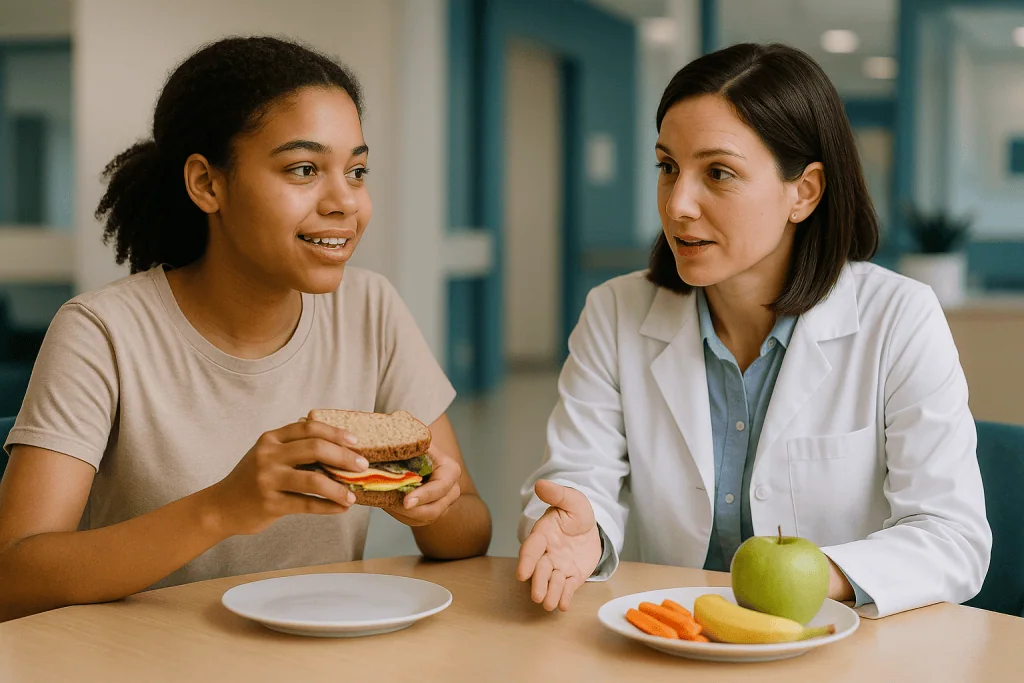
During that first stretch, the challenge is rarely the appliance breaking. It is that biting anything firm feels like pressing on a bruise. This is where soft, cool foods earn their reputation: smoothies without seeds, yogurt, mashed potato, scrambled eggs, soups that are not scalding, oatmeal, well-cooked pasta and soft fish. Cold has a mild numbing effect, so a chilled smoothie often goes down more easily than a warm meal.
The inside of the lips and cheeks also need time. Brackets rub on tissue that has never met metal before, and small sore spots are common. Orthodontic wax, a soft, food-safe wax pressed over a rough bracket, is the usual comfort measure, and teams typically send patients home with some. Rinsing with warm salt water is a gentle, widely recommended way to soothe the tissue.
By day four or five most people are cautiously back on regular textures, cut small. If pain is escalating rather than easing, or a spot inside the cheek is becoming an open ulcer that will not settle, that is a call to the orthodontic office rather than something to push through. Pain relief, if needed, is a conversation for the treating team or pharmacist, not a guess.
Safe swaps: a table of braces-friendly alternatives
Most people do not want a diet; they want their usual food with the danger removed. The table below pairs the common offenders with swaps that keep the flavor and lose the risk. Nothing here is exotic, and none of it requires giving up an entire food group.
| Risky with braces | Why it causes trouble | Easy swap |
|---|---|---|
| Whole apple, raw carrot | Front-tooth bite on a hard surface | Thin slices or matchsticks, steamed carrots |
| Corn on the cob | Incisor loading plus kernels under wires | Corn cut off the cob with a knife |
| Popcorn | Hard kernels and hulls that wedge | Puffed rice or corn snacks that dissolve |
| Nuts, hard candy | Point-load cracks brackets | Nut butter, sunflower seed butter, soft chocolate |
| Caramel, gum, gummy candy | Sticky pull lifts brackets and wires | Plain chocolate that melts, soft fruit |
| Crusty bread, bagels, pizza crust | Tough chew and front bite | Soft bread, pizza cut into small pieces |
| Ribs, wings, drumsticks | Tearing meat off bone with front teeth | Meat removed from bone and cut small |
| Hard taco shells, tortilla chips | Shatter into sharp shards | Soft tortillas, dips with soft pita |
| Ice cubes | Extreme hardness, chewed by habit | Chilled drinks without chewing the ice |
Two habits do most of the work behind this table. The first is a knife. Almost any fruit, vegetable or meat becomes braces-friendly once it is cut into pieces small enough to place on the back teeth. The second is cooking time. Steaming, roasting until tender and slow-cooking transform foods that would otherwise be hazardous. A raw carrot is a problem; a roasted carrot is dinner.
Why sugar and acid matter more with braces on
Broken brackets are the loud problem. The quiet one is decalcification, and it deserves equal attention because it can leave a permanent mark. Decalcification means minerals leaching out of enamel, and it shows up as chalky white patches around where the brackets sat. The NIH’s dental research institute lays out the chain of events: plaque bacteria feed on sugars, produce acid, and that acid dissolves enamel minerals faster than saliva can put them back. Do it often enough and a white spot appears; keep going and it becomes a cavity.
Braces raise the stakes in two ways. Plaque gathers around each bracket and along the gumline behind the wire, in spots a quick brush misses. And frequent sugary or acidic exposures give saliva no recovery window. It is the frequency of exposure, not just the total amount, that drives the damage. Six sips of soda spread across an afternoon do more harm than the same can finished with a meal.
Acid without sugar counts too. Sports drinks, energy drinks, fruit juices, lemon water and sour candies all lower the pH in the mouth. Sour gummies manage to be sticky, sugary and acidic at once, which is why orthodontic teams mention them so often.
None of this means a braces diet must be joyless. It means treating sweets as part of a meal rather than a running snack, choosing water between meals, and cleaning thoroughly at night when saliva flow drops. Fluoride toothpaste, which the NHS and the NIH both recommend for everyone, matters a little more when brackets are on; your orthodontist or dentist may suggest additional fluoride measures based on your own risk, and that decision is theirs to make with you.
Soft foods for braces: what to eat on a sore day
Sore days come and go through treatment: after the initial bonding, after each wire change, and sometimes after elastics are added. A short list of genuinely satisfying soft foods keeps those days from turning into a diet of pudding.
For breakfast, oatmeal, overnight oats, scrambled or soft-boiled eggs, yogurt with mashed banana, and pancakes without crisp edges all pass. Smoothies work well provided they skip seeds, hard nuts and ice chips; blend until fully smooth and drink without chewing.
Lunch and dinner have more range than people expect. Well-cooked pasta with soft sauces, risotto, mashed or baked potato, polenta, soft rice dishes, shepherd’s pie, lentil stew, dal, refried beans, tofu, flaky fish, meatballs, meatloaf and slow-cooked pulled meats all sit gently on tender teeth. Soups are ideal when they are warm rather than hot, because inflamed gums are more heat-sensitive.
Vegetables need a change of preparation rather than a ban. Steamed broccoli florets, roasted squash, sautéed spinach, avocado and cooked carrots are soft enough to mash with the tongue. Fruit is easiest when ripe and peeled: bananas, ripe pears, melon, berries, canned peaches in juice rather than syrup.
For dessert and snacks, applesauce, custard, cottage cheese, soft cheeses, gelatin, ice cream without hard inclusions, and soft-baked muffins all work. Cold foods have the bonus of mild numbing.
Keep an eye on protein. When everything is soft and sweet, protein tends to drop out, and a growing adolescent or a busy adult still needs it. Eggs, fish, beans, dairy and blended legumes solve that without a single hard bite.
What can you drink with braces?
Drinks rarely break anything, so they slide under the radar. Yet in terms of enamel, they may matter more than any single food, because people sip them slowly and often.
Water is the uncontroversial winner. It rinses debris from around brackets, buffers acid and keeps the mouth from drying. Plain milk is also friendly: it is low in acid and supplies calcium. Unsweetened tea and coffee are acceptable from a decay standpoint, though heavy staining of the tooth surface around brackets is possible over a long treatment, and the clear elastic ties some people have can discolor.
Soda, sweetened iced tea, lemonade, sports drinks and energy drinks combine sugar and acid, and the NIH’s guidance on tooth decay is blunt about frequent sugary drinks as a leading driver of cavities. Diet sodas remove the sugar but keep the acid. Fruit juice is nutritionally better than soda but still acidic and sugary, so treat it as an occasional drink with a meal rather than a bottle carried through the day.
Technique helps. Drinking through a straw sends liquid past the front teeth, which is where white spots most often appear. Finishing a sweet drink in one sitting rather than nursing it for an hour limits the acid exposure time. Swishing with water afterward costs nothing.
Ice deserves a specific warning. Chewing ice is one of the most common causes of broken brackets in people who otherwise follow every rule, because the habit is unconscious. Ask for drinks without ice, or let it melt.
Alcohol for adults in treatment is mainly an enamel question: sweet cocktails, cider and mixers are acidic and sugary, while dry wine is acidic. Moderation and water alongside are the sensible baseline.
How to eat with braces: technique matters as much as the menu
Two people can eat identical meals and one will break a bracket while the other never does. The difference is usually mechanics, not menu.
The central skill is moving the bite backward. Front teeth are built for cutting, and that cutting motion drives a bracket straight into whatever is being bitten. Molars are built for crushing, and the brackets on them face sideways where they are far less exposed. So the rule is: cut with a knife, chew with the back teeth. Sandwiches get halved and eaten from the side. Pizza is cut into bite-sized pieces. Even soft bread is torn rather than bitten.
Smaller bites help twice over. They reduce the force on any single bracket, and they let you feel a hidden hard fragment, a fruit stone or a piece of bone, before committing the full jaw.
Slow down for the first few weeks. Eating fast is how people forget and bite into the apple whole. Habits rebuild quickly; most people report that the new pattern becomes automatic within a few weeks, though this is observation rather than measured evidence.
Watch the unconscious chewers: pens, fingernails, ice, the plastic on a straw. These are leading causes of bent wires because nobody counts them as eating.
Temperature matters on sore days. Very hot food can sting inflamed gums and, for a few hours after an adjustment, everything feels more sensitive. Lukewarm is kinder.
Finally, if a bite feels wrong, stop. Something suddenly feeling loose or sharp is the appliance telling you it has shifted. Checking in a mirror and calling the office beats chewing through it and hoping.
Who gets metal braces, and whose eating rules are different?
Fixed metal braces are the most common way to correct malocclusion, the dental term for teeth or jaws that do not line up as they should. MedlinePlus describes the range: crowding, gaps, overbite, underbite, crossbite and teeth that erupted in the wrong position. Braces are usually offered once most permanent teeth are in, which for many children means the early teens, but adults are treated in growing numbers and the appliance works the same way at any age because bone keeps remodeling throughout life.
Some people are asked to wait. A child whose adult teeth have not yet come through may be monitored rather than treated, or given a simpler appliance first. Anyone with active gum disease or untreated cavities is normally asked to get those under control before brackets go on, because braces make cleaning harder and would worsen both. The orthodontist, sometimes with the dentist or a gum specialist, makes that call.
Eating rules vary with the hardware. A palatal expander, a device on the roof of the mouth that widens the upper jaw, traps food and makes soft, cut-up meals especially important. Molar bands, metal rings around back teeth, can loosen with sticky foods just as brackets do. Elastics, the small rubber bands hooked between upper and lower teeth to adjust the bite, are usually removed for eating and replaced afterward; forgetting them is a common early mistake.
Clear aligners, the removable plastic alternative, carry almost none of the food restrictions because they come out for meals, though they bring their own discipline of wear time and cleaning. The choice between systems depends on the problem being corrected and is a clinical decision made with the treating team, not a matter of which diet sounds easier.
Eating with metal braces at school, work and restaurants
The home kitchen is the easy part. The tests come in a cafeteria line, a conference buffet or a birthday party where corn chips and caramel apples are the only things on the table.
For school or work lunches, the trick is preparation the night before. Sliced fruit in a container, soft sandwiches on non-crusty bread cut into quarters, pasta salad, hummus with soft pita, cheese cubes, yogurt and hard-boiled eggs travel well and need no biting with front teeth. A small travel toothbrush, or at minimum a water bottle for swishing, turns the after-lunch problem into a thirty-second routine.
Restaurants are more forgiving than people fear. Most menus have a soft option: risotto, fish, curry with rice, noodle soup, pasta, omelets, tacos in soft tortillas, burgers with the bun torn rather than bitten. Ask for corn cut off the cob and meat off the bone; kitchens do this routinely for children and will do it for anyone. Skip the bread basket if it is crusty, or tear the soft interior.
Parties and holidays are where brackets break. Caramel apples, toffee, hard candy canes, nut brittle, popcorn balls and the ice in the punch bowl are the classic culprits. A useful mindset for a teenager is to decide in advance what the one treat will be, choose something that melts rather than something that pulls, and eat it with a meal rather than nibbling for hours.
Travel deserves a note too. Pack orthodontic wax, a spare toothbrush and the office’s phone number. Eating unfamiliar food far from the orthodontist is exactly when a cautious bite pays off, and most teams would rather take a call than see a wire that has been bent for a week.
What should you do after eating with braces?
What happens in the ten minutes after a meal shapes how the teeth look when the brackets finally come off. The NIH’s dental research institute explains that acid production in plaque starts as soon as sugar arrives and that saliva needs time to neutralize it. Clearing food from around brackets shortens that acid window.
Brushing after meals is the gold standard, and Cleveland Clinic’s guidance for people in braces recommends brushing after every meal where possible. The method matters more than the brush. Angle the bristles above the bracket and sweep down, then below the bracket and sweep up, so the plaque collecting on both ledges is reached. Give the gumline its own pass. A soft brush is enough; scrubbing hard does not remove more plaque and can irritate gums.
When brushing is impossible, rinse vigorously with water and swallow or spit. It is not as good as brushing, but it dislodges the sugary residue that would otherwise sit against enamel for hours.
Flossing with braces is fiddly because the wire blocks the usual path. Floss threaders, small plastic loops that pull floss under the wire, and interdental brushes, tiny brushes shaped to slip between teeth and behind the wire, both solve this. Water flossers are another option many people find easier. The NHS recommends cleaning between the teeth daily for everyone, and braces do not change that.
Nighttime cleaning is the one that cannot be skipped. Saliva flow drops during sleep, so anything left around a bracket at bedtime sits in acid until morning. Fluoride toothpaste, brushed thoroughly and not rinsed away with a big mouthful of water, gives enamel its best overnight defense. Your dentist or orthodontist may suggest further measures if white spots begin to appear.
What people often get wrong
Braces folklore is abundant, and some of it does real harm. A few corrections, grounded in what mainstream sources actually say.
Myth: You have to live on soft food for the whole treatment. The soft-food phase is for sore days, typically a few days after bonding and after adjustments, according to Mayo Clinic. Between those windows, most normal foods are fine once cut small and chewed at the back.
Myth: If a bracket breaks, it is not a big deal, just wait for the next visit. A loose bracket or bent wire means that section of teeth stops moving, and untreated it can lengthen the overall course. Cleveland Clinic advises contacting the orthodontist promptly rather than waiting. The office decides how urgent it is; you make the call.
Myth: Sugar-free means safe. Sugar-free sodas and sour candies are still acidic. Sugar-free gum is still sticky and can pull at brackets. Removing sugar addresses one risk, not all of them.
Myth: Chewing gum helps braces work faster. There is no reliable evidence that gum speeds tooth movement, and gum is a leading cause of dislodged wires. Some orthodontists permit certain sugar-free gums; that is an individual conversation, not a general rule.
Myth: White spots will vanish once the brackets come off. Decalcification can be permanent. Some spots fade partly as enamel remineralizes, but prevention through cleaning and limiting acid exposure is far more reliable than hoping.
Myth: Popcorn is fine if you avoid the kernels. Hulls wedge under wires and against gums, causing swelling and sometimes infection. Most teams say skip it entirely during treatment.
Myth: Adults cannot get metal braces. Bone remodels at any age. Adult treatment is common and follows the same food logic.
What if a bracket comes loose or a wire pokes?
Even careful eaters break something eventually, so it helps to know what a small emergency looks like and what to do in the moment. This is first aid, not repair; the repair is the orthodontist’s job.
A loose bracket often stays on the wire and slides. If it is not causing pain, leave it where it is, cover it with orthodontic wax so it does not rub, and call the office to arrange a visit. If the bracket comes off completely, keep it in a small bag and bring it along; the team decides whether to rebond it or replace it. Do not try to glue anything yourself.
A poking wire is the most common complaint. If the end of the wire has slipped out of the last bracket, a clean pencil eraser or the back of a spoon can sometimes press it gently back toward the tooth. If it cannot be tucked, a small ball of wax over the sharp end protects the cheek until the visit. Some offices permit trimming a long wire end with clean nail clippers as a temporary measure; check before doing so, because advice varies and a cut wire can create a new sharp edge.
A lost elastic tie or a missing rubber band is rarely urgent, but let the office know so it can be replaced at the next visit or sooner.
Swallowing a small piece of an appliance is alarming but usually passes without harm. Breathing it in is different and is covered in the red-flag section below.
Whatever has happened, switch to soft foods and back-teeth chewing until it is fixed. The appliance is already compromised, and a second knock can turn a small repair into a longer one.
Questions to ask your care team
Orthodontic visits are short, and the practical food questions are easy to forget once the chair tilts back. A written list, kept in a phone, changes that. These are the ones patients and parents most often wish they had asked.
- Which foods do you want me to avoid completely, and which are fine if cut small? Teams differ on borderline items such as crunchy chips and firm bread.
- Do I need to take my elastics out to eat, and when should they go back in?
- How long after each adjustment should I expect soreness, and what do you suggest for comfort? Let the team, not the internet, guide any pain-relief decision.
- What is your policy on chewing gum during treatment?
- How do you want me to handle a loose bracket or a poking wire between visits, and what is the after-hours number?
- Am I at higher risk for white spots, and would you recommend any extra fluoride measures or a particular cleaning routine?
- Which flossing tool do you think will work best for my mouth: threaders, interdental brushes or a water flosser?
- Are there drinks you specifically want me to limit, and does drinking through a straw help in my case?
- If I have an expander or bands as well as brackets, do any additional eating rules apply?
- Roughly how often will adjustments happen, and does a broken bracket change the plan?
- Will my regular dentist still see me for check-ups and cleanings during treatment, and how do the two offices coordinate?
Write the answers down. Every mouth, every appliance and every orthodontist is slightly different, and the specific guidance you receive should override any general list, including this one.
When to call your doctor
Most braces problems are minor and wait comfortably for a routine visit. A few do not. Contact your orthodontist, dentist or, where indicated, emergency services if any of the following occur.
- A piece of the appliance is inhaled rather than swallowed, or there is coughing, wheezing or difficulty breathing after a bracket or wire comes off. This is an emergency and needs immediate medical attention.
- A wire is embedded in the cheek, tongue or gum and cannot be moved, or is causing bleeding that does not stop with gentle pressure.
- Swelling of the gum, cheek or face, especially with fever, a bad taste, or pain that is worsening rather than settling. These can indicate infection around a trapped fragment or a decaying tooth under the appliance.
- Severe pain that is not eased by the comfort measures your team suggested, or pain that wakes you at night, particularly if it is centered on one tooth. Ordinary adjustment soreness eases over days; escalating pain is different.
- A tooth that feels suddenly loose beyond the gentle mobility normal during treatment, or a bite that has shifted dramatically after an injury to the face.
- Any blow to the mouth during sport or a fall, even if the braces look intact. Teeth and roots can be damaged without visible bracket loss.
- Mouth ulcers or sore patches that have not started to heal after about two weeks, which the NHS lists as a reason to be seen by a dental professional for anyone, braces or not.
For the everyday issues, a loose bracket, a bent wire, a lost tie, a snapped elastic, a routine call to the orthodontic office is the right step. Describe what happened, when, and what you have done so far. The team will decide how soon you need to be seen. That decision, like every treatment decision, belongs with them.
Frequently asked questions
What can you eat with braces on the first day?
Soft, cool foods that need no biting: yogurt, smoothies without seeds, applesauce, mashed potato, scrambled eggs, oatmeal, soft pasta, soup that is warm rather than hot, and ice cream without hard pieces. The teeth are usually tender for the first day or two as pressure begins, so chewing anything firm feels uncomfortable. Most people move back toward normal textures, cut small, within several days. Follow your own orthodontist’s instructions if they differ.
Can you eat popcorn with braces?
Most orthodontic teams advise avoiding popcorn entirely during treatment. The unpopped kernels are hard enough to snap a bracket, and the thin hulls slip under wires and lodge against gums, where they can cause swelling or infection. Hull-less varieties reduce but do not eliminate the problem. Puffed corn or rice snacks that dissolve in the mouth give a similar crunch without the risk. Check with your own team if you are unsure.
What are the main foods to avoid with braces?
Hard foods such as nuts, hard candy, ice and raw carrots; sticky foods such as caramel, gum, gummy candy and dried fruit; and foods bitten with the front teeth such as whole apples, corn on the cob, ribs and crusty bread. Cleveland Clinic and Mayo Clinic both group the risks this way. Many of these become acceptable once cut into small pieces or cooked soft, which is why technique matters as much as the list.
Which soft foods for braces still give enough protein?
Eggs, flaky fish, meatballs, slow-cooked pulled meats, tofu, lentils and dal, refried beans, cottage cheese, Greek yogurt and milk-based smoothies all provide protein without a hard bite. Protein often drops out when a diet turns soft and sweet, which matters for growing adolescents and for anyone healing sore gums. Blending beans into soups or adding nut butter to oatmeal are simple ways to keep intake up on sore days.
Can you eat pizza with braces?
Yes, with adjustments. The danger is the crust bitten with the front teeth and very chewy or crispy edges. Cut the slice into small pieces, eat the softer center with the back teeth, and leave the hard outer crust if it is crunchy. Toppings that are hard or stringy, such as thick pepperoni ends or very chewy cheese pulls, are easier to manage in small bites. Rinse or brush afterward, since cheese and sauce cling around brackets.
How long after getting braces can you eat normally?
Soreness typically peaks within a day or two of bonding and eases over roughly a week, according to Mayo Clinic, and most people return to regular textures cut into small pieces within that time. The restrictions on hard, sticky and front-bitten foods, however, last for the whole course of treatment, which the NHS describes as commonly 18–24 months. Expect a milder repeat of the sore phase for a few days after each adjustment.
Can you drink soda with braces?
It is best kept rare and taken with a meal rather than sipped through the day. Soda combines sugar and acid, and plaque around brackets converts the sugar to more acid, which pulls minerals from enamel and can leave permanent white spots. Diet versions remove sugar but stay acidic. If you do have one, a straw directs liquid past the front teeth, finishing it in one sitting shortens exposure, and rinsing with water afterward helps.
What should you eat after a braces tightening?
Treat the few days after an adjustment like a shorter version of the first week: soft foods that need little chewing, served cool or lukewarm. Yogurt, soups, pasta, mashed vegetables, eggs, soft fish and smoothies are typical choices. Soreness after adjustments usually fades within a few days as the teeth respond to the new wire. If pain is severe or getting worse rather than better, contact your orthodontic office for advice.
Is it safe to eat with elastics on?
Most orthodontists ask patients to remove the small rubber bands that connect upper and lower teeth before eating and put fresh ones in afterward, because chewing stretches and snaps them and traps food. Some teams allow eating with them in for specific bite corrections. Follow the instructions you were given, and ask if you are unsure. Forgetting to replace elastics after meals is one of the most common reasons bite correction falls behind schedule.
What happens if you eat something you should not with braces?
Often nothing, but check in a mirror for a bracket that slides on the wire, a wire end sticking out, or a missing tie. If everything looks and feels normal, carry on with a thorough clean. If something is loose or poking, cover it with orthodontic wax, switch to soft foods and back-teeth chewing, and call the orthodontic office. A loose bracket stops moving that tooth, so the team will decide how soon you need to be seen.
References
- MedlinePlus: Orthodontia
- NHS: Orthodontics
- NIH National Institute of Dental and Craniofacial Research: Tooth Decay
This article is for general information only and is not a substitute for professional medical advice. Please consult a qualified doctor about your individual situation.

More from the Blog
Why Teeth Discolor: How the Cause Decides Whether Teeth Whitening Will Work
Teeth discolor for three broad reasons: pigments from food, drink or tobacco settle on the outer enamel; enamel thins with age so the yellower…

How Orofacial Pain Is Diagnosed: Jaw Movement, Bite, Muscle and Nerve Examination
Orofacial pain is diagnosed mainly through a detailed history and a hands-on examination rather than a single test. Clinicians measure how the jaw opens…
When Dentists Reach for a Laser: Gum Reshaping, Sensitivity and Small Cavity Repair
Dentists use lasers most often for soft-tissue work such as reshaping gum lines, trimming overgrown tissue and cleaning infected gum pockets, and less often…
Why Enamel, Dentin and Pulp Matter: Dental Anatomy Explained Layer by Layer
A tooth has three main living and non-living layers. Enamel is the hard outer shell that resists chewing forces and acid but cannot regrow…

Caring for a Child’s Space Maintainer: Brushing Around the Band and Foods to Avoid
Space maintainer care comes down to three habits: brush twice a day with fluoride toothpaste, angling the bristles to sweep plaque from where the…
How Removable Orthodontic Appliances Work: Retainers, Expansion Plates and Functional Devices
Removable orthodontic appliances are custom-made devices patients can take in and out. The main types are retainers (Hawley and clear vacuum-formed) that hold teeth…