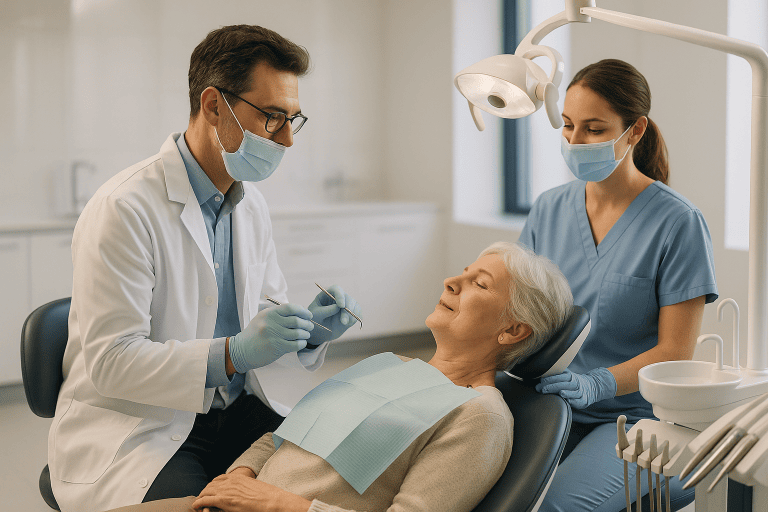
Metal Braces
Metal braces use fixed brackets and wires to gradually correct crowded, spaced, or misaligned teeth. They are a reliable orthodontic option for children, teenagers, and adults.
Quick answer
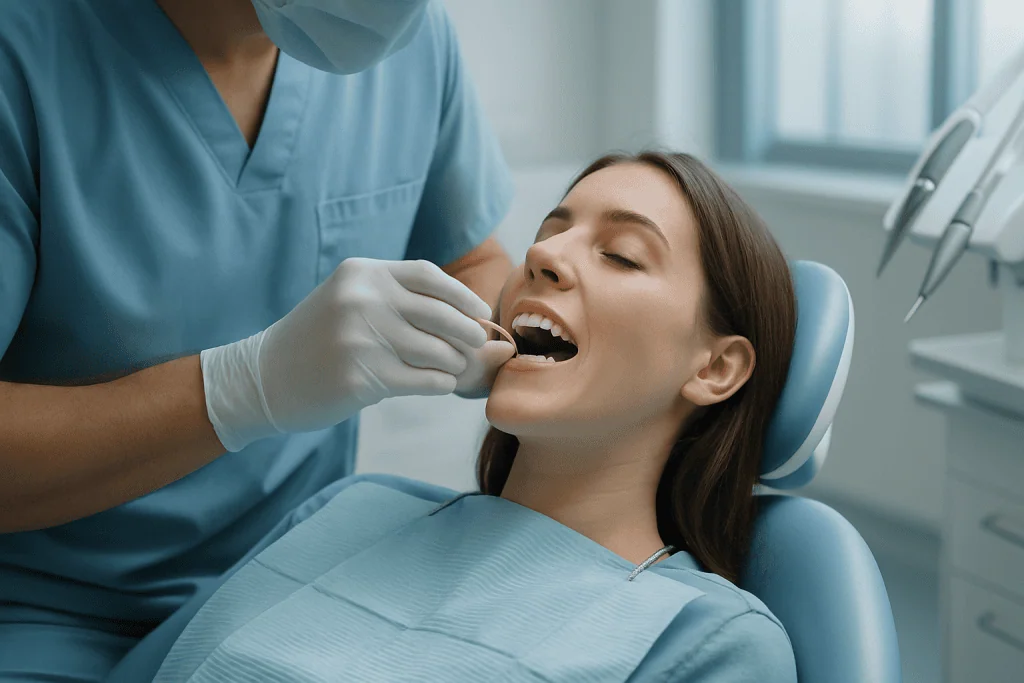
Metal braces are fixed orthodontic appliances: small brackets bonded to the teeth, connected by a thin archwire that applies light, continuous pressure. Over months, this pressure guides teeth into healthier, better-aligned positions and can correct crowding, spacing and many bite problems. They suit children, teenagers and adults, and treatment ends with retainers to hold the new positions in place.
What Are Metal Braces?
Metal braces are fixed orthodontic appliances that move teeth gradually into healthier, better-aligned positions. Small stainless-steel brackets are bonded to the front surface of each tooth and connected by a thin archwire, which applies light, continuous pressure until the teeth reach their planned positions. They are used in children, teenagers and adults, and they remain among the most versatile orthodontic braces for teeth available, because they can manage everything from mild crowding to complex bite correction. Whatever brought you to this page: a crooked front tooth, a bite that never felt right, a dentist’s referral: the mechanics behind braces are worth understanding before you decide anything.
They are called “fixed” braces for a simple reason: the brackets stay attached to your teeth for the whole of treatment. The main parts are the brackets, bonded to the tooth surfaces; the archwires, which create controlled movement as they gradually return to their manufactured shape; and the auxiliarieselastics, springs and small attachments that help correct specific bite problems. Small elastic ties or built-in clips hold the wire in position, depending on the bracket system your orthodontist uses. In some cases, metal bands are cemented around back teeth for additional support and anchorage. At planned intervals, the orthodontist changes or adjusts the wire and related components so that tooth movement progresses in a safe, measured way rather than all at once.
Because the appliance never comes out, it works continuously, during meals, at school or work, and while you sleep. That is a genuine advantage for anyone who does not want the responsibility of wearing a removable aligner for many hours each day, or for younger patients whose cooperation with removable appliances is uncertain. Fixed appliances are also particularly useful when teeth need significant rotation, vertical movement, space closure or careful coordination between the upper and lower arches. If you have been comparing different types of braces, metal braces are usually the reference point against which every other system is measured.
How do metal braces move teeth?
Metal braces move teeth by prompting the bone around each root to remodel. When light, sustained pressure is applied to a tooth, the bone on one side of the root is gradually resorbed while new bone forms on the other side, allowing the tooth to travel slowly into its new position. This is biology as much as mechanics, and it cannot be safely hurried. Moving teeth too quickly, or with inappropriate force, increases the risk of discomfort, root changes, gum problems and instability after treatment. That is why braces work in stages, why wires are changed progressively rather than tightened aggressively, and why regular monitoring appointments matter throughout treatment. The pace is set by your tissues, not by the appliance.
What about braces on back teeth?
Braces on back teeth usually take one of two forms. The first is routine: in a standard fixed appliance, the molars often carry bands or bonded tubes, because these large teeth act as anchors for the forces that move the rest of the arch. The second is a different appliance altogether, lingual braces, in which brackets are bonded to the inner, tongue-facing surfaces of the teeth so the appliance is hidden from view. Lingual systems are more technique-sensitive, can take longer to get used to because of tongue contact, and are not suitable for every bite. Whether a lingual option is realistic for your case depends on your tooth anatomy, bite depth and treatment goals, and it is something to raise at the diagnostic stage rather than assume in advance.
Deciding Whether Braces Are Right for You
Starting treatment with braces is rarely just a cosmetic decision. Crowded, spaced or misaligned teeth can affect how you bite, chew, speak, clean your teeth and feel when you smile. A bite that does not fit together properly can concentrate chewing forces on a few teeth, wear enamel unevenly and make some surfaces genuinely difficult to keep clean. Appearance matters, it is usually what prompts the first appointment, but the functional case for orthodontic treatment is often just as strong.
For children and teenagers, parents tend to worry about timing, comfort, school routines and whether treatment will support healthy jaw and dental development. These are reasonable questions, and the honest answer is that timing varies by child. Some problems benefit from early attention during growth; others are best treated once most permanent teeth have erupted. A proper evaluation tells you which situation applies, and “not yet” is a perfectly common and legitimate outcome of a first orthodontic assessment.
Adults usually bring different concerns: professional appearance, previous dental work, gum health, travel schedules, or the quiet worry that it is somehow “too late” to straighten their teeth. Age itself is rarely the barrier. What matters is whether the gums and supporting bone are healthy enough for tooth movement. Adult treatment is often part of a larger dental plan, creating space for an implant, stabilising the bite before crowns or teeth veneers, or correcting positions affected by earlier tooth loss. Aligning teeth before restorative work can improve how well that work functions and lasts.
Do braces work for adult men?
Yes, and there is no special category of man braces, only standard orthodontic appliances planned around adult biology. Teeth move by the same bone-remodelling process regardless of sex or age, although adult bone is denser than a teenager’s, which can affect the pace and mechanics of treatment. Men who ask this question are often really asking about visibility and professional settings, and there are genuine choices there: conventional metal brackets, smaller low-profile brackets, tooth-coloured ceramic systems or lingual braces. The right answer depends on your bite, your budget and how much appliance maintenance you are prepared to accept, not on whether braces are “for” you.
At Acibadem, orthodontic care is approached as a medical and dental decision, not simply an aesthetic service. Before recommending a plan, your orthodontist evaluates your teeth, jaw relationship, facial profile, oral hygiene, gum health, growth stage and long-term dental needs. For international patients this structured approach matters: it clarifies what braces can realistically achieve, how long treatment may take, what visits are needed and how care can be coordinated if you live abroad.
Who May Need Metal Braces?
Metal braces may be recommended for children, teenagers or adults whose teeth or bite relationships would benefit from guided orthodontic movement. The need for braces is not always obvious from appearance alone. Some patients have fairly straight front teeth but an uneven bite, impacted teeth, a jaw growth imbalance or back teeth that do not fit together correctly. Others are concerned mainly about crowding, spacing or the look of their smile. Both groups deserve the same careful diagnosis.
Common signs that an orthodontic evaluation may be worthwhile include:
- Teeth that overlap, appear twisted or sit outside the arch
- Spaces between teeth, whether long-standing or newly appearing
- Difficulty biting into or chewing food comfortably
- Upper front teeth that protrude noticeably
- Lower teeth that sit too far forward relative to the upper teeth
- An open bite, where the front teeth do not meet when the back teeth close
- A deep bite, where the upper teeth cover the lower teeth excessively
- A crossbite, where some upper teeth bite inside the lower teeth
- Jaw fatigue, uneven tooth wear, speech changes or frequent food trapping
- Gum irritation around teeth that are hard to clean because of crowding
In children, concerns are often first spotted by a paediatric dentist, family dentist or parent. Early assessment is valuable when there are growth-related issues, delayed tooth eruption, premature loss of baby teeth, habits such as thumb sucking, narrow dental arches or teeth that appear blocked from erupting properly. Not every child needs immediate braces. Sometimes the best plan is observation, preventive care, or a limited first phase of treatment with comprehensive braces later, once more permanent teeth are in place.
Teenagers are the most commonly treated group, because most permanent teeth have erupted and growth can often still be guided. For adults, braces may be appropriate whenever the gums and supporting bone are healthy enough to tolerate movement. Adults weighing braces against other options, particularly where teeth are missing, should keep in mind that braces reposition natural teeth while implants replace absent ones: the two solve different problems and are sometimes combined in a single plan, with alignment usually completed first so that the implant space is opened, closed or held exactly where the restorative plan needs it.
Diagnosis begins with a detailed orthodontic examination. Your orthodontist assesses your bite, tooth alignment, jaw movement, facial balance, oral hygiene, gum condition and any existing restorations. Diagnostic records often include clinical photographs, digital X-rays, panoramic imaging, cephalometric analysis and either conventional impressions or digital scans of the teeth. These records reveal what the eye cannot: root positions, jaw relationships, eruption patterns, bone support and the amount of space actually available in each arch.
For patients living abroad, an initial evaluation can begin with a remote review of photographs, X-rays and dental history where these are available. A definitive treatment plan, however, usually requires an in-person examination. Bracket placement, gum health, tooth mobility, bite contacts and functional jaw movement have to be assessed directly before treatment can responsibly begin.
Conditions Metal Braces Can Address
Metal braces treat a wide range of orthodontic conditions. The exact plan depends on the severity of the problem, the patient’s age, growth stage, oral health and goals. Sometimes braces are used alone. In other cases they are combined with tooth extractions, expanders, elastics, temporary anchorage devices, oral surgery, periodontal care or restorative dentistry. The conditions below are the ones orthodontists see most often.
Crowded teeth occur when there is not enough space in the dental arch for the teeth to align properly. Crowding makes teeth harder to clean and can contribute to plaque accumulation, gum inflammation, cavities and uneven wear. Braces align crowded teeth by creating or redistributing space, through arch development, selective enamel reshaping, extractions where genuinely necessary, or coordinated movement of neighbouring teeth. Where wisdom teeth are present or impacted, your orthodontist may also assess whether they affect the plan, although wisdom teeth are not the usual cause of front-tooth crowding.
Spacing means gaps between teeth. Spaces may relate to tooth size, missing teeth, gum conditions, oral habits or jaw size. Braces can close certain spaces entirely, or deliberately arrange the teeth to support later restorative work such as bonding, veneers, bridges or implants. Which approach is right depends on why the gaps exist, closing a space caused by a missing tooth is a very different decision from closing a natural gap between two small teeth.
Overbite describes excessive vertical overlap of the upper front teeth over the lower front teeth. A deep overbite can contribute to tooth wear, gum trauma behind the upper teeth and bite instability. Braces can level the bite and improve how the front and back teeth share the load when you close and chew.
Overjet refers to upper front teeth that sit too far ahead of the lower front teeth horizontally. It can affect appearance, lip closure and speech, and prominent front teeth are more exposed to accidental trauma. Depending on the cause, treatment may involve braces with elastics, growth guidance in younger patients, extractions, or, in selected adult skeletal cases, combined orthodontic and surgical planning.
Underbite occurs when the lower teeth or lower jaw sit ahead of the upper teeth. Mild dental underbites can often be corrected with braces and bite mechanics alone. More significant skeletal underbites, particularly in adults whose growth has finished, may require orthodontics coordinated with jaw surgery, and an honest diagnosis will say so at the outset rather than midway through treatment.
Crossbite occurs when upper teeth bite inside the lower teeth. It may involve a single tooth, several teeth or a whole side of the arch. Left uncorrected, a crossbite can contribute to uneven wear, gum recession and a functional jaw shift as the patient closes around the interference. Braces may be combined with expansion or other appliances, and the options differ considerably between a growing child and an adult.
Open bite means certain teeth do not touch when the jaws close, most often the front teeth. This affects biting into food, chewing efficiency, speech and wear patterns on the teeth that do meet. Open bites may relate to habits, tongue posture, growth patterns or eruption problems, and they demand careful diagnosis, because long-term stability depends on addressing the underlying functional cause as well as the tooth positions.
Impacted or ectopic teeth are teeth that fail to erupt into their correct position; canines are among the most commonly affected. Braces can be used together with minor surgical exposure, where appropriate, to guide an impacted tooth gradually into the arch. This work requires precise coordination between the orthodontic and oral surgery teams, and the earlier an impaction is identified, the more options usually remain open.
Metal Braces, Ceramic Braces and Other Options
Ceramic braces work on exactly the same principle as metal braces, fixed brackets, an archwire, controlled continuous force, but the brackets are made of a tooth-coloured or translucent material that stands out far less against the teeth. They are the most common choice for patients who want fixed-appliance treatment with a lower visual profile, and they sit within the broader family of appliances covered on our orthodontics page alongside removable clear aligners and lingual systems.
Which is better: ceramic or metal braces?
Neither is universally better; they trade different strengths. Metal brackets are more robust, less bulky in some systems, and tolerate the full range of orthodontic mechanics comfortably, which is why complex cases often default to metal. Ceramic brackets are far less visible, but the material is more brittle, brackets can fracture under heavy bite forces, and the elastic ties holding the wire can pick up staining from coffee, tea, red wine or smoking between visits. In treatment terms, both can achieve the same tooth movements in most cases: the appliance does not change the biology of how teeth move. The better choice is the one that fits your bite, your habits and your priorities.
Should I get ceramic or metal braces?
Decide on three practical questions. First, how much does visibility matter to you day to day, enough to accept a more fragile bracket and stricter care around staining foods? Second, what does your bite require, some deep bites and heavy-force mechanics are simply kinder to metal brackets, and your orthodontist will tell you if your case is one of them? Third, how do the two options compare in your treatment quote, since ceramic systems typically sit at a different price point than metal in most clinics? There is no wrong answer here, only a trade-off, and it is worth making it consciously rather than by default.
Removable clear aligners are a further alternative for suitable cases, though they depend heavily on wearing time and are not appropriate for every tooth movement. Lingual braces, bonded behind the teeth, offer near-invisibility at the cost of adaptation time and technique sensitivity. A thorough diagnostic consultation should set out which of these options are genuinely open to you, rather than presenting one system as the answer to everything.
How Metal Braces Treatment Is Performed
Treatment begins with planning, not with brackets. Before anything is bonded, the orthodontist reviews your diagnostic records and explains the goals of treatment, the estimated duration, the appointment schedule, your responsibilities during treatment and the realistic alternatives. If cavities, active gum disease or significant dental infections are present, these normally need treating first. Tooth movement through inflamed or infected tissues is not safe practice; a healthy foundation comes before mechanics.
Preparation may include a professional dental cleaning, fluoride recommendations, hygiene instruction and coordination with other specialists where needed. Patients with gum disease may need periodontal evaluation. Adults with missing teeth, crowns, implants or complex restorative needs may have a combined plan involving orthodontics and prosthodontics. Children and teenagers may need growth assessment or space management before full braces are placed. None of this is padding: it is what separates a planned result from a lucky one.
The placement appointment itself is straightforward and is performed in an outpatient dental setting without general anaesthesia. A typical bonding visit follows this sequence:
- The teeth are professionally cleaned, then dried and kept isolated from saliva.
- The enamel is conditioned so the dental adhesive can bond reliably.
- Each bracket is positioned precisely on its tooth according to the planned movement, placement accuracy at this stage shapes the whole treatment.
- The adhesive is set, usually with a curing light.
- The first archwire is placed into the brackets and secured with elastic ties or clips.
- You receive instructions on eating, cleaning, managing early discomfort and what to do if a bracket or wire comes loose.
Bonding often takes about one to two hours, depending on whether braces are placed on one or both arches and whether additional appliances are needed. You can usually return to normal daily activities immediately. The teeth commonly feel sensitive for several days as they begin responding to the new forces; soft foods, orthodontic wax over any rough spots, and over-the-counter pain relief recommended by your clinician help during this adjustment period. The sensation is pressure and tenderness rather than sharp pain, and it settles as the mouth adapts.
Follow-up visits are the engine of treatment. At each one, the orthodontist checks tooth movement, oral hygiene, bracket condition, bite changes and your comfort. Wires may be changed, elastics added or forces adjusted. These visits usually occur every several weeks, although the exact rhythm varies by case and treatment stage. Consistent attendance matters, because a fixed appliance keeps applying force whether or not it is being monitored, supervision is what keeps that force doing the right work.
Modern orthodontic care draws on several diagnostic and planning technologies. Digital radiography reduces radiation exposure compared with older film-based methods and helps evaluate teeth, roots and bone support. Panoramic and cephalometric imaging assess the dental arches and jaw relationship. Intraoral scanning can create digital models of the teeth without conventional impression material in many cases. Three-dimensional planning tools assist with complex tooth positions, impacted teeth, facial proportions and surgical-orthodontic cases.
Technology supports decision-making; it does not replace it. Braces have to be planned around the individual patient’s biology, not just a desired final image. Root position, gum thickness, bone support, tooth shape, jaw growth, facial aesthetics and bite function all shape the safest and most stable path to alignment, and weighing those factors is the orthodontist’s judgement, not the software’s.
During treatment, you play an active role. Brushing and flossing take longer with braces, because brackets and wires create ledges where food and plaque collect. Your orthodontic team will demonstrate the techniques that work: interdental brushes for the spaces around brackets, floss threaders or orthodontic floss to get under the wire, water irrigators where appropriate, and fluoride products to protect the enamel around each bracket. Diet changes too, hard, sticky and very chewy foods can break brackets and distort wires, and every breakage is a small delay.
Many patients are asked to wear elastics between the upper and lower braces. These small rubber bands correct bite relationships that the wires alone cannot, and their effectiveness depends almost entirely on cooperation. Wearing them less than instructed can extend treatment time or limit the final bite correction. For teenagers and adults alike, understanding why the elastics are prescribed usually improves consistency more than any reminder does.
How long do metal braces take to straighten teeth?
Many comprehensive orthodontic plans last roughly one to three years, but the honest answer is that duration is set by your case, not by the appliance. Mild alignment changes take less time; complex bite correction, impacted teeth, extraction cases and jaw coordination take longer. Within any plan, timing is also affected by things partly in your control, missed appointments, broken brackets, hygiene problems that force pauses, and things that are not, such as how quickly your bone responds to force. Your orthodontist will give you a personalised estimate after diagnosis, and a good one will also tell you which factors could stretch it.
When active treatment finishes, the braces are removed in a controlled appointment: brackets are gently debonded, adhesive is polished from the enamel, and retainers are made. Retention is not an optional extra: it is part of the treatment. Teeth naturally tend to drift, especially in the months just after braces come off, and retainers hold the new positions while bone and soft tissues consolidate. Your orthodontist will advise whether removable retainers, a fixed bonded retainer or a combination suits your case. This is also the point at which some patients consider teeth whitening, once the full tooth surfaces are accessible again: a separate decision, best discussed with your dental team.
How Much Are Metal Braces?
There is no single answer, and any page that quotes you one figure before diagnosis is guessing. The cost of metal braces is set case by case, because the treatment itself is set case by case: a mild crowding correction and a two-year bite reconstruction are different undertakings, even though both are called “braces”. A meaningful quote comes after clinical examination and diagnostic records, when the orthodontist knows what your teeth actually need.
When you ask how much metal braces cost, what you are really asking about is a set of cost drivers:
- Complexity of the casethe type and severity of the alignment and bite problems being corrected.
- Treatment lengthlonger treatment means more adjustment visits, more wires and more clinical time.
- Additional proceduresextractions, surgical exposure of impacted teeth, expanders or other auxiliary appliances.
- Preparatory dental workcavities, gum treatment or cleanings needed before braces can safely start.
- Appliance typeconventional metal, ceramic or lingual systems sit at different price points.
- Retentionretainers and the follow-up visits that come with them.
If you are asking how much for metal braces at a specific clinic, ask what the quoted figure includes. A useful quote states whether diagnostic records, all adjustment visits, repairs of broken brackets, retainers and retention follow-up are covered, or whether these are billed separately. Two quotes that look different can describe the same total treatment, or genuinely different scopes of care. Comparing scope, not just headline numbers, is what protects you from surprises midway through a multi-year commitment.
Recovery and Adjustment Timeline
Metal braces do not involve surgical recovery, but almost everyone goes through a normal adjustment period while the teeth and soft tissues adapt. Knowing the shape of that period in advance makes it far easier to live through.
| Time Period | What Patients Can Expect |
|---|---|
| Day 1 | Brackets and wires feel new in the mouth. Mild pressure or tightness may begin within several hours. Eating soft foods is usually more comfortable. |
| First Week | Tooth sensitivity and cheek or lip irritation commonly improve. Orthodontic wax, careful brushing, and soft meals can help during adaptation. |
| First Month | Patients become more comfortable cleaning around braces and eating with them. Early tooth movement may be visible in some cases. |
| During Active Treatment | Adjustment visits continue at planned intervals. Temporary soreness may occur after wire changes or elastic adjustments. |
| After Braces Are Removed | Teeth feel smooth again, and retainers are provided to maintain the result. Retainer wear is essential for long-term stability. |
| Longer Term | Regular dental care and retainer follow-up help preserve alignment, bite function, and oral health over time. |
What can you eat with braces?
Most normal food, prepared sensibly. In the first days, soft options, soups, pasta, eggs, yoghurt, well-cooked vegetables, are simply more comfortable. Throughout treatment, the foods to manage are the ones that break appliances: hard items like nuts, ice and crusty bread ends, sticky sweets and chewing gum, and anything you would normally bite into whole, such as apples or corn on the cob, which are fine cut into pieces. This is not a diet; it is damage control, and patients who adapt their habits early tend to lose far less time to repairs.
How do you keep teeth clean with braces?
Slowly and systematically, at least at first. Brush after meals, angling the bristles above and below each bracket where plaque hides; use an interdental brush for the gaps the toothbrush misses; and clean under the archwire daily with threaded floss or an irrigator if your team recommends one. Fluoride toothpaste, and any additional fluoride product your orthodontist suggests, protects the enamel around the brackets: the area where white spot marks can develop if plaque sits undisturbed for months. The routine takes a few extra minutes a day and repays them for the rest of your life with the teeth you straightened.
Small appliance problems happen even to careful patients. A ligature can slip, a bracket can debond, a wire end can begin to rub. Orthodontic wax over the irritating spot is the standard interim measure, and letting your orthodontist know promptly means the fix can be folded into your schedule rather than becoming a delay. These are nuisances, not crises, and every orthodontic practice deals with them daily. If you play contact sport, ask about an orthodontic mouthguard designed to fit over braces; wind and brass musicians usually adapt within a few weeks with wax and practice.
Benefits of Metal Braces
When carefully planned and maintained, metal braces improve both dental function and smile alignment in ways that outlast the appliance itself.
| Benefit | What It Means for You |
|---|---|
| Precise tooth movement | Fixed brackets and wires allow the orthodontist to guide individual teeth, including rotations, vertical changes, and complex space closure. |
| Effective for many bite problems | Metal braces can address crowding, spacing, overbite, underbite, crossbite, open bite, and many combined orthodontic concerns. |
| Continuous treatment action | Because braces are fixed in place, they work throughout the day and do not depend on remembering to insert an appliance. |
| Improved oral hygiene access after alignment | Straighter teeth can be easier to brush and floss once treatment is complete, supporting long-term gum and tooth health. |
| Better bite balance | A more stable bite can help distribute chewing forces more evenly and may reduce abnormal wear on certain teeth. |
| Long-term smile improvement | Orthodontic alignment can enhance facial and dental aesthetics while preserving your natural teeth. |
What Influences a Good Orthodontic Result?
A successful outcome depends on more than the appliance. The quality of diagnosis, the biological response of your teeth, your own cooperation, your hygiene and the retention phase all shape the final result. Two patients can begin with what looks like identical crowding and need different plans, because their root positions, gum thickness, jaw relationships or growth stages differ underneath the surface.
Accurate diagnosis is the foundation. Orthodontic treatment has to account for the roots below the gumline as much as the crowns you can see. Moving teeth without understanding bone support, gum condition or jaw relationship can compromise both stability and oral health. Imaging and clinical examination together define what is possible, and, just as importantly, what should be avoided.
Oral hygiene is the biggest factor within your own control. Plaque left around brackets can cause white spot lesions on the enamel, cavities, swollen gums and bad breath. Patients who brush thoroughly, clean between teeth, limit sugary snacking and keep up their dental cleanings are far more likely to finish treatment with healthy enamel and gums. The orthodontic team provides the guidance; the daily work happens at your bathroom sink.
Consistency with appointments drives timing. Missed visits delay wire changes, bite correction and the monitoring that keeps forces on track. If a bracket loosens or a wire displaces, telling your orthodontist promptly avoids unnecessary drift. If you know your travel or work schedule will interrupt the usual rhythm, say so before treatment starts, so the plan can be built around reality rather than repaired afterwards.
Elastics and auxiliary appliances can be decisive. If elastics are prescribed, they exist to correct the bite, not merely to straighten the visible teeth, and no amount of clinical skill compensates for elastics left in a pocket. Wearing them exactly as instructed is one of the highest-return habits in the whole of orthodontics.
Growth and age shape the plan. Children and teenagers may have growth potential that supports certain corrections. Adults can achieve excellent results too, but planning must account for denser bone, gum history, restorations, missing teeth and previous dental work. Adult treatment is often highly customised and may involve collaboration with periodontists, oral surgeons or restorative dentists.
Retention determines how well the result lasts. Teeth shift after braces through natural ageing, chewing forces, oral habits, gum changes and the elastic memory of the fibres around each tooth. Retainers counter that drift. Long-term retainer wear, exactly as your orthodontist advises, is not an afterthought: it is the part of treatment that protects everything the previous years achieved.
Realistic goals matter as much as any of the above. Orthodontics can significantly improve alignment and bite function, but it cannot change every aspect of tooth shape, jaw structure or facial anatomy on its own. Some ideal results require restorative dentistry, periodontal care or jaw surgery alongside braces. A frank conversation before treatment starts, about what braces can do and what they cannot, is a sign of a good clinician, not a hesitant one.
Why Acting Early Matters
Orthodontic problems rarely demand urgent treatment, but timely evaluation stops small issues becoming complicated ones. Crowding can worsen as permanent teeth erupt. Bite problems quietly contribute to uneven wear, gum irritation, jaw strain and cleaning difficulty for years before they cause obvious trouble. Impacted teeth become harder to guide the longer they stay untreated. In children, certain jaw growth patterns can be influenced only while growth is still active: a window that closes on its own schedule.
Early assessment does not mean early braces. In many cases, watching and waiting is exactly the right plan, and a good orthodontist will say so. What delay costs is not treatment itself but options: a child with a narrow upper arch may be treatable simply during a growth window, while an adult with the same skeletal pattern faces more complex care. Impacted canines are far easier to guide when identified before root development and position make the job harder.
For adults, timing matters for different reasons. Gum health, bone levels and tooth wear change over the years. Crowded teeth are hard to clean thoroughly, which raises the risk of periodontal inflammation, and an unbalanced bite loads certain teeth and restorations excessively. Sorting out alignment before major restorative work, crowns, bridges, implants, veneers or zirconium teethcan improve how well that work functions and how long it lasts.
The point of timely evaluation is not to rush anyone into brackets. It is to make an informed decision at the right moment: braces now, another option, or simply watchful observation with a review date in the diary.
Metal Braces at Acibadem: What International Patients Should Know
Braces are not a single-visit treatment, and that fact should shape how anyone living abroad thinks about where to have them. Fixed appliances need adjustment at planned intervals for months or years, so the real questions are about continuity: who monitors the treatment, how the visit schedule fits your travel patterns, and what happens between appointments. A provider should be chosen for diagnostic depth, planning quality and follow-up structure, not for the placement appointment alone.
At Acibadem, orthodontic treatment is planned individually, and cases that cross specialty lines are handled within the wider structure of a hospital group. That matters more often than patients expect. Impacted teeth need coordination between orthodontics and oral surgery. Adults with gum concerns benefit from periodontal input before and during tooth movement. Patients preparing for implants or restorative dentistry may need orthodontics first, to create space and stabilise the bite. Having those conversations happen within one clinical structure keeps a multi-part plan coherent.
Practical treatment models vary by patient. Some begin braces at Acibadem and return for scheduled adjustment visits when their travel allows. Others complete the diagnostic and planning stage, examination, imaging, records, a documented plan, and then coordinate ongoing care with an orthodontist in their home country. Others come for a second opinion on a plan proposed elsewhere. What is clinically responsible depends on the complexity of the case and the realistic visit schedule, and that is a conversation to have honestly at the planning stage, before any bracket is bonded.
Patient education runs through the whole process. Before braces are placed, you should understand the expected treatment length, the reason for each major step, how to clean around the brackets, which foods to avoid, how discomfort is managed and which appliance problems need attention between visits. Patients who understand their treatment cooperate better with it, and cooperation is half of orthodontics.
One further practical note for anyone whose braces will overlap with other medical care: fixed orthodontic appliances are relevant information for anaesthesia and surgical teams. Pre-operative assessments routinely ask about dental work, and brackets, archwires and bonded retainers are all worth mentioning at that stage, brackets sit close to where airway instruments pass, and a fixed wire behind the front teeth is easy to overlook unless it is on record before the day of the procedure.
Making an Informed Decision
Metal braces are a trusted, evidence-based option for correcting crowded, spaced or misaligned teeth and improving how the bite functions. They demand time, cooperation and consistent follow-up, and they repay all three: for many children, teenagers and adults, they remain the most dependable route to healthier alignment and a more balanced smile.
A detailed orthodontic evaluation is where any real decision starts. A thorough consultation includes clinical examination, diagnostic imaging, records of your teeth and bite, and a candid discussion of the options, including the option of waiting. From that point, a specialist can explain what is causing the alignment problem, whether metal braces are the right tool for it, how long treatment is likely to take and what each stage will ask of you.
Weigh the plan, not just the appliance. The best orthodontic decisions are made by patients who understand their own diagnosis, know why each step exists and can see the retention phase at the end of the road before the first wire ever goes in. With that clarity, braces stop being an intimidating commitment and become what they actually are: a well-understood, well-mapped process with a defined destination.
Preparation
- A dentist or orthodontic specialist evaluates the teeth, bite, and jaw alignment with an oral examination and imaging if needed. Any cavities, gum inflammation, or dental hygiene issues should be treated before braces are placed. Patients are advised on treatment expectations, oral hygiene, and dietary changes.
Aftercare
- Mild soreness is common for a few days after braces are fitted or adjusted and can usually be managed with soft foods and routine pain relief if recommended. Patients should avoid hard, sticky, or very chewy foods and clean carefully around brackets and wires. Regular adjustment appointments are needed throughout treatment to guide tooth movement safely.
Frequently Asked Questions
What affects the cost of metal braces?
The final cost depends on the complexity of tooth movement, bite correction needs, appliance type, diagnostic records, clinic setting, orthodontist expertise, number of adjustment visits, retainers, and whether additional dental treatments are required.
How can I get a personalised quote from Acibadem?
You can request a free consultation by sharing recent dental records, photos, and any previous orthodontic information. An orthodontic specialist can then review your case and provide a personalised treatment plan and quote.
Are metal braces suitable for adults as well as younger patients?
Yes, metal braces can be used for adults, teenagers, and children when clinically appropriate. Suitability depends on dental development, gum health, bone support, bite condition, and the goals of treatment.
What is usually included in a metal braces package?
Inclusions vary by clinic and treatment plan, but may include consultation, orthodontic assessment, imaging guidance, braces placement, adjustment appointments, care coordination, and retainers. Always confirm what is included before starting treatment.
Will I need to travel back for follow-up appointments?
Metal braces require regular monitoring and adjustments. International patients should discuss follow-up planning before treatment begins, including how visits will be scheduled and whether any parts of care can be coordinated with a local dentist or orthodontist.
Is this information medical or financial advice?
No. This is general educational information. A specialist consultation is needed to decide clinical suitability, and a personalised quote is required to understand the cost for your individual case.
Medically reviewed by the Acıbadem International Medical Board September 8, 2026
See our medical review board →
Update history
- PublishedJune 8, 2026
- Medical review approvedSeptember 8, 2026
- Last content updateSeptember 8, 2026
References1
- Orthodontics nhs.uk
Trusted care for international patients
Braces & Invisalign costsledger-based guide ranges, or browse the full Turkey Medical Price Index.
From the Acibadem Blog

What Can You Eat With Metal Braces? Foods That Break Brackets and Easy Swaps
With metal braces you can eat most foods once they are cut small and cooked soft: pasta, rice, eggs, fish, yogurt, soft fruit, steamed…
Broken Bracket or Poking Wire: Metal Braces Problems and When to Call the Orthodontist
If a bracket breaks or comes loose, the usual first step is to leave it in place, cover any sharp edge with orthodontic wax,…

Metal Braces for Adults: Old Fillings, Gum Health and What Changes After Teenage Years
Metal braces work for adults because teeth can move at any age as long as the surrounding bone and gums are healthy. Adults differ…