

What Does Stroke Rehabilitation Involve? Physical, Occupational, Speech and Cognitive Therapy
Key Takeaways
- Stroke rehabilitation combines four therapy strands, physical, occupational, speech and language, and cognitive, delivered by a coordinated team rather than one professional.
- The AHA/ASA guideline recommends screening swallowing before any food, drink or oral medicine after stroke, because a weak swallow can cause aspiration pneumonia.
- Very early, very intensive mobilization within the first 24 hours was not shown to help in a large trial, so teams aim for early but measured activity.
- Johns Hopkins describes the fastest recovery in the first three months and slower gains through six months, with improvement still possible beyond that through practice.
- Roughly one in three stroke survivors experience depression, according to the AHA/ASA guideline, which recommends routine screening because untreated depression slows functional recovery.
- Most of the repetitions that drive neuroplasticity happen at home between sessions, which is why a structured self-practice program matters as much as clinic time.
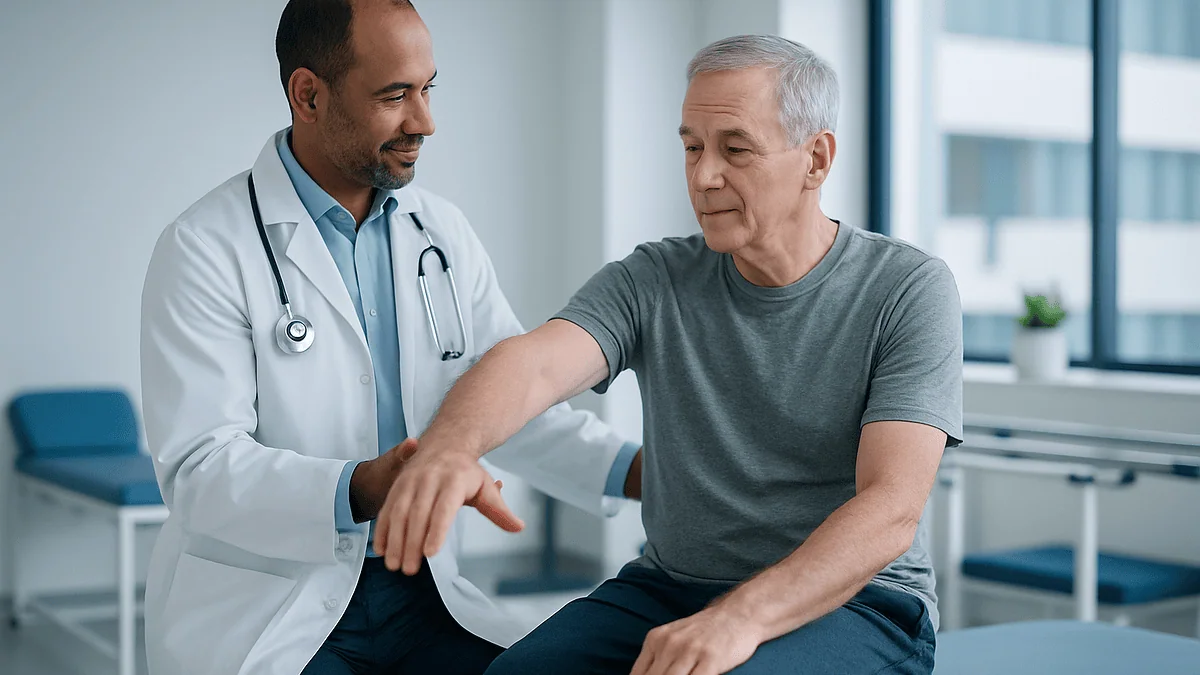
Stroke rehabilitation is a coordinated program that helps the brain and body relearn lost skills after a stroke. It usually combines physical therapy for movement and balance, occupational therapy for everyday tasks, speech and language therapy for communication and swallowing, and cognitive therapy for memory and attention. It begins as soon as a person is medically stable and continues for months, with intensity and setting tailored by the treating team.
The first time Maria tried to butter a slice of toast after her stroke, the knife went sideways and the bread slid off the plate. She laughed, then cried, then asked the therapist standing beside her the question almost everyone asks in that moment: so what happens now?
What does stroke rehabilitation involve, really? Families often picture a gym, a set of parallel bars and a determined person walking again. That picture is not wrong, but it is incomplete. Rehabilitation after a stroke is closer to a relearning curriculum than a workout plan, and the syllabus stretches well beyond the legs.
It takes in the hand that will not open, the words that arrive in the wrong order, the coffee that keeps going down the wrong way and the memory that no longer holds a phone number. This guide walks through each of those strands, what the evidence says about them, and what a typical path looks like from hospital bed to kitchen counter.
What does stroke rehabilitation involve, in plain terms?
A stroke happens when blood flow to part of the brain is interrupted, either by a clot or by bleeding, and brain cells in that area are damaged. Rehabilitation is everything that happens afterward to help a person regain function, learn ways around what cannot be regained and return, as far as possible, to their own life. The National Library of Medicine describes it as a program of therapies, not a single treatment, and that framing matters.
Four professional strands run through almost every program. Physical therapy addresses movement: sitting, standing, walking, balance and the affected arm. Occupational therapy addresses doing: washing, dressing, cooking, handling money and, later, working or driving. Speech and language therapy covers talking, understanding, reading and swallowing. Cognitive rehabilitation, often delivered by occupational therapists or neuropsychologists, targets memory, attention and problem-solving.
Around those four sit a wider team: rehabilitation physicians, nurses, dietitians, social workers and psychologists. The American Heart Association and American Stroke Association guideline on adult stroke rehabilitation recommends this kind of organized, interdisciplinary care because outcomes are better when the team plans together rather than in separate silos.
The engine underneath all of it is neuroplasticity, the brain’s ability to form new connections and reassign tasks to undamaged areas. Nobody can replace the cells lost in the stroke. What therapy does is give the surviving brain a great deal of structured, repetitive practice so that new pathways can take over. Think of a city that has lost a bridge: traffic does not return to the fallen span, it learns new routes, and the more often those routes are driven, the faster they become.
When does stroke rehabilitation start after a stroke?
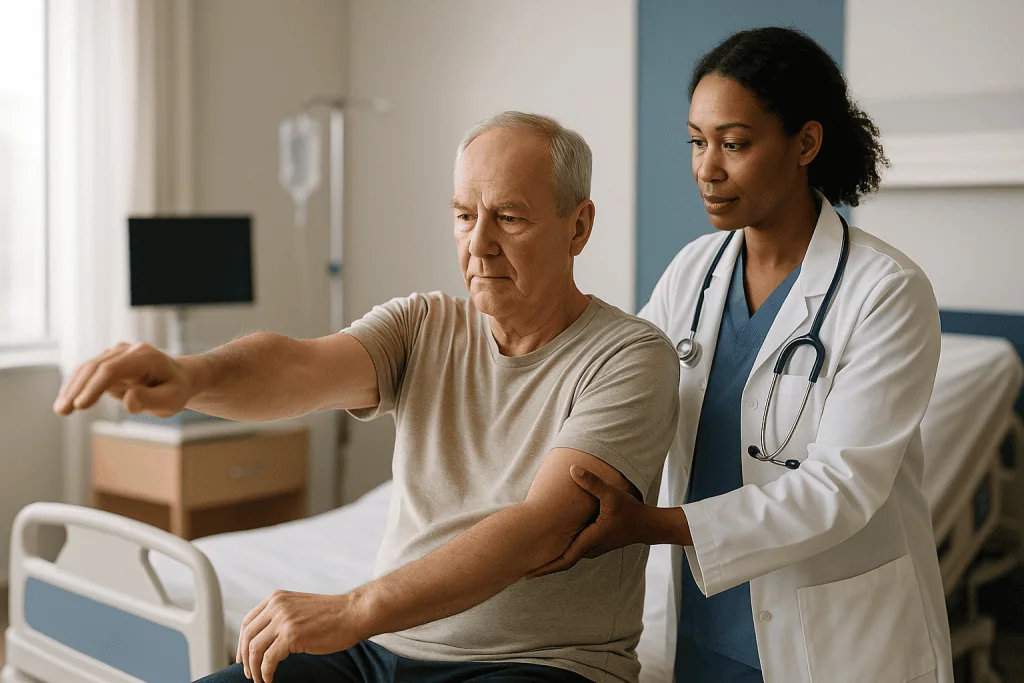
Sooner than most families expect. The NHS advises that rehabilitation begins as soon as a person is medically stable, often while they are still on the acute stroke unit. In practice that can mean a physiotherapist helping someone sit on the edge of the bed within the first day or two, or a speech and language therapist checking swallowing before the first sip of water.
That swallow check deserves emphasis. The AHA/ASA guideline recommends screening for swallowing difficulty before any food, drink or oral medication is given, because a weakened swallow can let liquid slip into the lungs and cause pneumonia. It is one of the least visible parts of early rehabilitation and one of the most protective.
Early does not mean frantic. The same guideline notes that very high-dose, very early mobilization within the first 24 hours was not shown to help in a large trial and may be harmful for some people, so teams aim for early but measured activity: short, frequent sessions rather than a marathon on day one.
A typical early sequence looks like this. Nurses and therapists assess sitting balance, arm and leg strength, speech, swallowing and awareness of the affected side. A rehabilitation plan is drafted with goals the person actually cares about, such as getting to the bathroom independently or being able to say a grandchild’s name. Sessions begin, usually daily, and the plan is revised as abilities change. The Mayo Clinic notes that the priorities in this window are preventing complications, including pressure sores, contractures, falls and a second stroke, while getting the relearning process under way.
Who is stroke rehab usually for, and who is asked to wait?
Almost everyone who survives a stroke is offered some form of rehabilitation, from a single session of advice for someone with minimal symptoms to months of intensive inpatient care for someone with severe weakness. The question is rarely whether, but how much, where and when.
People who benefit most from an intensive inpatient program are typically those who have meaningful deficits, can tolerate several hours of therapy a day, and have a realistic prospect of returning home with the right support. The AHA/ASA guideline recommends that stroke survivors who qualify for inpatient rehabilitation receive it in a dedicated rehabilitation facility rather than a general nursing setting where possible, because coordinated, higher-intensity care in that setting is associated with better functional outcomes.
Some people are asked to wait, or to start gently, for good reasons:
- Blood pressure, heart rhythm or blood sugar is not yet stable enough for exertion.
- A bleed in the brain is still being monitored and the team wants to limit strain.
- The person is too drowsy or confused to participate safely in active therapy.
- Pneumonia or another infection needs treating first.
Waiting in these cases is not neglect. Passive measures still run in the background: positioning to protect the shoulder, gentle range-of-motion exercises, turning to prevent pressure injuries and swallow precautions. Age alone is not a reason to withhold rehabilitation; the guideline is clear that older adults can and do make functional gains. The decision about intensity and setting sits with the treating team, who weigh medical stability, stamina, cognition and the support available at home.
Where does rehab happen? Inpatient, outpatient and home settings compared
Rehabilitation is not one place. Most people move through two or three settings, and the right one depends on how much help is needed and how much the person can tolerate. The table below summarizes the common options described by the National Library of Medicine and the Mayo Clinic.
| Setting | Who it usually suits | Typical intensity | What it looks like |
|---|---|---|---|
| Acute stroke unit | Everyone in the first days | Short, frequent sessions | Assessment, swallow screening, early sitting and standing, complication prevention |
| Inpatient rehabilitation facility | Significant deficits, able to tolerate intensive therapy | Around 3 hours of therapy on most days, per the AHA/ASA guideline description of these units | Live-in program with daily physical, occupational and speech therapy and 24-hour nursing |
| Skilled nursing or subacute unit | Needs nursing care but cannot yet manage intensive therapy | Lower, paced to stamina | Therapy several times a week alongside nursing support |
| Outpatient clinic | Living at home, able to travel | Sessions one or more times a week | Targeted work on walking, arm function, speech or cognition |
| Home-based rehabilitation | Home is safe and the person cannot easily travel | Varies | Therapists visit and practice tasks in the real kitchen, bathroom and stairs |
Home-based programs have an underrated advantage: the environment is the one that matters. Learning to make tea on your own stove, with your own kettle at your own counter height, transfers directly to daily life in a way that a clinic mock-up cannot fully replicate. The trade-off is less equipment and fewer hours. Many teams blend settings, starting in an inpatient unit and stepping down to outpatient or home visits as independence grows.
Physical therapy after stroke: walking, balance and the affected arm
Physical therapy, called physiotherapy in the UK, is the strand most people picture. It begins with the unglamorous fundamentals: rolling in bed, sitting up without toppling, standing with support, transferring from bed to chair. Each is a skill in its own right when one side of the body is weak and the brain is unsure where that side is in space.
Walking retraining follows, and it is rarely just walking. Therapists work on weight-shift, stepping, stair practice and the ability to turn without losing balance. Some centers use treadmills with body-weight support harnesses; the AHA/ASA guideline notes these are reasonable options but not shown to be superior to well-structured over-ground practice. The common thread across approaches is repetition: many hundreds of steps, many times a week.
The arm is often slower than the leg, and therapy targets it deliberately. Two approaches with supportive evidence in the guideline are:
- Task-specific training, where the person practices reaching for a cup, turning a key or buttoning a shirt rather than lifting weights in isolation.
- Constraint-induced movement therapy, where the stronger arm is deliberately restricted for set periods so the weaker one is forced to work. It suits people who already have some hand and wrist movement.
Mirror therapy, in which the person watches the reflection of the unaffected hand moving so the brain is tricked into seeing the weak hand move, is also listed as a reasonable adjunct. Spasticity, meaning involuntary muscle tightness, is managed with stretching, positioning and splints; where medicines are used to relax specific muscles, that decision belongs to the prescribing clinician, not the therapist. Preventing falls threads through everything: the guideline recommends a formal fall-prevention program for every stroke survivor because the risk is high in the first year.
Occupational therapy: getting dressed, cooking and getting your life back
If physical therapy asks whether you can stand, occupational therapy asks whether you can stand at the sink long enough to wash the dishes. The word occupational confuses people; it refers to the occupations of daily life, not to a job, although returning to work is part of the remit for those who want it.
The early work is on what clinicians call activities of daily living: bathing, dressing, toileting, grooming and eating. An occupational therapist might teach a one-handed technique for putting on a shirt, recommend a long-handled sponge, or fit a raised toilet seat. Later comes the harder tier, sometimes called instrumental activities: cooking a meal safely, managing medication routines, using a phone, handling money, shopping.
Much of this is problem-solving rather than exercise. The National Library of Medicine describes occupational therapists as specialists in adapting tasks and environments so people can do them with the abilities they have now. That might mean reorganizing a kitchen so everything is within reach of the stronger hand, or breaking a recipe into a checklist for someone whose sequencing has been affected.
Occupational therapists also assess a phenomenon called neglect, where the brain ignores one side of space; a person may leave the left half of a plate untouched or bump into doorframes on that side. Scanning training and cues placed on the neglected side help the brain attend to it again.
Driving and work are recurring questions. Both are assessed rather than assumed. The NHS notes that returning to driving after stroke depends on the type of stroke, remaining deficits and local licensing rules, and that a formal driving assessment may be needed. Work return is planned in stages, often with graded hours and adjusted duties. The therapist’s job is to be honest about what is realistic and creative about how to get there.
Speech and language therapy: aphasia, slurred speech and swallowing
Losing words is one of the most frightening consequences of stroke, and it takes more than one form. Aphasia is a language disorder: the machinery of speech is intact but the brain struggles to find words, build sentences or understand what is said. Dysarthria is different; the language is there but the muscles of the mouth and throat are weak, so speech is slurred or quiet. Apraxia of speech is a third problem, where the brain cannot plan the movements needed to say a word even though the muscles work.
The NHS describes aphasia as common after stroke and notes that it can affect speaking, understanding, reading and writing to different degrees in the same person. Someone may understand everything but produce only a few words; another may speak fluently but in sentences that do not make sense.
Therapy is tailored to the pattern. It can include naming drills, sentence-building practice, conversation training with a partner, and training in alternative means of communication such as gesture, writing, picture boards or communication apps. The AHA/ASA guideline recommends speech and language therapy for people with aphasia and notes that more intensive treatment, where tolerated, appears to yield larger gains than sparse sessions. Family members are often taught how to support conversation: slowing down, asking yes-or-no questions, allowing silence rather than finishing sentences.
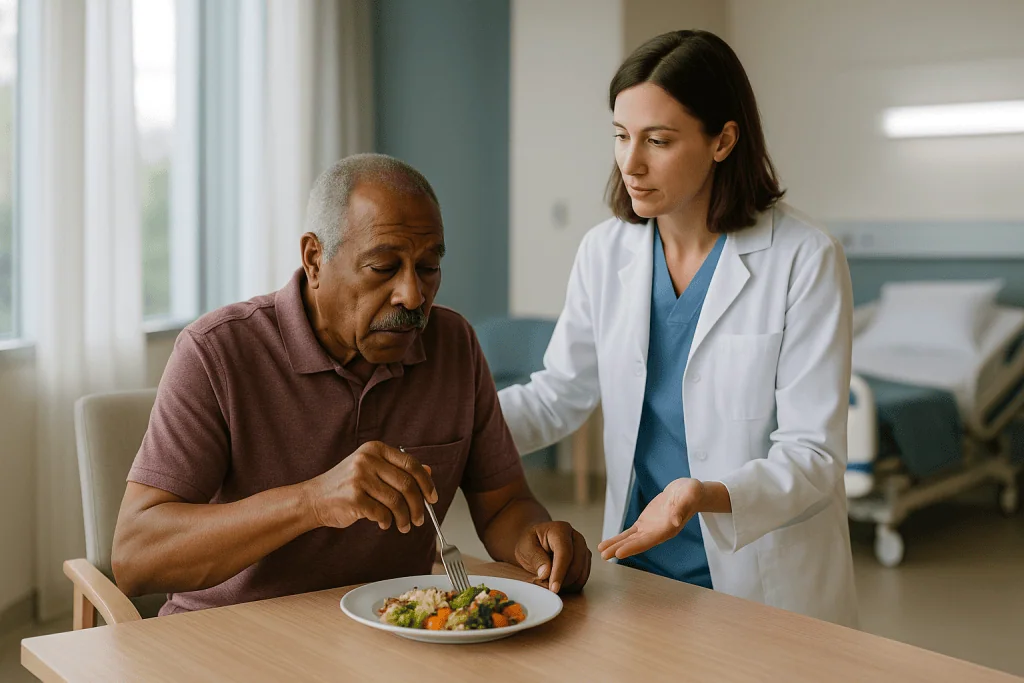
Swallowing sits in the same department because the same nerves and muscles are involved. Dysphagia, meaning difficulty swallowing, can lead to choking, dehydration, malnutrition and aspiration pneumonia. Therapists assess it at the bedside and sometimes with an X-ray or camera study, then prescribe texture-modified foods, thickened liquids, specific head positions or strengthening exercises. Many people move from a modified diet back toward normal textures as recovery progresses, always on the therapist’s reassessment rather than on a guess.
Cognitive rehabilitation after stroke: memory, attention and planning
Cognition is the thinking part of the brain’s work: paying attention, remembering, planning, judging and solving problems. Stroke can dent any of these, and the effects are often invisible to visitors who see someone walking and talking normally. The person themselves knows. They lose the thread of a television program, forget whether they took their tablets, or cannot work out the steps to make a sandwich.
The Mayo Clinic lists cognitive therapy as a core component of stroke rehabilitation, and the AHA/ASA guideline recommends cognitive rehabilitation for people with attention, memory and executive-function difficulties. Executive function is the umbrella term for planning, organizing and shifting between tasks; it is what lets you cook two dishes at once and still answer the door.
Approaches fall into two broad families:
- Restorative strategies try to rebuild the skill itself through graded exercises, such as attention drills that gradually add distraction, or memory tasks that lengthen over time.
- Compensatory strategies work around the gap: calendars, alarms, labeled cupboards, checklists, a fixed place for keys and a notebook that travels everywhere.
In practice therapists blend both, and the evidence favors training that is tied to real tasks over abstract puzzles. Learning to use a phone reminder for medication is more useful than improving a score on a memory game.
Two related problems deserve a mention. Neglect, already described, is partly a cognitive attention problem. And emotional lability, where a person laughs or cries suddenly without feeling the corresponding emotion, is a neurological effect rather than a sign of instability; understanding that alone reduces distress for families. Cognitive rehabilitation is often the strand that continues longest, because these skills are tested most once a person is home and the world stops making allowances.
What do the first days and weeks of stroke rehabilitation involve?
The first week is about assessment and stability. Expect therapists from each discipline to run through structured tests: how long you can sit unsupported, whether you can lift the affected arm against gravity, how you swallow a spoonful of puree, whether you can name pictures and follow two-step instructions. The results become the baseline against which everything is measured.
Goals are set with you, not for you. Good teams write them in plain language, for example, walk to the bathroom with a frame within two weeks, rather than in clinical scores. Sessions start short and frequent, because fatigue after stroke is profound and a tired brain learns poorly.
Weeks two to six, whether in an inpatient unit or at home with visiting therapists, are when the pace picks up. Johns Hopkins describes this period as one of the most active for recovery because the brain’s natural healing, sometimes called spontaneous recovery, overlaps with the effect of therapy. Standing becomes stepping; stepping becomes walking with an aid; single words become short phrases. Family members are drawn in and taught how to help with transfers, communication and exercises between sessions.
Discharge planning starts early. Before someone leaves an inpatient unit, an occupational therapist often visits the home or asks detailed questions about it: number of steps at the entrance, bathroom layout, whether the bedroom is upstairs. Equipment is ordered, and a follow-up program in an outpatient clinic or at home is arranged so there is no gap.
Medication review runs alongside. Most people leave hospital on treatments to lower the risk of another stroke, typically medicines that reduce clotting, lower blood pressure or lower cholesterol, depending on the type of stroke. Their purpose is prevention rather than recovery, and any change to them is a decision for the prescribing clinician.
How long does stroke rehabilitation take?
This is the question families most want answered and the one clinicians are most careful about, because the honest reply is a range shaped by the size and location of the stroke, the person’s age and health, and how much therapy they can access and tolerate.
The pattern is reasonably consistent even when the pace is not. Johns Hopkins summarizes it this way: the fastest gains usually happen in the first three months after a stroke, recovery generally continues but more slowly through about six months, and slower improvement can still occur beyond that, particularly with continued practice. The Mayo Clinic makes the same point and notes that duration of rehabilitation depends on the severity of the stroke and the complications that follow.
Inpatient stays vary widely. Some people need a few days on a stroke unit and go home with outpatient follow-up; others spend several weeks in an intensive rehabilitation facility. Outpatient and community therapy commonly runs for months. Cognitive and communication work often continues longest, because those skills are tested most heavily once a person returns to work, family responsibilities or social life.
Two ideas help make sense of the timeline. First, recovery is not linear. Plateaus are normal and do not mean the end of improvement; they often precede a fresh gain. Second, the closing of the early window does not close the door. The brain remains capable of change, and people who keep practicing skills at home continue to see functional improvements well after formal therapy ends. That is why teams increasingly hand over a self-directed program rather than simply saying goodbye.
Ask your team what they expect for your situation, and expect them to answer in ranges and probabilities rather than promises. A team that will not put a firm number on it is being accurate, not evasive.
Stroke rehab exercises at home: what continues after discharge
Formal therapy is measured in hours a week. Recovery is measured in the thousands of repetitions that happen between those hours, and most of them take place at home. Home practice is where the gains from clinic sessions are consolidated or lost.
Therapists typically send people home with a written or illustrated program. It usually blends the disciplines: a sit-to-stand routine from the physiotherapist, a reaching-and-grasping task from the occupational therapist using household objects, a naming or reading exercise from the speech therapist and a memory-strategy habit from cognitive rehabilitation. The National Library of Medicine notes that continuing exercises and skills practice at home is a standard part of recovery, and the AHA/ASA guideline supports task-specific practice and encourages ongoing physical activity for stroke survivors within their capabilities.
Some principles matter more than any specific exercise:
- Frequency beats duration. Three ten-minute sessions across a day are generally kinder to a fatigued brain than one thirty-minute push.
- Practice the real task. Stacking actual plates trains the arm better than lifting a weight, and it also gets the plates put away.
- Use the affected side deliberately. It is tempting to let the strong hand do everything; that habit, sometimes called learned non-use, slows recovery.
- Safety first. Practice standing and walking exercises near a stable surface, with someone present if balance is uncertain.
Home practice should follow the therapist’s program, not a generic video. Exercises that suit one person’s deficit can be unhelpful or unsafe for another’s, particularly where balance, shoulder pain or swallowing is involved. If an exercise causes new pain, dizziness or a sharp increase in tightness, stop and tell the team. Re-checks at outpatient visits let the therapist adjust the program as abilities change, which is exactly what should happen.
Mood, fatigue and the parts of recovery nobody puts on the timetable
Ask stroke survivors a year on what was hardest, and many do not mention the walking. They mention the tiredness that arrived like weather and the flatness that made them stop answering the phone.
Post-stroke fatigue is a specific, well-recognized problem, different from ordinary tiredness in that rest does not fully relieve it. The NHS describes it as very common and notes that it can persist for months. It matters for rehabilitation because a tired brain learns poorly, so therapists deliberately schedule rest and teach energy pacing: doing the most demanding tasks at the time of day when energy is highest, and stopping before exhaustion rather than after.
Depression is common too. The AHA/ASA guideline reports that roughly one in three stroke survivors experience depression at some point after the event, and recommends routine screening because it is both treatable and, left alone, associated with slower functional recovery. Anxiety, particularly a fear of another stroke, is also frequent. Treatment can involve talking therapies, structured activity, peer support and, where a clinician judges it appropriate, antidepressant medication; the choice is individual and made with the prescribing doctor.
Families carry their own load. Caregivers often report stress, disrupted sleep and their own low mood, and the guideline explicitly recommends that education and support be offered to them as well as to the person who had the stroke. Rehabilitation that ignores the household usually falters when the household runs out of reserve.
Then there is identity. People describe grief for the version of themselves that existed before, and a slow negotiation with the new one. Good rehabilitation teams make space for that conversation. It is not a distraction from therapy; for many people it is the thing that lets therapy continue.
What people often get wrong about stroke rehabilitation
Several beliefs about stroke recovery circulate widely and quietly do harm. Here are the ones clinicians hear most, and what the evidence actually shows.
Recovery stops at six months. The steepest gains do cluster in the first three to six months, as Johns Hopkins and the Mayo Clinic describe, but improvement does not switch off at a calendar point. Functional gains continue with practice, especially in communication, cognition and arm use. The six-month figure describes a slowing, not a wall.
Rest is the best medicine. After the very first day or two, the opposite is closer to the truth. Bed rest invites pressure injuries, clots, contractures and deconditioning, and it gives the brain nothing to relearn from. Early, measured activity is the guideline standard.
If the arm has not moved by now, it never will. The arm often lags the leg, and some hand recovery emerges late. Even where full movement does not return, occupational therapy can restore a great deal of function through adapted technique and equipment.
Slurred speech means confusion. Dysarthria affects the muscles of speech, not the mind. Many people with unclear speech understand every word said to them, and being spoken to as if they do not is a common and painful experience.
A device, supplement or app will do the work. Robotic trainers, electrical stimulation and virtual reality appear in the AHA/ASA guideline as reasonable adjuncts in certain circumstances, not as replacements for task practice. No supplement has robust evidence for restoring function after stroke. Anything marketed as a breakthrough should be discussed with the team before money or hope is spent on it.
The therapist does the recovering. Therapists design and coach. The repetitions that rewire the brain happen mostly when the therapist is not in the room.
Questions to ask your care team about stroke rehabilitation
Rehabilitation goes better when the person and family understand the plan and feel able to question it. These are the questions that tend to unlock the most useful conversations. Take them written down; post-stroke fatigue and a busy ward are not friends to memory.
- What has the stroke affected, in plain words, and which of those problems is therapy targeting first?
- What are my goals for the next two weeks, and how will we know if we are on track?
- Which setting do you recommend after this one, and why that rather than the alternatives?
- How many therapy sessions a week should I expect, and from which disciplines?
- Is my swallow safe for normal food and drink, and when will it be reassessed?
- What should I be practicing between sessions, and what should I avoid?
- Who is my main point of contact if something changes at home?
- What are the signs that something is wrong, and who do I call, day and night?
- When will driving, work or travel be assessed, and what does that assessment involve?
- What does each of my medicines do, and who reviews them?
- Is there screening for mood and fatigue, and what support exists for my family?
- What happens when formal therapy ends, and how do I keep progressing?
It is also fair to ask about the evidence behind a recommended treatment, particularly for newer technologies. A confident team will explain what is well established, what is promising and what is still being studied, using the same graded language a guideline would. If an answer feels vague, ask for it again in a different form. Understanding the reasoning is not a courtesy; it is part of the therapy, because people who grasp why they are doing an exercise do more of it.
When to call your doctor during stroke recovery
Rehabilitation is a period of steady work punctuated by moments when something needs urgent attention. Knowing which is which protects both safety and peace of mind.
Call emergency services immediately if any of the following appear, because they can signal another stroke and treatment is time-critical. The CDC and the American Heart Association summarize them with the FAST reminder:
- Face drooping on one side, or a new lopsided smile.
- Arm weakness or numbness, especially new or worse on one side.
- Speech that is suddenly slurred, jumbled or absent, or new trouble understanding.
- Time to call: note when symptoms began and do not wait to see if they pass.
Sudden severe headache, sudden loss of vision or double vision, sudden dizziness with loss of balance, or a seizure also warrant an emergency call.
Contact your care team the same day for: coughing or choking during meals, a wet-sounding voice after swallowing, fever or a new cough, which can signal aspiration pneumonia; new calf pain, swelling or warmth in one leg, or sudden breathlessness or chest pain, which can signal a blood clot; a fall, even without obvious injury; a new pressure sore or skin breakdown; new shoulder pain in the affected arm; a sharp increase in spasticity; or a sudden drop in the ability to do something you could manage yesterday.
Raise at your next appointment, or sooner if it is worsening: persistent low mood, loss of interest, hopelessness or thoughts of self-harm, which should be treated as urgent; unmanageable fatigue; sleep problems; bladder or bowel changes; or side effects from medicines. Do not stop or adjust any prescribed medicine without speaking to the prescribing clinician, including the medicines that lower the risk of another stroke.
Recovery after stroke is a team effort, and the team includes you. Reporting a change promptly is not fussing; it is often the single most useful thing a person or family can do.
Frequently asked questions
What does stroke rehabilitation involve on a typical day?
A typical inpatient day includes separate sessions with physical, occupational and speech therapists, each around 45 to 60 minutes, interspersed with rest, meals supervised for swallow safety and nursing care. The AHA/ASA guideline describes intensive rehabilitation units as providing roughly three hours of therapy on most days. Outpatient days are lighter, with one or two sessions and home practice in between.
How long does stroke rehabilitation take for most people?
There is no single answer, but the pattern is consistent. Johns Hopkins describes the most rapid gains in the first three months, continued but slower recovery through about six months, and further improvement possible after that with ongoing practice. Duration depends on stroke severity, complications, health and access to therapy, so ask your team for a range specific to your situation.
What are the main types of stroke rehabilitation therapy?
The four core types are physical therapy for movement, balance and walking; occupational therapy for daily tasks such as dressing, cooking and returning to work; speech and language therapy for communication and swallowing; and cognitive rehabilitation for memory, attention and planning. Psychological support, nursing, dietetics and social work wrap around these to address mood, nutrition and discharge planning.
What is cognitive rehabilitation after stroke and who provides it?
Cognitive rehabilitation targets thinking skills damaged by stroke: attention, memory, planning and problem-solving. It is usually delivered by occupational therapists, speech and language therapists or neuropsychologists. It blends exercises that try to rebuild the skill with strategies that work around it, such as calendars, alarms and checklists, and the AHA/ASA guideline recommends it for people with these difficulties.
Can I do stroke rehab exercises at home on my own?
Yes, and home practice is a standard part of recovery, but it should follow the program your therapists give you rather than a generic online routine. Exercises that help one person’s deficit may be unsafe for another’s, particularly where balance, shoulder pain or swallowing is involved. Practice near stable support, stop if new pain or dizziness appears, and report changes at follow-up visits.
Does stroke rehabilitation still help after six months?
It can. The six-month mark describes a slowing of the brain’s natural recovery, not an end point. Johns Hopkins notes that improvement can continue beyond six months, particularly in communication, cognition and arm function, when people keep practicing. Later therapy often focuses on refining skills, adapting to remaining deficits and returning to specific goals such as work or driving.
Why do I feel so exhausted during stroke recovery?
Post-stroke fatigue is a recognized neurological effect, distinct from ordinary tiredness in that rest does not fully relieve it. The NHS describes it as very common and sometimes lasting for months. Therapists respond by pacing sessions, scheduling demanding tasks when energy is highest and teaching energy conservation. Persistent fatigue is worth raising with your team, as sleep problems, mood and medicines can contribute.
Will speech come back after a stroke?
Many people regain some or much of their communication, but the amount and speed vary with the type and size of the stroke. Speech and language therapy is recommended by the AHA/ASA guideline for aphasia, and more intensive therapy appears to produce larger gains where tolerated. Where words remain difficult, therapy also teaches alternative methods such as gesture, writing and communication aids.
When can I drive or return to work after a stroke?
Both are assessed rather than assumed. The NHS notes that returning to driving depends on the type of stroke, remaining physical, visual and cognitive deficits and local licensing rules, and may require a formal driving assessment. Return to work is usually planned in stages with an occupational therapist, often with graded hours and adjusted duties, and the timing is set with your treating team.
What is the difference between physical therapy and occupational therapy after stroke?
Physical therapy focuses on movement itself: strength, balance, transfers and walking. Occupational therapy focuses on using movement for real tasks: dressing, bathing, cooking, managing money and returning to work or hobbies. The two overlap and coordinate closely. A physiotherapist might work on standing balance while an occupational therapist uses that balance to practice washing at the sink.
References
- MedlinePlus: Stroke Rehabilitation
- NHS: Stroke, Recovery
- Guidelines for Adult Stroke Rehabilitation and Recovery, AHA/ASA (PubMed)
This article is for general information only and is not a substitute for professional medical advice. Please consult a qualified doctor about your individual situation.

More from the Blog
Physical Therapy Myths: No Pain No Gain, Machines Do the Work and Other Misconceptions
Physical therapy myths often come from a kernel of truth stretched too far. Some effort and mild, short-lived soreness can be part of rehabilitation,…
Magnifiers, Lighting and Electronic Aids: How Vision Rehabilitation Training Works
Low vision aids training is a rehabilitation program that teaches people with permanent, uncorrectable vision loss to use magnifiers, task lighting, contrast changes and…
What a Brain Injury Rehabilitation Program Covers: Movement, Thinking, Speech and Daily Skills
A brain injury rehabilitation program is a coordinated course of therapy that helps a person relearn movement, thinking, communication and everyday skills after a…
Daily Residual Limb Care During Amputee Rehabilitation: Skin Checks, Compression and Liners
Residual limb care during amputee rehabilitation means checking the skin of the remaining limb at least twice a day (a mirror helps for the…

Sore After Therapeutic Exercise? Normal Muscle Ache vs Pain That Means the Plan Needs Changing
Mild, symmetrical muscle ache that starts 12 to 24 hours after a rehab session, peaks within about three days and eases with gentle movement…
Amputee Rehabilitation Stages: Wound Healing, Limb Shaping, Prosthetic Fitting and Walking
Amputee rehabilitation usually moves through overlapping stages: wound healing in the first weeks, shaping the residual limb with compression, a prosthetic fitting once the…