Stroke Rehabilitation
Stroke rehabilitation is a coordinated program of physical, occupational, speech, and cognitive therapy that helps people recover function after an ischemic or hemorrhagic stroke. It typically begins in the hospital and may…
Quick answer
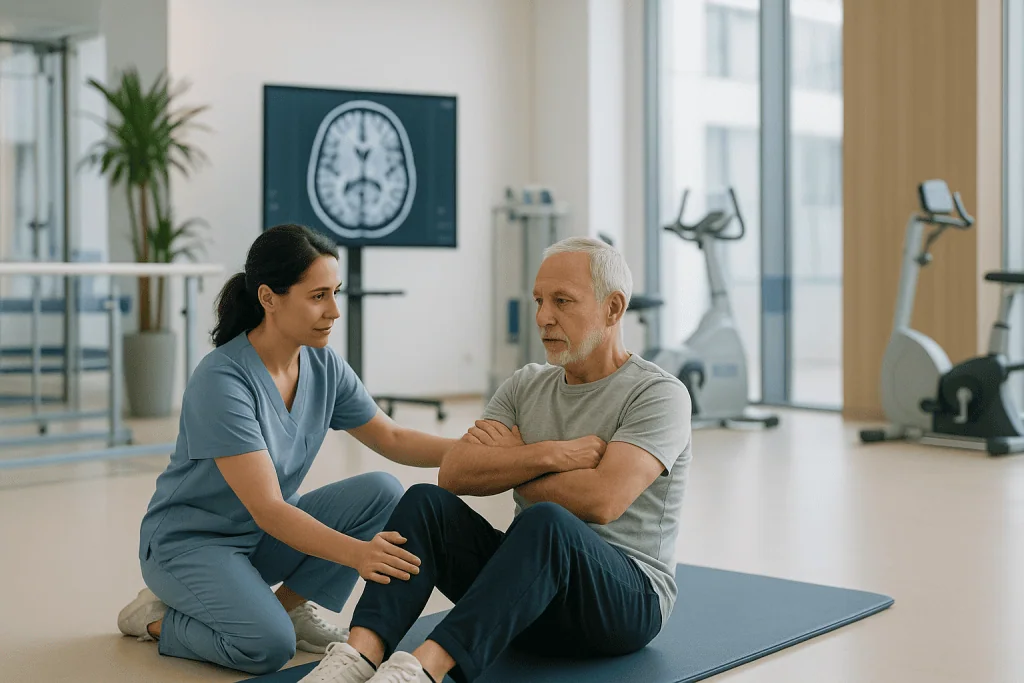
Stroke rehabilitation is a structured therapy program that helps people regain movement, speech, swallowing, thinking, and daily-living skills after a stroke. It typically starts in the hospital once the patient is stable, involves physical, occupational, and speech therapists, and continues for weeks to months, with the fastest gains usually seen in the first three months.
What is stroke rehabilitation?
Stroke rehabilitation is a structured program of therapy that helps people regain skills lost after a stroke. A stroke happens when blood flow to part of the brain is cut off, either by a blocked blood vessel (ischemic stroke) or by bleeding into or around the brain (hemorrhagic stroke). Brain cells in the affected area are damaged, and the abilities they controlled, such as moving an arm, speaking clearly, or swallowing, may be weakened or lost.
Rehabilitation for stroke recovery does not repair the damaged brain tissue directly. Instead, it uses repeated, goal-directed practice to encourage the brain to reorganize itself. This ability of the brain to form new connections is called neuroplasticity. Through therapy, healthy areas of the brain can, in many cases, take over some functions of the injured areas, and the person can also learn new ways of doing everyday tasks.
Post stroke rehabilitation is used after both ischemic and hemorrhagic strokes. It is also used after a transient ischemic attack (a "mini-stroke" with temporary symptoms) when lingering weakness or balance problems remain. The program is usually delivered by a team that may include a rehabilitation physician (a doctor specializing in physical medicine and rehabilitation), physical therapists, occupational therapists, speech and language therapists, rehabilitation nurses, dietitians, psychologists, and social workers. In many hospital groups, including Acibadem, this care is coordinated by the Physical Medicine & Rehabilitation department.
Who is a candidate
Most people who have had a stroke and have any lasting difficulty are considered for stroke rehabilitation. Common problems that rehabilitation addresses include:
- Weakness or paralysis on one side of the body (hemiparesis or hemiplegia)
- Poor balance, difficulty walking, or a high risk of falls
- Problems with speech and understanding language (aphasia)
- Slurred speech caused by weak facial or mouth muscles (dysarthria)
- Difficulty swallowing (dysphagia)
- Trouble with memory, attention, or planning
- Loss of sensation, vision changes, or neglect of one side of the body
- Difficulty with daily tasks such as dressing, bathing, cooking, or handling money
- Mood changes, including depression and anxiety, which are common after stroke
Age alone does not rule anyone out. Older adults and people with other medical conditions can often benefit, although goals may be adapted. Rehabilitation is also relevant for people with mild strokes who look fully recovered but notice subtle problems with fatigue, concentration, or fine hand movements.
There are situations in which formal rehabilitation is not yet suitable or must be modified. Therapy is usually delayed while a person is medically unstable, for example with uncontrolled blood pressure, an irregular heart rhythm that has not been treated, an active infection, or ongoing bleeding in the brain. People who are unconscious or unable to follow simple instructions may receive passive treatment, such as positioning and gentle joint movement, until they can take part more actively. In a small number of cases, when a stroke is very severe, the care team may focus on comfort and supportive care rather than intensive therapy, and this decision is made together with the family.
How the procedure works
Stroke rehabilitation is not a single procedure but a process that unfolds over weeks to months. It generally has three phases.
Before rehabilitation begins
Rehabilitation typically starts in the hospital, often within the first one to two days after a stroke, once the person is medically stable. The rehabilitation physician and therapists carry out an assessment. This includes checking muscle strength, sensation, balance, speech, swallowing, thinking skills, and the ability to perform basic self-care. The team then sets goals with the patient and family. Goals are specific and practical, such as sitting up without help, walking to the bathroom, or being able to eat a normal meal safely.
During the active rehabilitation phase
Therapy sessions are scheduled several times a day in inpatient stroke rehabilitation, or several times a week in an outpatient program. The main types of therapy are:
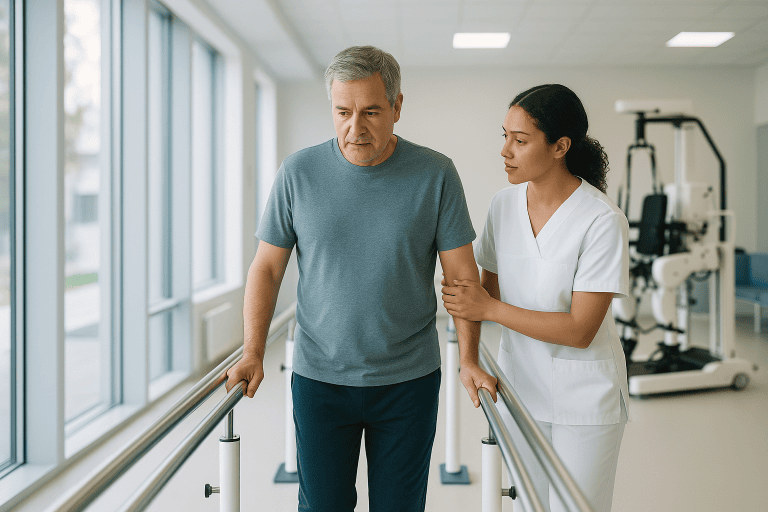
- Stroke physical rehabilitation (physical therapy): works on strength, range of motion, balance, sitting, standing, and walking. Therapists may use parallel bars, treadmills with body-weight support, and simple resistance equipment.
- Occupational therapy: focuses on daily living skills such as dressing, washing, cooking, and using the affected hand. It may include adaptive equipment such as a long-handled sponge or a modified fork.
- Speech and language therapy: addresses aphasia, dysarthria, and swallowing difficulties. Swallowing therapy may include changes in food texture and exercises for the throat muscles.
- Cognitive rehabilitation: uses exercises and strategies to improve memory, attention, and problem-solving.
- Psychological support: helps with mood, motivation, and adjustment to life changes.
Some centers also use technology such as robotic arm or leg trainers, electrical stimulation of weak muscles, virtual reality games, and mirror therapy. The evidence for these tools is still developing; they are generally used alongside, not instead of, hands-on therapy.
After the intensive phase
When goals are met or progress plateaus, the person moves to a less intensive setting. This may be an outpatient clinic, therapy at home, or a community program. A home exercise plan and regular reviews with the rehabilitation team help maintain gains. Stroke recovery continues for a long time, so the plan is adjusted as needs change.
Preparation for stroke rehabilitation
Because rehabilitation usually begins in the hospital soon after the stroke, there is little formal preparation for the first sessions. However, several practical steps help the process go smoothly:
- Bring or arrange comfortable, loose clothing and flat, well-fitting shoes with non-slip soles.
- Make sure glasses, hearing aids, and dentures are available, as they affect how well a person can take part in therapy.
- Share a full list of medications, allergies, and other health conditions with the team.
- Tell the therapists about the person's usual daily routine, work, hobbies, and home layout (stairs, bathroom access), so goals reflect real life.
- Identify a family member or friend who can attend some sessions and learn how to help safely at home.
- Ask about the daily schedule and rest periods; fatigue is very common after stroke and sessions are planned around it.
If a person is moving to a dedicated inpatient rehabilitation unit or a private stroke rehabilitation program, the referring hospital typically sends medical records, brain imaging, and a summary of current abilities. Confirming insurance coverage or funding arrangements before transfer can prevent interruptions in care.
Recovery and aftercare
The stroke recovery timeline varies widely from person to person. It depends on the size and location of the stroke, age, general health, and how early and how intensively rehabilitation starts. General patterns that clinicians often describe include:
- First days to weeks: the brain is recovering from swelling and shock. Some functions return spontaneously during this period, and early mobilization helps prevent complications such as pressure sores and blood clots.
- First three months: this is typically the period of fastest improvement, and most intensive therapy is concentrated here.
- Three to six months: gains often continue but usually at a slower rate. Many patients transition from inpatient to outpatient or home-based therapy in this window.
- Beyond six months: improvement can still occur, especially with continued practice, although progress is usually more gradual. Some people continue to gain skills for years.
Aftercare focuses on keeping what has been gained and preventing another stroke. This typically includes:
- Following a home program of stroke rehabilitation exercises taught by the therapists, usually daily
- Taking prescribed medications for blood pressure, cholesterol, diabetes, or blood thinning exactly as directed
- Attending follow-up appointments with the neurologist and rehabilitation physician
- Managing risk factors: not smoking, limiting alcohol, eating a balanced diet, and being as physically active as safely possible
- Watching for mood changes and asking for help if sadness, anxiety, or loss of interest persists
- Using prescribed aids, such as an ankle brace, cane, or communication device, until the team advises otherwise
Returning to work, driving, and other activities is decided case by case. Driving after a stroke usually requires medical clearance and, in many places, a formal assessment, because vision, reaction time, and judgment can be affected without the person being fully aware of it.
Risks and side effects
Stroke rehabilitation is generally considered safe, and the risks of not doing it, such as stiff joints, muscle wasting, falls, and loss of independence, are usually greater than the risks of therapy. Nonetheless, some problems can occur:
- Falls: the most common risk during balance and walking training. Therapists use gait belts, rails, and supervision to reduce this.
- Muscle or joint soreness: mild aching after sessions is expected. Shoulder pain on the weak side is common after stroke and can be aggravated by improper lifting or positioning.
- Fatigue: post-stroke fatigue can be intense. Overexertion may temporarily worsen weakness or concentration.
- Spasticity: increased muscle tightness that develops over weeks. It is a consequence of the stroke rather than of therapy, but it can interfere with exercises and may need medication or injections.
- Choking or aspiration: a risk during swallowing therapy if recommendations about food texture are not followed. Aspiration (food or liquid entering the lungs) can cause pneumonia.
- Skin irritation: from braces, electrical stimulation pads, or prolonged sitting.
- Emotional distress: confronting lost abilities can be discouraging. Depression after stroke is common and treatable.
Rare complications include cardiovascular events during exertion, which is why heart rate and blood pressure are monitored, particularly early on and in people with known heart disease.
Results and outlook
The overall evidence supports organized, multidisciplinary stroke rehabilitation. Studies consistently show that people who receive coordinated care from a stroke rehabilitation team are more likely to survive, regain independence, and return home than those who do not. Starting rehabilitation early, once the person is medically stable, and providing enough repetition of meaningful tasks appear to be key factors.
What individuals achieve varies. Some people recover nearly all function, particularly after smaller strokes. Others regain the ability to walk with a cane or manage self-care but keep some weakness or speech difficulty. A smaller group remains dependent on others for most daily activities. Recovery of walking is often more complete than recovery of fine hand movement, and language can continue to improve for a long time with practice.
Rehabilitation cannot promise a return to exactly the way things were before. Its realistic aim is to maximize independence, safety, and quality of life, and to help the person and family adapt. Many patients report that structured therapy gives them a sense of progress and control during a difficult time, even when some deficits remain.
Cost considerations
The cost of stroke rehabilitation varies considerably and is influenced mainly by the following factors:
- Setting and length of stay: inpatient stroke rehabilitation, with a room, nursing care, and multiple therapy sessions per day, generally costs more than outpatient or home-based therapy. The number of weeks needed is often the largest driver.
- Intensity and number of disciplines involved: programs that combine physical, occupational, speech, and cognitive therapy involve more professional time than a single type of therapy.
- Equipment and devices: braces, wheelchairs, walking aids, communication devices, and access to robotic or electrical stimulation equipment add to the cost. Some items are one-time purchases; others are rented.
- Medical management: ongoing medications, imaging, and treatment of complications such as spasticity or pneumonia are usually billed separately.
- Follow-up and maintenance therapy: reviews, periodic therapy blocks, and home visits continue for months and can be an ongoing expense.
- Private versus public provision: private stroke rehabilitation may offer more scheduling flexibility or single rooms, and costs and insurance coverage differ from publicly funded programs.
Patients and families are usually advised to ask the hospital's finance or patient services office for a written estimate that lists what is included and to clarify with their insurer which components are covered.
Frequently asked questions
When should stroke rehabilitation start?
Rehabilitation usually begins in the hospital within the first one to two days after a stroke, as soon as the person is medically stable. Early activity, even just sitting up and moving in bed with help, reduces complications and takes advantage of the period when the brain is most responsive. The exact timing is decided by the medical team, who weigh the benefits of early movement against the risk of worsening the stroke.
What is the typical stroke recovery timeline?
Most rapid improvement typically happens in the first three months, followed by slower gains over the next several months. Some people continue to improve for a year or more, especially in speech and hand function, if they keep practicing. The timeline is different for everyone, and a slower start does not necessarily mean a poor final outcome.
What are common stroke rehabilitation exercises I can do at home?
Home exercises are chosen by your therapist to match your abilities. They may include seated marching to strengthen the legs, reaching for objects on a table to work the arm, squeezing a soft ball for the hand, standing with support to practice balance, and naming pictures or reading aloud for speech. It is important to do only exercises that have been shown to you, because incorrect movements can cause shoulder injury or falls.
What is the difference between inpatient and outpatient post stroke rehabilitation?
Inpatient stroke rehabilitation means staying in a hospital or dedicated unit where therapy is delivered several hours a day with nursing support. It is generally recommended for people who need help with most daily activities or have several types of deficits. Outpatient rehabilitation means living at home and attending sessions a few times a week. Many patients move from inpatient to outpatient care as they become more independent.
Can older adults benefit from rehabilitation for stroke recovery?
Yes. Age by itself is not a barrier. Older adults may have other health conditions that slow progress or require adjusted goals, but studies generally show that they gain meaningful improvements in mobility and independence from rehabilitation. Programs are tailored to each person's stamina and medical situation.
Is stroke physical rehabilitation painful?
Therapy should not be severely painful, although mild muscle soreness, stretching discomfort, and tiredness are common. Shoulder pain on the affected side is a known problem after stroke, and therapists take care with positioning and lifting to prevent it. You should tell your therapist about any sharp or persistent pain so the program can be adjusted.
How long does private stroke rehabilitation usually last?
Length depends on the severity of the stroke and the goals set with the team, not on whether the program is private or public. Intensive inpatient programs often last from two to eight weeks, and outpatient or home therapy commonly continues for several months. Your team reviews progress regularly and adjusts the plan, and therapy is generally scaled back when goals are met or improvement plateaus.
When to see a doctor
Everyone who has had a stroke should be under the regular care of a neurologist or rehabilitation physician. You should arrange a review with your specialist if you notice any of the following during or after your rehabilitation program:
- Progress that stops for several weeks or abilities that seem to be getting worse rather than better
- New or worsening muscle tightness, painful spasms, or a hand or foot that is becoming fixed in one position
- Persistent shoulder, hip, or knee pain that limits exercise
- Repeated falls or near-falls at home
- Coughing or choking when eating or drinking, a wet-sounding voice after swallowing, or unexplained fever, which may suggest aspiration
- Low mood, tearfulness, loss of interest, or anxiety lasting more than two weeks
- Trouble managing medications, or side effects such as unusual bruising or bleeding on blood thinners
- Severe fatigue that does not improve with rest
Urgent red flags: a second stroke can happen at any time, and the risk is highest in the weeks after the first. Call emergency services immediately if you or the person you care for has any of these signs, even if they go away within minutes:
- Sudden new weakness or numbness of the face, arm, or leg, especially on one side
- Sudden confusion, trouble speaking, or difficulty understanding speech
- Sudden loss of vision in one or both eyes
- Sudden severe headache with no known cause
- Sudden dizziness, loss of balance, or inability to walk
- Seizure, fainting, or a marked drop in alertness
- Chest pain, shortness of breath, or a swollen, painful calf, which can indicate a heart problem or a blood clot
Rapid treatment of a new stroke can limit brain damage, so these symptoms should never be watched at home.
Preparation
- Rehabilitation usually starts in the hospital soon after the stroke, so preparation is mostly practical. Arrange comfortable clothing, non-slip shoes, glasses, hearing aids, and dentures, and give the team a full medication list. Share details about your home layout, daily routine, and goals so therapy reflects real life. Identify a family member who can attend sessions and learn to help safely.
Aftercare
- Continue the home exercise program your therapists taught you, usually daily, and attend all follow-up appointments. Take prescribed blood pressure, cholesterol, diabetes, and blood-thinning medications exactly as directed to reduce the risk of another stroke. Use walking aids or braces as advised and watch for mood changes, swallowing problems, or new pain. Ask your doctor before returning to driving or work.
Medically reviewed by the Acıbadem International Medical Board September 8, 2026
See our medical review board →
Update history
- PublishedSeptember 8, 2026
- Medical review approvedSeptember 8, 2026
- Last content updateSeptember 8, 2026
References2
From the Acibadem Blog
What Recovery Usually Looks Like After Stroke Rehabilitation: Honest Expectations by Stage
Stroke rehabilitation results vary widely, but most measurable change happens in the first three months, when the brain's natural recovery is fastest and therapy…
Stroke Rehabilitation Timeline: From Hospital Bedside to Outpatient Therapy and Home Practice
A stroke rehabilitation timeline usually begins at the hospital bedside within about 24 to 48 hours, moves to an inpatient rehabilitation unit or home-based…
What Does Stroke Rehabilitation Involve? Physical, Occupational, Speech and Cognitive Therapy
Stroke rehabilitation is a coordinated program that helps the brain and body relearn lost skills after a stroke. It usually combines physical therapy for…