

What Happens After Pulmonary Edema Treatment? Weight Checks, Urine Output and Follow-Up

Key Takeaways
- A liter of retained water weighs about one kilogram, roughly 2.2 pounds, which is why a sudden overnight weight gain after pulmonary edema is almost always fluid rather than fat.
- The American Heart Association treats a gain of 2–3 pounds in one day or 5 pounds in a week as a signal to contact the care team, not to adjust medicines yourself.
- Loop diuretics remove salt and water through the kidneys but can also lower potassium and magnesium, which is why electrolytes and kidney function are rechecked at early follow-up visits.
- Pulmonary edema is fluid inside the air sacs, while pleural effusion is fluid between the lung and the chest wall; the two have overlapping causes but different treatments and follow-up imaging.
- The frothy or pink-tinged sputum of pulmonary edema is not infected phlegm to be cleared at home; it is a reason to seek emergency care.
- Weigh at the same time every morning, after urinating and before eating, and bring the written record to appointments, because a week of trend data guides medicine adjustment better than any single reading.
After pulmonary edema treatment, recovery centers on stopping fluid from building up in the lungs again. Most people are asked to weigh themselves every morning, notice changes in how much they urinate, take prescribed medicines exactly as directed, and attend early follow-up for blood tests, heart checks and a medication review. Sudden weight gain, worsening breathlessness or new swelling should prompt a same-day call to the care team.
The bathroom scale was the first thing he touched on his first morning home. Barefoot, before coffee, notebook balanced on the sink. Two days earlier he had been propped upright in an emergency bay with a tight mask over his face, listening to a nurse count his breaths. Now the instructions from the discharge folder came down to a number he was supposed to write in a column, every day, for weeks.
That scale is not a formality. Life after pulmonary edema treatment is organized around one quiet question: is fluid creeping back? The lungs clear fairly quickly once treatment begins; what caused the flood usually takes far longer to settle. The daily weight, the trips to the bathroom, the blood tests at the first follow-up visit are all ways of answering that question before breathlessness answers it for you.
This explainer walks through what the hospital did, why the home routine looks the way it does, what the next weeks typically hold, and which signs mean you stop watching and start dialing.
What does pulmonary edema treatment actually do inside the lungs?
Pulmonary edema is fluid that has leaked from tiny blood vessels into the air sacs of the lungs, where oxygen is supposed to cross into the blood. Picture a sponge that is meant to stay dry suddenly soaked through. Oxygen cannot get across wet sponge, so breathing becomes fast, shallow and frightening.
Two broad problems cause the leak. In cardiogenic pulmonary edema, a struggling or stiff heart lets pressure back up into the lung vessels, and fluid is forced out the way water seeps through a wall under pressure. In non-cardiogenic pulmonary edema, the vessel walls themselves become leaky, which can follow a severe infection, lung injury, rapid ascent to high altitude, or certain toxins. Mayo Clinic describes both pathways in its overview of causes.
Treatment attacks the problem from several sides at once. Oxygen raises the amount reaching the blood. Positive pressure, delivered through a tight mask and often called noninvasive ventilation, holds the air sacs open at the end of each breath and pushes back against the fluid. Diuretics, medicines that make the kidneys excrete more salt and water, lower the volume of blood the heart has to handle. Vasodilators, which relax blood vessels, drop the pressure the heart is pumping against. A review in the NIH library notes that the precise mix depends on blood pressure, kidney function and the suspected trigger.
Underneath all of this sits the real work: finding and treating what set it off. A heart attack, a dangerously high blood pressure spike, an abnormal rhythm, a missed medicine, or a chest infection each call for a different fix. The mask and the diuretic buy time; the diagnosis determines everything that comes next.
Why the first weeks after pulmonary edema treatment matter most
Discharge can feel like a finish line. In practice it is closer to the start of the second half. The episode of fluid in the lungs was a symptom, often a dramatic one, of a problem that is still being stabilized when you walk out the door.
Think about what has changed. Medicines may have been started or adjusted in a hurry. The kidneys have just been asked to clear a large volume of fluid. The heart, if it was the culprit, is still recovering from whatever strain tipped it over. Each of those systems can drift in either direction over the following days: too much fluid returning, or too much removed.
That is why the care team’s attention does not relax at discharge. Cleveland Clinic’s patient guidance stresses that pulmonary edema can return if the underlying cause is not controlled, and the NHS advises people living with heart failure to monitor weight and symptoms at home precisely because early fluid build-up is quiet before it is loud.
If one opinion runs through this article, it is this: two things deserve more of your energy than anything else in the first month. The first is the daily weight, written down, every morning. The second is turning up to the early follow-up appointment with that record in your hand. Diet advice, exercise plans and sleep positioning all matter, but they build on those two habits rather than replacing them.
The sections that follow explain the mechanics of each, so the routine feels less like homework and more like a set of instruments you have learned to read.
Why daily weight checks track fluid, not fat
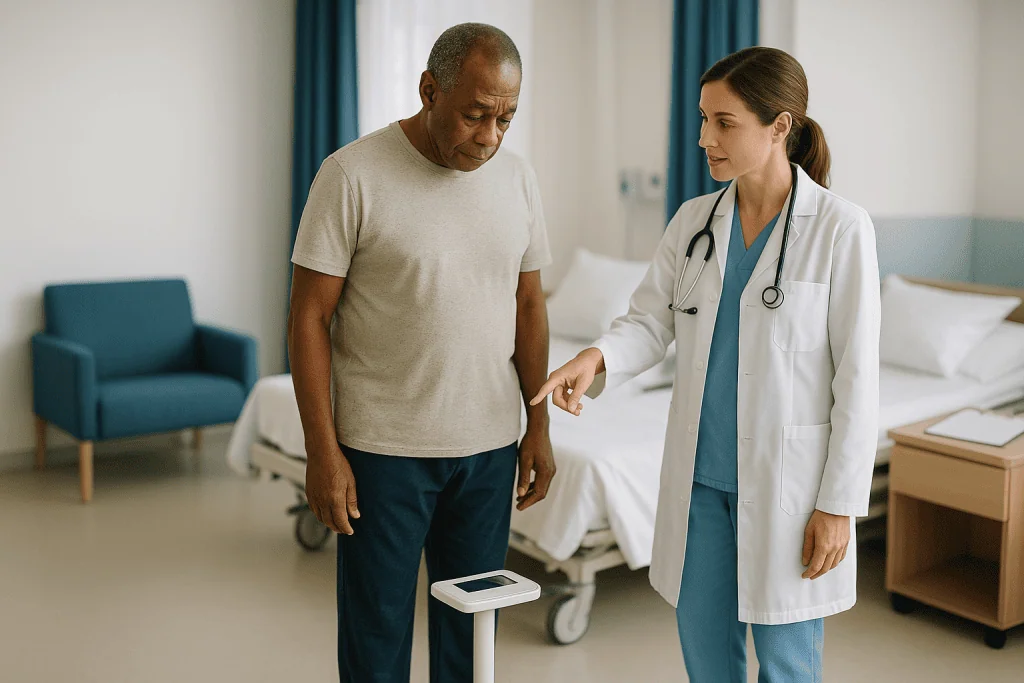
A liter of water weighs about one kilogram, roughly 2.2 pounds. Body fat cannot accumulate at anything like that speed; a jump of two or three pounds overnight is almost always water. That single piece of physics is why the scale becomes the most sensitive home instrument for someone recovering from pulmonary edema.
The American Heart Association’s warning-signs guidance for heart failure puts numbers on it: a gain of 2–3 pounds in a single day, or 5 pounds or more in a week, is a signal to contact the care team. Many people are given a personal “dry weight,” the weight at which they left hospital with lungs clear and swelling gone, as the baseline for comparison.
Method matters as much as the number. Mayo Clinic and the NHS both describe the same routine, and it is worth following to the letter:
- Weigh at the same time each morning, after using the toilet and before eating or drinking.
- Use the same scale on a hard, flat floor, in similar light clothing or none.
- Write the figure down immediately, in a notebook or a phone note, with the date.
- Bring the record to every appointment rather than relying on memory.
Trends tell the team more than any single reading. A slow upward drift over four or five days can matter as much as one sharp jump, and a steady downward drift may point to too much fluid being removed. Either pattern is a reason to call, not to adjust anything yourself. The scale reports; the prescribing clinician decides.
What urine output tells your care team, in hospital and at home
Diuretics work by changing what the kidneys do with salt and water, so the first measurable sign that treatment is working is the urine. In hospital, that output is often collected and measured, sometimes through a catheter, and set against fluids going in. This running total, called the fluid balance, helps the team judge whether the medicine is doing enough, too much, or not enough. The NIH review of acute pulmonary edema management describes urine output and kidney blood tests as part of judging early response.
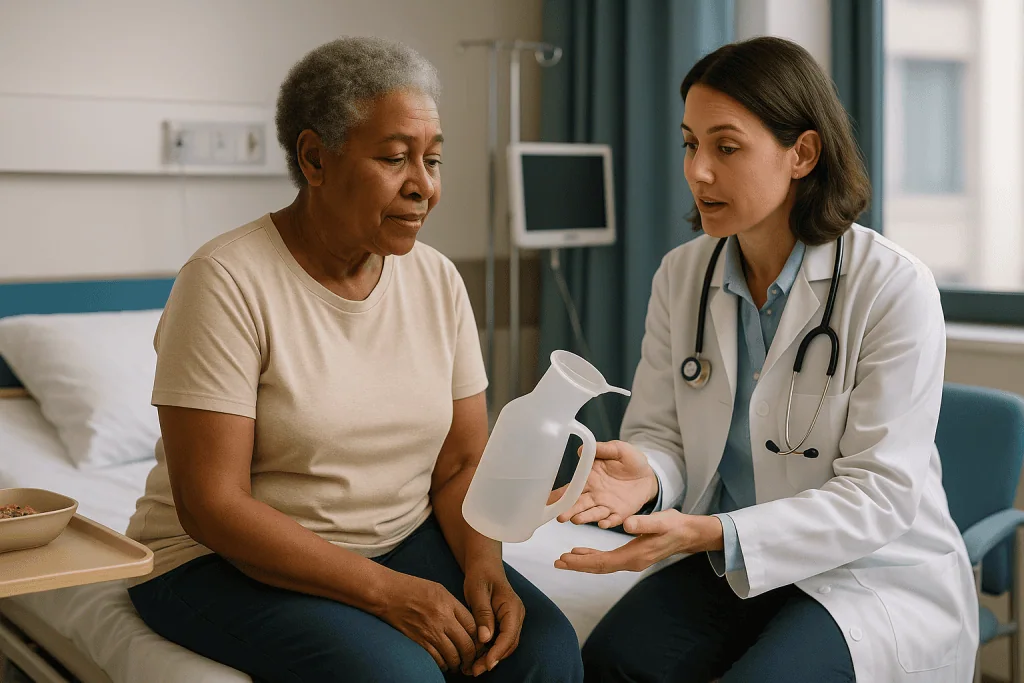
At home nobody hands you a measuring jug, and you are not expected to count milliliters. What you are asked to notice is pattern. Most people find that a diuretic produces a predictable surge of urination in the hours after the dose, which is why timing it earlier in the day, as agreed with the prescriber, often protects sleep.
Two shifts are worth reporting rather than ignoring. The first is urinating far less than usual while weight climbs or breathing feels heavier; that can suggest fluid is being retained again. The second is urinating heavily while feeling lightheaded on standing, unusually thirsty, or noticing dark, concentrated urine and muscle cramps; that pattern can point toward too much fluid or too much potassium being lost. MedlinePlus lists dizziness and cramps among the effects that can accompany diuretic therapy and should be discussed with a clinician.
None of this is a diagnosis you make at the bathroom mirror. The value of noticing is that the follow-up blood tests, which check kidney function and electrolytes (the dissolved salts such as potassium and sodium that keep heart rhythm steady), can be read alongside what you have observed, and the plan adjusted by the people who prescribed it.
Pulmonary edema recovery time: what the next days and weeks usually look like
Recovery has two clocks running at different speeds. The lungs are on the fast clock. Positive pressure and fluid removal act quickly, and many people notice easier breathing while still in the emergency department, as the NIH review of acute management describes. The underlying cause is on the slow clock, and it sets the length of the hospital stay and the shape of the weeks afterward.
In hospital, expect repeated checks of oxygen level, blood pressure, weight, urine output and kidney blood tests, plus an ultrasound of the heart (an echocardiogram) if it has not already been done. The mask is usually weaned as oxygen levels hold on their own.
The first days at home tend to share a few features. Tiredness is common after the body has shifted that much fluid. Sleep may still feel better propped up on pillows for a while. Walking around the house is encouraged; the NHS guidance on living with heart failure favors gentle, gradually increasing activity over bed rest, and people whose edema had a cardiac cause are often offered a structured cardiac rehabilitation program.
Over the following weeks, appointments cluster. Blood tests are repeated as medicines are adjusted. Breathlessness on stairs usually eases as the heart or lungs settle, though the pace varies enormously with the cause: a blood pressure spike resolved in hospital behaves very differently from newly diagnosed heart failure or lung injury after a severe infection.
Ask the team for your own expected timeline rather than borrowing someone else’s. What you can expect everywhere is the same checkpoint rhythm: weigh, note, attend, review. The routine is dull on purpose. Dull is what healing fluid balance looks like.
Who usually goes home soon, and who is asked to stay longer
Discharge timing is not a reward for feeling better. It is a judgment about whether the cause is understood and controlled, and whether home is a safe place to continue the work. The team weighs several questions, and the answers determine whether you leave in a day or two or stay considerably longer.
People who tend to go home sooner usually have a clear, treatable trigger that has already been addressed, such as a blood pressure surge, a brief abnormal rhythm, or a lapse in prescribed medicines. Their oxygen levels hold on room air, their kidney tests are stable, they can walk to the bathroom without becoming breathless, and someone at home can help with weighing and watching.
People who are commonly asked to wait include those whose edema came with a heart attack, a rhythm that has not yet settled, or blood pressure that is too low rather than too high. Anyone who needed a breathing tube, whose kidneys were injured by the episode, or whose lungs show the diffuse injury pattern of acute respiratory distress syndrome will usually stay until those problems are stable. Mayo Clinic notes that non-cardiogenic edema from lung injury can need prolonged breathing support.
A repeat episode, an unclear cause, or living alone without support also shift the balance toward staying. None of these are failures; they are the team buying more observation time while the slower clock runs.
If you are told to wait and feel ready to leave, ask what specifically needs to change before discharge is safe. The answer is usually concrete: a stable blood test, a steady rhythm, a weight that has stopped falling. The decision sits with the treating team, but you are entitled to know what they are waiting for.
Pulmonary edema follow-up care: the visits and tests to expect
The first appointment after discharge is the single most consequential one, because it catches the drift before it becomes an emergency. Heart failure guidance from the NHS and the American Heart Association both emphasize early review after hospitalization, and the content of that visit is fairly predictable wherever you are treated.
Blood tests come first. Kidney function and electrolytes show whether the diuretic has found the right balance. A natriuretic peptide test, which measures a hormone the heart releases when it is stretched by excess fluid, may be repeated to compare with the hospital value. Mayo Clinic lists this among the key tests used in pulmonary edema.
Heart assessment follows if the cause was cardiac. An echocardiogram reports the ejection fraction, the percentage of blood the main pumping chamber squeezes out with each beat, and this number shapes which medicine classes the team will build toward. An electrocardiogram checks rhythm. A chest X-ray may be repeated to confirm the lungs have cleared.
Then comes the medication review, which is where your notebook earns its keep. Weights, bathroom patterns, dizziness, pillows needed to sleep: each observation helps the prescriber decide whether to hold, adjust or add.
Depending on the cause, you may also be referred onward: to a heart failure clinic, a pulmonologist if the lungs rather than the heart were the problem, a sleep study if breathing pauses at night are suspected, or cardiac rehabilitation. Vaccinations against influenza and pneumococcal infection are commonly recommended for people with heart or lung disease, according to CDC guidance, because chest infections are a frequent trigger for fluid returning.
Bring a list of every medicine and supplement you take, including over-the-counter pain relievers; some anti-inflammatory painkillers can cause fluid retention and are worth discussing explicitly.
How the medicines work, and what the team checks at each visit
This section describes mechanisms and typical follow-up, not instructions. Every decision about what to take, when, and for how long belongs with the clinician who prescribed it.
Loop diuretics are the class most people recognize as the “water pill.” They act on a specific segment of the kidney’s filtering tubules to block salt reabsorption; water follows the salt out. The trade-off is that potassium and magnesium can leave with it, which is why electrolytes are checked repeatedly and why the team may pair the diuretic with another medicine or a dietary suggestion. MedlinePlus explains that the goal is relieving fluid without pushing the kidneys or blood pressure too low.
When heart failure with a reduced ejection fraction is the underlying cause, guideline-directed therapy usually involves several medicine classes layered in over weeks and months rather than all at once. These include medicines that relax blood vessels and blunt stress hormones (ACE inhibitors, angiotensin receptor blockers or a combined neprilysin inhibitor), beta blockers that slow and steady the heart, mineralocorticoid receptor antagonists that limit salt retention, and SGLT2 inhibitors, originally diabetes medicines, that reduce fluid load and hospitalizations. The American Heart Association describes these classes in its heart failure treatment overview. Each addition typically brings another blood test and blood pressure check.
When blood pressure was the trigger, the focus shifts to blood-pressure control. When the cause was non-cardiogenic, treatment aims at the lung injury or infection itself, and diuretics play a smaller role.
Two practical points recur across all of these. Never stop or skip a medicine because you feel well; feeling well is often the medicine working. And report side effects promptly rather than quietly tolerating them, because most have alternatives the prescriber can consider.
What should you track at home? A simple daily log
Most heart failure programs use a traffic-light system, and it translates well to anyone recovering from pulmonary edema regardless of cause. The American Heart Association publishes a version of this self-check; the table below adapts the idea into a daily log you can keep in a notebook or on a phone.
| What to record | How | Why it matters | Pattern worth a call |
|---|---|---|---|
| Morning weight | Same scale, same time, after urinating | Fluid shows on the scale before it shows in the lungs | Up 2–3 lb in a day or 5 lb in a week (AHA) |
| Breathing at rest and on stairs | Note effort compared with yesterday | Early sign of fluid returning | Worse than yesterday for two days running |
| Pillows needed to sleep | Count them | Needing to sit up to breathe (orthopnea) signals fluid shifting into the lungs when lying flat | Needing more than your usual |
| Ankle and belly swelling | Press the shin; check waistband | Fluid pooling in tissues | New or increasing |
| Urination pattern | More, less, or usual | Reflects kidney response to treatment | Much less than usual, or heavy with dizziness |
| Blood pressure, if asked | Seated, rested, same arm | Guides medicine adjustment | Outside the range your team gave you |
The point of the log is not to grade yourself. Numbers will wobble. The point is that at the follow-up visit the clinician can see a fortnight of real data instead of a vague “I think I’ve been okay.” A record that shows weight creeping up by half a pound a day for a week, with one extra pillow added on Thursday, is far more useful to the team than any single alarming figure, and it often leads to a small, early adjustment rather than another night in a hospital bed.
Can you fully recover from pulmonary edema?
The honest answer splits into two parts, and most online summaries only give you the first.
The fluid itself can clear completely. Lung tissue is resilient, and once the pressure or the leak is corrected, the air sacs dry out and oxygen exchange returns. Mayo Clinic notes that the outlook depends chiefly on the cause and how quickly it is treated. Someone whose edema followed a blood pressure spike, a rhythm problem that has been corrected, or a rapid climb to altitude followed by descent can expect the lungs themselves to recover.
The second part is the cause, and here “full recovery” means something different for each person. Heart failure that has declared itself through an episode of pulmonary edema does not disappear, but it can be managed, often for many years, with medicines, monitoring and the habits this article describes. Lung injury from a severe infection or acute respiratory distress syndrome can leave scarring that takes months to improve, and some people retain reduced lung capacity.
What the evidence does not support is a single number for how often people recover, and you should be skeptical of any source that offers one without naming the study and the population it studied. The range of causes is simply too wide for a blanket figure to mean anything.
A more useful question to bring to your care team is this: what, specifically, caused my episode, and what does recovery look like for that cause? The answer for a controlled trigger is very different from the answer for a newly diagnosed heart condition, and knowing which one applies to you turns the daily routine from a vague precaution into a plan with a purpose.
Pulmonary edema vs pleural effusion: why the difference changes your follow-up
The two terms get confused constantly, including by people who have had both. They describe fluid in different places, and the distinction matters for what happens after treatment.
Pulmonary edema is fluid inside the lung tissue, within the air sacs themselves. Pleural effusion is fluid outside the lung, in the thin space between the lung’s surface and the inner chest wall. MedlinePlus describes this space as normally holding only a small film of lubricating fluid; an effusion is that film swollen into a pool that squashes the lung from outside rather than flooding it from within.
Causes overlap but are not identical. Heart failure can produce both, and often does. Effusions also arise from pneumonia, cancer, kidney or liver disease, blood clots and autoimmune conditions, which means an effusion sometimes sends the team looking in directions a pure edema would not.
Treatment differs too. Edema from heart pressure responds to diuretics and treating the heart. A large effusion may need to be drained through a needle or small tube, and the fluid sent for analysis to find its source. Small effusions from heart failure frequently shrink as the fluid balance improves.
For follow-up, the practical difference is this: if you had an effusion, expect additional imaging to confirm it has resolved and, if it was drained, results from the fluid analysis. If the cause was not clearly cardiac, a pulmonologist may be involved alongside the cardiologist. Ask which you had, or whether you had both, because the discharge summary may use the terms loosely and your home monitoring plan should match what was actually found.
What people often get wrong after pulmonary edema
Recovery myths tend to be comforting, which is exactly why they persist. A few deserve direct correction.
“I feel fine, so I can ease off the water pill.” Feeling fine is usually the diuretic doing its job. Stopping or thinning it out without medical advice is one of the commonest routes back to the emergency department, as the NHS guidance on living with heart failure warns. Report side effects; do not quietly self-adjust.
“Drinking less is always safer.” Some people are advised to limit fluids, others are not, and overdoing restriction while on a diuretic can leave the kidneys short and blood pressure low. The limit, if any, should be the one your team gives you.
“That weight gain is because I finally ate properly.” As the earlier section explained, nobody gains two pounds of fat overnight. Overnight gain is water until proven otherwise.
“Pulmonary edema means I am slowly drowning.” Untreated acute pulmonary edema is genuinely life-threatening, which is why Mayo Clinic calls it an emergency. Treated and monitored, the fluid clears, and the long-term picture depends on the cause rather than on the episode itself.
“I need to clear this phlegm from my chest.” The frothy, sometimes pink-tinged sputum of pulmonary edema is not infected mucus and is not something to cough out with home remedies; it is a reason to seek care. Ordinary chest phlegm after an infection is a different matter, and if it lingers it should be assessed rather than treated with guesswork.
“Salt only counts if I add it at the table.” Most dietary sodium comes from processed and restaurant food, according to the American Heart Association, not the shaker.
Questions to ask your care team before and after discharge
The right questions turn a confusing discharge into a plan you can run at home. Ask them before you leave if you can, and again at the first follow-up visit; the answers may change as test results arrive.
- What caused my pulmonary edema, and is that cause now controlled, or still being investigated?
- Was it cardiogenic or non-cardiogenic, and did I also have a pleural effusion?
- What is my dry weight, and at what gain should I call rather than wait for the next appointment?
- Am I on a fluid or salt limit, and if so, what exactly does it include?
- Which of my medicines are new, which were changed, and what is each one for?
- What side effects should I report straight away, and who do I call to report them?
- Which blood tests are being repeated, when, and what are they checking?
- Do I need an echocardiogram, a repeat chest X-ray, or a sleep study, and when?
- Is there a heart failure nurse, clinic or telephone line I can contact between visits?
- Am I suitable for cardiac or pulmonary rehabilitation, and how is the referral made?
- Which over-the-counter medicines and supplements should I avoid because they can hold fluid or raise blood pressure?
- What activity is reasonable this week, and how will I know I am ready for more?
- Which vaccinations do you recommend, given that chest infections can trigger fluid returning?
Write the answers down, or ask whether a companion can take notes. People retain a fraction of what is said in a discharge conversation, and the gaps tend to show up at two in the morning when the pillows are not quite enough. A written answer to “when do I call?” is worth more than any reassurance you half-remember.
When to call your doctor: red-flag signs after pulmonary edema treatment
Monitoring only works if it ends in action. Divide the signs into two tiers, and keep both numbers somewhere you can find them in the dark.
Call emergency services immediately if you have severe breathlessness at rest or breathing that is rapidly getting worse, coughing up frothy or pink-tinged sputum, chest pain or pressure, a bluish or gray tinge to lips or fingertips, new confusion, or fainting. Mayo Clinic lists these as the hallmarks of acute pulmonary edema returning, and they do not wait for office hours.
Call your care team the same day for signs that fluid may be creeping back or that treatment may need adjusting:
- Weight up 2–3 pounds in a day or 5 pounds or more in a week, per American Heart Association guidance.
- Needing more pillows than usual, or waking at night short of breath.
- New or worsening swelling of the ankles, legs or abdomen.
- A cough that is getting worse rather than better, or a fever, since infection often triggers fluid.
- Dizziness or lightheadedness when standing, especially with very little urination, dark urine or muscle cramps.
- A racing, pounding or irregular heartbeat.
- Any side effect that makes you want to skip a medicine.
One more category deserves a mention: the vague sense that something is off. People who have had one episode often recognize the early feel of the next before any single sign crosses a threshold. The NHS encourages people living with heart failure to contact their team when symptoms change, not only when they become severe. A call that turns out to be unnecessary costs a few minutes. A call delayed can cost a readmission, or worse.
The decisions about what to change, and whether you need to be seen, always rest with the clinicians who know your history. Your job is to notice, record and report. Theirs is to act.
Frequently asked questions
Can you recover from pulmonary edema fully?
The fluid in the lungs can clear completely once the cause is treated, and lung tissue generally recovers. Whether the recovery is total depends on what caused the episode: a corrected blood pressure spike or high-altitude exposure usually leaves no lasting effect, while heart failure is managed long term rather than reversed, and severe lung injury can leave reduced capacity for months.
What is the difference between pleural effusion and pulmonary edema?
Pulmonary edema is fluid inside the lung’s air sacs; pleural effusion is fluid in the space between the lung and the chest wall. Edema floods the lung from within and usually responds to treating heart pressure or the leak; an effusion squashes the lung from outside and may need to be drained and analyzed. Heart failure can cause both at once.
How long can someone last with pulmonary edema?
Untreated acute pulmonary edema is a medical emergency that can be fatal within hours, which is why sudden severe breathlessness needs emergency care. With treatment, the fluid clears and the long-term outlook depends on the underlying cause rather than the episode. No single survival figure applies across the many different causes, and you should treat any such number with caution.
How do you get phlegm out of your chest quickly?
If the material is frothy or pink-tinged, do not try to clear it at home; that pattern suggests fluid in the lungs and needs urgent assessment. Ordinary mucus after a chest infection can be eased by staying upright, keeping hydrated within any limit your team has set, and controlled coughing. Phlegm that persists or worsens should be assessed by a clinician rather than treated with guesswork.
What is the typical pulmonary edema recovery time at home?
Breathing often improves within the first hours of treatment, but the weeks afterward are shaped by the cause. Tiredness, sleeping propped up and gradual return to activity are common early on, with blood tests and medicine adjustments clustering in the first month. Ask your team for a timeline specific to your diagnosis, since a resolved trigger and newly diagnosed heart failure recover on very different schedules.
What does pulmonary edema follow up care usually include?
An early review after discharge with blood tests for kidney function and electrolytes, often a repeat natriuretic peptide test, an echocardiogram if the cause was cardiac, an electrocardiogram, and a detailed medicine review using your home weight record. Depending on the cause you may be referred to a heart failure clinic, a pulmonologist, a sleep study or a rehabilitation program.
Why do I have to weigh myself every day after pulmonary edema?
Because fluid shows on the scale before it shows in the lungs. Water weighs about one kilogram per liter, so a jump of two or three pounds overnight is almost certainly retained fluid. A daily morning weight, taken the same way each time and written down, lets your team catch fluid returning days before breathlessness would, and adjust treatment early.
Should I drink less water after pulmonary edema treatment?
Only if your care team has set a limit. Some people with heart failure are advised to restrict fluids; others are not, and cutting back too far while taking a diuretic can leave the kidneys short and blood pressure low, causing dizziness. Ask for a specific instruction, including whether soups, fruit and other liquid-rich foods count toward it.
What should I notice about urination after pulmonary edema?
Pattern rather than exact volume. Diuretics usually cause a predictable surge of urination after each dose. Report urinating far less than usual while weight rises, and also report heavy urination accompanied by lightheadedness, dark urine or muscle cramps, which can suggest too much fluid or potassium is being lost. Your team will interpret these alongside blood tests.
Is it safe to stop the water pill once I feel better?
No, not without the prescriber’s agreement. Feeling well is typically a sign the diuretic is working, and stopping it is a common reason fluid returns and people are readmitted. If side effects such as cramps, dizziness or inconvenient timing are the problem, raise them at your follow-up or by phone; adjustments are usually possible, but they should come from the clinician.
References
- MedlinePlus: Pulmonary edema
- NHS: Heart failure, living with
- NIH National Library of Medicine (PMC): Managing acute pulmonary oedema
This article is for general information only and is not a substitute for professional medical advice. Please consult a qualified doctor about your individual situation.

More from the Blog
How Doctors Confirm Bronchitis: Oxygen Readings, Chest X-Rays and When Sputum Is Tested
Doctors diagnose acute bronchitis mainly from your history and a physical exam: how long you have coughed, what the cough brings up, whether you…

Which Tests Confirm Emphysema? Spirometry, Chest CT and Oxygen Checks Explained
Emphysema is usually confirmed with a combination of tests rather than one. Spirometry, a breathing test, shows whether airflow is obstructed; a gas transfer…

Who Is a Candidate for Single-Port VATS? Lung Biopsies, Collapsed Lung and Small Tumors
Single-port VATS candidates are usually people who need a lung biopsy that a needle cannot safely provide, a repair for a recurrent or persistent…
Which Tests Explain a Pleural Effusion? Chest Ultrasound, CT and What the Fluid Sample Reveals
A pleural effusion is usually confirmed with a chest X-ray or chest ultrasound, and ultrasound is now the preferred first test because it detects…

Do Antibiotics Help Acute Bronchitis? Why Most Cases Are Viral and What Treatment Looks Like
Antibiotics usually do not help acute bronchitis, because the large majority of cases are caused by viruses that antibiotics cannot touch. Pooled trials suggest…

Which Chest Conditions Suit Robotic Thoracic Surgery? Lung Nodules, Mediastinal Tumors and More
Robotic thoracic surgery is most often considered for small lung nodules and early-stage lung cancer needing a wedge resection, segmentectomy or lobectomy, for tumors…