

What Healing After a Tooth Extraction Usually Looks Like and When the Gap Can Be Filled

Key Takeaways
- The blood clot that forms in the first hours is the foundation of healing, which is why rinsing, spitting, straws and smoking are discouraged in the first 24 hours.
- Swelling and soreness typically peak at 48–72 hours and then improve daily; pain that worsens after day three, rather than easing, is the signal to call.
- The NHS puts full recovery from wisdom tooth removal at up to two weeks, with jaw stiffness for seven to ten days and bruising possible for two weeks.
- Dry socket usually appears one to three days after extraction, is more common after lower wisdom teeth, and is managed with cleaning and a dressing rather than antibiotics.
- Gum tissue covers the socket in roughly one to two weeks, but bone keeps filling in for several months, which governs implant timing.
- Replacing the gap is a separate decision from the extraction; implants, bridges and partial dentures each have timing and maintenance trade-offs the treating team will explain.
After a tooth extraction, a blood clot forms in the socket within the first day, soreness and swelling typically peak around 48–72 hours, and the gum usually closes over in about one to two weeks, while the underlying bone keeps remodeling for several months. Most people return to normal routines within a few days. Whether and when the gap is filled with an implant, bridge or denture is decided with the treating dental team.
The gauze comes out, you run your tongue over the spot where a tooth used to be, and the question arrives all at once: is this hole supposed to look like that, and how long until it closes? Almost everyone who has had a tooth pulled has stood at a bathroom mirror asking exactly this.
Knowing what to expect after tooth extraction turns a slightly alarming week into a predictable one. The socket is doing quiet, orderly work: sealing itself with a clot, growing new gum tissue over the top, then slowly filling with bone from below. Each stage has a look and a feel, and each has a moment where ordinary healing can be mistaken for something going wrong.
This explainer walks through that sequence honestly, including the day that usually feels worst, the habits that genuinely matter, and the point at which a dentist may talk with you about filling the space.
What to expect after tooth extraction: what actually happens in the socket
A tooth sits in a pocket of jawbone called the socket, held by a thin ligament and covered by gum. When the tooth comes out, the socket is briefly an open wound reaching down to bone, which is why the first hours are treated with such care.
Bleeding is the body’s first move. Within minutes, platelets and clotting proteins knit a soft plug that fills the socket. This clot is not a nuisance to be rinsed away; it is the scaffold every later stage builds on. It protects the exposed bone, keeps bacteria and food out, and releases signals that call in the cells that will rebuild the site.
Over the following days the clot is gradually replaced by granulation tissue, a soft pink layer rich in tiny blood vessels. Gum cells creep inward from the edges of the socket at the same time. By about a week, most sockets are covered by a thin skin of new tissue, though a dip or small crater usually remains visible.
Bone is the slow part. Deep in the socket, bone-forming cells lay down a soft matrix that hardens over months. Cleveland Clinic notes that while the surface heals within roughly a week or two, the bone beneath continues to fill in for several months, which is why decisions about implants often wait.
Two features of this process explain most of the worries people bring to follow-up visits. First, healing happens from the bottom and the edges, so the surface can look unfinished while things are progressing normally underneath. Second, the clot is fragile in the first 72 hours, and losing it is the single most common reason a routine extraction turns painful.
The first 24 hours after a tooth is pulled: protecting the clot
The first day has one job: leave the clot alone long enough for it to firm up. Almost every instruction a dental team gives on the way out of the chair traces back to that principle.

Biting gently on gauze for a short period after the procedure compresses the socket and helps the clot form. Slight oozing that tints saliva pink for several hours is expected; a steady flow that soaks gauze quickly is not, and warrants a call. The NHS advises resting for the first 24 hours and avoiding rinsing, spitting or anything that creates suction in the mouth during that window, because negative pressure can pull the clot free.
Numbness from local anesthetic usually fades over a few hours. As it wears off, a dull ache sets in, and this is the moment most people start whatever pain relief the clinician suggested. Taking it before the numbness fully lifts, if the dentist has advised that, tends to keep discomfort steadier than chasing pain once it has peaked.
Swelling typically starts on the first evening. A cold pack wrapped in cloth, applied to the cheek in short intervals, is a standard recommendation for the first day. Sleeping with the head slightly raised on an extra pillow can reduce throbbing overnight.
What the first night usually looks like: a tender jaw, an odd taste, some cheek puffiness and a tongue that keeps drifting to the site. What it should not look like: bleeding that will not slow, pain that escalates sharply, or difficulty swallowing or breathing. Those belong in the red-flag list later in this article.
Why is day 3 the worst after tooth extraction?
People are often surprised that the second or third morning feels worse than the first. This is not a sign of trouble in most cases; it is the ordinary arc of inflammation.
When tissue is injured, the body floods the area with fluid and immune cells. That response does not peak immediately. According to NHS guidance on wisdom tooth removal, facial swelling can last up to three days, and jaw stiffness and soreness may persist for a week to ten days. Mayo Clinic similarly describes swelling of the cheeks and mouth that improves over two to three days. In practice, the combination of maximal swelling, a stiff jaw and fading of the initial protective numbness lands squarely around 48–72 hours.
There is a second reason day three has a reputation. Dry socket, the complication in which the clot is lost or breaks down early, typically declares itself between the first and third day after extraction, according to Mayo Clinic. So the timing of normal peak discomfort overlaps with the window in which the most common complication appears, and telling them apart matters.
The distinction usually comes down to direction of travel and character of pain. Normal healing hurts most on day two or three and then eases each day afterward. Dry socket often starts a couple of days in, then intensifies rather than fades, frequently radiating toward the ear or temple, sometimes with a foul taste or a visibly empty-looking socket.
A practical rule many dentists share: if you are gradually improving after day three, you are very likely on track. If you are clearly getting worse after day three, ring the practice.
Tooth extraction healing stages, week by week
Timelines vary with the tooth involved, the difficulty of removal and the person’s general health, so the ranges below are typical patterns rather than promises. A single-rooted front tooth generally settles faster than a surgically removed lower wisdom tooth.

| Timeframe | What is usually happening | What you commonly notice |
|---|---|---|
| First 24 hours | Clot forms and stabilizes | Oozing, numbness fading, ache starting, early swelling |
| Days 2–3 | Inflammation peaks; granulation tissue begins | Most swelling and soreness; stiff jaw; possible bruising |
| Days 4–7 | Gum edges migrate inward over the socket | Steady daily improvement; small dip still visible |
| Weeks 2–3 | Soft tissue largely closed | Little or no pain; site may still look slightly indented |
| Months 1–6 | Bone gradually fills and remodels | Contour flattens; gum may recede slightly over the ridge |
The NHS estimates that full recovery from wisdom tooth removal takes up to two weeks, with bruising possible for around two weeks and stiffness for seven to ten days. Cleveland Clinic describes surface healing over about one to two weeks and bone healing continuing for months.
Bruising deserves a mention because it alarms people. A yellow-green patch spreading down the jawline or neck in the first week is common after harder extractions and reflects blood tracking under the skin, not infection.
Two things tend to worry patients at week two: a white or cream-colored film over the socket, and a slight bad taste. The film is usually new tissue, sometimes with trapped food, rather than pus. A brief salt-water rinse after meals, once the team has cleared you to rinse, typically resolves the taste. Persistent foul taste with worsening pain is a different matter.
How long does tooth extraction take to heal? Gum versus bone
The honest answer has two parts, because “healed” means different things to the person looking in the mirror and the dentist looking at an X-ray.
For the gum, healing is fairly quick. Cleveland Clinic and MedlinePlus both describe the socket surface closing over in roughly one to two weeks for a straightforward extraction, with most people feeling back to normal within a few days. Surgical extractions, where the gum is opened and bone removed to free the tooth, sit at the longer end of that range and may involve stitches that dissolve on their own or are removed at a follow-up.
For the bone, the calendar stretches. The socket fills in from the bottom up over several months, and the surrounding ridge of jawbone changes shape as it does. Without a tooth root to load it, some of that ridge width and height is lost during the first year. This natural shrinkage is why a gap that once looked deep can end up as a gentle valley in the gum, and why timing matters for anyone considering an implant.
Factors that lengthen healing are well documented across mainstream sources: smoking, poorly controlled diabetes, certain medicines that affect bone turnover, previous radiation to the jaw, and infection at the time of extraction. Age plays a modest role; healing is generally slower in older adults but not dramatically so in the absence of other conditions.
Reasonable expectations, then: pain largely gone within a week, gum sealed within two to three weeks, bone still busy for the better part of six months. Only the treating dentist, ideally with an X-ray, can say whether a specific socket has healed enough for the next step.
What are the do's and don'ts after tooth extraction?
Aftercare advice can sound like a long list of prohibitions, but nearly every item protects either the clot or the fragile new tissue. Understanding the reason makes the rules easier to follow.
What generally helps, based on NHS and Mayo Clinic guidance:
- Rest for the remainder of the day, with your head slightly elevated.
- Apply a wrapped cold pack to the cheek in short intervals during the first day.
- After the first 24 hours, rinse gently with warm salt water after meals to keep the site clean.
- Keep brushing your other teeth, steering the brush away from the socket for the first few days.
- Eat soft, cool or lukewarm foods and drink plenty of water.
What generally hinders healing:
- Rinsing, spitting forcefully or using a straw in the first day; suction can dislodge the clot.
- Smoking or vaping; both reduce blood flow to the gum and are strongly associated with dry socket in Mayo Clinic’s account of risk factors.
- Alcohol and very hot drinks in the early days; both can increase bleeding.
- Strenuous exercise for the first few days, since raised blood pressure can restart bleeding.
- Probing the socket with a finger, tongue or toothpick.
Stitches, if used, are commonly the dissolving type and may fall out within a week or two; a loose thread is not usually an emergency. If a bit of bone feels sharp along the gum weeks later, it may be a small fragment working its way out, a known and usually harmless occurrence that a dentist can smooth or remove.
A short word on hormonal contraception: Mayo Clinic lists it among factors linked to dry socket, which is one reason some clinicians ask about it before scheduling, not a reason to alter it.
What to eat after tooth extraction, and when to return to normal food
Food does more than keep you comfortable; it supplies the protein and energy that tissue repair draws on. The trick in the first week is choosing foods that nourish without disturbing the site.
For the first day or two, soft and cool is the theme: yogurt, smoothies eaten with a spoon rather than a straw, applesauce, mashed potatoes, blended soups allowed to cool, scrambled eggs and soft fish. Chew on the opposite side where possible. Very hot foods and drinks are best avoided early because heat dilates blood vessels and can prompt oozing, a point made in NHS aftercare advice.
By days three to five, most people can add softer solids such as pasta, well-cooked vegetables and soft bread. Crunchy, crumbly or seeded foods tend to lodge in the socket, so nuts, popcorn, chips and small grains are usually held back for about a week or until the gum has visibly closed.
Spicy and acidic foods are not dangerous, but they sting raw tissue and many people prefer to wait a few days.
Alcohol is worth pausing for the first day or two at minimum, both because it can increase bleeding and because it interacts with many pain relievers. Follow the specific advice given with any prescribed medicine.
Hydration matters and is often forgotten. Sipping water frequently keeps the mouth clean, supports healing and helps if your appetite dips. Just skip the straw.
If eating remains genuinely difficult beyond a week, or if you cannot open your mouth wide enough to manage soft food, that stiffness may need assessment rather than patience alone.
Pain relief after a tooth extraction: what clinicians typically use and why
Discomfort after an extraction comes mainly from inflammation of the bone and gum around the socket. That mechanism shapes the choice of medicine, and every decision about which one, how much and for how long belongs to the prescribing clinician.
Two classes of over-the-counter pain relievers are most often discussed. Non-steroidal anti-inflammatory drugs, such as ibuprofen, dampen the chemical messengers that drive swelling and pain, which suits an inflammatory wound well. Acetaminophen (paracetamol) relieves pain by a different route and does not act on inflammation. Many dental teams describe using them in combination or alternation for a few days; the NHS notes that painkillers are commonly needed for a period after wisdom tooth removal. Some people cannot safely take NSAIDs because of stomach, kidney or heart conditions, or because of other medicines, so the plan should always be individualized.
Stronger prescription analgesics are reserved for more extensive surgery and are typically short courses when used at all.
Antibiotics are not a routine part of recovery. They are prescribed when there is an existing infection or a specific medical reason, not as a precaution for everyone. Taking leftover antibiotics from a previous illness is never a good idea.
Beyond medicine, the physical measures matter: cold packs in the first day, warm compresses later for stiffness, elevation at night and simply not chewing on the site.
Timeline expectations help too. Pain that needs regular relief for two to three days, then tapers, fits the normal pattern described by Mayo Clinic and the NHS. Pain that returns or ramps up after initial improvement, especially with a bad taste or smell, is the pattern that should prompt a call rather than an extra tablet.
Dry socket symptoms and other complications to recognize
Most extractions heal without incident, but a handful of complications are worth understanding because early recognition changes how they are managed.
Dry socket, medically called alveolar osteitis, occurs when the clot fails to form or is lost before tissue has covered the bone. Mayo Clinic describes it as relatively uncommon overall but more frequent after lower wisdom tooth removal, with onset typically one to three days after extraction. Hallmarks include severe pain that worsens rather than eases, pain radiating to the ear, eye or neck on the same side, a visibly empty socket or exposed bone, and a foul taste or odor. It is not an infection, and it does not usually respond to antibiotics; dentists manage it by cleaning the socket and placing a medicated dressing, which often brings rapid relief. Smoking, oral contraceptives, poor oral hygiene and a history of dry socket raise the risk.
Infection is different in character: swelling that increases after day three, warmth, fever, pus, and sometimes difficulty opening the mouth. It is less common than dry socket but needs prompt assessment.
Prolonged bleeding beyond the first day, or bleeding that restarts heavily, deserves a call, particularly for anyone on blood-thinning medicine.
Nerve irritation can follow lower wisdom tooth removal, producing numbness or tingling of the lip, chin or tongue. The NHS notes this is usually temporary, though it can occasionally last longer. It is a recognized risk clinicians should discuss beforehand.
Sinus communication can occur with upper back teeth whose roots sit close to the sinus floor; air escaping into the mouth when you breathe through the nose, or liquid coming from the nose when drinking, should be reported.
Who tends to heal smoothly, and who is usually asked to wait or take extra steps
A healthy adult with a simple extraction is the textbook case: a few days of soreness, gum closed within a couple of weeks, no drama. Several groups are routinely handled differently, not because extraction is forbidden but because the risk profile shifts.
People who smoke are counseled to stop for as long as possible before and after surgery. Nicotine narrows blood vessels and the act of drawing on a cigarette creates suction, both of which threaten the clot.
People with diabetes heal more slowly when glucose is poorly controlled and are more prone to infection. Dentists often coordinate timing with the person’s medical team and may schedule morning appointments around meals and medication.
People taking anticoagulants or antiplatelet drugs can bleed longer. Mainstream guidance generally favors keeping these medicines going rather than stopping them, with local measures to control bleeding, because the risk of a clot elsewhere in the body often outweighs the bleeding risk. The decision is made jointly by the dentist and the prescribing physician; no one should adjust these medicines on their own.
People on bisphosphonates or other bone-modifying drugs, used for osteoporosis and some cancers, carry a small risk of a jaw-healing problem called medication-related osteonecrosis. Dentists ask about these medicines specifically and may involve the prescribing specialist before elective extractions.
People who have had radiation to the head or neck are managed with particular caution because irradiated bone heals poorly.
Pregnancy is not a barrier to necessary dental care, though elective procedures are often timed for the second trimester where possible.
In every case, the treating team weighs the reason for extraction against these factors and decides on timing, precautions and follow-up.
How long should you rest after getting a tooth pulled? Work, exercise and travel
Rest advice is often vaguer than it needs to be. The evidence-based version is short: take it very easy for the first day, ease back over the next few, and let your body set the pace after that.
The NHS recommends resting for 24 hours after an extraction and avoiding strenuous activity for a few days. The reasoning is mechanical. Exertion raises blood pressure and heart rate, which can restart bleeding from a socket that has only just sealed. Bending forward and heavy lifting have a similar effect.
For desk-based work, many people are back the next day or the day after, perhaps with a softer lunch and a cold pack in the drawer. Physically demanding jobs usually warrant a longer pause, and anyone who had sedation must not drive or make important decisions for the rest of that day.
Exercise can typically resume in stages: gentle walking within a day or two, moderate activity after three to four days if there is no bleeding or throbbing, and full-intensity training once swelling has settled, often around a week. If a workout brings pulsing pain or fresh bleeding, that is a signal to step back a level.
For travel, particularly flying, a few practical points apply. Cabin pressure changes rarely cause problems after a simple extraction, but a sinus communication after an upper molar or unresolved infection can be aggravated by pressure shifts. Anyone planning to travel soon after a more complex extraction should mention it beforehand so the team can advise on timing, provide written aftercare and arrange how to reach someone if problems arise while away. Staying hydrated, moving about the cabin on longer flights and having pain relief on hand are sensible basics.
When can the gap be filled? Implants, bridges and dentures
Filling the space is a separate decision from the extraction itself, and not every gap needs filling. A back tooth with a healthy partner opposite it may be left, while a visible front tooth or a gap that lets neighbors drift usually prompts a discussion about replacement.
Three main options exist. A dental implant is a titanium post placed into the jawbone that fuses with it and carries a crown. A bridge attaches a false tooth to crowns on the adjacent teeth. A partial denture is a removable appliance that sits on the gum and clips to nearby teeth.
Timing for an implant depends on the socket. Mayo Clinic describes implant treatment as a staged process that typically unfolds over several months, because the bone must heal enough to hold the post and then fuse with it. In broad terms, dentists talk about three approaches: placing the implant at the same visit as the extraction when conditions are ideal, an early approach after the gum has healed over a period of weeks, and a delayed approach after the bone has substantially filled, often several months later. Which is appropriate depends on infection at the site, bone volume, gum health and how much ridge shrinkage is expected.
Because the jaw narrows after tooth loss, some people are offered a bone graft at extraction to preserve the ridge for a later implant. Mayo Clinic notes that graft material may need months to mature before an implant is placed.
Bridges and dentures generally wait for the gum to settle so the appliance fits well, commonly a matter of weeks to a few months, with temporary options sometimes used in the meantime for visible gaps.
The right choice is individual, and the treating team will lay out benefits, risks and maintenance for each.
What people often get wrong about healing after a tooth extraction
Several persistent beliefs make recovery harder than it needs to be.
“Rinsing vigorously keeps it clean.” In the first 24 hours, the opposite is true: forceful rinsing is one of the easiest ways to dislodge the clot. Gentle salt-water rinses come after day one, and they should be a tilt-and-let-fall motion rather than a swish-and-spit.
“White stuff in the socket means infection.” A pale film a few days in is usually granulation tissue or fibrin, both normal. Infection tends to announce itself with worsening swelling, fever and pus, not a quiet white patch.
“If it hurts on day three, something went wrong.” Day two to three is the expected peak of inflammation, as NHS and Mayo Clinic timelines make clear. The warning sign is pain that keeps climbing after that, not pain that exists on that day.
“Antibiotics prevent problems.” They do not prevent dry socket, which is not an infection, and they are not routinely needed after uncomplicated extractions. Using them without a clinical reason adds side effects and drives resistance.
“Stop blood thinners before the appointment.” Doing this on your own can be dangerous. Dentists and physicians usually keep these medicines going and manage bleeding locally; any change is their call.
“The hole should close in a few days.” Gum takes a week or two to cover the socket and the dip can persist for weeks beyond that while bone fills from below.
“An implant can go in as soon as the pain stops.” Pain resolves long before the bone is ready. Implant timing is guided by X-rays and clinical examination, not by comfort.
“Smoking one cigarette will not matter.” Both the chemicals and the suction matter, and the risk is highest exactly when the temptation is strongest, in the first three days.
Questions to ask your care team before and after the extraction
Good questions turn a rushed appointment into a shared plan. Bring a short list; write down the answers, because anesthetic and nerves both blur memory.
Before the procedure:
- Is this expected to be a simple or a surgical extraction, and what does that mean for my recovery time?
- Do any of my medicines or health conditions change how you will approach this, and should my physician be involved?
- Will there be stitches, and if so, do they dissolve or need removal?
- Is a bone graft being suggested to preserve the site, and what happens if I decline it?
- Are there nerve or sinus risks specific to this tooth?
For the recovery period:
- Which pain relief do you recommend for me, and when should I start it?
- When can I begin rinsing, brushing near the site, eating normally and exercising?
- What changes would you want to hear about, and how do I reach someone after hours?
- When is my follow-up, and will an X-ray be taken to check bone healing?
About the gap:
- Does this space need to be filled, and what happens to my other teeth if it is left?
- Which replacement options suit my bite, bone and budget of time, and what are the trade-offs of each?
- If an implant is an option, roughly when would you assess the site, and what would make you suggest waiting longer?
- How will each option be maintained over the years?
None of these questions has a universal answer, which is precisely why they are worth asking. The team that examined your mouth and reviewed your history is the only one positioned to answer them for you.
When to call your doctor or dentist: red-flag signs after a tooth extraction
Most recovery worries can wait until office hours, but a few should prompt a same-day call, and a small number need urgent care.
Contact your dental team promptly if you notice:
- Bleeding that does not slow with firm gauze pressure after the first few hours, or heavy bleeding that restarts after the first day.
- Pain that eases, then returns and intensifies from day two or three onward, especially with a foul taste, bad odor or a socket that looks empty; this pattern suggests dry socket.
- Swelling that keeps increasing after day three, or new swelling appearing later in the week.
- Fever, pus, or a jaw so stiff you cannot open your mouth enough to eat or drink.
- Numbness or tingling of the lip, chin or tongue that has not begun to improve after several days.
- Air or liquid passing between mouth and nose after an upper tooth extraction.
- Pain relief that is not working despite following the plan you were given.
Seek emergency care immediately, without waiting for the dental office, if you experience difficulty breathing or swallowing, swelling spreading toward the eye, neck or floor of the mouth, or bleeding that is heavy and uncontrolled. These are rare, but swelling that compromises the airway is a medical emergency.
A note on the middle ground. Many people hesitate to call about a bad taste or a socket that looks odd, worrying they are being dramatic. Dental teams would far rather assess a normal socket than miss an early dry socket or infection, both of which are quicker to settle when caught early. If you are unsure whether what you feel fits the normal timeline described above, that uncertainty itself is a reasonable reason to pick up the phone.
Frequently asked questions
Why is day 3 the worst after tooth extraction?
Day three usually feels worst because inflammation peaks around 48–72 hours, when swelling, jaw stiffness and the fading of early numbness overlap. It is also the window in which dry socket typically appears. Improvement after day three fits normal healing; pain that escalates after day three deserves a call to your dentist.
How long does a pulled tooth take to heal?
The gum generally closes over the socket in about one to two weeks, and most people feel normal within a few days. Bone beneath the gum continues filling in for several months. Surgical extractions and wisdom teeth sit at the longer end, with the NHS estimating up to two weeks for full recovery.
What are the do's and don'ts after tooth extraction?
Do rest for the first day, use a wrapped cold pack, eat soft cool foods and begin gentle salt-water rinses after 24 hours. Don’t smoke, use straws, spit forcefully, drink alcohol or hot drinks early, exercise hard for a few days, or poke the socket. Each rule protects the clot or new tissue.
How long should you rest after getting a tooth pulled?
Plan to rest for the first 24 hours and avoid strenuous activity for a few days, as the NHS advises, because exertion can restart bleeding. Desk work is often possible the next day; heavy physical work and intense exercise usually wait until swelling settles, often around a week.
What are the main dry socket symptoms?
Dry socket typically shows up one to three days after extraction with severe pain that worsens instead of easing, pain radiating to the ear or temple, a visibly empty socket or exposed bone, and a foul taste or odor. It is not an infection; dentists treat it by cleaning the site and placing a medicated dressing.
What should I eat after a tooth extraction?
Choose soft, cool or lukewarm foods for the first day or two, such as yogurt, smoothies eaten with a spoon, mashed potatoes, eggs and cooled soups, chewing on the opposite side. Add softer solids after a few days and hold crunchy, seeded or crumbly foods until the gum has closed, usually about a week.
Is white tissue in the socket a sign of infection?
Usually not. A pale film over the socket a few days in is typically granulation tissue or fibrin, both part of normal healing. Infection tends to bring increasing swelling after day three, fever, pus and sometimes difficulty opening the mouth. If the white area comes with worsening pain or a bad smell, have it checked.
When can I get an implant after tooth extraction?
It depends on the socket. Some implants are placed at the time of extraction when conditions are ideal; others wait weeks for the gum to heal or several months for bone to fill in. Mayo Clinic describes implant treatment as a staged process over months. Your dentist decides timing using examination and X-rays.
Do I need antibiotics after having a tooth pulled?
Not routinely. Antibiotics are prescribed when there is an existing infection or a specific medical reason, not as a precaution for everyone. They do not prevent dry socket, which is not an infection. Whether you need them is a decision for the dentist who assessed your mouth and medical history.
Should I stop blood thinners before a tooth extraction?
Never on your own. Mainstream guidance generally favors continuing anticoagulant or antiplatelet medicines and controlling bleeding with local measures, because stopping them can risk a dangerous clot elsewhere. Tell your dentist exactly what you take; any change is made jointly by the dentist and the prescribing physician.
References
This article is for general information only and is not a substitute for professional medical advice. Please consult a qualified doctor about your individual situation.

More from the Blog

Tooth Extraction Healing Timeline: The Socket From the First Day to the Fourth Week
After a tooth extraction, a blood clot forms in the socket within the first day, soft granulation tissue replaces it over the following week,…
Bringing Old X-Rays and Records to a Dental Anatomy Assessment: Why History Helps Planning
Bringing old X-rays and records to a dental anatomy assessment gives the clinician a timeline rather than a single snapshot. Prior radiographs, periodontal charts,…
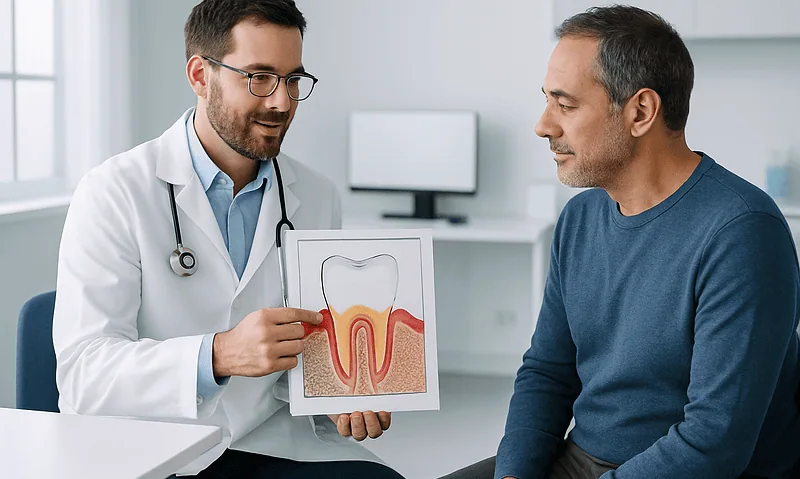
How Periodontal Disease Develops Below the Gumline and Why SRP Deep Cleaning Is Planned
Periodontal disease begins when bacterial plaque collects along the gumline, inflames the gums (gingivitis) and, if it persists, spreads below the gum to destroy…

Before Clear Aligners Start: Digital Scans, Cavities to Treat and the Aligner Plan
Before starting clear aligners, an orthodontist or dentist usually completes a full dental exam, X-rays, photographs and a digital scan of both jaws. Any…

Canker Sore vs Cold Sore: How to Tell Them Apart in Ten Seconds
Location is the fastest clue. Canker sores are shallow, round ulcers with a white or yellow center that form inside the mouth, on the…
Is a Dental Spa Right for Anxious Patients? Comfort Care Without Cutting Corners
A dental spa can suit many anxious patients when the comfort features sit on top of standard clinical care rather than replacing it. Warm…