

What to Eat on Ozempic: A Dietitian’s Approach to Protein, Fiber and Smaller Meals

Key Takeaways
- In the STEP 1 trial, DEXA scans suggested roughly 40% of weight lost on semaglutide was lean mass, which is why protein and strength training dominate current dietary advice.
- Semaglutide slows gastric emptying, so high-fat meals such as fried foods sit longer and are the most common trigger of the delayed nausea people report a couple of hours after eating.
- Many obesity-medicine specialists suggest 1.0 to 1.5 grams of protein per kilogram of body weight daily during weight loss, well above the 0.8 gram RDA, though direct GLP-1 trial evidence for this target is still limited.
- Constipation affected about one in four trial participants; increasing fiber gradually toward 25 to 38 grams a day with steady fluids is the first-line remedy.
- There is no label, guideline or trial that restricts eggs or coffee on semaglutide; the egg myth most likely stems from sulfur burps that many protein foods can cause during slowed digestion.
- People taking semaglutide alongside insulin or a sulfonylurea face a higher risk of low blood sugar when they eat much less, so a sharp appetite drop should be reported to the prescribing clinician rather than managed alone.
On Ozempic (semaglutide), most dietitians suggest building each smaller meal around a lean protein, adding fiber-rich vegetables, fruit, beans or whole grains gradually, and drinking water through the day. Because the medicine slows stomach emptying, greasy, fried and very sugary foods often worsen nausea, while small, protein-first meals eaten slowly tend to feel best. No food is forbidden; your prescribing clinician and a registered dietitian can tailor the details.
The plate looked like a leftover from someone else’s dinner: half a chicken thigh, three roasted carrots, a spoon of rice pushed to the rim. “I used to finish this and want dessert,” a patient told her dietitian a few weeks into semaglutide. “Now I’m full before I’m halfway through, and I have no idea whether that’s a problem.” That question, asked in clinics thousands of times a day, is why what to eat on Ozempic has become one of the most-searched nutrition queries of the year.
Two things pushed it into the spotlight. Researchers kept publishing data showing that a meaningful share of the weight lost on GLP-1 medicines can be lean tissue, which turned protein into the headline nutrient. At the same time, viral “Ozempic diet” lists began banning eggs, bread and entire food groups without a single trial behind them.
As of September 2026, the honest answer is less dramatic than the internet suggests, and more useful. Here is what the evidence supports, how strong it is, and what a dietitian would actually put on that half-empty plate.
Why what to eat on Ozempic matters more than any food list
Ozempic is the brand name for semaglutide, a once-weekly injectable medicine approved in the US for type 2 diabetes; a higher-dose version is marketed for weight management under another brand. It belongs to a class called GLP-1 receptor agonists, meaning it mimics a gut hormone that tells the pancreas to release insulin after meals and tells the brain that you have eaten enough.
Two of its effects change how food behaves inside you. First, it slows gastric emptying, the rate at which the stomach passes food into the small intestine. A meal that once left the stomach in a couple of hours may linger noticeably longer, which is why a normal portion can suddenly feel like a holiday feast. Second, it dampens appetite signals in the hypothalamus, so hunger arrives later and leaves sooner.
Neither effect is a problem in itself. The trouble starts when eating habits built for a fast-emptying stomach collide with a slow one. Large, fatty meals sit heavily and provoke nausea. Skipping meals because hunger never showed up leads to fatigue, headaches and, over months, the loss of muscle you would rather keep. And when total intake drops sharply, every bite carries more responsibility: protein, fiber, iron and calcium now have to arrive in a much smaller volume of food.
That is the real reason nutrition on this medicine deserves attention. The goal is not a punitive list of banned foods. It is making sure a smaller appetite still delivers the building blocks your body needs, while steering around the textures and fat loads that make a slower stomach complain. A registered dietitian, a nutrition professional with clinical training and licensure, can translate these principles into meals that fit your culture, budget and diagnosis.
What changed recently
Several dated developments explain why this conversation feels newly urgent.

In 2021, the STEP 1 trial, published in the New England Journal of Medicine and indexed on PubMed, reported that adults with obesity taking semaglutide for weight management lost an average of about 15% of body weight over 68 weeks, compared with roughly 2% on placebo. A substudy using DEXA scans, a low-dose X-ray that separates fat from lean tissue, found that around 40% of the weight lost was lean mass. That single figure has driven most of the current focus on protein and strength training.
In late 2023 and 2024, the US prescribing information summarized on MedlinePlus was updated to include ileus, a temporary halt in bowel movement, among reported effects, and to advise patients to tell any surgeon or anesthesiologist that they take the medicine, because food may remain in the stomach longer than expected before a procedure.
Through 2025, several US medical societies jointly published clinical advice on nutrition during GLP-1 therapy, emphasizing adequate protein, fiber, fluids and resistance exercise rather than restrictive food rules. Mayo Clinic’s and Cleveland Clinic’s patient pages were revised in the same period to describe gradual dietary adjustment as the standard approach to nausea.
Meanwhile, the social-media side of the story accelerated. Claims that eggs, bread, coffee or dairy are “not allowed” on semaglutide spread widely despite appearing in no label, guideline or trial. The gap between what is documented and what is circulating is the reason this article grades its evidence section by section.
What the evidence actually says about eating on semaglutide
Nutrition advice for people on GLP-1 medicines rests on three tiers of evidence, and it is worth knowing which is which.
Strong (randomized trials): The weight-loss and blood-sugar effects of semaglutide are well established across the STEP and SUSTAIN trial programs. The frequency of digestive side effects is also trial-grade: in STEP 1, roughly 44% of participants reported nausea, about 30% diarrhea, 24% vomiting and 24% constipation, most often during dose increases and usually easing over weeks. That lean mass makes up a substantial share of weight lost is documented in trial substudies.
Moderate (observational and extrapolated): The idea that higher protein intake, around 1.0 to 1.5 grams per kilogram of body weight daily, helps preserve muscle during weight loss comes largely from studies of calorie restriction and bariatric surgery, not from trials designed around semaglutide. It is biologically plausible and widely recommended, but direct GLP-1-specific trial proof is still limited.
Expert opinion (clinical experience): Most practical tips you will read, including eat slowly, stop at comfortable fullness, avoid greasy foods when nauseated, and choose bland options on bad days, are consensus advice from clinicians and dietitians, echoed on Mayo Clinic and Cleveland Clinic pages. They make sense mechanistically and rarely cause harm, but no one has run a randomized trial of “small meals versus large meals on Ozempic.”
What does this mean for you? Trust the side-effect numbers and the lean-mass warning. Treat the protein target as sensible guidance your clinician can personalize. And regard any confident claim that a specific food is forbidden as opinion until someone shows you the data.
Protein intake on GLP-1 medicines: how much and from where
If one nutrient deserves top billing when your appetite shrinks, it is protein. Muscle is metabolically active tissue; losing it lowers resting energy use, weakens grip and balance, and makes regaining fat easier later. The DEXA data from semaglutide trials suggest that without deliberate effort, a meaningful portion of weight lost will come from muscle rather than fat.
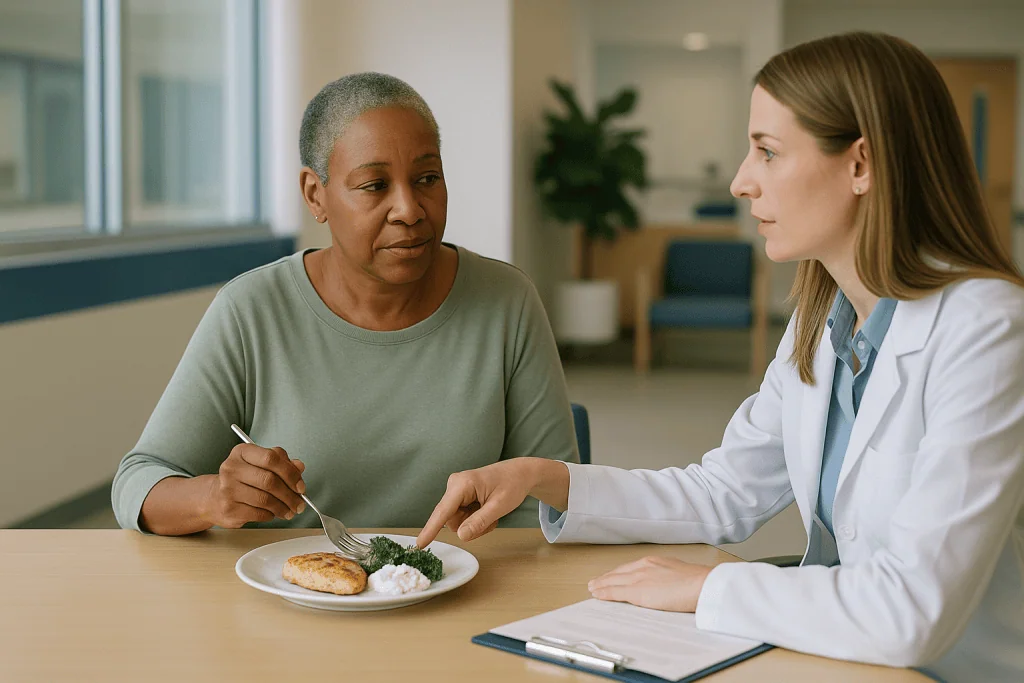
The US Recommended Dietary Allowance for adults is 0.8 grams of protein per kilogram of body weight per day, a floor designed to prevent deficiency in people who are not losing weight. During intentional weight loss, many obesity-medicine specialists suggest aiming higher, often 1.0 to 1.5 grams per kilogram, spread across the day. For a 90-kilogram adult that lands between roughly 90 and 135 grams daily. Whether you should be at the low or high end depends on kidney function, age and activity, which is a conversation for your prescribing clinician.
The practical challenge is volume. A person eating half of what they once did cannot simply eat twice as much chicken. Strategies dietitians commonly use include:
- Eating the protein portion first, before vegetables or starch, while appetite is present.
- Choosing dense sources: Greek yogurt, cottage cheese, eggs, fish, poultry, tofu, lentils, edamame.
- Using milk or fortified soy milk instead of water in oatmeal or smoothies.
- Keeping a protein-rich snack, such as a cheese stick or a hard-boiled egg, for days when a full meal feels impossible.
Powders and shakes can fill a gap on rough days, but food generally brings iron, zinc and B vitamins along for the ride. Fatty cuts of meat and fried proteins, meanwhile, tend to aggravate nausea because fat slows an already slow stomach. Grilled, baked or poached versions are the same protein with a gentler landing.
Which fiber foods help on Ozempic, and which backfire
Fiber is the part of plant food your body cannot digest, and it does double duty on semaglutide. Constipation affects roughly one in four people in trials, and fiber plus fluid is the first-line remedy. Fiber also steadies blood sugar after meals, which matters for anyone using the medicine for type 2 diabetes.
US guidance from MedlinePlus and the CDC points to about 25 grams a day for women and 38 grams for men, though most Americans get roughly half that. Reaching the target on a small appetite takes some planning, and rushing it is a classic mistake. A sudden jump from 12 grams to 35 grams, on top of a stomach that empties slowly, produces gas, bloating and cramping that many people wrongly blame on the medicine. Increasing by a few grams every several days, with a glass of water alongside, is the gentler route.
Not all fiber behaves the same way. Soluble fiber, which dissolves in water and forms a soft gel, is found in oats, beans, apples, pears, chia seeds and psyllium. It is usually the better-tolerated kind when nausea is around and helps with both constipation and loose stools. Insoluble fiber, the roughage in wheat bran, raw kale and vegetable skins, adds bulk but can feel scratchy when the stomach is irritable.
Foods that tend to earn their place:
- Cooked oats, lentil soup, black beans, hummus.
- Berries, kiwi, cooked pears or apples.
- Steamed or roasted carrots, zucchini, green beans.
- Whole-grain toast in modest amounts.
Foods that often backfire when symptoms flare: large raw salads, big servings of cruciferous vegetables, and heavily fried anything. None are unhealthy; they are simply poorly timed. Save them for weeks when your stomach is settled, and reintroduce them one at a time.
Eating smaller meals on GLP-1: a daily rhythm that works
The single most useful habit on semaglutide is also the least glamorous: eat smaller amounts, more slowly, and stop before you feel stuffed. Because fullness signals now arrive earlier and the stomach empties later, the old cue of “one more bite” frequently tips into nausea an hour after the meal.
Most clinicians suggest three modest meals with one or two planned snacks rather than grazing all day or squeezing everything into a single large dinner. Grazing keeps the stomach perpetually working and can leave you queasy by evening. A single large meal overwhelms it. A predictable rhythm, breakfast, midday meal, afternoon snack, early dinner, gives the stomach time to clear between loads.
Concrete adjustments patients find helpful:
- Serving food on a smaller plate so a half portion looks complete rather than sad.
- Putting the fork down between bites and aiming for a meal that lasts 20 minutes.
- Eating dinner at least two to three hours before lying down, since reflux is common when a full stomach meets a horizontal body.
- Sipping fluids between meals rather than drinking a large glass with food, which adds volume on top of volume.
Fullness on this medicine can feel different from what you remember. Some people describe a quiet absence of interest in food rather than a satisfied glow. Others notice fullness building after they stop eating, not during. Learning your new signals takes a few weeks, and a food-and-symptom diary can speed that up.
One caution: smaller meals should not become no meals. Skipping breakfast and lunch because hunger never arrived is one of the most common paths to fatigue, dizziness and muscle loss. If appetite is so low that you cannot manage three small meals, that is worth mentioning to your clinician, not something to push through.
Foods to avoid on semaglutide: the honest list
Strictly speaking, no food is contraindicated with semaglutide. There is no interaction like the one between grapefruit and certain statins. What exists instead is a set of foods that predictably make side effects worse, and a set of foods that undercut the goals of the treatment.
Foods that commonly worsen nausea, reflux or bloating on a slowed stomach:
- Fried and greasy foods: fried chicken, french fries, doughnuts, heavy cream sauces. Fat slows gastric emptying further and sits like a stone.
- Very large portions of anything, including healthy foods.
- Highly sweet items eaten alone: candy, pastries, sugary drinks. Concentrated sugar can trigger queasiness and, in people with diabetes, sharp glucose swings.
- Carbonated drinks, which add gas to a stomach already holding food longer.
- Spicy dishes for those prone to reflux.
- Alcohol, which irritates the stomach lining and, for some, worsens nausea.
Foods that undermine treatment goals without necessarily causing symptoms: ultra-processed snacks that deliver calories with little protein or fiber. When appetite is small, a bag of chips can crowd out the yogurt or beans your muscles needed that day.
The distinction matters because banning foods outright tends to backfire. People who are told “never eat bread” often abandon the whole plan after the first sandwich. Framing it as “greasy foods usually make me feel sick right now” keeps the decision practical and reversible. Many people find that as side effects settle after the first few months, foods that were rough early on become tolerable in modest portions.
What you should not do is stop or change your medicine to make room for a favorite meal. If a food you value consistently causes trouble, that is a question for your prescribing clinician or dietitian, who can suggest timing or preparation changes.
Can I eat a hamburger on Ozempic?
Yes. A hamburger is not on any prohibited list, and pretending otherwise sets people up for guilt and abandonment of a treatment that may be helping them. The more useful question is how a hamburger behaves in a slowed stomach, and how to make one that agrees with you.
A typical fast-food double cheeseburger with fries carries a large load of fat, often 40 grams or more, alongside a big volume of food. On semaglutide, that combination frequently produces the delayed, heavy nausea people describe a couple of hours after eating. The burger did not become poison; the portion and fat content simply overwhelmed a stomach that now works more slowly.
Approaches that keep the burger and lose the misery:
- Choose a single patty, ideally leaner ground beef, turkey or a bean patty.
- Skip or halve the fries. Many people find the fries, not the burger, are the real culprit.
- Add lettuce, tomato and onion for fiber and volume that digests easily.
- Eat half, wait 15 minutes, and see whether you genuinely want the rest.
- Pair it with water rather than a soda or milkshake.
The protein in a beef patty is a genuine asset. Roughly 20 grams of protein in a quarter-pound patty helps meet the muscle-preservation target that matters during weight loss. Heme iron from red meat also helps some people whose iron intake drops when meals shrink.
Timing helps too. Early in treatment and during weeks when your clinician increases the dose, digestive side effects peak; that is not the week to test a bacon double. A few months in, once the stomach has adapted, many people manage a modest burger without a second thought. Food should still bring pleasure on this medicine, and a well-built hamburger can be part of that.
Why can't I eat eggs on Ozempic? (You can.)
Few viral claims have spread further than the idea that eggs are banned on semaglutide. Search that question and you will find confident lists, dramatic videos and almost no evidence. The prescribing information does not mention eggs. No trial excluded them. Mayo Clinic, Cleveland Clinic and MedlinePlus list no egg restriction. Where did it come from?
The likeliest source is a real but unrelated symptom: sulfur burps. Some people on GLP-1 medicines report belches with a rotten-egg smell. The odor comes from hydrogen sulfide produced when protein-rich food, including but not limited to eggs, sits longer in the stomach and gut during slowed digestion. Eggs happen to be a food people eat daily, so they take the blame. Meat, cruciferous vegetables, dairy and alcohol can produce the same effect.
Eggs are, in fact, one of the most practical foods for this medicine. One large egg delivers about 6 grams of high-quality protein, along with vitamin B12, choline and vitamin D, in a small volume that suits a shrunken appetite. Scrambled with a little milk, poached, or hard-boiled as a snack, they are gentle on most stomachs. The version that causes trouble is the greasy diner plate: eggs fried in butter, beside bacon, sausage and hash browns. That is a fat problem, not an egg problem.
If eggs genuinely disagree with you, a few adjustments usually solve it. Cook them with minimal added fat, eat them slowly, and avoid pairing them with other heavy foods. People with a known egg allergy should of course continue avoiding them, medicine or not.
The broader lesson is worth carrying to every “you can’t eat X on Ozempic” claim you encounter: ask whether the source can point to a label, a guideline or a study. If the answer is a video with a countdown timer, treat it as entertainment.
A semaglutide diet plan for one day: what a dietitian would plate
Sample days are only illustrations; your needs depend on body size, kidney function, diabetes status and preferences. Still, seeing how protein, fiber and small portions fit together in real food is more useful than another abstract rule. The day below is built for someone in the adjustment phase who is eating roughly half their former volume.
| Meal | Example | Approx. protein | Approx. fiber | Why it works |
|---|---|---|---|---|
| Breakfast | Plain Greek yogurt with berries and a spoon of ground flaxseed | 17 g | 6 g | Protein first, soluble fiber, small volume |
| Midday | Lentil soup and a slice of whole-grain toast | 15 g | 10 g | Warm, soft, easy on a slow stomach |
| Snack | Hard-boiled egg and a kiwi | 7 g | 2 g | Portable protein, gentle fiber |
| Dinner | Baked salmon, roasted carrots, small scoop of quinoa | 28 g | 6 g | Lean protein, cooked vegetables, modest starch |
| Evening (optional) | Cottage cheese with sliced pear | 12 g | 3 g | Adds protein if dinner was small |
| Total | ≈79 g | ≈27 g |
Notice what the table does not do. It does not eliminate carbohydrates; quinoa and toast appear because whole grains carry fiber and B vitamins. It does not rely on shakes. It does not include any raw, gassy vegetables, which can return once symptoms settle. And it keeps every meal small enough that finishing is realistic.
For a larger person or someone lifting weights regularly, the protein column would need to climb, perhaps through a bigger salmon portion or an extra dairy serving. For someone with type 2 diabetes, a dietitian might trim the fruit at snack time and check how the toast affects glucose readings. The scaffold stays the same: protein anchors each meal, fiber arrives cooked and gradual, and volume stays modest.
Fluids, alcohol and coffee on Ozempic
Thirst signals fade for some people alongside hunger, and dehydration is an underappreciated cause of the headaches, fatigue and constipation blamed on the medicine. Vomiting or diarrhea during dose changes makes fluid loss worse. Most adults do well aiming for pale-yellow urine and drinking steadily through the day, sipping between meals rather than gulping with food.
Water remains the default. Broth-based soups count and double as a way to get warm, soft nutrition on queasy days. Milk and fortified plant milks contribute protein and calcium. Sugary sodas and juices add concentrated sugar that can worsen nausea and, for people with diabetes, push glucose upward. Carbonation adds gas to a stomach already holding its contents longer.
Coffee is another casualty of internet myth. There is no documented interaction between caffeine and semaglutide. Some people find black coffee on an empty stomach harsh when reflux is active; taking it with a small breakfast or switching to a gentler brew usually resolves that. Large, sweet, cream-heavy coffee drinks are a different matter, delivering fat and sugar that behave like dessert.
Alcohol deserves a more careful word. It does not chemically interact with semaglutide, but it irritates the stomach lining, worsens reflux and nausea for many, and adds calories with no protein or fiber. For people with type 2 diabetes who also take insulin or a sulfonylurea, a class of older diabetes tablets, alcohol raises the risk of low blood sugar. Some people on GLP-1 medicines report they simply want alcohol less, an observation being studied but not yet established in randomized trials. If you drink, moderation, food alongside, and a conversation with your clinician are the sensible course.
How do I speed up weight loss on Ozempic? An honest answer
This is among the most-searched questions about the medicine, and the honest answer disappoints at first: the strategies that make weight loss faster are usually the ones that make it less healthy and less durable. The strategies that make it better are about what you keep, not how quickly the scale drops.
In trials, weight loss on semaglutide continued gradually for over a year before leveling off. That pace is not a failure to be hacked. Rapid loss driven by eating very little increases the share of weight lost as muscle, raises the risk of gallstones, which appear more often during fast weight loss, and tends to produce hair shedding and fatigue.
What the evidence does support:
- Resistance training. Strength work at least two days a week, per the American Heart Association and CDC physical-activity guidance, is the best-documented way to hold on to muscle during any weight loss. Bodyweight squats, resistance bands and light dumbbells all count.
- Protein at every meal. Covered above; it works with the training, not instead of it.
- Sleep and regular meals. Short sleep and skipped meals both push people toward late-evening eating of low-protein foods.
- Walking after meals. A 10- to 15-minute walk aids digestion and blunts glucose spikes.
What you should not do is adjust your injection schedule, skip doses, take extra, or combine the medicine with anything bought online in hopes of faster results. Dose changes belong entirely to your prescribing clinician, who is weighing your side effects and labs. Nor should you cut calories to extremes; very low intake undermines the muscle-sparing goal that makes this treatment worthwhile.
A reframe helps. Instead of asking how to lose faster, ask what you will look like at the end: stronger or frailer? The choices that answer “stronger” are the ones worth speeding up.
Eating on Ozempic with type 2 diabetes: what is different
Ozempic’s approved use is type 2 diabetes, and many readers are taking it for blood sugar rather than weight. The protein-first, fiber-gradual, smaller-meal framework still applies, with a few additional layers.
Semaglutide alone rarely causes hypoglycemia, a blood sugar low enough to cause shakiness, sweating or confusion, because it raises insulin only when glucose is high. The picture changes when it is combined with insulin or a sulfonylurea. Eating far less than usual while those medicines remain at their previous doses can tip glucose too low. MedlinePlus and Mayo Clinic both advise anyone on such combinations to monitor closely and to tell their clinician if appetite drops sharply, so that companion medicines can be reviewed. That review is the clinician’s job, never a self-adjustment.
Carbohydrate quality matters more than carbohydrate elimination. Whole grains, beans, lentils, fruit and starchy vegetables carry fiber that slows glucose absorption, and the NHS and CDC both recommend them as part of diabetes eating. Refined carbohydrates and sugary drinks, which raise glucose quickly and offer little else, are the reasonable targets for cutting back. Pairing any carbohydrate with protein and fiber, a slice of toast with an egg rather than alone, flattens the post-meal rise.
The slowed stomach also changes timing. Because food enters the bloodstream later, some people notice glucose readings peak later than they used to after a meal. If you check glucose at home, a reading two hours after eating may tell a different story than it did before. Share that pattern with your care team rather than interpreting it alone.
Finally, illness days demand extra attention. Vomiting or diarrhea combined with reduced intake raises dehydration risk, which is harder on the kidneys for people with diabetes. Sip fluids steadily, and contact your clinician if you cannot keep liquids down.
Common myths about what to eat on Ozempic
Viral claims travel faster than trial results. Here are the ones clinicians hear most, checked against what is actually documented.
“You can’t eat eggs.” False. No label, guideline or study restricts eggs. The myth likely grew from sulfur burps, which many protein foods can cause during slowed digestion. Eggs are among the most useful compact proteins for a small appetite.
“Carbs are forbidden.” False. Whole grains, beans and fruit supply the fiber that treats the medicine’s most common complaint after nausea, constipation. Refined sugar is worth limiting; carbohydrates as a category are not.
“You don’t need to eat if you’re not hungry.” Harmful. Trial data show lean mass loss is substantial without effort to prevent it. Skipping meals accelerates that loss and invites fatigue, dizziness and gallstones.
“Coffee cancels the medicine.” No evidence. There is no documented interaction. Reflux with coffee on an empty stomach is a comfort issue, not a pharmacological one.
“Protein shakes are essential.” Overstated. Shakes are a convenient backup, but whole foods bring iron, calcium and B vitamins that powders often lack. Most people can meet protein needs with food and planning.
“If the food list is followed, side effects disappear.” Not quite. Food choices reduce nausea and constipation meaningfully, but roughly four in ten trial participants had nausea at some point regardless. Side effects that persist beyond the adjustment weeks are a medical conversation, not a sign you ate wrong.
“Any semaglutide bought online is the same.” Compounded or imported products marketed online are not the FDA-approved medicine and are not for self-use; the FDA has warned about dosing errors and contamination in such products. Diet cannot compensate for an unregulated drug.
When to see a doctor while eating on Ozempic
Most digestive symptoms on semaglutide are mild, peak during dose increases and fade over weeks with the food adjustments described above. A smaller set of signs need prompt medical attention, and no dietary change should be used to wait them out.
Contact your prescribing clinician promptly, or seek urgent care, if you experience:
- Severe, persistent abdominal pain, especially pain that radiates to the back, with or without vomiting. This can signal pancreatitis/">pancreatitis, inflammation of the pancreas, a rare but serious listed risk.
- Pain in the upper right abdomen, fever, yellowing of the skin or eyes, or clay-colored stools, which may indicate gallbladder problems, more common during rapid weight loss.
- Vomiting that prevents you from keeping down fluids for more than a day, or signs of dehydration such as very dark urine, dizziness on standing, or a racing heart.
- Severe constipation with abdominal swelling and no bowel movement for several days, or vomiting with a distended belly, which could indicate ileus.
- Symptoms of low blood sugar, such as shakiness, sweating, confusion or a rapid heartbeat, particularly if you also take insulin or a sulfonylurea.
- A lump or swelling in the neck, hoarseness or trouble swallowing, which the label lists as reasons to seek evaluation.
- Changes in vision, in people with diabetic eye disease.
- Signs of an allergic reaction: rash, swelling of the face or throat, difficulty breathing. Call emergency services.
Also book a routine appointment, rather than pushing on alone, if your appetite is so low that you cannot manage three small meals a day, if you are losing weight faster than your clinician expected, if you notice increasing weakness or hair shedding, or if you have any surgery or procedure scheduled, since the medicine affects stomach emptying under anesthesia.
Every decision about continuing, pausing or adjusting semaglutide, including in response to side effects, rests with the clinician who prescribed it. A registered dietitian can support the nutrition side, but the medication plan is a shared clinical decision, not a solo project.
Frequently asked questions
What should I not eat on Ozempic?
No food is medically forbidden, but fried and greasy foods, very large portions, sugary drinks and sweets, carbonated beverages and alcohol most often worsen nausea and reflux because the medicine slows stomach emptying. Ultra-processed snacks are also worth limiting since they crowd out protein and fiber when appetite is small. Reintroducing foods gradually once side effects settle is reasonable, and persistent problems are worth raising with your clinician or dietitian.
Can I eat a hamburger while on Ozempic?
Yes. A hamburger is not prohibited, and the beef patty supplies useful protein. The trouble usually comes from portion size and fat, particularly a double patty with fries and a shake, which can trigger heavy nausea on a slowed stomach. A single leaner patty with vegetables, half the fries or none, water instead of soda, and eating slowly makes it far more comfortable, especially after the early adjustment weeks.
Why can't I eat eggs on Ozempic?
You can. No prescribing information, guideline or trial restricts eggs on semaglutide. The viral claim likely arose from sulfur-smelling burps, which happen when protein foods of any kind linger in a slowed stomach. Eggs provide about 6 grams of high-quality protein each in a small volume, making them one of the most practical foods for a reduced appetite. Cook them with little added fat and avoid pairing them with greasy sides.
How do I speed up weight loss on Ozempic?
The evidence-supported way to improve results is to protect muscle, not to accelerate the scale: strength training at least twice a week, protein at every meal, regular small meals, adequate sleep and daily walking. Eating very little speeds weight loss but increases muscle loss, fatigue and gallstone risk. Never change your injection schedule or dose on your own; those decisions belong to your prescribing clinician.
What does a semaglutide diet plan look like in a day?
A typical dietitian-designed day anchors each small meal with protein and adds fiber gradually: Greek yogurt with berries at breakfast, lentil soup with whole-grain toast midday, a hard-boiled egg and fruit as a snack, baked fish with cooked vegetables and a small grain at dinner, and cottage cheese in the evening if needed. That pattern delivers roughly 75 to 80 grams of protein and about 27 grams of fiber in modest volumes. Individual needs vary.
How much protein should I aim for on GLP-1 medicines?
Many obesity-medicine clinicians suggest around 1.0 to 1.5 grams of protein per kilogram of body weight daily during active weight loss, above the general 0.8 gram RDA, to help preserve muscle. This target is extrapolated mostly from calorie-restriction and bariatric studies rather than semaglutide trials, so it is sensible guidance rather than proven fact. Kidney function, age and activity affect the right number, which your clinician can personalize.
Which foods to avoid on semaglutide cause the most nausea?
High-fat foods top the list: fried chicken, french fries, pastries, creamy sauces and fatty cuts of meat. Fat slows an already slowed stomach, producing the heavy, delayed nausea many people describe. Large portions, concentrated sweets and fizzy drinks come next. Symptoms typically peak during dose increases and ease over several weeks, so foods that trouble you early often become tolerable later in modest amounts.
Is eating smaller meals on GLP-1 medicines better than three normal meals?
Most clinicians recommend three modest meals plus one or two planned snacks rather than either large meals or all-day grazing. Large meals overwhelm a slowed stomach, while constant grazing never lets it clear. Eating slowly over about 20 minutes, stopping at comfortable fullness, and finishing dinner two to three hours before bed help reduce nausea and reflux. This advice is expert consensus, not the result of a randomized trial.
Can I drink coffee or alcohol on Ozempic?
Coffee has no documented interaction with semaglutide; if it irritates your stomach, having it with a small breakfast usually helps. Alcohol also has no direct interaction but commonly worsens nausea and reflux, adds empty calories, and raises hypoglycemia risk for people who also take insulin or a sulfonylurea. If you drink, keep it moderate, eat alongside it, and discuss your pattern with your clinician.
Does Ozempic make you lose muscle, and can diet prevent it?
Trial substudies using DEXA scans found that a substantial share of weight lost on semaglutide, around 40% in STEP 1, was lean tissue. That is similar to other forms of rapid weight loss and is not unique to the medicine. Adequate protein spread across meals combined with resistance training at least twice weekly is the best-supported strategy to limit muscle loss, though large trials testing this specifically on GLP-1 medicines are still emerging.
References
- Semaglutide Injection: MedlinePlus Drug Information
- GLP-1 Agonists: Cleveland Clinic
- Dietary Fiber: MedlinePlus
- Type 2 diabetes: Food and keeping active: NHS
This article is for general information only and is not a substitute for professional medical advice. Please consult a qualified doctor about your individual situation.

More from the Blog

The GLP-1 Diet: What to Eat to Support (or Naturally Boost) Your Own Gut Hormones
A GLP-1 diet is not an official eating plan. It describes two things: foods that modestly stimulate your own glucagon-like peptide-1, mainly protein, fiber-rich…

Survodutide: The Glucagon-GLP-1 Dual Agonist Being Studied for Obesity and Liver Disease
Survodutide is an investigational injectable peptide that activates both the glucagon receptor and the GLP-1 receptor. In phase 2 trials it produced average weight…

Ozempic Feet: What Rapid Weight Loss Does to the Fat Pads of the Feet
Ozempic feet is a social-media term, not a medical diagnosis. It describes feet that look bonier or feel sore under the heel or ball…

Is Ozempic Safe? What Years of Semaglutide Data Say About Risks and Benefits
Ozempic (semaglutide) is considered safe for most adults with type 2 diabetes when prescribed and monitored by a clinician. Large randomized trials covering tens…

Food Noise: Why GLP-1 Medicines Quiet It, and What Helps When You Are Not on Them
Food noise is the persistent, intrusive stream of thoughts about food that continues when the body does not need fuel. GLP-1 medicines such as…

Weight Loss Injections Explained: The Approved Medicines, How They Differ and Who Qualifies
Weight loss injections are prescription medicines that mimic gut hormones to reduce appetite and slow digestion. Three are FDA-approved for chronic weight management: semaglutide…