

When Is Surgery Considered in Androgen Insensitivity Syndrome? Gonadal Risk and Timing Weighed

Key Takeaways
- In complete AIS, germ cell tumor risk before puberty is under 1% in reported series, and the 2006 international consensus classified overall risk as low at roughly 2%.
- The widely repeated estimate of about one-in-three lifetime risk in CAIS traces to a small 1976 case series and is not a reliable modern figure.
- Internal testes in CAIS produce testosterone that the body converts to estrogen, which drives spontaneous puberty and protects bone, so removing them means lifelong hormone replacement.
- Partial AIS with gonads outside the scrotum was placed in the high-risk category (an estimated 50% in small series) by the 2006 consensus, which is why surgery is discussed earlier in that group.
- No surveillance method, including ultrasound, MRI or tumor markers, has been validated to detect the microscopic precursor stage of germ cell tumors in retained AIS gonads.
- Gonadectomy in AIS is almost always laparoscopic, and the NHS describes keyhole abdominal surgery as typically allowing discharge the same day or after one night with recovery over days to weeks.
In complete androgen insensitivity syndrome, removing the gonads (gonadectomy) is usually considered only after puberty has finished, because the risk of a gonadal germ cell tumor is low in childhood and the testes drive natural puberty. Some adults choose to keep their gonads under surveillance instead. In partial AIS with gonads outside the scrotum, risk is higher and surgery is discussed earlier. The decision rests with a specialist team.
The appointment letter said “routine review.” It did not feel routine. She was nineteen, two years past the ultrasound that explained why her periods had never started, and the endocrinologist had just asked a question she had been quietly dreading: had she thought any more about whether she wanted her gonads removed?
For families living with androgen insensitivity syndrome, the AIS gonadectomy decision is rarely a single conversation. It tends to unfold over years, shaped by tumor statistics that are older and thinner than most people assume, by the surprising amount of work internal testes do during adolescence, and by a shift in medical thinking that has moved the default from “remove early” to “discuss, and often wait.”
This article walks through what the evidence actually says about gonadal risk, why timing matters more than it once seemed to, what surgery and surveillance each involve, and which questions are worth bringing to the specialist team that will guide the choice.
What androgen insensitivity syndrome is, and how it actually works
Androgen insensitivity syndrome (AIS) is a genetic condition in which the body’s cells cannot respond normally to androgens, the group of hormones that includes testosterone. The cause sits in a single gene on the X chromosome, the androgen receptor gene, which builds the protein that lets cells “hear” testosterone. When that receptor is faulty or absent, testosterone can be present in normal or even high amounts, yet the tissues behave as though it were not there.
A person with AIS has a 46,XY chromosome pattern and develops testes, which sit inside the abdomen or in the groin rather than in a scrotum. Because the body cannot use the testosterone those testes make, external development follows a different path. In complete AIS (CAIS) the external genitals are typically female, there is no uterus, and the vagina is often shorter than average. In partial AIS (PAIS) the receptor works a little, so genital development sits somewhere along a spectrum, and children may be raised as girls or boys depending on circumstances. Mild AIS mostly affects fertility or puberty in people with otherwise typical male development.
How common is it? MedlinePlus Genetics estimates that CAIS affects roughly 2 to 5 in every 100,000 people born with a Y chromosome, and that PAIS is thought to be at least as common. Diagnosis often arrives in one of two moments: in infancy or early childhood, when a hernia repair reveals a testis where none was expected, or in the mid-teens, when puberty brings breast development but no periods. The NHS describes both routes.
The hormone picture is what makes the gonad question so distinctive. Those internal testes produce testosterone, and the body converts part of it into estrogen through an enzyme called aromatase. Estrogen receptors work normally in AIS. That single fact explains why puberty can happen spontaneously, and why the gonads are far more than passengers.
Why the AIS gonadectomy decision is more debated than it used to be
For much of the twentieth century, the pathway was straightforward: diagnose AIS, remove the testes, usually in childhood, and prescribe hormones later. The reasoning rested on a real concern. Testes that develop abnormally or sit outside the scrotum can carry a higher chance of germ cell tumors, which are cancers arising from the cells that would otherwise form sperm. Removing the gonads removed the worry.
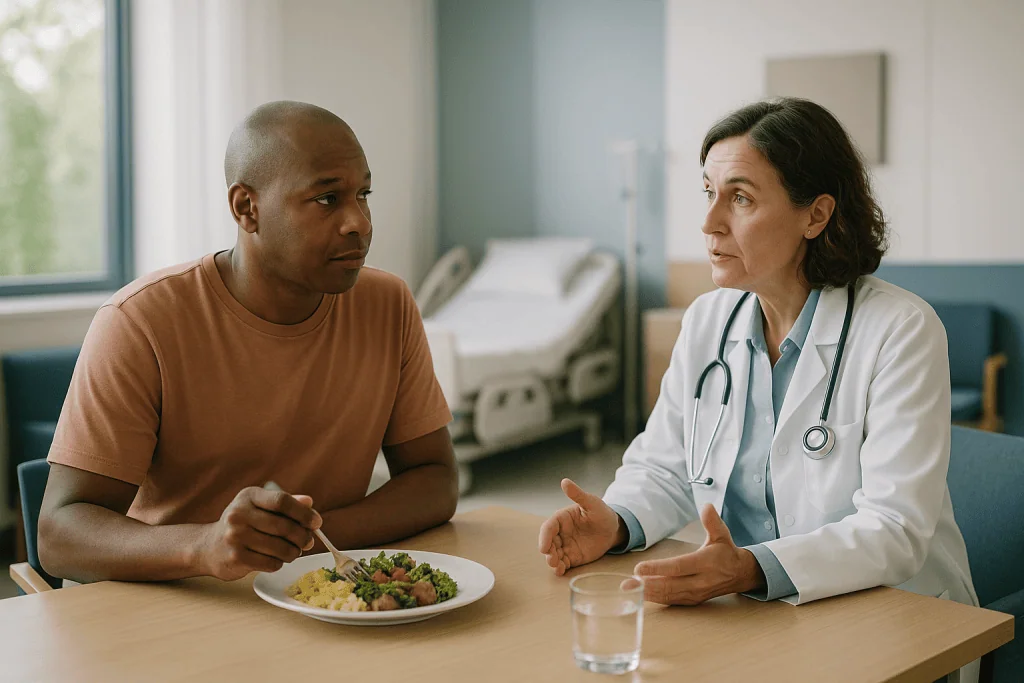
Three things unsettled that consensus. First, the numbers behind the worry turned out to be less solid than their confident repetition suggested. Many quoted lifetime risks traced back to small case series from the 1970s, a point made plainly in a 2012 review in Clinical Endocrinology that examined the evidence for timing gonadectomy in adults with CAIS. Second, the 2006 international consensus statement on the management of what it then called intersex disorders (published in Archives of Disease in Childhood) formally classified CAIS as a low-risk condition for germ cell malignancy, estimating risk at around 2%, and noted that gonadectomy in CAIS could reasonably be deferred until after puberty. Third, adults who had been through early surgery began to say, in surveys and clinics, that they wished they had been asked.
The 2016 global update to that consensus, published in Hormone Research in Paediatrics, went further, acknowledging that some adults with CAIS may choose to retain their gonads under surveillance, while being candid that surveillance methods have not been validated. In other words, the field moved from a protocol to a conversation.
That is why the AIS gonadectomy decision now involves three distinct questions rather than one: how large is the tumor risk for this particular person, what would the gonads contribute if left in place, and how does the individual weigh a low but uncertain cancer risk against surgery and lifelong hormone replacement? Each of those has an evidence base, and none of them has a universal answer.
What is the androgen insensitivity syndrome cancer risk in CAIS?
Start with what is best established: the risk of a germ cell tumor in CAIS before puberty is very low. The 2016 consensus update summarizes pediatric series in which malignancy was found in under 1% of prepubertal gonads removed from children with CAIS. Whatever a family decides, there is broad agreement that childhood is not a time when cancer risk forces the issue.
The picture in adulthood is murkier, and honesty about that murkiness matters. The often-quoted figures of 3.6% risk by age 25 and about 33% by age 50 come from a 1976 analysis of a small number of historical cases, as the 2012 Clinical Endocrinology review points out. Those patients were diagnosed and followed in a different era, with different definitions of what counted as a tumor, and the series was tiny by modern standards. Later reviews, including the 2016 update, place adult estimates across a wide band, from under 1% to over 20%, and describe the data as limited.
Two features of CAIS gonads complicate the arithmetic. Pathologists frequently find germ cell neoplasia in situ, sometimes called precursor lesions, in gonads removed after puberty. These are abnormal cells that have not become an invasive cancer, and it is not known what proportion would ever progress in a person with CAIS. Counting them inflates risk figures; ignoring them may understate risk. Reviews also note that the cells most prone to malignant change appear to be those exposed to a partially working androgen receptor, which may help explain why CAIS carries lower risk than PAIS.
What a careful clinician can say, then, is this: the chance of a gonadal cancer in an adult with CAIS is real but appears low, it probably rises gradually with age, and the precise number is not known. That uncertainty is not a reason for alarm. It is the honest backdrop against which the timing question is weighed.
How partial AIS changes the gonadal tumor risk in AIS
Partial AIS is a different calculation, and it is worth being clear about why. In PAIS the androgen receptor functions to some degree, and the germ cells inside the testis are exposed to a hormonal environment that seems, on current understanding, to leave them more vulnerable to malignant change than in CAIS. Position matters too: a testis that sits in the abdomen is warmer and harder to examine than one in the scrotum.

The 2006 consensus statement placed PAIS with non-scrotal gonads in its high-risk category, quoting an estimated germ cell malignancy risk of around 50%, while flagging that this figure came from a small number of cases. PAIS with gonads in the scrotum was classed as unknown risk, because scrotal testes can be examined by hand and by ultrasound, and the available series were too small to produce a figure. The 2016 update did not overturn this ranking, though it repeated the caution that all of these percentages rest on limited data.
Management therefore diverges from CAIS:
- When a child with PAIS is raised as a boy and the testes are in the abdomen or groin, surgeons often discuss bringing them down into the scrotum (an operation called orchidopexy) so that they can be monitored and so that any testosterone the body can use is preserved.
- When gonads cannot be brought down, or when a child is raised as a girl and the gonads would produce unwanted androgen effects at puberty, earlier removal is more commonly discussed.
- In adolescence and adulthood, scrotal testes in PAIS are usually kept under self-examination and periodic imaging rather than removed pre-emptively.
None of these is automatic. The degree of receptor function, the gonad position, the sex of rearing and the person’s own wishes all feed into the recommendation, which is why PAIS care is typically coordinated by a multidisciplinary team rather than a single specialist.
What the gonads do if they stay: puberty, estrogen and bone
It is easy to think of the testes in CAIS as inert tissue that carries risk and nothing else. Physiology says otherwise. Those gonads produce testosterone in amounts that are often at or above the typical male range, and the aromatase enzyme in fat, bone and other tissues converts a share of it into estradiol, the main form of estrogen. Estrogen receptors work normally in AIS, so this estrogen does everything estrogen usually does.
During adolescence that means spontaneous puberty. Breast development begins, hips broaden, growth accelerates and then slows as the growth plates in the long bones close, all without any prescribed medicine. Because the body cannot respond to androgens, there is little or no pubic and underarm hair, which is one of the observations that sometimes prompts investigation. The NHS notes that leaving the testes in place until puberty is complete allows this natural development to happen.
Bone is the second reason clinicians pause before removal. Estrogen is the principal hormone protecting bone density in every sex, and people with AIS appear to start from a somewhat lower baseline, possibly because androgen signalling contributes to bone strength and is absent. The 2012 review found lower bone density in women with CAIS whether or not they had undergone gonadectomy, but noted that those who had surgery and did not maintain hormone replacement fared worst. Retained gonads supply estrogen continuously and without the need to remember a prescription.
There are also less measurable considerations that adults with CAIS frequently raise: a sense of bodily integrity, wariness about a lifelong medicine, and the observation that many other body tissues rely on hormones in ways that are not fully mapped. The evidence does not settle these points, and it does not need to. They are legitimate parts of the balance, and a good care team will ask about them directly.
CAIS gonadectomy timing: who is usually offered surgery, and who is asked to wait
Current consensus does not assign a fixed age. It describes situations, and the situations sort roughly into three groups.
Surgery is more commonly recommended sooner when tumor risk is judged high or when the gonads are working against the person’s development. That typically means PAIS with gonads that cannot be brought into the scrotum, or a child with PAIS being raised as a girl whose testes would otherwise produce androgen effects at puberty that the body can partly respond to. Gonads that cannot be located or imaged reliably also weigh toward removal, because surveillance depends on being able to see them. In these cases the 2006 consensus statement supported gonadectomy at the time of diagnosis, with hormone replacement introduced at the age puberty would normally begin.
Waiting is the usual advice in CAIS diagnosed in childhood. Both the 2006 statement and the 2016 update describe deferring gonadectomy until puberty is complete, so that natural development and growth can occur. Practically, that tends to mean the late teens, once breast development has finished and growth has stopped, though the exact point is individual.
A third group is adults with CAIS who, having reached the age at which surgery would traditionally be scheduled, prefer to retain their gonads. The 2016 update recognizes this as a reasonable choice when the person understands that tumor risk is low but not zero and that surveillance is imperfect. The 2012 review found a substantial share of adult women with CAIS in one survey expressing a preference to keep their gonads once fully informed.
What unites all three groups is that the recommendation follows an assessment of this person’s gonads, receptor function, imaging findings and values. Age is a proxy for puberty status and rising risk, not a rule in itself. That is why two people with the same diagnosis can receive different, equally defensible advice.
Early removal, gonadectomy after puberty, or keep and watch: the options compared
Laid side by side, the three broad approaches trade different things against each other. The table below summarizes what the consensus documents and reviews describe; it is a map of considerations, not a scoring system, and the weight given to each row is personal.
| Consideration | Gonadectomy in childhood | Gonadectomy after puberty | Retention with surveillance |
|---|---|---|---|
| Germ cell tumor risk addressed | Yes, but risk in childhood is already very low in CAIS (under 1% in reported series) | Yes, before the gradual adult rise | No; relies on detection, which is unvalidated |
| Spontaneous puberty | Lost; induced with prescribed hormones | Preserved | Preserved |
| Lifelong hormone replacement | Required from the age of puberty | Required from surgery onward | Not required while gonads function |
| Who decides | Parents on the child’s behalf | Adolescent or young adult with team | Adult with team |
| Usual place in current guidance | Reserved for high-risk situations such as non-scrotal PAIS | Historically the standard in CAIS; still common | Recognized option in CAIS for informed adults |
| Main uncertainty | Whether surgery was needed at all | True size of adult risk being removed | Whether imaging would catch an early tumor |
A few points deserve emphasis. The first column is not obsolete; it remains the mainstream recommendation for children whose gonads carry high risk or would drive unwanted development. The second column has the longest track record and removes the need for surveillance entirely. The third column asks the person to accept a small, poorly quantified risk in return for avoiding an operation and a daily medicine, and to commit to follow-up over decades.
Notice what the table does not contain: a row that says one option is right. The 2016 update is explicit that decision-making should be shared, informed by the best available (and admittedly imperfect) evidence, and revisited as the person grows and as knowledge improves.
What gonadal surveillance involves, and what it cannot see
Surveillance means keeping the gonads and checking them at intervals for signs of change. It sounds reassuring, and for many people it is. Its limits, though, are the crux of why the option is described as reasonable rather than recommended.
In practice, surveillance in CAIS usually combines periodic imaging, most often ultrasound or magnetic resonance imaging (MRI, a scan that uses magnetic fields rather than radiation), with clinical review. Some centers add blood tests for tumor markers, which are proteins that certain germ cell tumors release into the bloodstream, and some have proposed a one-off biopsy at or after puberty to look for precursor cells. The 2012 review outlined such a protocol as a suggestion for discussion, not as a validated standard.
The central problem is biological. The earliest abnormal cells, germ cell neoplasia in situ, cause no symptoms and do not change the size or texture of the gonad in a way scans can detect. Imaging finds masses; it does not find microscopic change. Tumor markers are elevated in only some tumor types and usually only once a tumor is established. A biopsy samples a fragment of tissue and can miss patches of abnormal cells elsewhere. The 2016 update states plainly that no surveillance method has been shown to reliably detect early malignancy in this setting.
What surveillance can do is find a tumor while it is still small and confined, which is the situation in which germ cell tumors are generally treated most effectively. Whether that trade is acceptable depends on the person. Many adults with CAIS decide that a low absolute risk, monitored imperfectly, is preferable to certain surgery; others find the open-endedness harder to live with than the operation. Both responses are rational, and neither is a failure of nerve or of judgment.
Anyone choosing surveillance should have a clear written plan: how often, which tests, who arranges them, and what would prompt a change of course.
What happens during gonadectomy surgery
Gonadectomy in AIS means surgical removal of both testes. Because the gonads sit inside the abdomen or in the inguinal canal (the passage in the groin through which the testes would normally descend), the operation is almost always performed laparoscopically. Laparoscopy, sometimes called keyhole surgery, uses a thin camera and instruments inserted through a few small cuts, typically near the navel and lower abdomen, rather than one long incision.
The procedure takes place under general anesthesia, so the person is fully asleep. The surgeon inflates the abdomen gently with carbon dioxide to create working space, locates each gonad and its blood supply, seals the vessels, and removes the tissue, usually through one of the small ports. Both gonads are sent to a pathology laboratory, where a specialist examines them under a microscope. This examination is itself informative: it tells the person and team whether any precursor cells or tumor were present, and in a minority of cases it changes follow-up.
Before surgery there is usually a pre-assessment visit covering general health, any bleeding tendencies, medicines and allergies, and anesthesia questions. For a young adult this is also the moment to confirm the hormone replacement plan, since estrogen levels will fall within days of the operation and the prescribing clinician will want the transition to be seamless.
The NHS describes laparoscopic procedures as generally allowing a shorter hospital stay and quicker recovery than open surgery, with many people going home the same day or after one night. Risks are those of any abdominal keyhole operation: bleeding, infection at the incision sites, injury to nearby structures such as bowel or bladder (uncommon), reactions to anesthesia, and blood clots in the legs, for which stockings and early walking are the usual precautions. Serious complications are rare, but the surgical team will discuss them individually, because personal factors such as previous abdominal surgery alter the picture.
What the days and weeks after gonadectomy usually look like
The first day is mostly about anesthesia wearing off. Expect grogginess, a sore throat from the breathing tube, and a bloated, achy feeling in the abdomen and sometimes the shoulders, which comes from the gas used during laparoscopy irritating the diaphragm. The NHS notes that these effects usually settle within a day or two. Nurses will encourage walking early, both for comfort and to reduce clot risk.
Over the first week, the small incisions heal under dressings or dissolvable stitches, and discomfort shifts from constant to occasional, mostly when moving from lying to sitting. Light activity is generally encouraged; lifting heavy objects and strenuous exercise are usually paused. The NHS gives a broad guide for laparoscopic surgery of a few days to two weeks before returning to normal activities after minor procedures, with more extensive operations taking longer. Where gonadectomy sits in that range depends on how the gonads were positioned and how the individual recovers, so the surgical team’s specific advice takes precedence over any general figure.
Hormonally, the change arrives quickly. Estrogen made from gonadal testosterone falls within days of removal, and without replacement, hot flushes, disturbed sleep and mood changes can begin within the first weeks. This is why the estrogen plan is typically agreed before surgery and started promptly afterward, under the direction of the endocrinology team.
The pathology report usually returns within a few weeks. A follow-up appointment covers those findings, checks the wounds, reviews how the hormone therapy is settling, and sets the schedule for ongoing care. For most people with CAIS, that ongoing care centers on bone health, hormone review and general well-being rather than cancer follow-up, since the tissue at risk has been removed.
Emotionally, the weeks after surgery can be more complex than expected, even when the decision felt right. Fatigue, the visible reminder of scars and the adjustment to a daily medicine all take time. Peer support organizations for people with AIS and their families are frequently recommended by clinical teams for exactly this stretch.
Hormone replacement after gonadectomy: what changes and why
Once the gonads are gone, the body loses its only significant source of sex hormones. In CAIS, the hormone that matters for day-to-day function is estrogen, because it is the one the body can respond to. Replacement therapy aims to restore what the gonads were providing, and the type, form and amount are decided by the prescribing clinician based on age, bone density, other health conditions and preference.
The mechanism is simple to state. Estrogen maintains bone density by restraining the cells that break down bone; it supports the health of vaginal and urinary tissues; it influences temperature regulation, sleep and mood; and it plays a role in cardiovascular and metabolic health. In someone whose gonads were removed after puberty, replacement is about maintenance. In a child whose gonads were removed early, it is also about induction: the team introduces estrogen gradually at the age puberty would ordinarily begin, so that breast development and growth follow a natural-looking timeline. Both situations require regular review rather than a fixed lifelong regimen.
People often ask whether progesterone is needed. In CAIS there is no uterus, so the usual reason for adding a progestogen (protecting the womb lining) does not apply, and estrogen alone is typical. Whether testosterone has any role is a live question; the androgen receptor cannot respond to it in CAIS, though small studies have explored possible effects through conversion to estrogen or other pathways. The 2016 consensus update describes this as unresolved.
Formats vary: tablets, skin patches and gels are all in use, and each has a different pattern of absorption and a different profile of considerations, such as clot risk with certain oral forms. Choosing among them is a discussion for the prescriber. What matters to this article is the timeline principle: replacement should begin promptly after surgery, be reviewed periodically, and be paired with attention to bone health, including adequate calcium and vitamin D intake and weight-bearing exercise, as the NHS advises for anyone on long-term hormone replacement.
What people often get wrong about the AIS gonadectomy decision
“The gonads will almost certainly turn cancerous.” They will not. The best-supported figure for CAIS puts childhood risk under 1%, and the 2006 consensus estimated overall risk at around 2%, with adult estimates ranging widely because the data are thin. The often-repeated one-in-three figure comes from a small 1970s series and is not a reliable modern estimate.
“Waiting is a new, experimental idea.” Deferring gonadectomy in CAIS until after puberty has been mainstream guidance since the 2006 international consensus and was reaffirmed in 2016. Retention with surveillance in informed adults is the newer, more cautiously worded option.
“If a tumor develops it will be found too late.” Imaging can detect an established tumor, and germ cell tumors found early are generally treatable. The genuine limitation is that scans cannot see the microscopic precursor stage, which is why surveillance is described as imperfect rather than useless.
“Hormone replacement is optional after surgery.” Without gonads there is no meaningful estrogen production, and the 2012 review linked poor adherence to replacement with the lowest bone density in women with CAIS. Replacement is a medical necessity, not a cosmetic choice.
“Removing the testes makes someone ‘more female.'” Gender identity is not created or altered by gonad removal. Women with CAIS are women with or without their gonads, and men with PAIS are men with or without theirs. Surgery changes hormone production and tumor risk; it does not change who someone is.
“The decision is one-off and irreversible either way.” Surgery is irreversible, but choosing to wait is not a permanent refusal. Many adults revisit the question as they age, as imaging findings change, or simply as their feelings evolve. Guidance supports revisiting rather than settling the matter once.
“Doctors know the right answer and are withholding it.” On this question, thoughtful clinicians genuinely differ, and the consensus documents say so. A team that presents options rather than instructions is following the evidence, not dodging it.
Questions to ask your care team
A good consultation about gonadal surgery leaves a person with a clear sense of their own risk profile and a written plan. These questions can help get there. It is reasonable to ask for a second appointment if the first feels rushed; the decision is rarely urgent in CAIS.
- Is my diagnosis complete, partial or mild AIS, and how confident is the team about that classification?
- Where exactly are my gonads, and can they be seen clearly on imaging? Has anything on recent scans changed?
- What is your best estimate of my personal tumor risk, and what evidence is that estimate based on?
- If I keep my gonads, what would surveillance involve, how often, and who would coordinate it? What findings would prompt you to recommend surgery?
- If I choose surgery, will it be laparoscopic, how long would I expect to be in hospital, and what recovery guidance do you give?
- What will the pathology report tell us, and could it change my follow-up afterward?
- When would hormone replacement start, who will prescribe and review it, and how will bone health be monitored over time?
- Are there other procedures being suggested alongside gonadectomy, such as hernia repair, and can they be considered separately?
- Is there a psychologist or counselor with experience in differences of sex development on the team, and can I meet them before deciding?
- Can you put me in touch with a peer support group for people with AIS?
- If I decide to wait now, how and when will we revisit the question?
- Can I have a copy of the letter summarizing today’s discussion, including the options you have described?
Parents of a young child face a version of these questions on someone else’s behalf. The 2016 consensus update encourages teams to involve children in age-appropriate ways and to defer decisions that can safely wait until the child can take part. Asking “what happens if we do nothing for now?” is often the most useful question a parent can put to the team.
When to call your doctor
Most of the AIS gonad journey is unhurried, but a few situations should move quickly. Contact the care team promptly, or seek urgent care, if any of the following apply.
If the gonads have been retained: a new lump, swelling or persistent ache in the groin or lower abdomen; a scrotal testis in PAIS that changes in size, firmness or shape; unexplained abdominal or back pain that does not settle; or new breast tenderness or enlargement in an adult that the team has not anticipated. These may have ordinary explanations, and a clinician should examine and, if needed, image the area rather than wait for the next scheduled review.
In the days and weeks after gonadectomy: fever or shaking chills; redness, spreading warmth or pus at an incision site; abdominal pain that is worsening rather than easing; persistent vomiting or inability to keep fluids down; heavy bleeding from a wound; difficulty passing urine; or pain, swelling and warmth in one calf, which can signal a blood clot. Sudden chest pain, breathlessness or coughing up blood after any operation is an emergency and warrants calling emergency services rather than a clinic line.
At any time on hormone replacement: new severe headaches, visual disturbance, a swollen or painful leg, chest pain or breathlessness, or symptoms that suggest the therapy is not working, such as returning hot flushes, night sweats or low mood. Do not stop or adjust the medicine without speaking to the prescriber; the aim is to review the plan together.
For parents: a child with known AIS who develops a new groin swelling, particularly one that is painful, hard or cannot be gently pushed back, should be seen the same day, since hernias involving a gonad can occasionally become trapped.
Beyond red flags, it is entirely appropriate to call because a decision has begun to feel heavier than expected. Teams caring for people with differences of sex development expect those calls, and they are part of good care, not an interruption to it.
Frequently asked questions
Is gonadectomy after puberty safer than in childhood for someone with complete AIS?
For CAIS, current consensus favors waiting until puberty is complete rather than operating in childhood. Tumor risk before puberty is very low, and the gonads supply the estrogen that drives natural development and growth. Operating early adds no meaningful safety benefit in CAIS and commits a child to induced puberty with prescribed hormones. In high-risk situations such as non-scrotal partial AIS, earlier surgery is more commonly advised.
How high is the gonadal tumor risk in AIS if I never have surgery?
Nobody can give a precise number. For CAIS the 2006 consensus estimated around 2%, and later reviews place adult estimates anywhere from under 1% to over 20%, describing the data as limited. Risk appears to rise gradually with age. For partial AIS with gonads in the abdomen, the estimate is considerably higher. Your team can refine the picture based on your specific diagnosis and imaging.
What is the androgen insensitivity syndrome cancer risk compared with other conditions?
The 2006 consensus ranked conditions by estimated germ cell tumor risk. CAIS sat in the low group at around 2%, comparable to ovotesticular conditions. Partial AIS with non-scrotal gonads sat in the high group alongside certain forms of gonadal dysgenesis. All of these figures came from small series, and the authors were explicit that they should be treated as rough estimates rather than firm probabilities.
Can I keep my gonads and just be monitored?
For adults with CAIS, yes, this is recognized as a reasonable option in the 2016 consensus update, provided you understand that risk is low but not zero and that surveillance cannot detect the earliest microscopic changes. Monitoring usually involves periodic imaging and clinical review, sometimes with blood markers. The plan should be written down, with clear triggers for revisiting the decision.
Will I need hormone replacement for life after gonadectomy?
Yes, in practical terms. Removing the gonads removes the body’s only significant source of sex hormones, and in CAIS the hormone that matters is estrogen. Replacement protects bone density, tissue health, sleep and mood, and the 2012 review linked poor adherence with the lowest bone density. The form and amount are decided by your prescriber and reviewed over time; never stop or adjust it without that discussion.
What does CAIS gonadectomy timing usually look like in practice?
When diagnosed in childhood, teams typically recommend waiting until puberty has finished, which usually means the late teens once breast development and growth are complete. The exact point is individual, and some young adults choose to postpone further or to retain their gonads with monitoring. There is no fixed age in current guidance; puberty status and personal preference matter more than a birthday.
Is the surgery itself major?
It is a laparoscopic abdominal operation under general anesthesia, which the NHS describes as generally less invasive than open surgery, with many people going home the same day or after one night. Recovery from keyhole procedures typically takes days to a couple of weeks for lighter operations. Risks include bleeding, infection, injury to nearby organs, anesthesia reactions and blood clots, all uncommon and discussed individually beforehand.
Does partial AIS always require gonadectomy?
No. If the testes are in the scrotum, or can be brought there surgically, they are usually kept and monitored by examination and imaging, since scrotal testes can be checked directly. Removal is more commonly recommended when gonads cannot be brought down or when they would produce unwanted androgen effects at puberty in a child raised as a girl. Receptor function, gonad position and sex of rearing all shape the advice.
Can surveillance scans detect early cancer in retained gonads?
They can detect an established tumor, which is generally treatable when found while small. They cannot see germ cell neoplasia in situ, the microscopic precursor stage, and the 2016 consensus update states that no monitoring method has been validated for this purpose. That is why retention is described as a reasonable informed choice rather than a recommended strategy.
Who makes the final AIS gonadectomy decision?
For adults, the person themselves, in shared decision-making with a specialist team that typically includes endocrinology, surgery, psychology and sometimes genetics. For children, parents decide with the team, and consensus guidance encourages deferring anything that can safely wait until the child can participate. Clinicians provide the risk estimates and options; the weighing of those against personal values belongs to the individual or family.
References
- MedlinePlus Genetics: Androgen insensitivity syndrome
- NHS: Androgen insensitivity syndrome
- NHS: Laparoscopy (keyhole surgery)
- Hughes IA et al. Consensus statement on management of intersex disorders. Arch Dis Child (PubMed)
This article is for general information only and is not a substitute for professional medical advice. Please consult a qualified doctor about your individual situation.

More from the Blog

Before a TSI Blood Test: Thyroid Medicines, Iodine Contrast and Pregnancy to Mention
TSI test preparation is usually simple: most people do not need to fast, and the blood draw takes a few minutes. What matters more…

Why Do Fluid and Urine Logs Matter Before a Diabetes Insipidus Evaluation?
A fluid and urine log gives clinicians the one piece of evidence a clinic visit cannot capture: how much you drink and pass across…

Living With Adrenal Insufficiency: Medical Alert ID, Sick-Day Plans and Endocrine Follow-Up
Living with adrenal insufficiency means replacing the cortisol the adrenal glands can no longer make, every day, and preparing for the days when the…

Long-Term Graves Disease Care: Follow-Up Blood Tests, Relapse Watch and Ongoing Monitoring
Living with Graves disease usually means years of scheduled thyroid blood tests, most often TSH and free T4, with the interval set by your…
Hyperparathyroidism in Older Adults: How Age and Kidney Function Shape the Treatment Plan
Hyperparathyroidism in older adults is treated according to how high the blood calcium is, how well the kidneys are working, bone strength, symptoms and…

How Long Does Parathyroidectomy Recovery Take? Calcium Checks, Tingling and Normal Days
Most people recover from parathyroidectomy within one to two weeks, with the neck incision healing and energy returning over that period, while bones and…