

Before a TSI Blood Test: Thyroid Medicines, Iodine Contrast and Pregnancy to Mention
Key Takeaways
- TSI measures an antibody that stimulates the thyroid's TSH receptor, the core mechanism of Graves' disease, which NIDDK estimates affects about 1 in 200 people.
- MedlinePlus states that thyroid antibody tests, including TSI, normally require no fasting or other special preparation.
- Antithyroid drugs, beta blockers and levothyroxine do not invalidate a TSI result and should never be stopped or skipped for the test without a clinician's explicit instruction.
- Iodine contrast does not change the antibody itself, but it can shift accompanying hormone tests and interfere with radioactive iodine uptake scans, so the date of any recent scan should be disclosed.
- High-dose biotin supplements can distort certain immunoassays, a problem the NIH Office of Dietary Supplements notes has led to documented misdiagnoses when not disclosed.
- TSI antibodies cross the placenta, which is why people with current or past Graves' disease are commonly tested during pregnancy to guide monitoring of the baby.
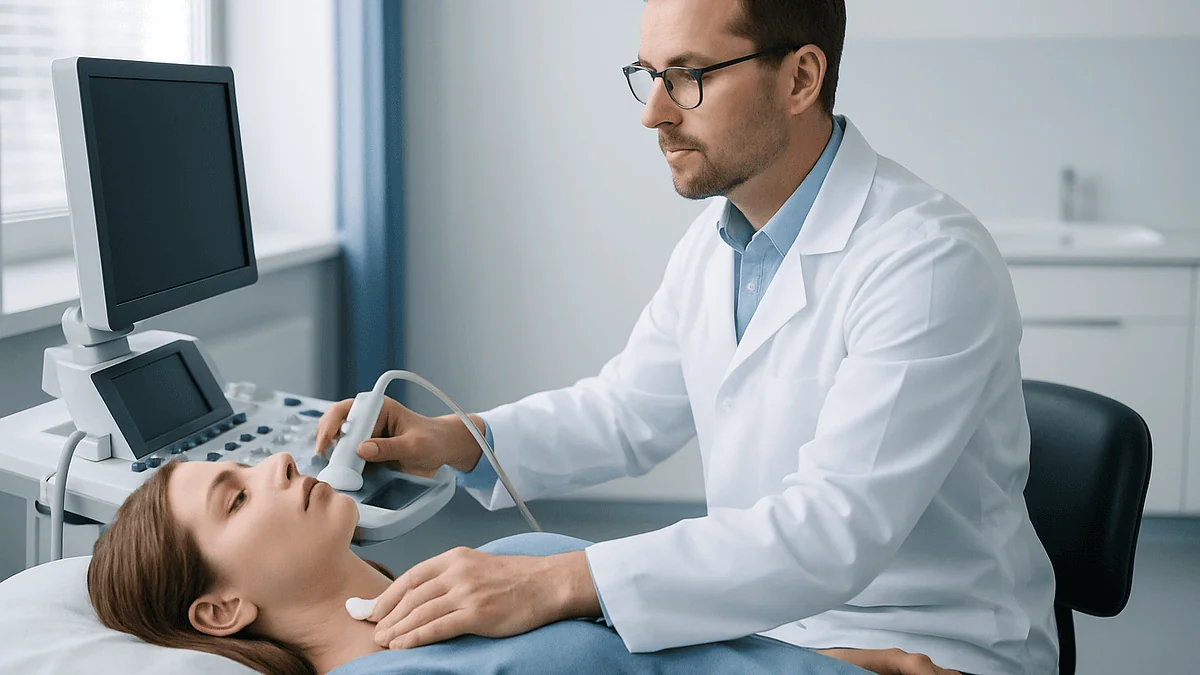
TSI test preparation is usually simple: most people do not need to fast, and the blood draw takes a few minutes. What matters more is disclosure. Before the test, tell your care team about any thyroid medicines, high-dose biotin or other supplements, recent iodine contrast scans, and whether you are or could be pregnant, so results are interpreted correctly.
The lab slip sits on the kitchen counter next to the car keys. Three letters, circled in blue ink: TSI. The endocrinologist explained it, briefly, at the end of a visit that was mostly about a racing heart and hands that would not stay still. Now, the night before the appointment, the questions arrive. Should breakfast wait? Do the morning tablets still go down? Does the CT scan from last month matter?
A quick online search does not help. The top results are about a college placement exam that happens to share the same abbreviation. Real tsi test preparation, the medical kind, gets buried.
This explainer is for that kitchen-counter moment. It covers what the test actually measures, what genuinely affects the result, and the handful of things worth mentioning to the person drawing your blood or reading the report. None of it replaces your own care team’s instructions, which always take priority.
What does a TSI blood test measure, and why does preparation matter?
TSI stands for thyroid-stimulating immunoglobulin. An immunoglobulin is an antibody, a protein the immune system makes; this particular one attaches to the thyroid gland’s receptor for TSH, the pituitary hormone that normally tells the thyroid how hard to work. Once attached, the antibody behaves like an accelerator pedal stuck to the floor. The thyroid keeps producing hormone regardless of what the body actually needs.
That runaway signal is the core mechanism of Graves’ disease, an autoimmune condition and the most common cause of an overactive thyroid in the United States, according to the National Institute of Diabetes and Digestive and Kidney Diseases. NIDDK estimates Graves’ disease affects roughly 1 in 200 people, with women affected far more often than men.
The TSI test looks for that stimulating antibody in a tube of blood. Unlike a TSH or free T4 test, which measures how much hormone is circulating, the TSI test asks a different question: is the immune system driving the thyroid, or is something else going on, such as an inflamed gland or an overactive nodule? The answer shapes what comes next.
Preparation matters less for this test than people expect, and in a particular way. Skipping breakfast will not change the antibody level. What can distort the picture is context the lab cannot see: a supplement that interferes with the assay chemistry, a recent scan that flooded the body with iodine, or a pregnancy that changes how the result should be read. The point of preparing is not to alter your body. It is to make sure the number lands on the right desk with the right footnotes attached.
How the thyroid stimulating immunoglobulin test works, from arm to lab bench
On your side of the process, the test is an ordinary blood draw. A phlebotomist, the technician trained to collect blood, places a tourniquet on the upper arm, cleans the skin, and draws blood from a vein at the inner elbow into one or more small tubes. MedlinePlus describes the whole thing as usually taking less than five minutes, with a brief sting or pinch when the needle goes in and, for some people, a small bruise afterward.

The interesting part happens after the tubes leave the room. Two broad laboratory approaches exist for TSH receptor antibodies, and the difference explains why your report might carry slightly different names.
A binding assay checks whether antibodies in your serum attach to the TSH receptor at all. It is sensitive but cannot tell a stimulating antibody from a blocking one, because both bind the same spot. Results from this type are usually labeled TRAb or TSH receptor antibody.
A bioassay goes a step further. Laboratory cells engineered to carry the human TSH receptor are exposed to your serum. If stimulating antibodies are present, the cells respond by producing a chemical messenger called cyclic AMP, the same internal signal the real thyroid uses. The lab measures that response and reports it as TSI, often as a percentage of a reference sample or in international units per liter.
Because the bioassay depends on living cells behaving predictably, it is more technically demanding than a routine hormone panel and is frequently run at specialized reference laboratories. That is one reason turnaround is measured in days rather than the same afternoon. Your team can tell you the typical wait for the lab they use.
TSI test preparation basics: do you need to fast or stop caffeine?
For most people, the honest answer is no. MedlinePlus states that thyroid antibody tests generally require no special preparation. Antibodies circulate at stable levels over hours and days; a bowl of oatmeal or a morning coffee does not meaningfully move them. If your requisition also includes tests that do require fasting, such as a lipid panel or fasting glucose, your team will say so, and it is worth confirming which instructions apply to which tubes.
Hydration is the one small practical step that helps. Drinking water beforehand tends to make veins easier to find, which can turn a two-attempt draw into a one-attempt draw. There is no evidence that dehydration changes the TSI result itself, only the comfort of getting the sample.
Timing of day is another common worry. TSH, the pituitary hormone, follows a daily rhythm and tends to run higher overnight and early morning. Antibodies do not swing this way. A TSI drawn at 8 a.m. and one drawn at 3 p.m. should tell the same story, provided nothing else has changed. If your team wants TSH and TSI together, they may prefer a morning slot for the TSH’s sake, not the TSI’s.
Exercise the night before, a stressful week at work, a mild cold: none of these are documented to alter TSI in a clinically meaningful way. Severe illness can shift thyroid hormone levels, so mention if you are acutely unwell, but the antibody itself is a slow-moving marker.
What people often overlook is the paperwork side of preparation. Bring or know the names of every medicine and supplement you take, the date of any recent imaging with contrast, and whether pregnancy is possible. Those details do more for an accurate interpretation than any dietary change.
Thyroid medicines to mention, and why you should not stop them on your own
Three groups of medicines commonly sit in the cabinet of someone being tested for TSI, and each interacts with the result in a different way.

Antithyroid drugs, sometimes called thionamides, work inside the thyroid to slow hormone production. They do not neutralize antibodies directly, so a dose taken this morning will not erase a positive TSI. Over months of treatment, however, many people’s antibody levels drift downward as the immune process quiets. That is why clinicians sometimes repeat the TSI after a long stretch of therapy: the trend helps inform, though never decides on its own, whether the immune drive has eased. The Mayo Clinic notes that antithyroid medicines are one of the main treatment approaches for Graves’ disease, alongside radioactive iodine and surgery.
Beta blockers, prescribed to calm palpitations and tremor while the thyroid is settling, act on the heart and nervous system rather than the gland. They have no known effect on TSI measurement.
Levothyroxine, a synthetic form of thyroid hormone, is taken by people whose thyroid is underactive, including some who had Graves’ disease treated years earlier. It replaces hormone; it does not touch antibody production. A TSI can be perfectly interpretable while someone takes it.
The practical guidance is consistent across all three: do not stop, skip or adjust any of them for the sake of the test. Abruptly stopping an antithyroid drug can allow hormone levels to climb; stopping a beta blocker suddenly can be hazardous for the heart. If a clinician wants a specific medicine held before a draw, that request will come from them with clear reasoning. Absent that instruction, take your usual regimen and simply list it accurately.
Why iodine contrast from a recent scan belongs on your pre-test list
Iodinated contrast is the dye injected during many CT scans and some heart and vascular procedures to make blood vessels and organs stand out. It contains a very large amount of iodine relative to what the thyroid encounters from food, and the thyroid is designed to grab iodine eagerly.
Here is the nuance worth understanding. Iodine contrast does not change the TSI antibody itself. The immune system does not make more or less stimulating immunoglobulin because a scan happened. So a TSI drawn shortly after a CT is not chemically invalid.
Why mention it, then? Because the TSI is rarely ordered alone. The NIH Office of Dietary Supplements notes that excess iodine can disturb thyroid function, sometimes pushing susceptible people toward overactivity or underactivity. A sudden iodine load can therefore shift TSH and free T4 in the same blood sample, muddying the picture the TSI is meant to clarify.
The larger issue is the radioactive iodine uptake scan, a test the Mayo Clinic lists among the standard tools for sorting out hyperthyroidism. That scan works by watching how much radioactive iodine the thyroid absorbs. If the gland is already saturated from contrast, uptake looks falsely low and the scan can mislead. Clinicians typically wait until the extra iodine has cleared before scheduling it, and the length of that wait is a judgment your team will make based on the type of contrast and your kidney function.
Iodine-heavy medicines fall in the same category. Amiodarone, a heart rhythm drug, carries a substantial iodine load and can itself provoke thyroid dysfunction. Certain antiseptics, kelp supplements and some cough remedies also contain iodine. None of these need to be stopped for a TSI, but every one of them deserves a line on the intake form.
TSI test pregnancy considerations: why disclosure changes interpretation
Pregnancy does not make the TSI test unsafe. It is a simple blood draw with no radiation, unlike the uptake scan, which is avoided in pregnancy altogether. What pregnancy changes is the reason the test is ordered and the way the number is read.
TSI antibodies are small enough to cross the placenta. NIDDK explains that when a pregnant person has Graves’ disease, or had it treated in the past, these antibodies can reach the fetus and, in a minority of cases, stimulate the baby’s own thyroid. The result can be a temporary overactive thyroid in the newborn, sometimes called neonatal Graves’ disease, which resolves as the maternal antibodies clear from the infant’s bloodstream over weeks to months.
This is why obstetric and endocrine teams often check TSI or TRAb during pregnancy in anyone with a current or prior Graves’ diagnosis, including people whose thyroid was removed or treated with radioactive iodine years earlier and who now take levothyroxine. The thyroid may be gone; the antibody-producing immune cells may not be. A high level prompts closer monitoring of the fetus, typically through ultrasound and, after birth, checks of the baby’s thyroid function.
Pregnancy also shifts the background hormones. Human chorionic gonadotropin, the pregnancy hormone, mildly resembles TSH and can nudge thyroid tests in the first trimester. Clinicians use pregnancy-specific reference ranges for TSH and free T4 precisely because of this. A TSI result read alongside those numbers needs the pregnancy noted.
The practical step is straightforward: tell the ordering clinician and the phlebotomist if you are pregnant, breastfeeding, or trying to conceive, even if it feels unrelated. Decisions about how often to repeat the test and how to interpret it belong with your obstetric and endocrine team together.
Biotin and other supplements that can interfere with the assay
Of all the things that can quietly corrupt a thyroid test, biotin is the one most people have never heard about. Biotin is a B vitamin sold in high-dose form for hair, skin and nail health. The amounts in those products are many times what a normal diet provides.
The problem lies in laboratory chemistry rather than in your thyroid. Many immunoassays, the type of test that uses antibodies to detect a target, rely on biotin as a molecular glue within the test itself. When a blood sample is flooded with extra biotin from a supplement, it can compete with that internal chemistry and produce falsely high or falsely low readings depending on the assay design. The NIH Office of Dietary Supplements notes that the U.S. Food and Drug Administration has warned about biotin interfering with laboratory tests, including some thyroid tests, and that a lack of awareness has led to misdiagnosis in some reported cases.
Whether a specific TSI or TRAb assay is affected depends on the platform the lab uses. Cell-based bioassays are generally less vulnerable than certain binding immunoassays, but a patient cannot know which method their sample will meet. The safe move is to disclose biotin use, along with any multivitamin or hair supplement that may contain it. Your team may ask you to pause it for a period before the draw; that is their call to make, not a step to take independently.
Kelp and seaweed supplements deserve a mention for a different reason: iodine content, discussed above. Herbal products marketed for thyroid support sometimes contain undisclosed iodine or even thyroid gland tissue. None of these have evidence of benefit for Graves’ disease, and all of them belong on the list you hand your clinician.
Who is usually offered a TSI test, and who is usually asked to wait
TSI is a targeted test, not a screening test. It earns its place when a clinician already suspects the immune system is driving the thyroid and needs to confirm or exclude that possibility.
The most common scenario is new hyperthyroidism where the cause is unclear. A low TSH and high free T4 tell you the thyroid is overactive; they do not say why. Graves’ disease, an inflamed thyroid releasing stored hormone, and an autonomous nodule can all produce the same hormone pattern. A positive TSI points strongly toward Graves’.
A second group has eye symptoms suggestive of thyroid eye disease, the inflammation behind the eyes that Mayo Clinic reports affects about 30 percent of people with Graves’ disease, sometimes before hormone levels become abnormal. A TSI can help connect the eye findings to the underlying autoimmune process.
Pregnancy with a current or past Graves’ diagnosis, discussed earlier, is a third established indication. A fourth is monitoring: after a long course of antithyroid treatment, clinicians may check whether antibody levels have fallen, one piece of information among several when discussing next steps.
Who is asked to wait? People with a mildly abnormal TSH and no symptoms are usually asked to repeat basic thyroid tests first, since transient shifts are common and often resolve. Someone with an obviously nodular gland may head to imaging instead. And in a person already known to have Graves’ disease with a classic presentation, an additional TSI may add little to the decision at hand.
Children are tested along the same logic, most often when Graves’ disease is suspected or when a mother had high antibodies during pregnancy. The blood draw is the same; the interpretation uses pediatric reference ranges and sits with the pediatric endocrinology team.
TSI vs TRAb test vs TPO antibodies: a comparison table
Thyroid antibody reports can look like alphabet soup. Three tests appear most often, and they answer genuinely different questions. Mixing them up is one of the most common sources of confusion when people read their own results.
| Test | What it detects | What a positive result suggests | Typical use |
|---|---|---|---|
| TSI (thyroid-stimulating immunoglobulin) | Antibodies that actively stimulate the TSH receptor, measured by cell response | Immune-driven overactivity, characteristic of Graves’ disease | Confirming Graves’ disease; pregnancy monitoring; assessing antibody trend during treatment |
| TRAb (TSH receptor antibody) | Any antibody binding the TSH receptor, stimulating or blocking | Autoimmune activity at the receptor; usually but not always Graves’ disease | Often used interchangeably with TSI in practice; widely available |
| TPO antibodies (thyroid peroxidase) | Antibodies against an enzyme inside thyroid cells | Autoimmune thyroid inflammation, most often Hashimoto’s disease; also present in many people with Graves’ | Evaluating underactive thyroid; assessing autoimmune risk |
| Thyroglobulin antibodies | Antibodies against thyroglobulin, the storage protein for thyroid hormone | Autoimmune thyroid disease; can interfere with thyroglobulin measurement after thyroid cancer treatment | Companion to TPO; thyroid cancer follow-up |
MedlinePlus groups these under the umbrella of thyroid antibody tests and notes they are commonly ordered together when autoimmune thyroid disease is suspected. The key distinction for someone with an overactive thyroid is between TSI and TRAb: both target the same receptor, but only the TSI bioassay demonstrates that the antibody is pressing the accelerator rather than merely sitting on it. In everyday clinical practice the two are frequently treated as equivalent, and a positive result on either supports a Graves’ diagnosis in the right context.
Preparation does not differ across these tests. None require fasting; all are potentially affected by biotin depending on the platform; all deserve the same disclosure of medicines, contrast and pregnancy.
What the days and weeks after the TSI test usually look like
The needle comes out, a cotton ball goes on, and that is essentially it for the physical part. MedlinePlus describes typical aftereffects as mild: a small bruise or tenderness at the site that fades within a few days. Most people go straight back to work or school. If you feel lightheaded during or after draws, say so beforehand; lying down for the collection is a simple fix.
The waiting is the harder part. Because TSI bioassays often travel to a reference laboratory, results generally arrive over several days rather than the same day, and your team will give you their lab’s usual window. Routine hormone tests drawn at the same time may come back sooner, which can leave you looking at a partial report. Resist reading too much into TSH and free T4 alone; the TSI is the piece that answers the why.
What happens once the result lands depends entirely on the question that prompted the test. A positive TSI in someone with new hyperthyroidism usually leads to a conversation about the treatment approaches Mayo Clinic describes for Graves’ disease: antithyroid medicines, radioactive iodine, or surgery, each with its own trade-offs the team will lay out. A negative result with clearly overactive hormones may redirect attention toward thyroiditis or a nodule and prompt an ultrasound or uptake scan.
If the test was for monitoring during treatment, the result becomes one data point in a longer series. NIDDK notes that some people treated with antithyroid drugs eventually see the disease go into remission, and antibody trend is one of several factors clinicians weigh, alongside hormone levels, gland size and symptoms. In pregnancy, a high result typically triggers a plan for fetal monitoring rather than an immediate change in your own treatment.
Whatever the outcome, the next appointment is where decisions are made, together with your treating team.
Understanding your TSI result without over-reading it
Reports arrive in one of two formats. Some labs express TSI as a percentage of a baseline reference, with results above a stated threshold flagged as positive. Others report international units per liter, again with a cutoff. The threshold differs by laboratory and method, which is why comparing a number from one lab to a number from another can mislead. When trends matter, clinicians prefer to use the same lab each time.
A positive result, in the setting of overactive hormones, strongly supports Graves’ disease. But the size of the number is not a direct measure of how sick you are or how severe your symptoms should be. Two people with similar TSI values can feel very different, because symptoms depend on hormone levels, heart sensitivity, age and other factors. Do not let a large-looking figure alarm you or a modest one reassure you; that reading is your clinician’s job.
A negative result does not close the door on Graves’ disease entirely. Assay sensitivity is high but not perfect, and antibody levels can fluctuate, particularly early in the illness or after treatment has begun. A clinician who still suspects Graves’ may repeat the test or turn to an uptake scan. Conversely, a low positive in someone with normal hormone levels and no symptoms may simply be watched.
Interference deserves one more mention here. If you took high-dose biotin and did not disclose it, or if a contrast scan happened days before and the accompanying hormone tests look odd, say so when discussing results. A repeat draw under clean conditions is far better than a treatment decision built on a distorted number.
The Cleveland Clinic’s overview of thyroid blood tests makes the same point in plainer terms: no single thyroid value is read in isolation. TSI gains its meaning from the company it keeps.
What people often get wrong about tsi test preparation
Start with the search engine problem. Type the abbreviation and the results are dominated by study guides for a college placement exam that shares the letters. Questions like how hard the test is, how to pass it, or whether it compares to the SAT belong to that world, not this one. The blood test has no pass or fail, cannot be studied for, and measures an antibody rather than algebra. If a well-meaning relative sends you a practice quiz, you can smile and set it aside.
Myth two: you must fast. As MedlinePlus states for thyroid antibody tests, no special preparation is normally required. Skipping meals can leave someone with an overactive thyroid, who is often already burning through calories and feeling shaky, worse off in the waiting room for no benefit.
Myth three: skipping your antithyroid tablet that morning gives a truer result. It does not. The drug acts on hormone synthesis, not on antibodies, and an unplanned skipped dose can nudge hormone levels upward. The medicine list is for disclosure, not for editing.
Myth four: a CT with contrast ruins the TSI. It does not alter the antibody. It can distort accompanying hormone tests and, more significantly, an uptake scan, which is why it needs to be mentioned. The fix is scheduling, decided by your team, not cancellation.
Myth five: a normal TSH means the thyroid is fine and antibody testing is pointless. People with thyroid eye disease can have positive TSI with normal hormone levels, as Mayo Clinic’s description of Graves’ ophthalmopathy makes clear. Context decides the value of the test.
Myth six: a positive TSI means lifelong illness. NIDDK notes that some people treated with antithyroid drugs achieve remission. An antibody test describes the present; it does not dictate the future.
Questions to ask your care team before and after the test
A short list, brought to the appointment, turns a rushed conversation into a useful one. These are the questions that tend to matter most for this particular test.
- Which thyroid antibody test are you ordering, TSI or TRAb, and does the difference matter for my situation?
- Are any of my other blood tests being drawn at the same time, and do any of those require fasting?
- I take these medicines and supplements (hand over the list). Should any of them be paused before the draw, and if so, for how long and how do I restart?
- I had a scan with contrast recently. Does that affect the timing of this test or of any scan you are planning?
- I am pregnant, breastfeeding, or trying to conceive. How does that change what you are looking for and how the result will be read?
- How long does your laboratory usually take to return TSI results, and how will I receive them?
- If the result is positive, what are the options we will discuss, and what are the trade-offs of each?
- If the result is negative but my symptoms continue, what is the next step?
- Will this test be repeated, and if so, roughly when and why?
- Should I be watching for any symptoms while I wait for results, and how do I reach you if they appear?
Two habits make these conversations work better. First, ask for the reference range and the laboratory name to be noted on your copy of the result, so future comparisons use the same yardstick. Second, if a clinician recommends holding a supplement or medicine, ask them to write it down. Verbal instructions about timing are easy to misremember once you are back in the parking lot.
None of these questions are meant to challenge the plan. They are meant to make sure the plan is built on complete information, which is the whole purpose of preparing well.
When to call your doctor
The blood draw itself rarely causes problems. Call your care team if the puncture site becomes increasingly red, warm, swollen or painful over the following day or two, if bleeding does not stop with firm pressure, or if you notice numbness or tingling in the hand that does not ease. These are uncommon, but they warrant a phone call rather than watchful waiting.
More important are the symptoms of the underlying thyroid condition, which do not pause while you wait for a lab report. The NHS and Mayo Clinic describe the picture of an overactive thyroid as including a rapid or irregular heartbeat, unexplained weight loss, heat intolerance, tremor, anxiety and disrupted sleep. If these are worsening while results are pending, let your team know; treatment decisions do not have to wait for the antibody result.
Seek urgent care, by emergency services if needed, for any of the following red flags: a very fast or pounding heartbeat with chest pain, breathlessness or fainting; a high fever with confusion or agitation; severe vomiting or diarrhea with signs of dehydration; sudden vision changes, double vision, or eye pain; or a sudden swelling of the neck that makes breathing or swallowing difficult. In someone with an overactive thyroid, a combination of high fever, racing heart and altered mental state can signal a rare but serious escalation that needs immediate hospital assessment.
During pregnancy, contact your obstetric team promptly for a persistently racing heart, severe nausea beyond what is expected, or any reduction in the baby’s movements, since maternal thyroid status and fetal wellbeing are closely linked.
Finally, call if you realize after the draw that you forgot to mention a supplement, a contrast scan or a possible pregnancy. A repeat sample is a small inconvenience; a treatment plan built on a misread result is not. Every decision about what the number means, and what to do about it, rests with your treating team.
Frequently asked questions
Do I need to fast for a TSI blood test?
No, fasting is not normally required for a TSI test. MedlinePlus notes that thyroid antibody tests generally need no special preparation, because antibody levels do not shift with meals. If other tests on the same requisition do require fasting, such as glucose or cholesterol, your care team will tell you. Drinking water beforehand can make the vein easier to find, but it does not change the result.
What is the difference between a TSI and a TRAb test?
Both look for antibodies against the thyroid’s TSH receptor, but they use different methods. A TRAb binding assay detects any antibody attached to the receptor, whether it stimulates or blocks the gland. A TSI bioassay measures whether your serum actually makes receptor-bearing cells respond, so it specifically identifies stimulating antibodies. In practice, clinicians often treat the two as broadly equivalent for diagnosing Graves’ disease.
Is the TSI blood test the same as the TSI college exam?
No. The blood test measures thyroid-stimulating immunoglobulin, an antibody linked to Graves’ disease. The exam with the same abbreviation is a college placement assessment and is unrelated to health. Online searches often return study guides and practice questions about how hard the exam is or how to pass it; none of that applies to a laboratory test, which cannot be studied for and has no pass or fail.
Should I stop my thyroid medicine before a TSI test?
Not unless your prescribing clinician specifically asks you to. Antithyroid drugs slow hormone production but do not directly change antibody levels, beta blockers act on the heart rather than the thyroid, and levothyroxine replaces hormone without affecting TSI. Stopping any of these abruptly can cause harm. List everything you take accurately and let the team decide whether any adjustment is needed.
How long after a CT scan with contrast can I have a TSI test?
The TSI itself is not altered by iodine contrast, so there is no fixed waiting period for the antibody test alone. What contrast can affect is thyroid hormone levels drawn at the same time and, more importantly, a radioactive iodine uptake scan, which your team may postpone until the extra iodine clears. Tell them the date of the scan and let them sequence the tests.
Why does my doctor want a TSI test during pregnancy?
TSI antibodies can cross the placenta and, in some cases, stimulate the baby’s thyroid, as NIDDK describes. People with current Graves’ disease, or a history of it even after thyroid surgery or radioactive iodine, may still produce these antibodies. Measuring them helps the obstetric and endocrine team decide how closely to monitor the fetus and newborn. The test is a simple blood draw and involves no radiation.
Can biotin supplements affect thyroid antibody tests?
Yes, high-dose biotin can interfere with some laboratory immunoassays, producing falsely high or low readings depending on the test design. The NIH Office of Dietary Supplements notes the FDA has warned about this interference, including with thyroid tests. Whether a specific TSI platform is affected varies by lab. Disclose any biotin, hair or nail supplement, and follow your team’s advice about pausing it before the draw.
What does a positive TSI result mean?
A positive TSI, alongside overactive thyroid hormone levels, strongly supports a diagnosis of Graves’ disease, the most common cause of hyperthyroidism in the United States according to NIDDK. The size of the number does not directly reflect how severe your symptoms are. Your clinician will interpret it together with TSH, free T4, your symptoms and sometimes imaging before discussing treatment options with you.
Can a TSI test be negative and I still have Graves' disease?
Yes, although it is uncommon. Assays are highly sensitive but not perfect, and antibody levels can vary, especially early in the illness or once treatment has begun. If the clinical picture still points to Graves’ disease, your clinician may repeat the test or order a radioactive iodine uptake scan to look at the gland’s activity directly. A negative result is one piece of evidence, not a final verdict.
How is the TSI blood test done and does it hurt?
It is an ordinary venous blood draw, usually from the inner elbow, that MedlinePlus describes as taking less than five minutes. Most people feel a brief sting when the needle enters and perhaps mild bruising afterward. No sedation or special equipment is involved. The technical work happens later in a laboratory, where your serum is tested for its ability to stimulate cells carrying the TSH receptor.
References
- Thyroid Antibodies: MedlinePlus Medical Test
- Graves' Disease: National Institute of Diabetes and Digestive and Kidney Diseases (NIH)
- Overactive thyroid (hyperthyroidism): NHS
This article is for general information only and is not a substitute for professional medical advice. Please consult a qualified doctor about your individual situation.

More from the Blog
Robotic Thyroidectomy Through the Armpit: What Does the Robot Change vs a Neck Incision?
A robotic transaxillary thyroidectomy removes the thyroid through an incision hidden in the armpit, using a surgeon-controlled robot to reach the neck beneath the…

Long-Term Care in Androgen Insensitivity Syndrome: Bone Health, Hormones and Support
Long-term care in androgen insensitivity syndrome (AIS) means lifelong follow-up with an endocrinologist and a wider team: monitoring bone density, using hormone replacement after…

Graves Disease in Pregnancy and When Planning a Family: How Treatment Is Adapted
Graves disease in pregnancy is usually managed with antithyroid medicines rather than radioactive iodine, which is not used in pregnancy. Guidelines generally favor propylthiouracil…

Robotic Thyroidectomy Recovery: Armpit Soreness, Shoulder Movement and Overhead Limits
After a robotic thyroidectomy done through the armpit, most people go home within a day, return to desk work within roughly one to two…

Minimally Invasive or Four-Gland Exploration Parathyroidectomy: How Is the Approach Chosen?
Surgeons choose between a minimally invasive (focused) parathyroidectomy and a four-gland exploration mainly on whether preoperative imaging clearly points to a single overactive gland.…

Exercise With Type 1 Diabetes: How Activity Affects Glucose and How Plans Are Adjusted Safely
People with type 1 diabetes can exercise safely, and most guidelines encourage regular aerobic and strength activity. The challenge is that injected insulin cannot…