

Which Hemorrhoid Treatments Are Considered During Pregnancy and Which Wait Until After Birth?
Key Takeaways
- Pregnancy drives hemorrhoids through three mechanisms, uterine pressure on pelvic veins, progesterone relaxing vein walls, and constipation-related straining, and every conservative treatment targets one of those three.
- The NHS advises around 30 g of fiber and six to eight glasses of fluid a day for adults, and notes that piles often improve within a few days once constipation is corrected.
- A warm sitz bath of about 10 to 15 minutes, as described by the NIDDK, relaxes the anal sphincter and is one of the few measures that eases both hemorrhoids and postnatal perineal soreness.
- Witch hazel is an astringent that soothes surface irritation but has no demonstrated effect on hemorrhoid size or bleeding, so it belongs in the comfort category rather than the treatment category.
- A thrombosed external hemorrhoid is a clot confined to a surface vein that does not travel; it can be opened under local anesthetic during pregnancy, and this works best within the first few days.
- Rubber band ligation, sclerotherapy and hemorrhoidectomy are usually deferred until after birth because most pregnancy hemorrhoids improve once pelvic pressure lifts, with reassessment typically at the six-to-eight-week postnatal check.
During pregnancy, hemorrhoid care usually stays conservative: more fiber and fluid, avoiding straining, warm sitz baths, cold packs, and short courses of topical or stool-softening medicines chosen by the prescribing clinician. A painful clotted external hemorrhoid can sometimes be treated under local anesthetic. Banding, sclerotherapy and surgery are generally deferred until after birth, because most pregnancy hemorrhoids improve once the baby arrives.
Thirty-one weeks along, she has learned to lower herself onto the sofa one hip at a time. Nobody warned her about this part. The swelling, the itch, the streak of bright red on the toilet paper that sent her searching her phone at two in the morning. By the next afternoon she has read that she should see a surgeon immediately, that she should never see a surgeon while pregnant, and that a cabbage leaf will fix everything.
The honest answer sits between those extremes. Hemorrhoids in pregnancy treatment follows a fairly predictable ladder, and most rungs of that ladder are available right now: diet, bowel habits, bathing, cold, and carefully chosen medicines. A few options, mainly the office procedures and operations, are usually parked until after birth, not because they are forbidden but because they are rarely needed once the pelvic pressure lifts.
This explainer walks through what is typically considered during pregnancy, what waits, why the distinction exists, and how to recognize the handful of situations where waiting is the wrong choice.
Why do hemorrhoids during pregnancy become so common?
Hemorrhoids are cushions of blood vessels and connective tissue that everyone has at the lower end of the rectum and around the anus. They become a problem only when they swell, stretch, bleed or slide out of place. Pregnancy is almost designed to make that happen, and three forces do most of the work.
The first is pressure. As the uterus grows it presses on the pelvic veins and on the large vein that returns blood from the lower body to the heart, so blood pools in the veins below. The second is hormonal. Progesterone, the hormone that keeps the uterus relaxed, also relaxes the walls of veins, letting them stretch more easily; it slows the bowel too, which brings the third force, constipation. Hard stools mean straining, and straining pushes blood into those already distended cushions.
Blood volume rises during pregnancy as well, so there is simply more fluid moving through the vessels. Iron supplements, often prescribed for pregnancy anemia, can stiffen stools further for some people.
The NHS describes piles as a common pregnancy complaint and notes that they usually improve after the baby is born. The Mayo Clinic makes the same point and adds that they are most frequent in the third trimester, when the uterus is heaviest. Outside pregnancy, the National Institute of Diabetes and Digestive and Kidney Diseases estimates that about 1 in 20 Americans has hemorrhoids at any time, rising to about half of adults over 50, which gives a sense of how ordinary the underlying tissue change is.
Understanding the mechanism matters because it explains the treatment logic. Nearly every conservative measure works by reducing one of those three forces: softening stool so there is less straining, keeping blood moving so it pools less, or calming the irritated tissue while the body does the rest.
What are the symptoms of piles, and why should a clinician confirm them?
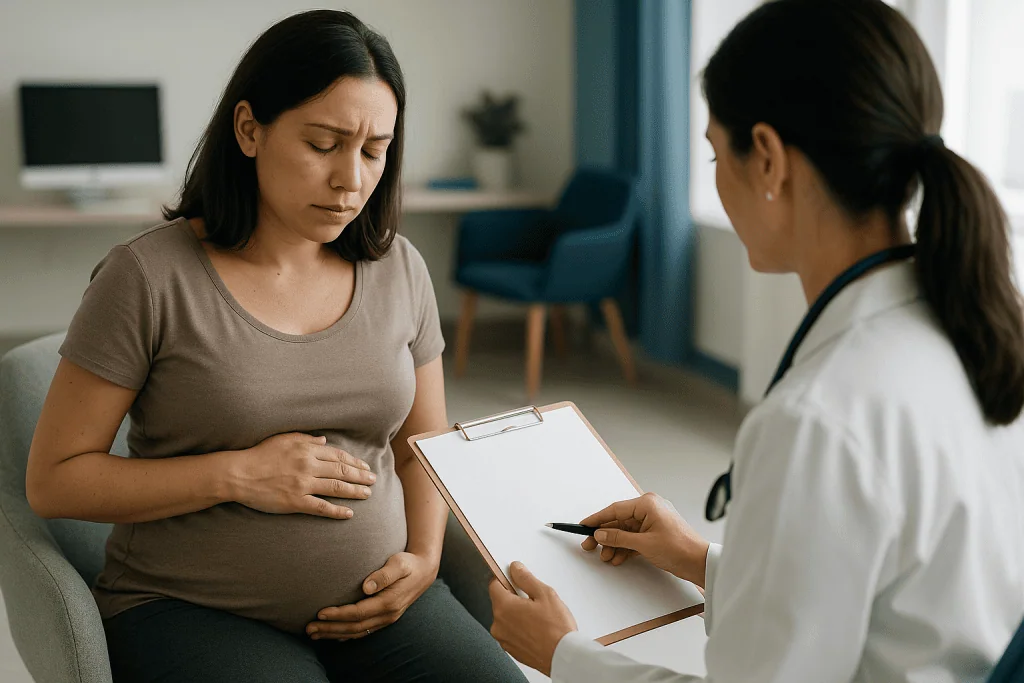
Most people describe piles in similar terms: itching or soreness around the anus, a sense of fullness or a lump that is more noticeable after a bowel movement, discomfort when sitting, and bright red blood on the paper or in the bowl. Mucus and a feeling of incomplete emptying are also common, according to the NHS.
Clinicians group hemorrhoids by location. Internal hemorrhoids form inside the rectum, where there are few pain nerves, so they tend to bleed rather than hurt. External hemorrhoids form under the skin around the anus, which is richly supplied with nerves, so these are the ones that itch, sting and swell. Internal hemorrhoids are further graded from one to four depending on whether they stay inside, slip out and go back on their own, need to be pushed back, or stay out permanently, a scale summarized by the Cleveland Clinic.
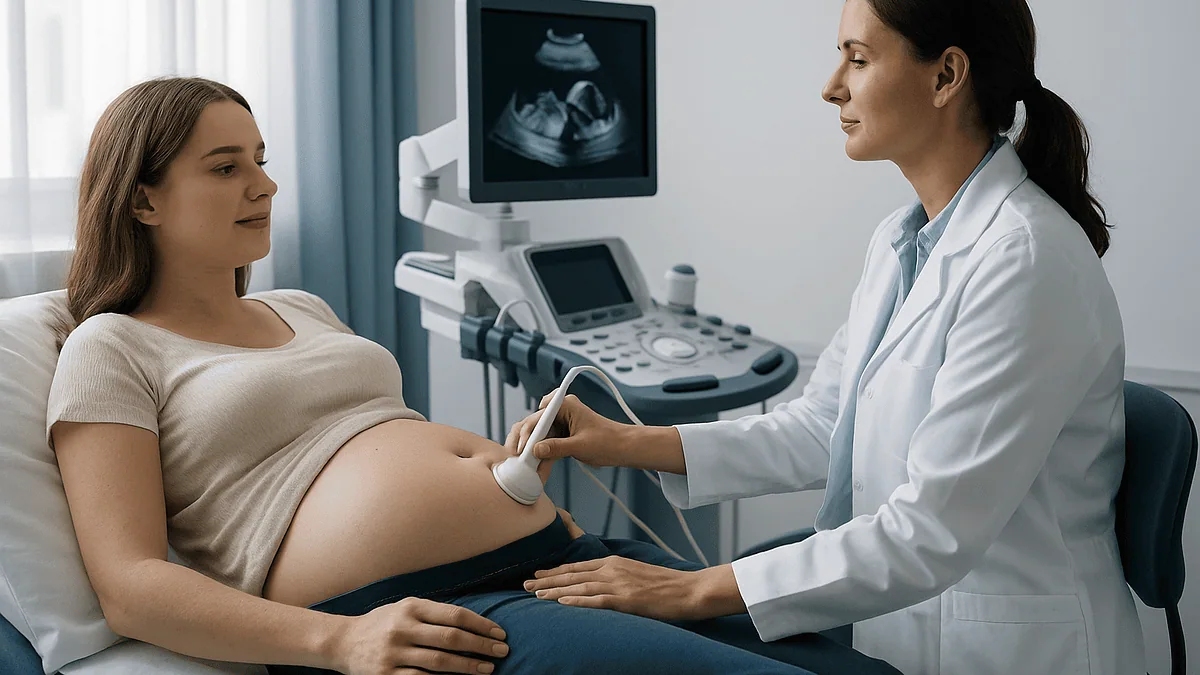
This is where a clinician earns their keep. Rectal bleeding in pregnancy has other possible causes, including an anal fissure, which is a small tear in the lining of the anus that produces a sharp, knife-like pain during bowel movements. Bleeding can also come from higher in the bowel, and pregnancy does not exempt anyone from the conditions that cause that. A midwife, obstetrician or family doctor can usually confirm hemorrhoids with a brief external examination, sometimes with a gloved finger exam, and will decide whether anything more is needed.
Self-diagnosis from a list of symptoms is tempting and often correct, but the point of a check is not to prove you right. It is to rule out the less common causes before weeks of home treatment aimed at the wrong target. If you are unsure, ask at your next antenatal visit; it is one of the most frequent questions those teams hear.
How hemorrhoids in pregnancy treatment actually works: a staged plan
Picture a staircase rather than a menu. Nearly every guideline-level source, from the NHS to the NIDDK, starts at the bottom step and only climbs when the lower steps have genuinely been tried. In pregnancy the staircase is the same; the difference is how far up it is usually sensible to go.
Step one is changing what arrives at the anus. Softer, bulkier stool that passes without straining removes the main mechanical insult. Fiber, fluids, movement and a settled bathroom routine do this, and the NHS notes that piles often improve within a few days once constipation is addressed.
Step two is calming the tissue. Warm sitz baths relax the anal muscle and improve local blood flow; cold packs shrink swelling and numb itch. These are low-risk and can be repeated as often as helpful.
Step three brings in medicines. Bulk-forming or osmotic laxatives and stool softeners act in the bowel, and topical creams, ointments or suppositories act on the hemorrhoid itself. In pregnancy the prescribing clinician selects from the options with the longest safety record and usually keeps courses short.
Step four is procedural. For a painful thrombosed external hemorrhoid, which is a hemorrhoid in which a blood clot has formed, a clinician may open it under local anesthetic to release the clot. This step can be taken during pregnancy when pain is severe and the clot is fresh.
Step five is the office treatments and operations for internal hemorrhoids: rubber band ligation, sclerotherapy, infrared coagulation, and surgical removal. These are the rungs that usually wait until after birth, for reasons covered later.
The staircase is also a conversation. Every move upward is a decision made with the treating team, weighing how much the symptoms are affecting daily life against the small but real downsides of each intervention.
What should you eat and drink first? Fiber, fluids and the bathroom routine
Nothing in hemorrhoid care has a better evidence-to-effort ratio than stool that passes easily. Fiber does this in two ways. Soluble fiber, found in oats, beans, lentils, apples and pears, absorbs water and forms a soft gel. Insoluble fiber, found in whole grains, vegetable skins and nuts, adds bulk that keeps the bowel moving. Both together produce stool that leaves without a push.
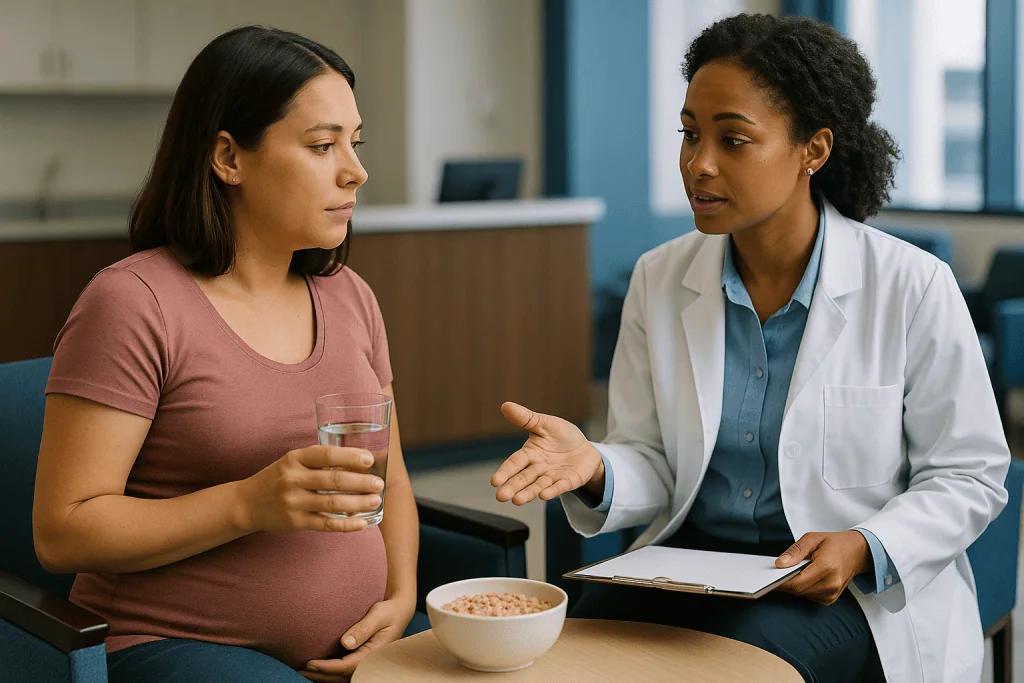
The NHS advises adults to aim for around 30 g of fiber a day and notes that most people manage only about 20 g. Pregnancy is a reasonable time to close that gap gradually; a sudden jump can cause bloating, so add one higher-fiber food every few days rather than overhauling every meal at once.
Fiber without fluid can backfire, because the gel needs water to form. The NHS suggests six to eight glasses of fluid a day for adults, and in pregnancy thirst is a reasonable guide on top of that. Water, milk and diluted fruit juice all count.
Habits matter as much as ingredients. Go when the urge comes rather than holding on, since waiting lets the bowel reabsorb water and harden the stool. Do not sit on the toilet longer than it takes; phones and books lengthen the time the anal cushions spend under downward pressure. A small footstool that raises the knees above the hips straightens the angle of the rectum and makes passage easier without straining, a position the Cleveland Clinic and others describe.
Iron supplements deserve a word. If they are making stools hard, tell the prescribing clinician rather than stopping them. There are different formulations and different ways to time them, and the decision about which to use sits with the team looking after your blood count.
Do warm baths, cold packs and witch hazel help hemorrhoids?
These are the measures most pregnant people reach for first, and they deserve a frank assessment rather than either dismissal or hype.
Warm sitz baths have the strongest footing. A sitz bath simply means sitting in a few inches of warm water so that the anal area is submerged; the NIDDK suggests about 10 to 15 minutes, several times a day, especially after bowel movements. The warmth relaxes the internal anal sphincter, the ring of muscle that tightens in response to pain, and improves blood flow in the irritated tissue. A clean bathtub or a basin that fits over the toilet both work. Pat dry afterwards; rubbing inflames the skin.
Cold packs work on a different principle. Cold constricts blood vessels and dulls nerve endings, so a wrapped ice pack or a cold compress held against the area for a few minutes can reduce swelling and itch. The NHS specifically mentions a cold pack as a pregnancy-safe measure. Never place ice directly on skin.
Witch hazel is the one most people ask about. It is a plant extract that acts as an astringent, meaning it tightens the surface of tissue and can reduce weeping and minor irritation. Pads soaked in witch hazel are widely used for the itching and soreness of external hemorrhoids and are included in general hemorrhoid advice from sources such as the Cleveland Clinic and Harvard Health. What the evidence does not show is any effect on the size of the hemorrhoid or on bleeding; it is a comfort measure, not a treatment of the underlying vein. For most people it is low risk as a topical product, but as with anything applied in pregnancy it is reasonable to mention it to your midwife or doctor, particularly if the skin is broken.
Gentle cleaning with water or unscented wipes rather than dry paper rounds out this layer.
Which creams, suppositories and laxatives are considered in pregnancy?
When diet and bathing are not enough, medicines enter the picture, and this is the point at which the prescribing clinician’s judgment replaces general advice. What follows describes how the main classes work, not which one anyone should use.
Bulk-forming laxatives are essentially concentrated fiber, usually psyllium or methylcellulose. They are not absorbed into the bloodstream; they swell in the bowel and make stool softer and larger, which is why many clinicians regard them as a first choice in pregnancy. Osmotic laxatives, such as lactulose or macrogols, draw water into the bowel and are also largely unabsorbed. Stool softeners, such as docusate, let water and fat mix into the stool. Stimulant laxatives, which make the bowel muscle contract, are generally kept for short-term use and only on clinical advice in pregnancy.
Topical products fall into a few families. Soothing or barrier preparations containing zinc oxide or similar ingredients protect the skin. Local anesthetic creams containing lidocaine numb the area briefly. Mild corticosteroid creams or suppositories reduce inflammation and itch; because the steroid is low strength and applied to a small area, systemic absorption is small, but the NHS and others advise using them only for short courses and on advice during pregnancy. Some combined products include a vasoconstrictor, which narrows blood vessels; these are the ones most often avoided or used cautiously in pregnancy, and the clinician will say which.
Oral medicines that claim to strengthen veins, such as flavonoid preparations, have limited evidence of benefit and are not part of mainstream pregnancy guidance.
Timelines are modest. Bulk and osmotic laxatives typically take a day or more to show an effect; topical products act within minutes to hours but treat symptoms rather than the swollen vein. If a prescribed product is not helping after the period the clinician suggested, say so rather than doubling up.
What are thrombosed hemorrhoids, and what happens if one forms in pregnancy?
A thrombosed hemorrhoid is an external hemorrhoid in which a blood clot has formed inside the swollen vein. The name sounds alarming, and the pain can be, but it is a local event. The clot does not travel anywhere and carries none of the risks of a clot in a leg vein.
The symptoms are distinctive enough that clinicians often recognize them from the description alone: a sudden, firm, tender lump at the edge of the anus, typically bluish or purple, with pain that is constant rather than tied only to bowel movements. Sitting, walking and wiping all hurt. The Mayo Clinic and Cleveland Clinic both note that the pain is usually worst in the first day or two and then eases as the clot is gradually reabsorbed, with the lump shrinking over the following weeks and sometimes leaving a small skin tag.
During pregnancy the pressure and hormonal changes described earlier make thrombosis more likely, and labor itself, with its prolonged bearing down, is a common trigger in the days after birth.
Treatment is one of the few places where a procedure is actively considered during pregnancy. If the pain is severe and the clot is recent, a clinician can numb the area with local anesthetic, make a small incision and remove the clot, which brings rapid relief. The timing matters: this works best in the first few days, while the clot is fresh and the pain is at its peak. Once several days have passed, the clot is already dissolving and most clinicians advise riding it out with sitz baths, cold packs, stool softening and simple pain relief chosen by the prescribing team.
Whether to cut or to wait is a judgment call that depends on pain level, the stage of pregnancy and the clot’s age. It is made in person, after an examination, by the treating team.
Which hemorrhoid procedures usually wait until after birth, and who is the exception?
The treatments for internal hemorrhoids that go beyond medicines share a goal: cutting off blood supply to the swollen cushion or removing it altogether. Rubber band ligation places a tight band around the base of an internal hemorrhoid so that it shrivels and falls off, usually within about a week according to the NHS. Sclerotherapy injects a chemical that scars the vessel closed. Infrared coagulation uses heat to achieve the same end. For larger or persistent hemorrhoids, a hemorrhoidectomy, the surgical removal of the tissue, or a stapled or artery-ligation operation may be offered.
None of these is strictly forbidden in pregnancy, and ligation in particular is sometimes performed in later pregnancy for persistent bleeding or prolapse. They are usually deferred, though, for three practical reasons. First, the NHS and Mayo Clinic both note that most pregnancy hemorrhoids improve substantially after birth once the uterus no longer compresses the pelvic veins, so an intervention now may treat a problem that would have resolved on its own. Second, operations require anesthesia and positioning that are more complicated with a pregnant abdomen, and recovery from a hemorrhoidectomy, which the NHS describes as taking a few weeks and being quite painful at first, is hard to combine with late pregnancy or a newborn. Third, any procedure carries a small risk of bleeding or infection, and clinicians prefer not to add avoidable risk during pregnancy.
The exceptions are defined by severity. Someone with persistent bleeding that is causing anemia, a prolapsed hemorrhoid that will not go back in and is becoming painful or strangulated, or pain that is uncontrollable with conservative measures may be seen by a colorectal surgeon during pregnancy. The surgeon and the obstetric team then decide together, weighing gestation, symptoms and the specific procedure.
For almost everyone else, the usual advice is to treat conservatively now and reassess two to three months after birth, when the true baseline is clear.
Hemorrhoids in pregnancy treatment at a glance: now versus later
The table pulls together the options discussed so far. It describes what is usually considered, not what any individual should have; the treating team may reasonably move an option from one column to the other based on the specific situation.
| Option | How it works | Usually considered during pregnancy? | Notes |
|---|---|---|---|
| Fiber, fluids, bathroom habits | Softer stool, less straining | Yes, first step | NHS: piles often improve within days once constipation is treated |
| Warm sitz baths, cold packs | Relax sphincter; reduce swelling and itch | Yes | NIDDK suggests about 10–15 minutes per bath |
| Witch hazel pads, barrier creams | Astringent and skin protection | Yes, comfort measure | Eases irritation; no effect on hemorrhoid size |
| Bulk, osmotic or softening laxatives | Act within the bowel, little absorption | Yes, on clinical advice | Product and duration chosen by prescriber |
| Local anesthetic or mild steroid creams | Numb or reduce inflammation | Short courses, on advice | Vasoconstrictor combinations often avoided |
| Incision of a thrombosed external hemorrhoid | Removes fresh clot under local anesthetic | Yes, if pain severe and clot recent | Best in the first few days |
| Rubber band ligation | Band cuts off blood supply to internal hemorrhoid | Usually deferred; occasionally used | Considered for persistent bleeding or prolapse |
| Sclerotherapy, infrared coagulation | Scar or heat seals vessel | Usually deferred | Reassessed after birth |
| Hemorrhoidectomy or stapled surgery | Removes or repositions tissue | Deferred except in emergencies | Recovery takes weeks; needs anesthesia |
Two patterns stand out. Everything in the top half of the table acts locally or in the bowel, with minimal exposure to the baby, which is why those options are widely used. Everything in the bottom half targets internal hemorrhoids that, for most people, shrink on their own after birth. The exception column, the thrombosed clot, is the one truly time-sensitive item and the one most worth recognizing early.
What kind of exercise is best for hemorrhoids in pregnancy?
Movement helps hemorrhoids in two ways: it keeps the bowel moving, which reduces constipation, and it keeps blood circulating, which reduces pooling in the pelvic veins. The NHS lists regular exercise among its core pregnancy advice for piles, alongside fiber and fluids.
The best exercise is the one that fits the pregnancy. Walking is the obvious first choice; a brisk 20–30 minute walk most days keeps circulation and bowel rhythm steady without any load through the pelvic floor. Swimming and water aerobics are especially kind in the third trimester, because the water supports the belly and removes the downward pressure that aggravates hemorrhoids while you are upright. Stationary cycling and prenatal yoga are reasonable for people who were already active, provided the instructor knows you are pregnant.
Pelvic floor exercises, sometimes called Kegels, deserve a specific mention. Tightening and releasing the muscles that stop the flow of urine improves tone around the anus and rectum and supports the venous cushions. They are recommended in pregnancy anyway for bladder control and recovery after birth, so there is no trade-off.
What to avoid is more about technique than type. Heavy lifting with a held breath, the so-called Valsalva maneuver, drives pressure into the pelvis and is the exercise equivalent of straining on the toilet. Prolonged sitting, whether on a bike saddle or at a desk, is a quieter culprit; the NHS advises not sitting for long periods, so build in short standing breaks.
If a thrombosed hemorrhoid is acutely painful, rest for a day or two is sensible, then resume walking as comfort allows. Anyone with pregnancy complications such as high blood pressure, bleeding or a low-lying placenta should follow the exercise limits set by their obstetric team rather than general advice.
What happens to hemorrhoids during labor and in the first weeks after birth?
Labor is the single biggest mechanical stress the anal cushions will face. The pushing stage involves repeated, forceful bearing down, sometimes for an hour or more, and it is common for hemorrhoids to appear for the first time, or worsen sharply, in the days afterwards. The Mayo Clinic notes that this is expected and usually temporary. A cesarean birth avoids the pushing but not the preceding months of pressure, so hemorrhoids can be present after either route.
The first week after birth is often the most uncomfortable. Swelling from labor, the first bowel movement, which many people dread, and the general soreness of the perineum all overlap. Postnatal teams routinely use stool softeners or osmotic laxatives at this stage to make that first bowel movement easier; the choice is theirs. Sitz baths serve a double purpose now, easing both hemorrhoids and any perineal stitches. Cold packs, unscented cleansing and lying on your side to feed rather than sitting upright all help.
Over the following two to six weeks the picture usually changes markedly. Once the uterus shrinks back toward its normal size and progesterone falls, pelvic venous pressure drops and the vein walls regain tone. The NHS states plainly that piles related to pregnancy usually get better after the birth, and most people find external swelling settles and bleeding stops within this window.
What may remain is a skin tag, a small flap of loose skin where a swollen external hemorrhoid once was. Skin tags are harmless, do not bleed and are not hemorrhoids, although they can be mistaken for them.
The sensible checkpoint is the postnatal review around six to eight weeks. If symptoms persist beyond that, especially bleeding or prolapse, that is the moment to ask about referral for the procedures that were deferred during pregnancy.
What changes for piles in pregnancy relief once you are breastfeeding?
Many people assume that once the baby is born every treatment option opens up. Mostly that is true, with one adjustment: if you are breastfeeding, the prescribing clinician will again favor products with minimal absorption into the bloodstream, because a small amount of some medicines can pass into milk.
In practice the same families used in pregnancy remain the mainstays. Bulk-forming and osmotic laxatives and stool softeners act within the bowel and are generally considered compatible with breastfeeding. Topical anesthetic and mild steroid preparations are applied to a small area and, used short term, are also commonly continued. The NHS pregnancy and breastfeeding guidance on piles makes the same recommendation it makes for pregnancy: check with a pharmacist, midwife or doctor before using any medicine, so that the product and duration are chosen for your situation.
The procedural options are where breastfeeding changes little. Rubber band ligation and sclerotherapy are done in an outpatient setting without general anesthesia and do not interfere with feeding. A hemorrhoidectomy under general or spinal anesthesia is also compatible with continuing to breastfeed afterwards in most cases; modern anesthetic agents clear quickly, and the anesthesia team will advise on timing of the first feed. What makes surgery harder is not the milk but the recovery, which the NHS describes as several weeks of soreness with a newborn to care for. That is a logistics question, and it is worth raising honestly with the surgeon.
Pain relief after any procedure is chosen by the treating team with feeding in mind. Some common analgesics are routinely used while breastfeeding; a few are avoided. Tell every clinician you see that you are feeding, including at the pharmacy counter, so the choice is made with full information.
What people often get wrong about hemorrhoids in pregnancy
Myth: bleeding means something is badly wrong. Bright red blood on the paper is the classic sign of a hemorrhoid or a fissure and, in isolation, is rarely dangerous. What it does need is a clinician’s confirmation of the source, because the color and timing can look identical for other causes. Dark, clotted or heavy bleeding, or blood mixed through the stool, is a different matter and belongs in the red-flag section below.
Myth: hemorrhoids in pregnancy are permanent. The NHS and Mayo Clinic both describe them as usually improving after birth. Some people are left with a skin tag or a tendency to flare with future constipation, but permanent prolapse is uncommon when the cause was pregnancy.
Myth: no cream is safe, so suffer through it. Several topical and laxative classes have long records of use in pregnancy, and withholding all treatment serves no one. The accurate statement is that the product and duration should be chosen by someone who knows your history, not that nothing can be used.
Myth: surgery during pregnancy is impossible. It is uncommon and usually avoided, but for strangulated prolapse, uncontrolled bleeding or a severely painful fresh clot, procedures are performed, and clot incision under local anesthetic is routine.
Myth: witch hazel, cabbage leaves or special diets shrink hemorrhoids. Witch hazel soothes the surface; the others have no mainstream evidence. Fiber and fluid genuinely change outcomes by removing straining, which is a different claim from shrinking tissue directly.
Myth: a thrombosed hemorrhoid is a dangerous blood clot. It is a clot confined to a small surface vein and does not travel. It hurts, but it is not a deep vein thrombosis, which involves the leg veins and is a separate pregnancy risk with separate symptoms.
Myth: hemorrhoids will complicate the birth. They are not a reason to change the mode of delivery, although a very painful external hemorrhoid will be noted so that positioning and postnatal care can be adjusted.
Questions to ask your care team
Antenatal appointments are short, and embarrassment makes many people skip the question entirely. Having a few specific ones ready turns a mumbled mention into a useful plan. Consider asking:
- Can you confirm these symptoms are from hemorrhoids and not an anal fissure or something else?
- Are my iron tablets contributing to constipation, and are there alternatives you would consider?
- Which laxative or stool softener would you choose for me, and how long should I expect it to take to work?
- Is a topical cream or suppository appropriate at my stage of pregnancy, and for how many days?
- If I develop a sudden painful lump, who should I contact and how quickly, given that clot removal works best early?
- Is there anything about my pregnancy, such as a low platelet count or a bleeding disorder, that changes the usual advice?
- At what point would you refer me to a colorectal specialist during pregnancy rather than after?
- What should I do for the first bowel movement after birth, and will the postnatal team plan for it?
- If symptoms are still present at my postnatal check, what is the pathway for banding or other treatment?
- Which of the products I have already bought are fine to keep using?
Write the answers down or ask for them in your notes. Pregnancy involves several clinicians across different settings, and a short record of what was advised, and why, prevents contradictory suggestions later. If a midwife is your main contact, they can often answer most of these directly and will know when to involve the obstetrician or a pharmacist.
One further question is worth keeping in reserve for after birth: if a procedure is eventually suggested, what are the realistic alternatives, and what happens if you simply wait another few months? The honest answer is sometimes that waiting is reasonable, and a good team will say so.
When to call your doctor
Most hemorrhoid symptoms in pregnancy are uncomfortable rather than urgent, and the staircase of conservative care handles them. A small number of situations should not wait for the next scheduled appointment. Contact your midwife, obstetric unit or doctor the same day, or seek urgent care, if any of the following occur.
Bleeding that is heavy, that fills the toilet bowl, that produces clots, or that continues between bowel movements. Dark or black stool, or blood mixed through the stool rather than on its surface, which suggests a source higher in the bowel. Any rectal bleeding accompanied by dizziness, faintness, a racing heart or unusual breathlessness, which can indicate significant blood loss or anemia.
A sudden, severe, constant pain with a firm lump at the anus, especially within the first day or two, because this may be a thrombosed hemorrhoid and early assessment widens the treatment options. A hemorrhoid that has prolapsed and cannot be pushed back, particularly if it is becoming darker, very swollen or increasingly painful, which can mean the blood supply is compromised. Fever, spreading redness, pus or a foul-smelling discharge from the anal area, which point toward an abscess or infection rather than a simple hemorrhoid.
Pain so severe that you cannot pass stool at all, or no bowel movement for several days despite laxatives, since impacted stool compounds every other problem.
The NHS also advises seeking advice if piles do not improve after a week of home treatment, and the Cleveland Clinic and MedlinePlus list persistent bleeding and uncontrolled pain among the reasons to be seen. Pregnancy adds one more rule: any vaginal bleeding, abdominal pain or change in the baby’s movements is an obstetric emergency regardless of what is happening with hemorrhoids, and should be treated as such.
Every decision about examination, medicines or procedures rests with the clinicians who assess you in person. The purpose of this list is simply to make sure that assessment happens promptly when it matters.
Frequently asked questions
What are the symptoms of piles in pregnancy?
Piles typically cause itching, soreness, a lump near the anus after bowel movements, discomfort when sitting, and bright red blood on the paper. Internal hemorrhoids tend to bleed painlessly; external ones swell and sting. Because an anal fissure or other bowel conditions can produce similar bleeding, a midwife or doctor should confirm the cause with a brief examination before you rely on home treatment.
What are thrombosed hemorrhoids and what are their symptoms?
A thrombosed hemorrhoid is an external hemorrhoid in which a blood clot has formed, producing a sudden, firm, bluish lump at the anal edge with constant pain that peaks in the first day or two. The clot stays local and is not a deep vein thrombosis. If the pain is severe and the clot is fresh, a clinician can remove it under local anesthetic, even during pregnancy.
Can witch hazel help with hemorrhoids during pregnancy?
Witch hazel can ease the itching and weeping of external hemorrhoids because it is an astringent that tightens irritated tissue. It is generally considered low risk as a topical product, and sources such as the Cleveland Clinic list it among soothing measures. It does not shrink the hemorrhoid or stop bleeding, so it complements rather than replaces fiber, fluids and any medicine your clinician chooses.
What kind of exercise is best for hemorrhoids?
Walking and swimming are usually the best choices, because they keep the bowel and circulation moving without loading the pelvic floor, and water removes the downward pressure that aggravates hemorrhoids. Pelvic floor exercises improve muscle tone around the anus. Avoid heavy lifting with a held breath and prolonged sitting. Anyone with pregnancy complications should follow the exercise limits set by their obstetric team.
Can I use hemorrhoid cream while pregnant?
Several topical products, including barrier creams, short courses of local anesthetic or mild corticosteroid preparations, are commonly used in pregnancy, but the choice and duration should come from a pharmacist, midwife or doctor. Combination products containing a vasoconstrictor are the ones most often avoided. Describe your symptoms and stage of pregnancy, and let the prescriber select the product rather than picking one from a shelf.
Will hemorrhoids during pregnancy go away on their own after birth?
Usually, yes. The NHS and Mayo Clinic both describe pregnancy-related piles as typically improving after the baby is born, as the uterus shrinks, pelvic vein pressure falls and progesterone levels drop. Most people notice swelling and bleeding settle over the following weeks. A harmless skin tag may remain. If symptoms persist at the postnatal check, that is the point to discuss the procedures deferred during pregnancy.
Can you have hemorrhoid surgery while pregnant?
Surgery during pregnancy is uncommon and usually avoided, but it is not impossible. Clinicians reserve it for emergencies such as a strangulated prolapsed hemorrhoid, bleeding causing anemia, or pain that nothing else controls. Rubber band ligation is occasionally used in later pregnancy for persistent bleeding. For almost everyone else, treatment stays conservative and surgery is reconsidered a few months after birth.
How can I get piles in pregnancy relief tonight?
The fastest short-term measures are a warm sitz bath for about 10 to 15 minutes, a wrapped cold pack held against the area for a few minutes, gentle cleansing with water rather than dry paper, and lying on your side to take pressure off the pelvic veins. Softer stool over the next day or two depends on fiber and fluid. Any medicine should be chosen with your clinician.
Do iron tablets make hemorrhoids worse in pregnancy?
Iron supplements can harden stool for some people, and harder stool means more straining, which aggravates hemorrhoids. If you suspect this, raise it with the clinician who prescribed the iron rather than stopping it; different formulations, timing with food, and added fiber or an osmotic laxative are all options they may consider. Maintaining your iron level still matters for a safe pregnancy and birth.
What should I do about the first bowel movement after birth?
Tell the postnatal team if you have hemorrhoids or perineal stitches; they routinely plan for the first bowel movement with stool softeners or osmotic laxatives, chosen by them. Drink well, eat fiber, go when the urge comes, and support the perineum with a clean pad while passing stool. A warm sitz bath afterwards eases both hemorrhoids and stitches. Avoid straining; a footstool helps.
References
- NHS: Piles in pregnancy
- NHS: Piles (haemorrhoids)
- Cleveland Clinic: Hemorrhoids
- NIH NIDDK: Treatment of Hemorrhoids
This article is for general information only and is not a substitute for professional medical advice. Please consult a qualified doctor about your individual situation.
Add us as a Preferred Source to see more of our trusted health content across Google Search, AI Overviews and Discover.

More from the Blog
Diet and Exercise After Appendectomy: Rebuilding Routine Once the Incisions Have Healed
After an appendectomy, most people return to a normal diet within days, starting with fluids and light meals and adding fiber and protein as…
How Does Digestion Change Without a Gallbladder? Bile Flow and Why Some Meals Feel Different
After gallbladder removal, the liver still makes bile, but it trickles into the small intestine continuously instead of being stored and released in a…

Life After Hemorrhoid Surgery: Fiber, Fluids, Stool Softeners and Sitz Baths as Routine
After hemorrhoid surgery, most surgical teams build recovery around four daily habits: fiber from food or a bulk-forming supplement, enough fluid to keep that…

Before Emergency Appendicitis Surgery: Fasting, IV Fluids and the Hours Before the OR
Preparation for emergency appendicitis surgery usually happens within hours, not days. Once appendicitis is suspected, patients are typically asked to take nothing by mouth,…
Bowel Habit Training and Pelvic Floor Exercises: Daily Routines in Fecal Incontinence Care
Pelvic floor exercises for bowel control strengthen and coordinate the muscles that close the anus, while bowel habit training uses timed toilet visits, unhurried…
How Achalasia Progresses: Why the Esophageal Valve Stops Relaxing and Food Backs Up
Achalasia progresses slowly, usually over years. Nerve cells in the wall of the esophagus are lost, so the lower esophageal sphincter stops relaxing and…