

Who Is a Candidate for Foot Feminization Surgery and Who Is Advised to Wait?

Key Takeaways
- Foot length is fixed once the growth plates close in the late teens, so hormone therapy softens skin and shifts fat but does not shorten the bones of the foot.
- The procedures grouped as foot feminization surgery are the same bone operations used for painful bunions and long toes, and the supporting evidence comes from people who had pain, not cosmetic goals.
- Recovery from forefoot bone surgery typically spans six to twelve weeks before a regular shoe, with swelling that can linger for months (Cleveland Clinic; Mayo Clinic).
- Uncontrolled diabetes, nicotine use, poor circulation, active infection and age under 18 are the most common reasons surgeons ask people to wait rather than proceed.
- Shortening a toe changes fit at the tip by millimeters and rarely changes the printed shoe size, because the heel-to-ball length that governs fit is untouched.
- New calf swelling, spreading redness, fever or toes turning white or blue after surgery are red flags that need same-day contact with the surgical team.
Foot feminization surgery candidates are usually healthy, skeletally mature adults with specific and modest goals, good circulation, no uncontrolled diabetes or nicotine use, and time for several weeks of restricted weight-bearing, ideally with a functional problem such as a painful bunion. People are typically advised to wait if they are under 18, smoke, have unstable medical or mental health conditions, or expect dramatic shoe-size changes. The treating team makes the final call.
The shoe department is quieter on weekday mornings, which is partly why she comes then. She has found the pair she wants, a low block heel in soft taupe, and the assistant has gone to check whether it comes in her size. It does not. It rarely does. On the way home she types a question into her phone that she has typed before: foot feminization surgery candidates.
Her situation is more common than the silence around it suggests. Feet are the one part of the body that hormone therapy leaves essentially untouched, and for some transgender women, and for plenty of people who simply dislike their feet, that permanence is the hardest part to live with.
What follows is an honest map of who surgeons tend to consider, who they ask to wait, what the operations actually involve, and why the evidence deserves more weight than the brochures.
What is foot feminization surgery, and what is it not?
Foot feminization surgery is not one operation. It is an umbrella term, mostly used in marketing, for a set of cosmetic procedures that aim to make a foot look shorter, narrower or more delicate. The building blocks are familiar to any foot surgeon: shortening long toes by removing a small segment of bone, trimming or realigning the bony bump at the base of the big toe known as a bunion, narrowing the forefoot by cutting and repositioning the long bones behind the toes, and occasionally adding fat to thin pads under the ball of the foot.
What ties these together is intent rather than technique. Each procedure was developed to relieve pain or restore function in feet that had a problem. Applied to a foot that works well, the same operation becomes purely cosmetic, and the balance of benefit and risk shifts.
It also helps to be clear about what the term is not. Foot procedures do not appear in mainstream descriptions of gender-affirming surgery, which focus on the face, chest, genitals, voice and body contour (Cleveland Clinic). No major guideline sets eligibility criteria for feminizing the feet, so surgeons borrow the standards they already use for elective bone surgery and add a heavy dose of judgment.
The appeal is easy to understand. Foot length is fixed once the growth plates, the soft zones at the ends of bones where growth happens, close in the late teens. Hormone therapy can soften skin and shift fat, but it does not shorten a metatarsal. For someone whose feet feel like a daily reminder of a body that never matched, that permanence can sting, which is exactly why the questions of who, and when, deserve careful answers.
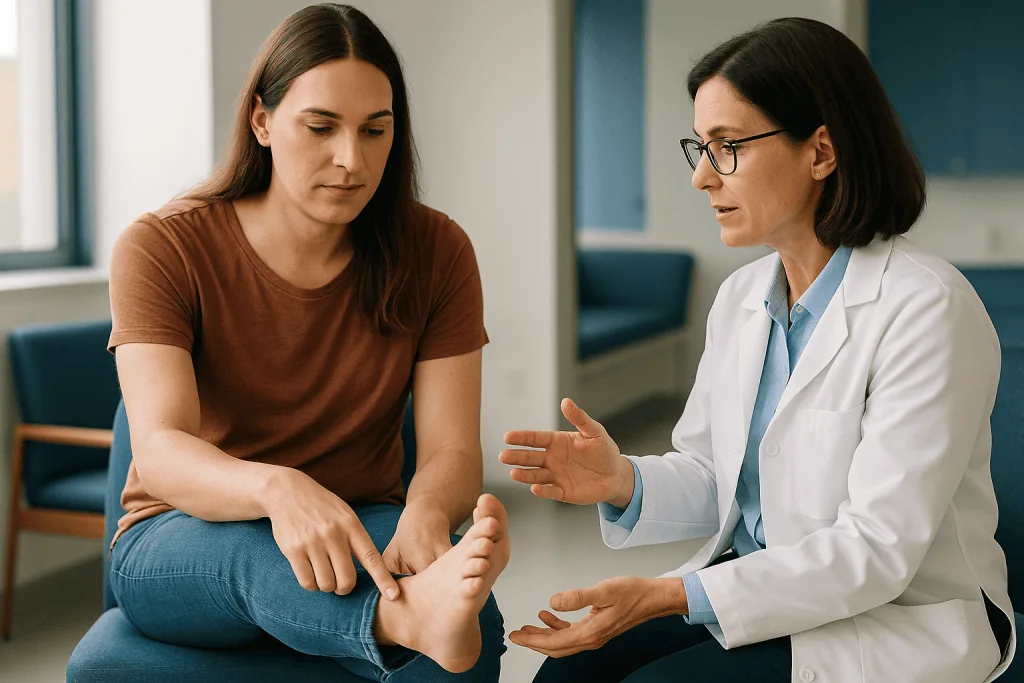
Who are typical foot feminization surgery candidates?
Because no guideline exists for this specific request, surgeons tend to assemble a candidate profile from three sources: the rules for any elective bone operation, the principles of gender-affirming care, and plain experience with cosmetic foot surgery. The profile that emerges looks like this.
- An adult whose bones have finished growing, so any correction stays where it was placed.
- Good general health, with blood sugar, blood pressure and circulation in ranges that support wound and bone healing.
- No nicotine use for a period the surgeon specifies, since nicotine narrows blood vessels and slows bone knitting.
- A goal that is specific and modest: a toe that overlaps its neighbor, a bunion that pushes shoes out of shape, a forefoot that spreads visibly in sandals.
- Realistic expectations about the ceiling of change. A foot can be tidied; it cannot be rebuilt two sizes smaller.
- Weeks of protected time, a stable place to recover and someone available to help, because walking will be limited.
- For transgender and gender-diverse people, an established relationship with a care team that already knows their history and priorities.
The strongest cases usually combine a functional problem with an aesthetic one. A painful bunion that also looks bulky is a medical indication with a cosmetic bonus; the operation would be reasonable even if appearance were irrelevant. That matters because the evidence supporting bunion surgery comes almost entirely from people who had pain (NHS). When the surgeon can point to an actual deformity rather than a preference, the risks of nerve injury and stiffness are being taken for a reason the literature recognizes.
Candidacy is a conversation, not a checkbox. Two people with identical X-rays can receive different advice because their health, their jobs and the way they describe their goals differ.
Who is usually advised to wait, and why waiting is not a refusal
Being asked to wait is one of the most common outcomes of a consultation, and it is rarely a polite no. It usually means the surgeon has spotted something fixable that would make the operation safer later.
Age comes first. Before the growth plates close, cutting and shortening bone can disturb how the foot finishes developing, so surgeons generally defer cosmetic bone work until adulthood. Nicotine is next: smoking and vaping both constrict the tiny vessels that feed healing bone and skin, and most surgeons want a nicotine-free window before and after the operation, set by the team rather than by a magazine.
Poorly controlled diabetes, especially with reduced sensation in the feet, changes the calculation sharply. Nerve damage means a small wound problem can go unnoticed, and impaired circulation slows repair; foot ulcers in people with diabetes are a leading cause of amputation (MedlinePlus). Peripheral arterial disease, active skin or nail infection, a recent foot injury and a history of blood clots all sit in the same category: not permanent barriers, but reasons to treat, stabilize and reassess.
Timing in life matters as much as timing in the body. Someone who has recently begun hormone therapy, is still recovering from another operation or is navigating a period of acute distress is often asked to let things settle. Surgeons also pause when the stated goal outruns what bone can deliver, when a partner or employer seems to be driving the request, or when the person cannot yet arrange the weeks of reduced walking that recovery demands.
Waiting preserves options. Bone that has been shortened cannot be lengthened again without a far bigger operation, so a delayed yes costs little while a hurried yes can cost a great deal.
How does foot feminization surgery work? What actually happens
Think of the foot as a set of levers. The five metatarsals are the long bones between the ankle and the toes; the phalanges are the smaller bones inside each toe. Almost every feminizing procedure changes the length or angle of one of these levers.
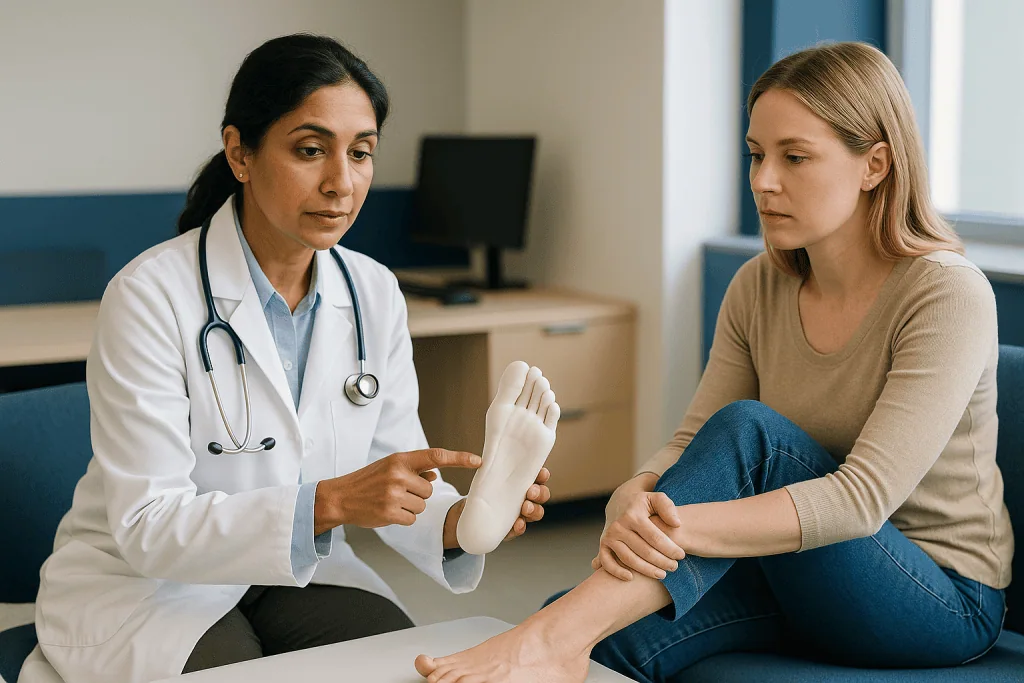
Toe shortening removes a wafer of bone from a phalanx, usually the middle one, then holds the two ends together with a slim pin or screw until they knit. Bunion correction, the most studied of the group, involves an osteotomy, which is a controlled surgical cut through bone, to realign the first metatarsal and pull the big toe back into line, fixed with small screws (Mayo Clinic). Forefoot narrowing applies similar cuts to the lesser metatarsals so the splayed bones sit closer together. Fat grafting, when offered, moves a small amount of the person’s own fat into a thin pad under the ball of the foot.
The day itself is often structured as day surgery. Anesthesia may be a general anesthetic or a regional block that numbs the leg while the person stays sedated; the anesthesia team makes that call based on health and the extent of work planned. The foot leaves the operating room in a bulky dressing and a rigid-soled post-operative shoe or boot that stops the forefoot from bending while bone heals.
What the operation cannot do is as important as what it can. It does not change the heel bone, the ankle or the arch. It cannot make a foot narrower than the width of its bones lying side by side. Each cut also carries a small tax in stiffness and a redistribution of load, which is why a surgeon asked to do three toes and a bunion in one sitting will spend a long time explaining trade-offs.
What is Cinderella foot surgery, and is it the same thing?
Cinderella foot surgery is a nickname, not a diagnosis or a recognized procedure. The label attached itself to a bundle of cosmetic operations sold on the promise of slipping into narrow or high-heeled shoes: toe shortening, bunion removal on painless feet, forefoot narrowing and fat padding. The overlap with foot feminization surgery is almost total. The difference is the audience the marketing addresses.
That shared ancestry matters because the concerns raised about Cinderella procedures apply directly to feminization requests. Orthopedic and podiatric professionals have long cautioned against operating on feet that do not hurt, for a simple reason: pain gives the surgeon a measurable target, and its absence removes the main way to judge whether the operation was worth it. A person who arrives with no pain can only get worse in that dimension, never better.
The fairy-tale framing also obscures how permanent the changes are. A toe that has been shortened stays shortened; a metatarsal that has been narrowed carries a line inside the bone where it was cut. Shoe fashions rotate every few years, while the skeleton does not.
None of this means the operations are illegitimate. Bunion surgery has a substantial evidence base for people with symptoms, and correcting a toe that rubs raw against its neighbor is ordinary reconstructive care (NHS). The distinction that matters is indication: whether the foot has a problem the surgery addresses, or whether the surgery is creating a new normal for a foot that was already normal. A candid surgeon will tell you which side of that line your request falls on, and a candid patient will want to know before anything is scheduled.
Is foot surgery a major surgery? A grounded answer
The honest answer is that it depends on what you mean by major. Measured by hospital stay, most cosmetic foot operations are minor: they are commonly done as day cases and people go home the same afternoon (Mayo Clinic). Measured by what happens to the body and to daily life, they are anything but.
Any operation that cuts bone triggers the same healing sequence as a fracture. The cut ends bleed, form a soft callus, then harden into new bone over weeks. Cleveland Clinic describes recovery from bunion surgery as typically taking six to twelve weeks, with swelling that can persist longer. During the early part of that window the forefoot cannot bear full load, which means a stiff shoe, stairs taken carefully and no driving until braking is safe.
Then there is the hardware. Screws and pins hold the bone while it knits, and some people later need them removed because they irritate soft tissue. Nerves run in a dense network across the top and sides of the foot, so numbness over the operated area is common and occasionally permanent. Deep vein thrombosis, a clot in a leg vein, is a recognized risk after any lower-limb procedure that limits movement, which is why the team will talk about early mobilization and clot prevention.
The feet are also unforgiving in a way the face is not. You stand on the result thousands of times a day. A small misalignment that would be invisible elsewhere can shift weight onto a neighboring toe and create a new pain that did not exist before, a phenomenon called transfer metatarsalgia.
So: minor in the operating room, major in the calendar. Anyone weighing candidacy should plan for the second version.
Which health conditions change the risk calculation?
Some medical factors do more than raise risk; they change what the surgeon is willing to offer. The table summarizes the ones that come up most often in pre-assessment, drawn from standard guidance on bunion and elective foot surgery (Mayo Clinic; NHS; MedlinePlus). It is a map of the conversation, not a verdict, and the final judgment rests with the treating team.
| Factor | Why it matters for foot bone surgery | Typical stance |
|---|---|---|
| Diabetes with neuropathy or poor control | Slow healing, reduced sensation, higher infection and ulcer risk | Usually wait until stable; may decline |
| Peripheral arterial disease | Reduced blood flow to healing bone and skin | Often decline, or require vascular assessment first |
| Smoking or vaping | Nicotine constricts vessels and delays bone union | Wait until nicotine-free for the period the team sets |
| Previous blood clot | Higher risk of clots with reduced mobility | Proceed with a prevention plan, or defer |
| Active skin or nail infection | Bacteria close to fresh incisions | Treat first, then reassess |
| Inflammatory arthritis or long-term steroid use | Fragile bone and skin, altered immunity | Case by case with the prescribing specialist |
| Age under 18 | Growth plates may still be open | Wait until skeletal maturity |
Two things stand out. First, most items are modifiable. Blood sugar can be brought under control, nicotine stopped, infection treated, weight-bearing plans rearranged. A wait of a few months often converts a risky candidate into an acceptable one. Second, sensation matters as much as circulation. A foot that cannot feel a rubbing shoe cannot protect a healing incision, which is why diabetes-related neuropathy sits near the top of every surgeon’s list of reasons to hesitate.
Medicines deserve a mention without specifics. Blood thinners, steroids and some immune-modulating drugs affect bleeding or healing, and the prescriber, not the surgeon alone, decides whether they are adjusted around the operation. Never change a prescribed medicine on your own initiative because a procedure is planned.
What does the evidence actually show about cosmetic foot surgery?
Here the magazine has to be blunt: the evidence base for feminizing the feet is thin. There are no randomized trials comparing surgery with no surgery for cosmetic foot concerns, no large registries tracking long-term results, and no systematic reviews that isolate feminization as an indication. What exists are small case series from individual surgeons, which by their nature show the best of what those surgeons do and rarely capture the people who were unhappy.
The nearest solid ground is bunion surgery for painful bunions. Guidance from the NHS and Mayo Clinic agrees that surgery is considered when pain persists despite wider shoes and padding, that it generally relieves pain and improves alignment, and that a bunion can return over time. Notice what that evidence is about: pain and function. It says nothing directly about how a foot looks in a sandal, and it cannot be assumed to transfer to feet that never hurt.
Toe shortening has an even smaller literature, most of it describing correction of a genuinely long second toe that overlaps or hammers. Complications reported in those series include stiffness, a toe that sits slightly raised off the ground, and persistent swelling. Forefoot narrowing is described mainly in the context of arthritis or severe splaying.
Within gender-affirming care, research on surgery and wellbeing concentrates on chest, genital and facial procedures. Feet are essentially absent. A surgeon who says foot surgery will relieve dysphoria is offering a plausible hope, not a demonstrated result, and the honest phrasing is: some people report satisfaction, the numbers are small, and no one has measured this rigorously.
Uncertainty of that kind is not a reason to forbid a procedure. It is a reason to enter it with eyes open and to weight the known risks more heavily than the hoped-for gains.
What do the days and weeks after surgery usually look like?
Recovery has a rhythm, and knowing it in advance is half the battle. The ranges below are typical for bunion and forefoot bone surgery as described by Mayo Clinic and Cleveland Clinic; individual timelines vary and the team’s instructions override anything written here.
The first two or three days are about elevation and swelling. The foot stays above heart level as much as possible, the dressing stays dry, and pain is usually at its worst before it settles. Walking is limited to short trips indoors in the rigid post-operative shoe. Numbness from a regional block wears off within the first day, which is when people are most surprised by how much a small foot can ache.
Weeks one and two bring the first clinic visit, a dressing change and a wound check. Stitches, if not dissolvable, are typically removed around this point. Most people are still off work if the job involves standing, and driving waits until an emergency stop is possible without hesitation.
Weeks three to six are the slow middle. Bone is forming callus but is not yet strong, so the protective shoe stays on. Swelling begins to ease but the foot is still visibly puffy by evening. Gentle range-of-motion exercises for the toes often start now to limit stiffness.
Somewhere between six and twelve weeks, an X-ray usually confirms the bone has knitted well enough to move into a supportive regular shoe (Cleveland Clinic). Full recovery, including the settling of swelling and the return of a normal walking pattern, can take several months (Mayo Clinic). The narrow or heeled shoe that motivated the operation is typically the last thing to fit comfortably, and for some people it never fits the way the fantasy promised.
Cosmetic foot surgery risks, in plain language
Every consent form lists complications, but the list reads differently when the operation was optional. These are the ones that matter most for feminizing procedures, described neutrally (Mayo Clinic; MedlinePlus).
Infection sits at the top for a reason: feet live in shoes, close to the ground, and incisions here are harder to keep clean than on the arm. Most infections are superficial and settle with treatment, but an infection that reaches the bone or the hardware is a serious problem that may require further surgery.
Nonunion means the cut bone fails to knit; malunion means it knits in the wrong position. Either can leave a toe floating above the ground, a metatarsal that bears too much or too little load, and a foot that hurts where it did not before. Transfer metatarsalgia, pain that migrates to the neighboring ball-of-foot area when loads shift, is a classic consequence of shortening one bone without accounting for its neighbors.
Nerve injury shows up as numbness, tingling or, less often, burning pain along the scar. Small skin nerves are unavoidable casualties of any incision on the foot, and while most sensation returns, some does not. Stiffness in the operated toe joints is common and can be permanent, which matters when that toe has to bend every time you push off to walk.
Recurrence is specific to bunion work: the toe can drift back over years (NHS). Hardware can irritate and need removal. Blood clots are a risk whenever leg movement is reduced. Scars on the top of the foot are visible in exactly the shoes the surgery was meant to enable.
The rarest outcome, but the one every surgeon fears, is a foot that looks slightly different and functions noticeably worse. The way to avoid it is not courage; it is careful selection, which brings the discussion back to candidacy.
Alternatives worth trying before deciding
Surgery is one option on a menu that most people have not fully explored. None of these alternatives changes bone, but several change how a foot looks and feels in a shoe, and all of them are reversible.
Fit comes first, and it is more flexible than people assume. Shoe length and width vary noticeably between manufacturers and even between styles from the same maker, so trying several in the same nominal size often turns up a better proportion. A pointed or almond toe shape visually lengthens the line of the foot and leg, which reads as slimmer; a low heel does something similar by lifting the arch. Darker or tonal colors that match the leg tend to make the foot recede visually, while contrast draws the eye to its outline.
Padding and inserts address specific complaints. Gel toe separators and bunion pads relieve rubbing and can make a slightly wider shoe feel acceptable; a slim insole can take up volume in a shoe that is a half size long. For a bunion that is beginning to ache, the NHS advises wide, low-heeled shoes and padding as the first step before any surgical discussion.
Skin and nail care changes the impression a foot makes more than most people credit. Well-kept nails, treated calluses and moisturized skin shift attention away from size. A podiatrist can manage thickened nails or corns that make feet look neglected rather than large.
For transgender and gender-diverse readers, one further alternative is sequencing. Many people find that once procedures with stronger evidence and larger personal impact are complete, the feet matter less than they did at the start. That is not a reason to dismiss the concern; it is a reason to give it time before committing bone to it.
What people often get wrong about foot feminization surgery
Myths gather around any procedure that lives mostly online. These are the ones that most often distort decisions.
Hormone therapy will shrink my feet, so surgery is a shortcut. Estrogen can soften skin and redistribute fat, and a few people notice shoes feeling slightly looser. Bone length does not change after the growth plates close, so the skeletal size of the foot stays put. Surgery is not a faster version of something hormones do; it is the only thing that alters length, and only by millimeters per toe.
Cosmetic means low risk. The word describes the reason for surgery, not its intensity. Cutting and fixing bone carries the same infection, nonunion and nerve risks whether the indication is pain or appearance (Mayo Clinic).
I can drop two shoe sizes. Shortening a toe by a few millimeters may change how a shoe fits at the tip but rarely changes the size printed inside it, because the heel-to-ball length that governs fit is untouched.
Doing both feet at once halves the recovery. It doubles the dependency. With two forefeet protected, ordinary tasks like carrying a cup of coffee across a room become logistical problems, which is why many surgeons stage the feet.
A no from one surgeon means find another. Sometimes a second opinion is wise. When several experienced surgeons decline the same request, the pattern is information about the request, not about the surgeons.
Fixing my feet will fix how I feel about my body. Some people do feel better. Others discover that the discomfort relocates. Because the evidence is so thin, no one can promise the emotional result, and a care team that knows you well is better placed than a surgeon who met you once to help you weigh it.
Questions to ask your care team
A good consultation should leave you with more clarity, not more brochures. Bring these questions, write down the answers and notice which ones the surgeon welcomes.
- Which exact procedures are you proposing, bone by bone, and which are you advising against?
- Does my foot have a functional problem you would operate on regardless of appearance, or is this entirely cosmetic?
- How often do you perform each of these operations, and how do you follow up your patients beyond the first few months?
- What would make you say I am not a candidate today, and what would change that?
- Realistically, how much shorter or narrower can this foot be, in millimeters, and how would that translate to shoe fit?
- What are the specific risks for my foot, given my health, my job and the way I walk?
- How long will I be unable to bear full weight, drive or stand for work, and what does the swelling timeline look like?
- Would you stage the two feet or do them together, and why?
- If a screw needs removing or a toe stiffens, what does that further treatment involve?
- Who do I contact after hours if something looks wrong, and what would you consider an emergency?
- How does this fit with the rest of my gender-affirming care, and have you spoken with the team that already supports me?
Two kinds of response deserve attention. A surgeon who answers the question about limits with specific numbers and a shrug about shoe sizes is being honest. One who promises comfort in a particular heel, or presses for a decision at the first visit, is describing a sale rather than an operation. The pace of the decision is yours, and the final recommendation about whether and when to operate belongs to the treating team looking at your foot, not to any article.
When to call your doctor: red-flag signs before and after surgery
Most recoveries are uneventful, but the foot is a place where small problems escalate quickly, and knowing the warning signs is part of being a good candidate. Contact your surgical team the same day if any of the following appear after surgery (Mayo Clinic; MedlinePlus).
- Fever, chills or feeling generally unwell in the first two weeks.
- Redness spreading beyond the dressing, increasing warmth, or pus or foul-smelling fluid from the wound.
- Pain that worsens after the first few days rather than easing, or pain not controlled by the plan you were given.
- A wound that opens, or a dressing that becomes soaked with blood.
- Toes that turn white, blue or cold, or numbness that spreads rather than shrinks.
- New calf pain, tenderness or swelling in either leg, which can signal a blood clot.
Call emergency services immediately for sudden breathlessness, chest pain, coughing up blood or collapse; these can indicate a clot that has traveled to the lungs.
Red flags exist before surgery too. Seek a medical review rather than a surgical booking if a foot problem you were planning to treat cosmetically is accompanied by unexplained numbness, non-healing sores, color change or pain at night, since these can point to circulation or nerve conditions that need treatment first. If you have diabetes and notice any break in the skin of the foot, contact your usual care team promptly regardless of surgical plans.
One softer red flag: pressure. If you feel rushed toward a date, discouraged from a second opinion, or unable to get plain answers to the questions in the previous section, step back. A procedure that permanently changes the shape of your bones can wait for a team that treats your caution as a strength.
Frequently asked questions
What is Cinderella foot surgery?
Cinderella foot surgery is a marketing nickname for a bundle of cosmetic foot procedures, typically toe shortening, bunion removal on painless feet, forefoot narrowing and fat padding, sold on the idea of fitting into narrow or high-heeled shoes. The operations overlap almost entirely with those offered as foot feminization surgery. The nickname is not a recognized procedure, and the evidence for operating on feet that do not hurt is limited.
Is foot surgery a major surgery?
It is usually minor in terms of hospital stay, since most cosmetic foot operations are done as day cases, but it is major in terms of recovery. Cutting bone triggers fracture-style healing that Cleveland Clinic describes as typically taking six to twelve weeks, with restricted weight-bearing, no driving early on and swelling that can persist for months. Risks include infection, nerve injury and blood clots.
How much does foot feminization surgery cost?
This magazine does not publish price figures for any treatment, because they vary widely by procedure, setting, anesthesia type and whether a functional indication such as a painful bunion exists. Coverage also differs between insurers and health systems. The most reliable route is to ask the treating team’s administrative staff for a written, itemized estimate specific to the procedures actually proposed for your foot.
Does hormone therapy change foot size?
Not in any meaningful skeletal sense. Estrogen can soften skin and redistribute fat, and some people notice shoes feeling slightly looser, but bone length is fixed once the growth plates close in the late teens. Neither hormone therapy nor time will shorten a metatarsal or toe bone, which is why some people look toward surgery as the only option that alters length, and then only by millimeters.
Can I have both feet done at the same time?
Some surgeons will, but many prefer to stage the feet. Operating on both at once doubles the dependency during the early weeks when the forefoot cannot bear full load, making stairs, carrying objects and basic self-care difficult. Staging allows one foot to bear weight while the other heals. The decision depends on the extent of surgery, your home support and the surgeon’s judgment.
What are the main cosmetic foot surgery risks?
The main risks are infection, bone that fails to knit or knits in the wrong position, nerve numbness or persistent pain along the scar, joint stiffness, pain transferring to a neighboring toe as loads shift, hardware irritation, blood clots and, for bunion work, recurrence over time (Mayo Clinic; NHS). Because these operations are optional, surgeons weigh them more heavily than they would for a painful deformity.
How long is toe shortening surgery recovery?
Toe shortening follows the same bone-healing timeline as other forefoot procedures. Guidance on comparable operations describes six to twelve weeks in a protective shoe before bone has knitted enough for regular footwear, and several months for swelling to fully settle (Cleveland Clinic; Mayo Clinic). Stiffness in the operated toe can take longer to improve and in some cases is permanent. Your team’s instructions take precedence.
Can teenagers have foot feminization surgery?
Surgeons generally defer cosmetic bone surgery on the feet until skeletal maturity, because cutting and shortening bone before the growth plates close can disturb how the foot finishes developing. Growth plates in the foot typically close in the late teens. Any young person with a genuinely painful or functionally limiting foot deformity should be assessed by a pediatric orthopedic or podiatric specialist, who decides on timing.
Will I need a mental health assessment first?
There is no formal requirement, since no guideline defines eligibility for feminizing the feet. Many surgeons nonetheless ask for input from a person’s existing gender-affirming care team or a mental health professional, particularly when the request is purely cosmetic, expectations seem high or the timing coincides with other major changes. The purpose is to support a durable decision, not to gatekeep it.
Is there an A to Z list of foot problems I should rule out before considering surgery?
MedlinePlus maintains a comprehensive overview of foot injuries and disorders, covering bunions, hammer toes, arthritis, nerve conditions, circulation problems and skin or nail disease. Reviewing it can help you describe what you are noticing, but it is not a self-diagnosis tool. Any numbness, non-healing sore, color change or night pain should be assessed by a clinician before a cosmetic operation is discussed.
References
This article is for general information only and is not a substitute for professional medical advice. Please consult a qualified doctor about your individual situation.

More from the Blog

Local, Regional or General? Anesthesia Options for Finger and Toe Surgery Explained
Most finger and toe operations can be done under local anesthesia, usually a digital block that numbs only the affected digit while you stay…

Who May Be a Candidate for Proximal Fibular Osteotomy When Inner-Knee Arthritis Is Mild?
Proximal fibular osteotomy is usually considered for adults whose knee osteoarthritis is confined mainly to the inner (medial) compartment, who have mild to moderate…

Knee Pain Causes: Why Knees Hurt (and Why It Differs in Women)
Knee pain in women most often comes from patellofemoral (front-of-knee) pain, osteoarthritis, tendon or bursa irritation, meniscus wear, or ligament injury. Women see certain…

Shoulder, Elbow, Wrist or Hand: How Upper Limb Surgery Is Planned for Each Joint
Upper limb surgery covers operations on the shoulder, elbow, wrist and hand, from nerve releases and tendon repairs to fracture fixation and joint replacement.…

Life After Adult Reconstruction Surgery: Why High-Impact Sport Is Limited and What Replaces It
After adult reconstruction surgery, the orthopedic term for hip and knee replacement, most care teams advise a long-term shift away from running, jumping and…

How Foot Surgery Is Performed: Bunion Correction, Fusion and Tendon Repair Step by Step
Foot surgery is usually performed as a day procedure under a nerve block, spinal or general anesthetic. The surgeon makes one or more small…