Carney Complex
Carney complex is a rare genetic condition causing skin spots, heart myxomas and hormone excess. Learn about its symptoms, causes, diagnosis and treatment.
Quick answer
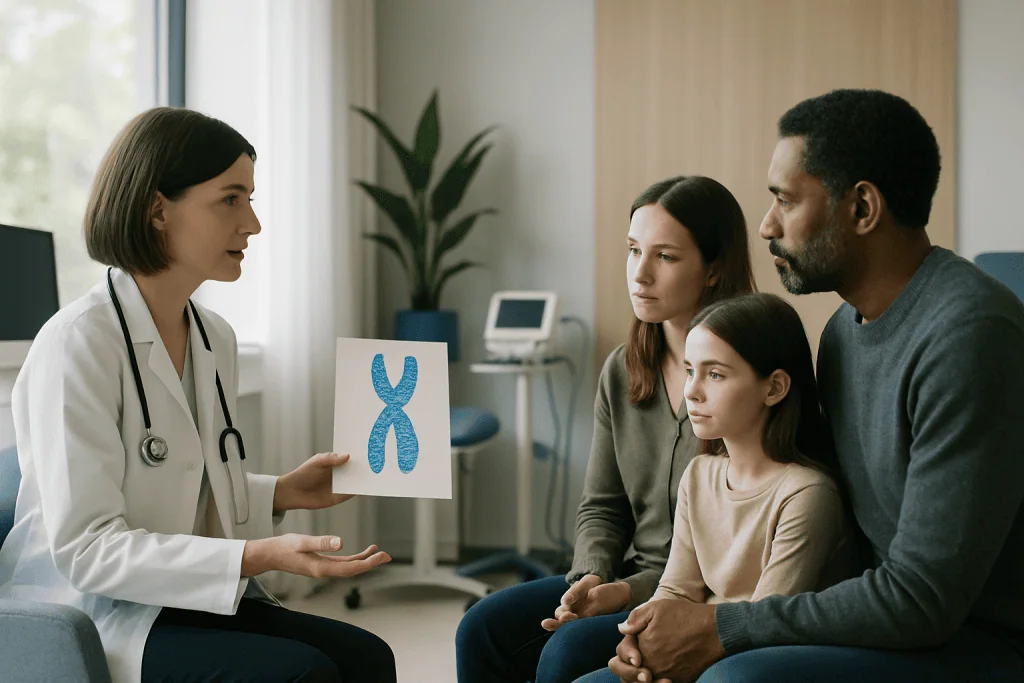
Carney complex is a rare inherited condition, usually caused by a PRKAR1A gene mutation, that produces spotty skin pigmentation, benign tumors called myxomas (often in the heart), and overactive hormone glands such as the adrenal and pituitary glands. There is no cure, but lifelong screening, surgery, and hormone treatment can manage its complications.
What is Carney complex?
Carney complex is a rare inherited condition that causes a mix of skin changes, benign (non-cancerous) tumors, and overactive hormone-producing glands. It is named after the pathologist who first described the pattern in the 1980s. The condition belongs to a group of disorders called multiple endocrine neoplasia syndromes, in which several glands of the endocrine (hormone) system develop tumors or overgrow over a person's lifetime.
The most characteristic features are spotty pigmentation of the skin, soft tumors called myxomas that can form in the heart and other tissues, and excess hormone production, most often from the adrenal glands or the pituitary gland. Because the features appear in different combinations and at different ages, no two people with Carney complex look exactly alike.
Carney complex affects males and females, and it occurs in families around the world. It is often recognized in childhood or early adulthood, although some people are not diagnosed until later in life, sometimes after a relative is found to have the condition. In most cases it is passed from a parent to a child, but it can also appear for the first time in a person with no family history. Because several organ systems are involved, care is usually coordinated by a specialist in endocrinology working alongside cardiologists, dermatologists, surgeons, and genetic counselors.
Carney complex symptoms
Carney complex symptoms vary widely from person to person, even within the same family. Some people have only skin changes, while others develop heart tumors or significant hormone problems. Common features include:
- Skin pigmentation: small brown or black freckle-like spots (lentigines) on the face, lips, eyelids, inner corners of the eyes, ears, and genital area; bluish-black moles called blue nevi.
- Myxomas: soft, gelatinous benign tumors that may form in the heart (cardiac myxomas), skin, breast, and, less often, other tissues.
- Heart-related symptoms: shortness of breath, palpitations, fainting, fatigue, or stroke-like events caused by a heart myxoma blocking blood flow or shedding fragments.
- Signs of excess cortisol (Cushing syndrome): weight gain in the face and trunk, thin skin and easy bruising, purple stretch marks, muscle weakness, high blood pressure, slowed growth in children.
- Signs of excess growth hormone (acromegaly): enlargement of the hands, feet, and jaw, coarsening of facial features, joint pain, headaches, sweating.
- Thyroid nodules: lumps in the thyroid gland, usually benign.
- Testicular tumors: usually benign large-cell calcifying Sertoli cell tumors, which may cause early puberty or breast enlargement in boys.
- Ovarian cysts in women.
- Nerve sheath tumors: a rare pigmented tumor of nerve tissue called psammomatous melanotic schwannoma, which can cause pain or numbness.
- Bone lesions: uncommon benign bone tumors, mainly in children.
Symptoms often unfold over time. Skin spots are frequently the earliest sign and may be present in infancy or early childhood, becoming more noticeable around puberty. Heart myxomas can occur at any age, including in young children, and may return after removal. Hormone-related symptoms, such as Cushing syndrome from the adrenal glands, tend to appear in adolescence or young adulthood, while acromegaly usually develops slowly in adults. Because many of these features are subtle at first, doctors often rely on planned screening rather than waiting for symptoms.
Causes and risk factors
Carney complex causes are genetic. In most affected people, the condition results from a harmful change (mutation) in a gene called PRKAR1A. This gene normally produces a protein that acts as a brake on a signaling pathway inside cells known as the cAMP-protein kinase A pathway. When the brake does not work properly, cells in certain tissues, particularly hormone-producing glands, skin, and heart tissue, receive too many growth signals and can multiply into tumors or become overactive.
A smaller number of people with Carney complex do not have a detectable PRKAR1A mutation. In some of these individuals, researchers have linked the condition to another region of the genome, and in rare cases to extra copies of related genes. In a portion of cases the exact genetic cause is not yet identified, although the clinical picture is the same.
The condition is inherited in an autosomal dominant pattern. This means that a person needs only one altered copy of the gene, from either parent, to develop the condition, and each child of an affected parent has a one-in-two chance of inheriting the altered gene. Carney complex can also arise from a new mutation in a person with no family history; that person can then pass it on to their children.
Risk factors are therefore primarily related to family history rather than lifestyle:
- Having a parent, sibling, or child with confirmed Carney complex.
- Carrying a known pathogenic PRKAR1A variant.
- Having a family history of unexplained heart myxomas, especially at a young age or recurring after surgery.
- Having a relative with Cushing syndrome caused by a specific adrenal condition called primary pigmented nodular adrenocortical disease (PPNAD).
There is no evidence that diet, infections, or environmental exposures cause Carney complex. It is not contagious, and nothing a parent did during pregnancy causes it.
Carney complex diagnosis
Carney complex diagnosis is usually based on a combination of clinical findings, laboratory tests, imaging, and genetic testing. Doctors use published diagnostic criteria that list the major features of the condition. In general, a diagnosis is made when a person has two or more major features, or one major feature together with a confirmed pathogenic gene variant or a first-degree relative who has the condition.
The evaluation may include several steps:
- Medical and family history: a detailed review of symptoms and any relatives with heart tumors, hormone disorders, or unusual skin pigmentation.
- Physical and skin examination: careful inspection for lentigines and blue nevi in characteristic locations, and for skin myxomas.
- Echocardiogram: an ultrasound of the heart that can detect myxomas in the heart chambers. It is a key test at diagnosis and is repeated regularly.
- Hormone testing: blood and urine tests measuring cortisol, including 24-hour urinary free cortisol and dexamethasone suppression tests, which check whether the adrenal glands respond normally to a steroid medicine. In PPNAD, cortisol may paradoxically rise during this test, a clue that points toward Carney complex.
- Growth hormone and IGF-1 levels: blood tests that help identify excess growth hormone from a pituitary tumor.
- Imaging of glands: ultrasound of the thyroid and, in males, of the testes; magnetic resonance imaging (MRI) of the pituitary gland when hormone tests suggest a problem; computed tomography (CT) or MRI of the adrenal glands in some cases.
- Genetic testing: a blood or saliva test to look for a PRKAR1A mutation. A positive result confirms the diagnosis and allows relatives to be tested. A negative result does not rule out Carney complex, because not all causative changes are detectable.
- Tissue examination (pathology): when a tumor is removed, examination under a microscope can show features typical of the condition.
Once a diagnosis is made, doctors often recommend that close family members be evaluated, since early identification allows heart screening to begin before complications occur. Genetic counseling is commonly offered to help families understand what test results mean.
Carney complex treatment options
There is currently no treatment that corrects the underlying genetic change, so Carney complex treatment focuses on finding tumors early, removing those that are dangerous, and controlling excess hormones. Care is individualized based on which features a person has.
Observation and surveillance. Lifelong monitoring is the foundation of care. This typically includes a yearly echocardiogram to look for heart myxomas, regular hormone testing, thyroid and testicular ultrasound at intervals, and periodic pituitary imaging when indicated. Children may also have growth and puberty monitored. Skin lentigines and blue nevi are harmless and usually need no treatment beyond observation.
Surgery for heart myxomas. Cardiac myxomas are removed surgically because they can obstruct blood flow, damage heart valves, or release fragments that travel to the brain or other organs. Open-heart surgery is the standard approach. Because myxomas can grow back or appear in a different part of the heart, follow-up imaging continues after surgery.
Treatment of Cushing syndrome from PPNAD. When both adrenal glands are overproducing cortisol, doctors most often recommend removing both glands (bilateral adrenalectomy), usually with minimally invasive techniques. After this operation a person must take replacement steroid hormones every day for life and carry emergency information, because the body can no longer make cortisol on its own. In selected cases, medicines that block cortisol production may be used temporarily or when surgery is not suitable.
Treatment of acromegaly. A growth hormone-producing pituitary tumor may be removed by surgery through the nose (transsphenoidal surgery). Medications such as somatostatin analogs, which reduce growth hormone release, may be used before surgery, after surgery if hormone levels remain high, or as primary therapy. Radiation therapy is reserved for cases that do not respond to other approaches.
Management of other tumors. Thyroid nodules are usually monitored, with biopsy or surgery if there are concerning features. Testicular tumors are typically benign; monitoring is common, and surgery is considered if they cause hormone effects or growth. Skin and breast myxomas can be removed if they are bothersome or growing. Melanotic schwannomas are removed when possible, and because a small proportion can behave aggressively, follow-up imaging is advised.
Supportive care and rehabilitation. After heart or adrenal surgery, a period of recovery with gradual return to activity is usual. People with acromegaly may benefit from physical therapy for joint symptoms. Psychological support and genetic counseling are part of comprehensive care. The Endocrinology and Metabolism department typically coordinates hormone management and long-term follow-up for people with this condition at Acibadem.
Living with Carney complex and outlook
Carney complex is a lifelong condition, but many people live full and active lives when it is identified early and monitored consistently. The outlook depends mainly on which features develop and how promptly they are treated. Heart myxomas are historically the most serious complication, because they can cause stroke or sudden heart problems if undetected. Regular echocardiography reduces this risk substantially, which is why keeping surveillance appointments is so important.
Hormone disorders such as Cushing syndrome and acromegaly can be well controlled with surgery and medication, though people who have had both adrenal glands removed need to manage daily hormone replacement and increase their dose during illness or stress as directed by their doctor. Most tumors in Carney complex are benign; cancer is uncommon but has been reported in some tumor types, so ongoing follow-up remains advisable.
Practical steps that many patients find helpful include keeping a written summary of their diagnosis and surgeries, wearing medical identification if they take steroid replacement, sharing information with relatives who may wish to be tested, and connecting with rare-disease patient organizations. Family planning discussions with a genetic counselor can help prospective parents understand inheritance and options. Because the condition is rare, care from a team familiar with it, or in consultation with such a team, is generally recommended.
Frequently asked questions
What are the first signs of Carney complex?
The earliest sign in many people is spotty skin pigmentation, small brown or black freckle-like spots on the lips, eyelids, and face that are present from childhood and often become more noticeable during puberty. In other cases the first recognized problem is a heart myxoma or symptoms of a hormone excess. Because early features can be subtle, the condition is sometimes identified only after a relative is diagnosed.
Is Carney complex a form of cancer?
Carney complex is not itself a cancer. Most of the tumors it causes, including myxomas, adrenal nodules, and pituitary adenomas, are benign, meaning they do not spread to other parts of the body. However, some of these growths can be harmful because of their location or the hormones they produce, and a small number of tumor types have the potential to become malignant, which is one reason lifelong follow-up is advised.
What causes Carney complex and can it be prevented?
Carney complex is caused by an inherited or newly arising change in a gene, most often PRKAR1A, that regulates cell growth in hormone-producing and other tissues. It cannot be prevented, because the genetic change is present from birth. What can be reduced is the risk of complications, through early diagnosis, regular screening, and timely treatment of tumors and hormone problems.
How is Carney complex diagnosed in children?
Children are usually evaluated because of characteristic skin spots, a family history, or symptoms such as slowed growth, early puberty, or a heart murmur. Doctors typically perform a skin examination, an echocardiogram, hormone blood and urine tests, and genetic testing for PRKAR1A. If a parent has a known mutation, the child can be tested directly, and screening may begin in infancy.
What does Carney complex treatment usually involve?
Treatment is tailored to the features present. It commonly involves regular surveillance imaging and hormone testing, surgery to remove heart myxomas, surgery or medication for excess cortisol or growth hormone, and monitoring or removal of other tumors as needed. There is no cure for the underlying gene change, so care continues throughout life, ideally coordinated by an endocrinology team working with other specialists.
Can heart myxomas come back after surgery?
Yes. In Carney complex, myxomas can recur in the same or a different heart chamber after removal, which differs from sporadic myxomas in people without the condition. For this reason, doctors generally recommend an echocardiogram at least once a year for life, even after successful surgery, so that any new growth can be found early.
Will my children inherit Carney complex?
Carney complex follows an autosomal dominant pattern, so each child of an affected parent has a one-in-two chance of inheriting the altered gene. Inheriting the gene does not predict which features a child will develop or how severe they will be, since the condition varies even within families. Genetic counseling can help families understand testing options and what results mean.
When to see a doctor
Anyone with a family history of Carney complex, unexplained heart myxomas, or characteristic skin pigmentation combined with hormone symptoms should be evaluated by a doctor, as early diagnosis allows screening to begin. People already diagnosed should keep scheduled surveillance visits even when they feel well.
Seek urgent medical care if you or a family member with Carney complex experience any of the following red-flag symptoms:
- Sudden weakness or numbness on one side of the body, facial drooping, trouble speaking, or sudden vision loss (possible stroke from a myxoma fragment).
- Fainting, severe shortness of breath, or chest pain, particularly when lying down or changing position.
- A new rapid or irregular heartbeat with dizziness.
- Severe vomiting, weakness, confusion, or collapse in someone who takes steroid replacement after adrenal surgery, which may signal adrenal crisis.
- Sudden severe headache with vision changes in someone with a known pituitary tumor.
- Rapid unexplained weight gain, high blood pressure, or dramatic mood changes in a child or young adult.
- A rapidly growing lump anywhere on the body, or new persistent pain or numbness along a nerve.
Less urgent but still important reasons to arrange a medical review include new skin spots in unusual locations, changes in growth or puberty in a child, enlargement of the hands, feet, or jaw, a lump in the neck or testicle, or any symptom that is new and unexplained.
Medically reviewed by the Acıbadem International Medical Board September 13, 2026
See our medical review board →
Update history
- PublishedSeptember 13, 2026
- Medical review approvedSeptember 13, 2026
- Last content updateSeptember 13, 2026