Orofacial Pain
Learn what orofacial pain is, its common symptoms and causes, how doctors diagnose it, and the treatment options that may help, from self-care to surgery.
Quick answer
Orofacial pain is pain felt in the mouth, jaw, face, or nearby head and neck areas. It is an umbrella term covering dental pain, jaw joint and muscle disorders, nerve conditions such as trigeminal neuralgia, and other causes. Diagnosis relies on examination and sometimes imaging; treatment depends on the underlying cause.
What is orofacial pain?
Orofacial pain is a broad term for pain felt in the mouth, jaws, face, and the surrounding areas of the head and neck. The word “orofacial” simply combines “oro” (mouth) and “facial” (face). It is not a single disease. Instead, it describes many different conditions that can cause discomfort in this region, ranging from a toothache or a sore jaw joint to nerve-related pain that has no obvious dental cause.
Many people have short-lived orofacial pain at some point, often because of a dental problem or a minor injury. For others, the pain lasts longer than three months and becomes chronic (long-lasting). Chronic orofacial pain can affect eating, speaking, sleeping, and mood. It is seen in people of all ages, but certain types are more common in adults, and several conditions, such as jaw joint disorders, are reported more often in women than in men.
Because so many structures sit close together in the face, the source of the pain is not always where it is felt. For example, pain from a jaw muscle may be felt in a tooth, and pain from a nerve may be felt across the cheek. This is one reason a careful assessment matters. In many hospitals, orofacial pain is evaluated by dentists, oral and maxillofacial specialists, neurologists, ear, nose, and throat doctors, or pain specialists, depending on the suspected cause. At Acibadem, dental and jaw-related pain is usually handled within the Dental & Oral Health unit, with referral to other departments when needed.
Symptoms of orofacial pain
Orofacial pain symptoms vary widely because the underlying causes are so different. The pain may be dull or sharp, constant or intermittent, and may affect one side of the face or both. Common symptoms include:
- Aching, pressure, or tenderness in the jaw, cheek, temple, or in front of the ear
- Toothache or pain in the gums, sometimes without a visible dental problem
- Clicking, popping, or grinding sounds in the jaw joint when opening or closing the mouth
- Difficulty or pain when chewing, yawning, or opening the mouth wide
- Locking of the jaw, where the mouth gets stuck open or closed
- Brief, severe, electric-shock-like pain triggered by touching the face, chewing, or brushing teeth
- Burning or tingling in the tongue, lips, or roof of the mouth
- Headache, often around the temples or behind the eyes
- Ear pain, ear fullness, or ringing without an ear infection
- Neck and shoulder tension that accompanies facial discomfort
The pattern of symptoms often points toward the type of problem. Pain from the jaw muscles or jaw joint (called temporomandibular disorders, or TMD) is usually a dull, aching pain that worsens with chewing or in the morning after clenching during sleep. Nerve pain, such as trigeminal neuralgia (a condition affecting the main sensory nerve of the face), tends to be sudden, stabbing, and very intense, lasting seconds to a couple of minutes. Burning mouth syndrome produces a burning sensation in the mouth without visible changes. Dental pain is often sharp and localized to a tooth, and may be triggered by hot, cold, or sweet foods.
Symptoms can also change over time. In the early stages, pain may come and go with clear triggers. When pain becomes chronic, it may feel more constant, spread to nearby areas, and be accompanied by tiredness, poor sleep, anxiety, or low mood. These changes do not mean the pain is “imaginary”; they reflect how the nervous system can become more sensitive over time.
Causes and risk factors
Orofacial pain causes fall into several broad groups. Often more than one factor is involved.
- Dental and oral causes: tooth decay, cracked teeth, dental abscesses (pockets of infection), gum disease, impacted wisdom teeth, and problems after dental treatment. These are the most common sources of facial pain overall.
- Musculoskeletal causes: temporomandibular disorders, which involve the jaw joint, the chewing muscles, or both. Jaw clenching, tooth grinding (bruxism), arthritis of the joint, and injury to the jaw can all contribute.
- Neuropathic (nerve-related) causes: trigeminal neuralgia, nerve injury after dental procedures or facial trauma, and pain following shingles (postherpetic neuralgia). Persistent idiopathic facial pain, formerly called atypical facial pain, is chronic pain without a clear identifiable source.
- Neurovascular causes: migraine and cluster headache can produce pain that is felt mainly in the face or teeth.
- Sinus, ear, and salivary gland conditions: sinus infections, ear infections, and blocked or inflamed salivary glands can cause pain that is felt in the cheek or jaw.
- Burning mouth syndrome: a chronic burning sensation, sometimes linked to nerve changes, dry mouth, nutritional deficiencies, or certain medications.
- Less common causes: tumors, infections of the jawbone, and inflammatory conditions such as giant cell arteritis (inflammation of blood vessels in the head, which is a medical emergency).
Several factors may raise the likelihood of developing chronic orofacial pain. These include female sex, age between the twenties and forties for jaw joint disorders, older age for trigeminal neuralgia, a history of jaw or facial injury, habits such as clenching or grinding, high stress levels, poor sleep, and other chronic pain conditions such as fibromyalgia, migraine, or irritable bowel syndrome. Anxiety and depression are also associated with chronic pain, both as contributing factors and as consequences of living with pain.
Diagnosis of orofacial pain
Orofacial pain diagnosis depends heavily on a detailed history and a careful physical examination. Because many conditions produce similar pain, the goal is first to rule out serious or easily treatable causes, and then to identify the most likely source.
Your doctor or dentist will usually ask about where the pain is, how it feels, how long it lasts, what triggers it, and what makes it better or worse. They will also ask about headaches, jaw habits, sleep, stress, and your general medical history. The examination often includes:
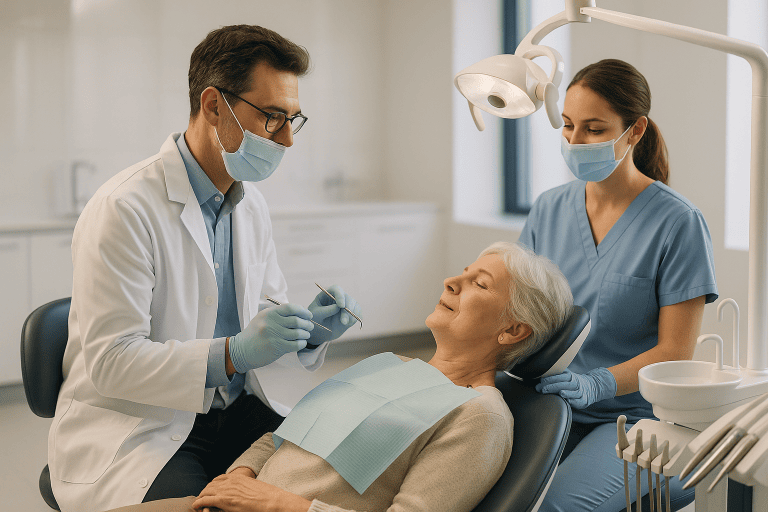
- Dental examination to check for decay, cracks, infection, gum disease, and worn tooth surfaces from grinding
- Jaw joint and muscle assessment, including feeling the joint and chewing muscles for tenderness, listening for clicking, and measuring how far the mouth opens
- Neurological examination of facial sensation, movement, and reflexes to look for nerve involvement
- Examination of the ears, nose, throat, and salivary glands when these are possible sources
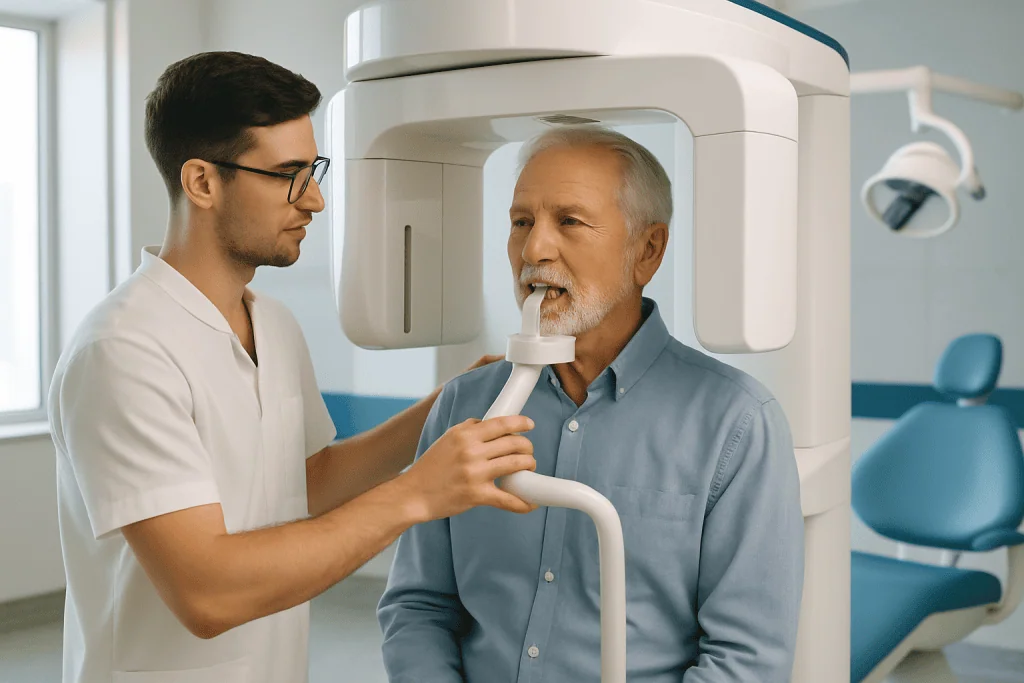
Tests are chosen based on what the examination suggests. Dental X-rays or a panoramic X-ray can show tooth and jawbone problems. Cone-beam computed tomography (CBCT), a type of three-dimensional dental scan, may be used to look at the jaw joint bones or the roots of teeth in more detail. Magnetic resonance imaging (MRI) is the preferred method to view the soft disc inside the jaw joint and is also used when a nerve-related cause such as trigeminal neuralgia is suspected, to check whether a blood vessel or other structure is pressing on the nerve. Blood tests may be ordered to look for inflammation, infection, vitamin deficiencies, or conditions such as giant cell arteritis.
For temporomandibular disorders, specialists often use standardized criteria that combine symptom questionnaires with examination findings. Trigeminal neuralgia is diagnosed mainly on the pattern of pain described by the patient, supported by imaging to rule out other causes. Sometimes a diagnostic nerve block, where a local anesthetic is injected near a nerve, is used to see whether the pain stops, which helps confirm its source. A diagnosis may take time, and it is not unusual for more than one specialist to be involved.
Treatment options for orofacial pain
Orofacial pain treatment options depend on the cause, how long the pain has lasted, and how much it affects daily life. In many cases, treatment begins with the simplest and least invasive approaches, moving to more involved options only if needed.
Treating the underlying cause. When pain comes from a tooth, gum, sinus, or salivary gland problem, treating that problem, for example with a filling, root canal treatment, tooth extraction, or antibiotics for a bacterial infection, often resolves the pain.
Self-care and observation. For mild jaw joint or muscle pain, doctors often recommend a period of self-care first. This may include eating softer foods, avoiding wide yawning or chewing gum, applying warm or cold compresses, gentle jaw stretching, and becoming aware of clenching habits. Many episodes of temporomandibular pain improve over weeks to months with these measures alone.
Medication. Options vary by diagnosis. Over-the-counter pain relievers or anti-inflammatory medicines may help musculoskeletal pain in the short term. Muscle relaxants are sometimes prescribed for jaw muscle spasm. Nerve-related pain often does not respond well to ordinary painkillers; instead, certain anti-seizure medicines (for example, carbamazepine for trigeminal neuralgia) or low-dose antidepressant medicines that alter pain signaling are commonly used. Your doctor will weigh benefits against side effects, and some of these medicines require regular blood monitoring.
Oral appliances. A custom-made bite splint or night guard, worn over the teeth, may reduce the effects of grinding and can ease jaw muscle pain in some people. These are fitted by a dentist.
Physical therapy and rehabilitation. Physical therapists who work with jaw disorders can teach exercises, posture correction, and relaxation of the chewing muscles. Treatments such as heat, ultrasound, or manual therapy may be included.
Behavioral and psychological approaches. Because stress, sleep, and mood strongly influence chronic pain, cognitive behavioral therapy (a structured talking therapy), relaxation training, and sleep management are often part of a treatment plan. These approaches do not imply that the pain is psychological; they address how the brain processes pain.
Injections and minimally invasive procedures. Trigger point injections into tight muscles, corticosteroid injections into an inflamed jaw joint, and botulinum toxin injections into overactive chewing muscles are used in selected cases. Arthrocentesis, which involves flushing the jaw joint with fluid through fine needles, may be offered for a joint that is locked or very painful.
Surgery. Surgery is reserved for specific situations. For trigeminal neuralgia that does not respond to medication, options include microvascular decompression (moving a blood vessel away from the nerve), radiofrequency or other lesioning procedures, and stereotactic radiosurgery (a focused radiation treatment). For severe jaw joint damage, arthroscopy or open joint surgery may be considered, though this is uncommon. Surgery carries risks, and results vary, so it is usually discussed only after other approaches have been tried.
Many people benefit most from a combined approach that addresses the physical source of pain, protective habits, and the wider factors that maintain chronic pain. Treatment plans are often adjusted over time.
Living with orofacial pain and outlook
The outlook for orofacial pain depends largely on its cause. Pain from dental problems usually resolves once the tooth or gum condition is treated. Most people with temporomandibular disorders improve with conservative care, although some have symptoms that come and go over years. Trigeminal neuralgia often responds well to medication at first, but the pain may return or become harder to control over time, and some people eventually need a procedure. Persistent idiopathic facial pain and burning mouth syndrome can be more difficult to treat, and the goal is often to reduce pain and improve function rather than to remove the pain completely.
Living with chronic orofacial pain can be tiring and isolating. Practical steps that many people find helpful include keeping a pain diary to identify triggers, maintaining regular sleep, eating a varied diet that does not require heavy chewing during flare-ups, pacing activities, and staying connected with family and friends. Because clenching often increases with stress, learning relaxation techniques may help. Regular dental care remains important, since chronic pain can make it tempting to avoid the dentist, which may lead to new problems.
It is reasonable to expect ups and downs. Setbacks do not mean that treatment has failed, and a plan that is reviewed with your care team over time is often more successful than a single intervention. Many people with long-term orofacial pain are able to return to normal eating, work, and social life, even if some discomfort remains.
Frequently asked questions
What is orofacial pain, and is it the same as a toothache?
Orofacial pain is an umbrella term for any pain in the mouth, jaw, or face. A toothache is one common type, but the term also covers jaw joint and muscle pain, nerve pain such as trigeminal neuralgia, burning mouth syndrome, and pain from sinus or salivary gland problems. Pain that feels like a toothache may sometimes come from a muscle, a nerve, or a sinus rather than a tooth, which is why a dentist may not find a dental cause.
What are the most common orofacial pain symptoms?
The most frequently reported symptoms are aching in the jaw or in front of the ear, pain when chewing or opening the mouth, jaw clicking, headaches around the temples, and tooth or gum pain. Less common but important symptoms include brief electric-shock-like facial pain, burning in the mouth, and numbness. Symptoms differ depending on the cause, so describing them in detail helps your doctor narrow down the source.
What are the main orofacial pain causes?
Dental problems are the leading cause, followed by temporomandibular disorders affecting the jaw joint and chewing muscles. Nerve conditions, migraine and other headache disorders, sinus and ear infections, and salivary gland problems can also cause facial pain. In some people, no single cause is found, and the pain is described as persistent idiopathic facial pain. Stress, clenching, poor sleep, and other chronic pain conditions can make orofacial pain more likely or more persistent.
How is orofacial pain diagnosis made?
Diagnosis is based mainly on a detailed history and a physical examination of the teeth, jaw, muscles, nerves, ears, and sinuses. Depending on the findings, your doctor may order dental X-rays, a CBCT scan, an MRI, or blood tests. For jaw joint disorders, standardized diagnostic criteria are often used, and for suspected nerve pain, imaging helps rule out other causes. Because several conditions can look alike, more than one visit or specialist may be needed.
What are the orofacial pain treatment options if medication does not help?
When medicines are not effective or cause side effects, other options may be considered depending on the diagnosis. These include oral splints, physical therapy, cognitive behavioral therapy, injections into muscles or the jaw joint, and, for specific conditions such as trigeminal neuralgia or severe joint damage, surgical procedures. Your doctor may also review the diagnosis itself, since pain that does not respond to standard treatment sometimes has a different cause than first suspected.
Can orofacial pain go away on its own?
Some types, particularly mild jaw muscle pain related to stress or clenching, often improve over weeks with self-care. Dental pain usually does not go away without treatment, and untreated infection can worsen. Nerve-related pain may have periods of remission but often returns. Pain that lasts more than a few weeks, keeps coming back, or interferes with eating and sleeping should be assessed rather than waited out.
Is orofacial pain a sign of something serious?
In most cases, orofacial pain is caused by dental, muscular, or nerve conditions that are not life-threatening, although they can significantly affect quality of life. Rarely, facial pain can be a sign of a tumor, a spreading infection, or an inflammatory condition such as giant cell arteritis. Warning signs that need prompt attention are listed in the section below.
When to see a doctor
Many episodes of orofacial pain are mild and settle with simple care, but persistent, worsening, or unexplained pain should be evaluated by a dentist or doctor. Seek care soon if pain lasts more than one to two weeks, keeps returning, interferes with eating or sleeping, or is not explained by an obvious dental problem.
Seek urgent medical attention if orofacial pain occurs together with any of the following red-flag signs:
- Facial swelling that is spreading, especially toward the eye or neck, or swelling with fever
- Difficulty breathing or swallowing, or inability to open the mouth
- Sudden weakness, drooping, or numbness of the face, especially on one side
- Sudden vision changes, jaw pain when chewing, and scalp tenderness in a person over 50, which may suggest giant cell arteritis
- A severe headache that comes on suddenly, or the worst headache you have ever had
- Facial pain after a significant head or facial injury
- An ulcer, lump, or patch in the mouth that does not heal within three weeks
- Unexplained weight loss, night sweats, or persistent fever alongside facial pain
- Chest pain or pressure spreading to the jaw, which can be a sign of a heart problem
If you are unsure whether your symptoms are urgent, it is safer to seek assessment promptly. Early evaluation can identify treatable causes and prevent complications.
Medically reviewed by the Acıbadem International Medical Board September 9, 2026
See our medical review board →
Update history
- PublishedSeptember 9, 2026
- Medical review approvedSeptember 9, 2026
- Last content updateSeptember 9, 2026