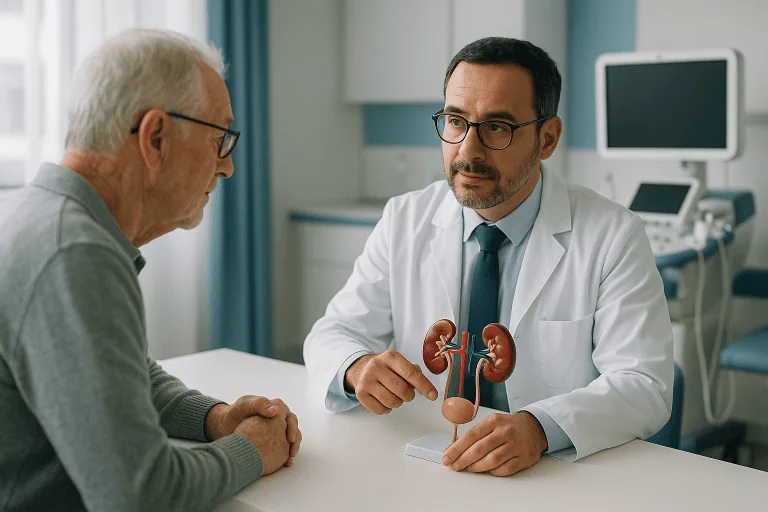
Simple Kidney Cyst
Simple Kidney Cyst is a usually benign fluid-filled sac in the kidney. Learn symptoms, causes, diagnosis, treatment and when to see a doctor.

Quick answer
A simple kidney cyst is a common, usually benign fluid-filled sac in the kidney that often causes no symptoms and may only need monitoring, while treatment is considered if it grows, causes pain, infection, bleeding, or affects kidney function. At Acibadem in Turkey, evaluation typically includes imaging and kidney assessment, with management ranging from follow-up to minimally invasive drainage or…
A simple kidney cyst is a usually benign, fluid-filled sac that forms in or on a kidney. Most simple kidney cysts cause no symptoms, do not affect kidney function, and are found by chance during imaging tests done for another reason.
Overview
A simple kidney cyst is a round or oval sac filled with clear fluid that develops in the kidney. It has a thin, smooth wall and no solid tissue inside. In medical reports, it may also be called a simple renal cyst. The word simple is important because it describes a cyst with imaging features that are generally considered benign.
Simple kidney cysts are often found incidentally during an ultrasound, CT scan, or MRI performed for abdominal pain, urinary symptoms, a check-up, or another medical condition. Many people are surprised to learn they have one because most simple cysts do not cause pain, do not turn into cancer, and do not usually interfere with kidney function.
A simple kidney cyst is different from polycystic kidney disease, which is an inherited condition involving many cysts and possible progressive kidney damage. It is also different from a complex kidney cyst, which may have thick walls, internal divisions, calcification, or solid areas and needs more careful evaluation. A radiologist and urology or nephrology specialist can interpret the imaging appearance and advise whether follow-up is needed.
Symptoms
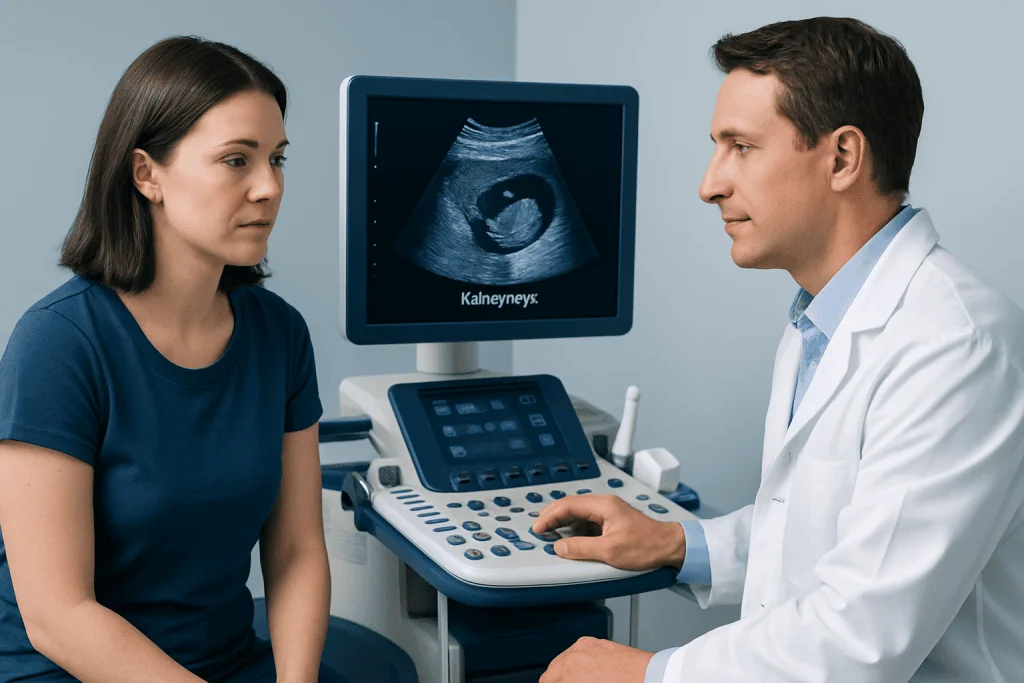
Most simple kidney cysts cause no symptoms. They are often small, stable, and discovered by chance. When a cyst is described as simple and the person has no related symptoms, it usually does not require urgent action.
Symptoms may occur if a cyst becomes large enough to stretch the kidney capsule or press on nearby organs. Possible symptoms include dull pain or pressure in the side, back, or upper abdomen. The discomfort may be constant or intermittent and may be noticed more with certain positions or activity.
Less commonly, a simple kidney cyst may be associated with complications. These can include bleeding into the cyst, infection, rupture, or blockage of urine drainage from the kidney. Warning symptoms that need medical assessment include fever, chills, worsening flank pain, blood in the urine, burning with urination, frequent urination, nausea, or new high blood pressure.
Because these symptoms can also be caused by kidney stones, urinary tract infection, kidney infection, tumors, or other abdominal conditions, symptoms alone cannot confirm that a simple cyst is responsible. A doctor uses history, examination, urine tests, blood tests, and imaging to identify the true cause.
Causes & Risk Factors
The exact reason simple kidney cysts form is not fully understood. One common explanation is that tiny tubules in the kidney may weaken or become blocked over time, allowing fluid to collect and form a small sac. This process is usually not related to anything a person did or did not do.
Simple kidney cysts become more common with age. They can occur in one kidney or both kidneys, and a person may have one cyst or several simple cysts. They are not usually inherited and are not the same as cysts caused by polycystic kidney disease.
Risk factors and associated features may include older age, male sex, and a history of kidney or urinary tract imaging that increases the chance of detection. Some people with reduced kidney function may also have cystic changes, but a simple cyst by itself does not necessarily mean kidney disease.
There is no proven way to prevent a simple kidney cyst. General kidney health measures remain useful for overall wellbeing: maintaining healthy blood pressure, staying well hydrated according to medical advice, avoiding unnecessary overuse of pain medicines that can affect the kidneys, and attending routine care for diabetes, hypertension, or known kidney disease.
Diagnosis
A simple kidney cyst is usually diagnosed with imaging. Ultrasound is often the first test because it is widely available, does not use radiation, and can show a fluid-filled cyst with a thin wall. A typical simple cyst appears dark on ultrasound, has a smooth outline, and shows no solid components.
If the cyst does not have clearly simple features, or if the person has symptoms that need further explanation, a doctor may request CT or MRI. These tests can provide more detailed information about the cyst wall, internal structure, enhancement after contrast, and its relationship to the kidney collecting system and nearby organs. Contrast imaging may not be suitable for every patient, especially those with certain kidney function concerns, so the choice of test is individualized.
Doctors may also order urine and blood tests. A urine test can check for infection, blood, or protein. Blood tests can evaluate kidney function and look for signs of infection or other medical issues. Blood pressure measurement is also important because kidney and urinary conditions can sometimes be associated with blood pressure changes.
Radiology reports may use systems that help classify kidney cysts according to appearance and risk level. A clearly simple cyst generally needs little or no further evaluation. A complex, indeterminate, or suspicious cyst is not treated as a simple cyst and should be assessed by a urologist, nephrologist, or other appropriate specialist.
Treatment Options
Most simple kidney cysts do not need treatment. If the cyst is small, has a typical benign appearance, and is not causing symptoms, a doctor may recommend reassurance only or periodic imaging to confirm stability. The need for follow-up depends on the cyst appearance, size, symptoms, age, kidney function, and the patient’s overall health.
If a cyst is causing pain, blocking urine flow, becoming infected, or repeatedly bleeding, treatment may be considered. Treatment categories include observation, medication for associated problems such as infection or pain under medical supervision, image-guided procedures, and minimally invasive surgery. The right approach is decided by a specialist after careful assessment and review of imaging.
Image-guided treatment may involve draining the cyst with a needle under ultrasound or CT guidance. In some cases, a specialist may use a technique designed to reduce the chance of fluid re-accumulation. This type of procedure is generally considered when a cyst is clearly responsible for symptoms and is accessible for safe drainage.
Surgical options may be discussed when a cyst is large, recurrent, difficult to drain, or causing significant symptoms. Minimally invasive laparoscopic or robotic techniques can remove or open the cyst wall so it does not refill. Surgery is not necessary for most simple cysts and is considered only when the expected benefit outweighs the risks for that individual patient.
Living With / Prognosis
The outlook for a simple kidney cyst is usually excellent. Most remain harmless and do not affect day-to-day life. People with a simple cyst can usually continue normal activities unless a doctor advises otherwise because of symptoms, kidney function concerns, or another condition.
Living with a simple kidney cyst often means understanding what was found and knowing when follow-up is appropriate. Patients may wish to keep a copy of their imaging report, ask whether the cyst was described as simple or complex, and clarify whether repeat imaging is recommended. If follow-up imaging is advised, attending it on schedule helps confirm that the cyst remains stable.
Healthy lifestyle habits support kidney and urinary tract health overall. These include managing blood pressure, following medical advice for diabetes or kidney disease, not smoking, using medicines responsibly, and seeking care for urinary infections. A simple cyst does not usually require a special diet, but people with kidney disease should follow the diet recommended by their clinician or dietitian.
For international patients seeking evaluation, Acibadem International’s multidisciplinary specialists and JCI-accredited hospitals can diagnose and treat kidney cysts and related urological or nephrological conditions. Care decisions should always be based on an individual medical assessment, imaging findings, and discussion with qualified clinicians.
When to See a Doctor
A person should see a doctor if they have persistent pain in the side, back, or upper abdomen, especially if the pain is new, worsening, or associated with urinary symptoms. Medical advice is also needed for blood in the urine, fever, chills, burning with urination, frequent urination, nausea, vomiting, or unexplained high blood pressure.
Anyone told that a kidney cyst is complex, atypical, indeterminate, enhancing, or suspicious should arrange specialist follow-up. These terms do not mean a person has cancer, but they do mean the cyst needs careful interpretation and may require additional imaging or monitoring.
People with known kidney disease, a single functioning kidney, recurrent urinary infections, kidney stones, or a family history of inherited cystic kidney disease should discuss imaging findings with a nephrologist or urologist. Children or young adults with multiple kidney cysts also need appropriate evaluation, because their situation may differ from an isolated simple cyst in an older adult.
Urgent care is appropriate for severe flank pain, high fever, inability to pass urine, fainting, or visible blood in the urine with clots. These symptoms may have several causes and should not be assumed to be due only to a simple kidney cyst.
Frequently asked questions
What is a simple kidney cyst?
A simple kidney cyst is a fluid-filled sac with a thin wall that forms in or on the kidney. It is usually benign and often found by chance on imaging. Most simple kidney cysts do not cause symptoms or affect kidney function.
Is a simple kidney cyst cancer?
A typical simple kidney cyst is not cancer and does not have the imaging features that suggest a tumor. However, cysts that look complex or atypical need further evaluation. A doctor can explain whether the imaging report describes a cyst as simple, complex, or uncertain.
Can a simple kidney cyst cause pain?
Most do not cause pain. Pain can occur if a cyst is large, stretches the kidney capsule, presses on nearby structures, bleeds, becomes infected, or blocks urine flow. Because flank pain has many possible causes, medical assessment is important.
Does a simple kidney cyst need treatment?
Many simple kidney cysts need no treatment and may only require reassurance or occasional follow-up imaging. Treatment may be considered if the cyst causes symptoms or complications. The most suitable option should be decided by a urologist or nephrologist after reviewing the patient’s symptoms and imaging.
How is a simple kidney cyst diagnosed?
A simple kidney cyst is usually diagnosed with ultrasound, CT, or MRI. Ultrasound often shows a round, clear fluid-filled structure with a smooth wall. CT or MRI may be used if the appearance is not clearly simple or if more detail is needed.
Can simple kidney cysts damage the kidneys?
A single simple kidney cyst usually does not damage the kidney. Problems are uncommon but may occur if a cyst becomes very large or blocks urine drainage. Kidney function tests and imaging help doctors decide whether the cyst is affecting the kidney.
What is the difference between a simple kidney cyst and polycystic kidney disease?
A simple kidney cyst is usually an isolated benign cyst, often found with aging. Polycystic kidney disease is an inherited condition that causes many cysts in the kidneys and can affect kidney function over time. Multiple cysts, family history, or kidney function changes should be discussed with a specialist.
This article is for general information only and is not a substitute for professional medical advice. Please consult a qualified doctor about your individual situation.
Medically reviewed by the Acıbadem International Medical Board June 20, 2026
See our medical review board →
Update history
- PublishedJune 8, 2026
- Medical review approvedJune 20, 2026
- Last content updateJune 12, 2026