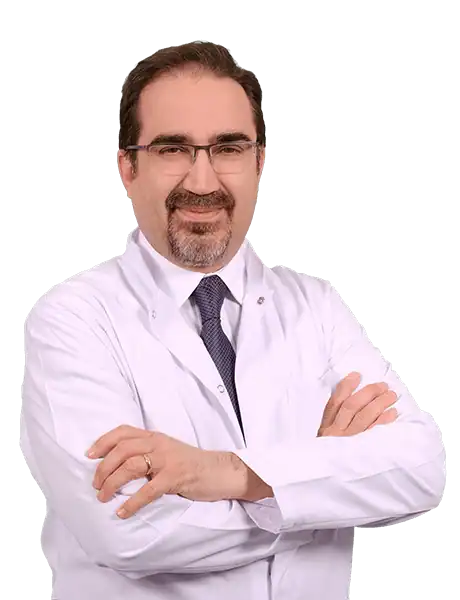
 Cardiology · Acibadem Maslak Hospital, İstanbul
 Prof. Ahmet Akyol, MD
✓ Medically verified profileProf. Ahmet Akyol, MD
Prof. Ahmet Akyol, MD is a cardiologist in the Cardiology Department at Acibadem Maslak Hospital in İstanbul. His work covers coronary artery disease, angina, heart failure, heart valve diseases, aortic stenosis, rheumatic heart disease, atrial septal defect, arrhythmias including atrial fibrillation, catheter ablation and pacemaker therapy. He speaks Turkish and English, and video consultation is available for international patients.
 Accepting international patients
About Prof. Ahmet Akyol, MD
Prof. Ahmet Akyol, MD is a cardiologist in the Cardiology Department at Acibadem Maslak Hospital in İstanbul. He has more than 40 years in medicine, and his clinical work covers coronary artery disease, heart failure, heart valve diseases, heart rhythm disorders, catheter ablation, pacemaker therapy and atrial septal defect.
Dr. Akyol studied at Marmara University Faculty of Medicine from 1986 to 1993 and completed his cardiology training at Dr. Siyami Ersek Thoracic, Cardiovascular Surgery Training and Research Hospital in 1998. He worked at Siyami Ersek Thoracic, Cardiovascular Surgery Training and Research Hospital from 1993 to 2009, serving as Chief Assistant of Cardiology from 2001 to 2009 and as Deputy Chief of Cardiology in 2009. He became an Associate Professor in 2008 and joined Acıbadem Healthcare Services in 2009. He is a member of the Turkish Society of Cardiology, the European Heart Rhythm Association (EHRA) and the European Cardiology Association, and he takes part in the TKD Interventional Cardiology Working Group, the TKD Cardiac Imaging Working Group, the TKD Arrhythmia, Pacemaker and Electrophysiology Working Group and the TKD Heart Failure Working Group. His co-authored publications include work on radiofrequency catheter ablation in Wolff-Parkinson-White syndrome, cardiac resynchronization therapy, atrial tachyarrhythmias in rheumatic mitral stenosis, pacemaker electrode location on the electrocardiogram, and coronary artery disease.
Clinical focus
A large part of Dr. Akyol’s practice concerns coronary artery disease, atherosclerosis and angina. He also assesses and manages patients with heart failure, and with structural conditions such as heart valve diseases, aortic stenosis, rheumatic heart disease and atrial septal defect.
His second main area is heart rhythm. He sees patients with arrhythmias, including atrial fibrillation, and his procedural work includes catheter ablation and pacemaker therapy. Which approach is appropriate depends on the individual patient’s findings, and treatment decisions are made after a full review of the history, examination and available test results.
How Dr. Akyol works with international patients
Dr. Akyol speaks Turkish and English, and interpreters can be arranged for patients who speak other languages. Before the visit, the Acibadem international patient team coordinates the collection of prior reports and imaging, arranges appointments and organises the hospital stay. A first consultation typically covers the patient’s history and symptoms, a review of existing imaging and previous treatments, a clinical examination and a discussion of the options. Video consultation is available for international patients who wish to discuss their case with Dr. Akyol before travelling to İstanbul.
What Dr. Akyol treats and performs
Each item opens the condition or treatment page with the care pathway for international patients.
Conditions treated
Education, career and memberships
Education & training
Education
- 2008Siyami Ersek Thoracic, Cardiovascular Surgery Training and Research Hospital / Associate Professor
- 1998Dr. Siyami Ersek Thoracic, Cardiovascular Surgery Training and Research Hospital Cardiology
- 1986–1993Marmara University Faculty of Medicine
Career
Professional Experience
- 2009Acıbadem Healthcare Services
- 2009Siyami Ersek Hospital / Deputy Chief of Cardiology
- 2001–2009Siyami Ersek Hospital / Chief Assistant of Cardiology
- 1993–2009Siyami Ersek Thoracic, Cardiovascular Surgery Training and Research Hospital
Memberships
Professional Memberships
- TKD Interventional Cardiology Working Group
- TKD Cardiac Imaging Working Group
- TKD Arrhythmia, Pacemaker and Electrophysiology Working Group
- European Heart Rhythm Association (EHRA)
- Turkish Society of Cardiology
- European Cardiology Association
- TKD Heart Failure Working Group
Selected publications
Selected Publications
- Effects of high altitude and sea level on mean platelet volume and platelet count in patients with acute coronary syndrome Alper AT, Sevimli S, Hasdemir H, Nurkalem Z, GÜvenç TS, Akyol A, Cakmak N, Durmuş G, Gürkan K. J Thromb Thrombolysis. 2009 Apr;27(2): 130-4
- Renal Artery Stenosis and type 2 Diabetes Mellitus: Combination of Increased Coagulation Propensity and Severe Coronary Artery Disease Alper AT, Hasdemir H, Çakmak N, Nurkalem Z, Akyol A, Erdinler İ, Gürkan K. Hipokrat Cardiology March 2008
- Wolff-Parkinson-White Syndrome and Rheumatie Mitral Stenosis: a Dneommon Coincidence that can Cause Severe Hemodynamie Disturbance. Alper AT, Hasdemir H, Akyol A. Indian Pacing Electrophysiol J. 2008;8(4 ):304-7
- Effeets of radiofrequency catheter ablation on myocardia1 performance index and plasma NT -Pro-BNP levels in patients with Wolff-Parkinson-White syndrome. Cakmak N, Sayar N, Cakmak M, Akyol A, Oguz E, Eksik A, Alper AT, Hasdemir H, Yilmaz H, Erdinler IC. Eehocardiography. 2008 Aug;25(7):692-8
- Effect of cardiac resynchronization therapy on mean platelet volume. Acta Cardiol. 2008 Dec;63(6):735-9 Alper AT, Akyol A, Hasdemir H, Yildirim A, Nurkalem Z, Guvenc TS, Cakmak N, Oguz E, Erdinler IC, Gurkan K.
- The relationship between nonalcoholic fatty liver disease and the severity of coronary artery disease in patients with metabolic syndrome. Alper AT, Hasdemir H, Sahin S, Onturk E, Akyol A, Nurkalem Z, Cakmak N, Erdinler I, Gurkan K.Turk Kardiyol Dem Ars. 2008;36(6):376-81
- Wolff-Parkinson-White Syndrome and Rheumatic Mitral Stenosis: an Uncommon Coincidence that can Cause Severe Hemodynamic Disturbance. Indian Pacing Electrophysiol J. 2008;8(4):304-7 Alper AT, Hasdemir H, Akyol A.
- High sensitivity CRP levels predict atrial tachyarrhythmias in rheumatic mitral stenosis. Ucer E, Gungor B, Erdinler IC, Akyol A, Alper AT, Eksik A, Cakmal( N, Gurkan K, Ulufer T. Ann Noninvasive Electrocardiol. 2008 Jan;13(l):31-8
- Glue (toluene) abuse: increased QT dispersion and relation with unexplained syncope. Inhal Toxicol. 2008 Jan;20(1):37-41 Alper AT, Akyol A, Hasdemir H, Nurkalem Z, Guler O, Guvenc TS, Erdinler I, Cakmak N, Eksik A, Gurkan K.
- High sensitivity CRP levels predict atrial tachyarrhythmias in rheumatic mitral stenosis. Ann Noninvasive Electrocardiol. 2008 Jan;13(1):31-8 Ucer E, Gungor B, Erdinler IC, Akyol A, Alper AT, Eksik A, Cakmak N, Gurkan K, Ulufer T.
- Hypertrophic Cardiomyopathy with Left Ventricular Apical Diverticulum Alper AT, Hasdemir H, Güvenç T. S, Akyol A, Çakmak N, Erdinler İ. Medical Network cardiology C:14 SA 2007
- Cardiac channelopathies and short QT syndromes. Çakmak N, Erdinler İ, Akyol A. Archives of the Turkish Society of Cardiology, 2007,35(3): 187-194
- An electrocardiographic algorithm for determining ille locatian of pacemaker electrode in patients with rigid bundle branch block configuration during paced ventricular pacing. Okmen E, Erdinler I, Oguz E, Akyol A, Turek O, Canı N, Ulufer T. Angiology. 2006 Oct-Nov;57(5):623-30