Artificial Disk Replacement: Procedure, Recovery and Results

Artificial disk replacement aims to reduce disc-related pain while maintaining movement at the treated spinal level. It is most often considered for one or two damaged discs in the neck or lower back when conservative care has not helped.
Key Takeaways
- Artificial disk replacement aims to reduce disc-related pain while maintaining movement at the treated spinal level.
- It is most often considered for one or two damaged discs in the neck or lower back when conservative care has not helped.
- Recovery is gradual: walking starts early, while return to unrestricted activity may take several months.
- Not everyone is a candidate; advanced arthritis, spinal instability, osteoporosis and certain deformities may make fusion or another treatment safer.
- Results depend on the diagnosis, spinal level treated, implant type, surgical technique and participation in rehabilitation.
- New weakness, loss of bladder or bowel control, fever or worsening pain after surgery requires prompt medical assessment.
Artificial disk replacement is a spine operation that removes a damaged disc and inserts a motion-preserving artificial implant. It can be an alternative to spinal fusion for carefully selected people with persistent disc-related neck or low-back pain after non-surgical treatment.
Artificial Disk Replacement: An Overview
Artificial disk replacement, also called total disc replacement or disc arthroplasty, is a surgical procedure that replaces a painful, damaged spinal disc with an artificial implant. The goal is to reduce pain caused by the disc while preserving more natural movement at that spinal level than may be possible with fusion surgery.
Discs are cushions between the bones of the spine. They help absorb forces and allow bending, turning and other movement. With age, injury or degeneration, a disc can lose height and flexibility or develop tears that may contribute to neck pain, back pain, arm pain or leg pain. Surgery is usually considered only when symptoms remain significant despite appropriate non-surgical treatment.
Disc replacement may be performed in the cervical spine (neck) or lumbar spine (lower back). It is different from spinal fusion, which joins two or more vertebrae together. Neither approach is automatically better for every person; the most suitable option depends on the source of pain, spinal alignment, joint health and overall medical condition.
How Artificial Disk Replacement Works and Who May Be a Candidate
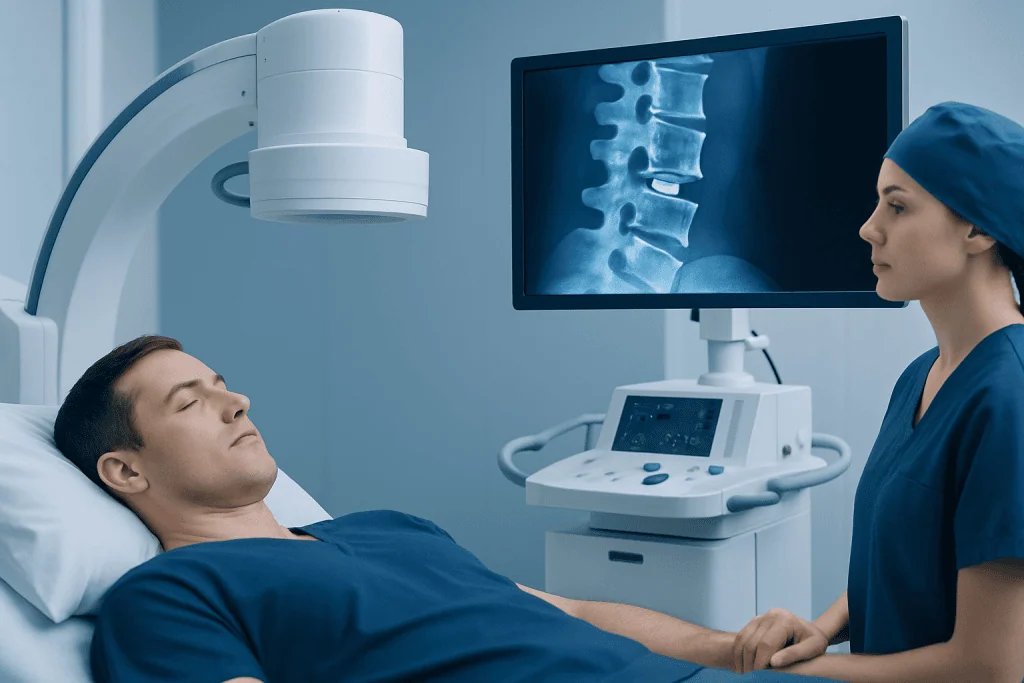
The implant takes the place of the removed disc. Although implant designs vary, they are made from biocompatible materials and are designed to support the space between vertebrae while allowing controlled motion. By maintaining disc height, the procedure may also help relieve pressure linked to a collapsed or damaged disc.
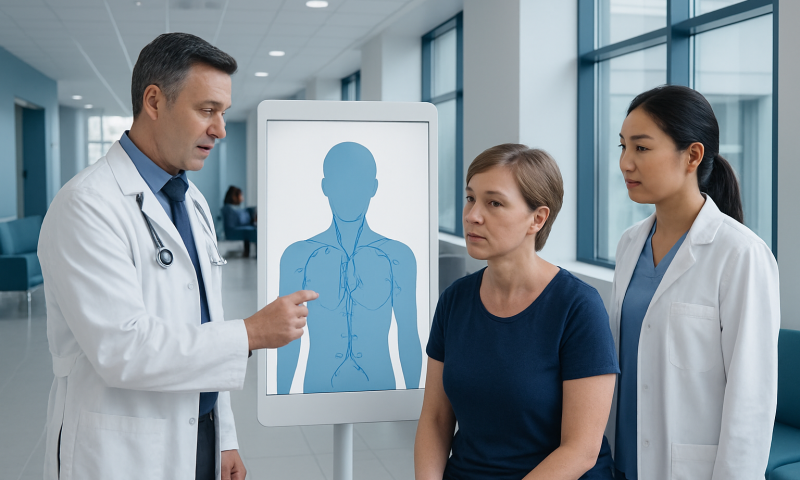
Potential candidates commonly have persistent symptoms clearly linked to one or two disc levels, confirmed through a clinical assessment and imaging. They may have tried measures such as guided exercise, physiotherapy, activity changes and appropriate pain management without sufficient relief. Cervical disc replacement may be considered for some people with nerve compression causing arm pain, numbness or weakness.
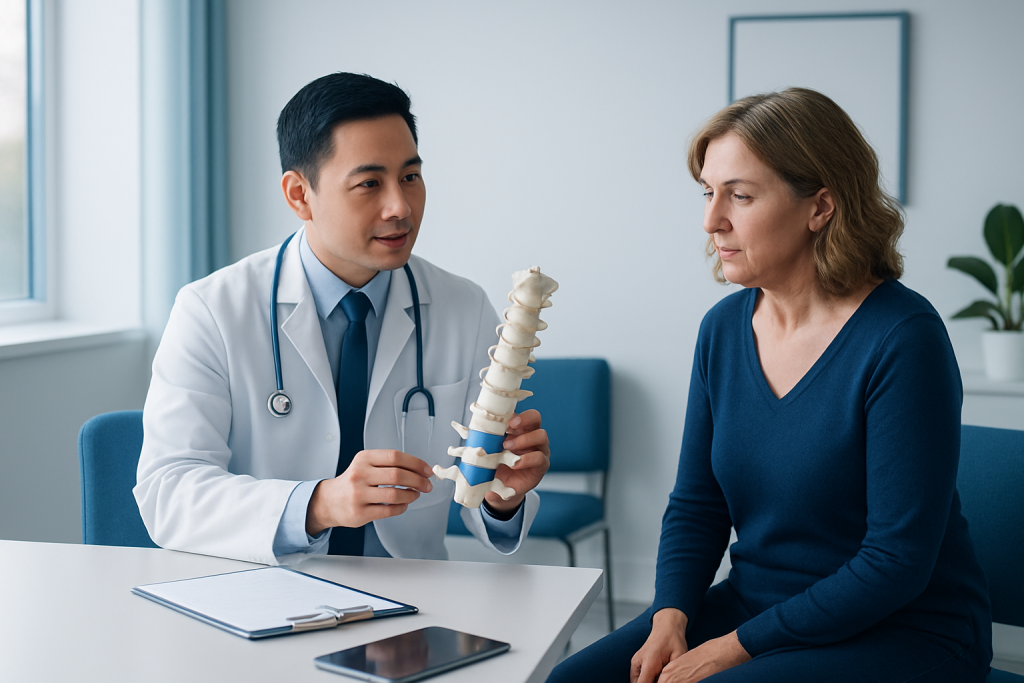
Artificial disk replacement is not appropriate for every type of back or neck pain. Significant facet-joint arthritis, spinal instability, severe osteoporosis, infection, major deformity, extensive disease at several levels or pain from a different structure can affect suitability. Related spinal concerns such as degenerative disc disease need a careful individualized evaluation rather than an assumption that surgery is required.
- Medical history, symptom pattern and physical examination help identify the likely pain source.
- X-rays, MRI and sometimes CT imaging assess disc damage, alignment, nerves and nearby joints.
- Surgeons also review bone quality, previous operations, medicines, smoking status and general fitness for anesthesia.
What Happens During Disc Replacement Surgery?
Disc replacement is a major operation performed under general anesthesia. The approach is usually from the front of the body: through the front of the neck for cervical surgery and through the abdomen for lumbar surgery. This route allows the surgeon to reach the disc without directly moving the spinal cord or major back muscles, although lumbar access involves careful work around abdominal structures and blood vessels.
After positioning the patient and confirming the correct spinal level with imaging, the surgeon removes the damaged disc and prepares the vertebral surfaces. Pressure on nearby nerves may be relieved when needed. The artificial disc is then placed precisely between the vertebrae, and its position and motion are checked before the incision is closed.
The operation length and hospital stay vary according to whether the procedure is in the neck or lower back, the number of levels treated, the person’s health and the surgical plan. Patients can discuss the approach, expected hospital course and rehabilitation pathway during a consultation for artificial disc replacement surgery.
Recovery Timeline: How Long Does It Take to Recover from Artificial Disc Replacement?
Recovery from artificial disc replacement occurs in stages. Many people stand and walk with assistance on the day of surgery or the next day, depending on the spinal level treated and their medical condition. Hospital discharge may occur after a short stay, but recovery at home still requires pacing, wound care and gradual increases in activity.
During the first few weeks, soreness, tiredness and temporary limits on lifting, driving, bending or twisting are common. The surgical team gives personalized instructions because restrictions differ between cervical and lumbar procedures and between patients. Short, frequent walks are often encouraged, while strenuous exercise and heavy physical work are delayed until healing is progressing well.
Many people resume light daily activities and some desk-based work within several weeks, but return to physically demanding work or sports can take several months. Follow-up visits and imaging help confirm implant position and recovery. Physiotherapy may begin or progress after the surgeon considers it safe, focusing on posture, mobility, core control and a gradual return to function.
Recovery is not a race. Pain relief and nerve recovery may continue over months, particularly when a nerve was irritated for a long time before surgery. Following the care plan, avoiding tobacco and reporting unexpected symptoms support safer healing.
Benefits, Risks and Expected Results
The potential benefits of artificial disk replacement include improvement in disc-related pain, reduced arm or leg symptoms when nerve compression is relieved, and preservation of movement at the operated level. Compared with fusion, motion preservation may reduce mechanical stress on neighboring levels in some situations, but it does not eliminate the possibility of future spine problems.
As with any surgery, risks include bleeding, infection, blood clots, anesthesia-related complications, injury to nerves or nearby structures, persistent symptoms and the need for further treatment. Cervical procedures can temporarily affect swallowing or voice. Lumbar procedures have specific access-related risks involving blood vessels or abdominal structures. Implant movement, wear, bone formation around the implant or continued degeneration elsewhere in the spine are uncommon but possible longer-term concerns.
Outcomes are best discussed in terms of an individual’s goals and diagnosis rather than a guaranteed result. Surgery may improve pain and function, but it cannot promise complete symptom relief. A spine specialist can explain whether motion-preserving surgery, spinal fusion, rehabilitation or another option is most appropriate.
What Is the Success Rate of L4-L5 Disc Replacement Surgery?
There is no single success rate that accurately applies to L4-L5 disc replacement surgery. Research uses different definitions of success, such as reduced pain, improved ability to function, no repeat operation, preserved movement or patient satisfaction. Results also differ depending on the implant used, how carefully patients were selected and how long they were followed.
For appropriately selected people with single-level lumbar disc disease, clinical studies have shown that many experience meaningful improvement in pain and daily function after lumbar disc replacement. However, L4-L5 surgery is technically and clinically complex, and outcomes are less predictable when pain comes from multiple spinal structures, facet arthritis, instability, significant nerve damage or widespread degeneration.
A surgeon should review the individual imaging findings and explain what outcome measures are most relevant. It is reasonable to ask about expected pain relief, return to activity, likelihood of further surgery and alternatives for that specific spinal level rather than relying on a general percentage.
How Painful Is Artificial Disc Replacement, and Is It a Big Surgery?
Artificial disc replacement is considered a major surgery because it requires general anesthesia, removal of a spinal disc and placement of a permanent implant. Even so, many patients are able to begin gentle movement shortly after surgery. The operation is carefully planned to protect nerves and surrounding structures, and pain control is an important part of hospital and home recovery.
Pain after surgery varies. Incision pain, muscle soreness, stiffness and fatigue are expected early on, while the original nerve-related pain may improve quickly or settle more gradually. The care team may use a combination of medications, early mobilization, positioning advice and rehabilitation strategies to make recovery more manageable.
Severe or increasing pain should not simply be ignored. Contact the surgical team if pain is not controlled by the prescribed plan, changes suddenly or is accompanied by fever, wound redness or drainage, new weakness, numbness, calf swelling, chest pain or breathing difficulty.
When to Seek Medical Care
People with neck or back pain should arrange medical assessment when symptoms persist, limit work or daily activity, recur frequently, or include pain travelling into an arm or leg. A clinician can check whether the symptoms may be related to a disc, joints, muscles, nerves or another health condition. Most back and neck pain does not require surgery, and a diagnosis helps guide appropriate care.
Urgent medical care is needed for new or progressive muscle weakness, numbness around the groin or inner thighs, loss of bladder or bowel control, or severe pain after a major injury. These symptoms can indicate significant nerve compression or another urgent problem.
After disc replacement, patients should follow their surgeon’s review schedule and seek advice promptly for wound concerns, fever, worsening neurological symptoms or unexpected swelling. Acibadem International’s multidisciplinary specialists and JCI-accredited hospitals assess and treat spinal conditions for international patients, with care plans based on individual findings and goals.
Frequently asked questions
How long does it take to recover from artificial disc replacement?
Early recovery usually involves walking and basic daily activities within days to weeks, while healing and conditioning continue for several months. Light work may be possible after several weeks for some people, but return to heavy work, impact exercise or sport often takes longer. The exact timeline depends on whether surgery was cervical or lumbar, the number of levels treated and the surgeon’s advice.
What is the success rate of L4-L5 disc replacement surgery?
A single success rate cannot describe every L4-L5 disc replacement operation because studies define success differently and patient factors vary. Many carefully selected patients improve in pain and function, but results are less predictable when there is facet arthritis, instability, multilevel degeneration or another source of pain. A spine surgeon can discuss expected outcomes based on the person’s scans and clinical findings.
How painful is artificial disc replacement?
Pain and soreness are expected after this major operation, especially around the incision and during the first days to weeks. Modern recovery plans use medication, movement and rehabilitation strategies to support comfort. Nerve-related symptoms may improve at different speeds, and any severe or worsening pain should be reported to the surgical team.
Is disc replacement a big surgery?
Yes. Disc replacement is a major spine operation performed under general anesthesia and involves removing a disc and inserting a permanent implant. However, it is planned carefully, and many patients begin supervised walking soon after surgery. Recovery requires follow-up, activity restrictions and gradual rehabilitation.
Is artificial disc replacement better than spinal fusion?
Neither procedure is better for everyone. Disc replacement can preserve motion at the treated level for people who meet specific eligibility criteria, while fusion may be safer or more effective when there is instability, significant arthritis, deformity or other contraindications to an artificial disc. The choice should follow a thorough spine assessment.
Can an artificial disc replacement fail?
Although many implants function well, complications or persistent symptoms can occur. Possible concerns include implant movement, wear, bone formation around the implant, continued pain or degeneration at another spinal level. Regular follow-up and early assessment of new symptoms help clinicians address problems appropriately.
References
- American Academy of Orthopaedic Surgeons
- North American Spine Society
- U.S. Food and Drug Administration
- National Institute of Neurological Disorders and Stroke
This article is for general information only and is not a substitute for professional medical advice. Please consult a qualified doctor about your individual situation.
Joint and spine care in Turkey — expert assessment & treatment
JCI-accredited · board-certified surgeons · reply within 24h
Add us as a Preferred Source to see more of our trusted health content across Google Search, AI Overviews and Discover.