Can Laser Surgery Cure Astigmatism: Procedure, Recovery and Results
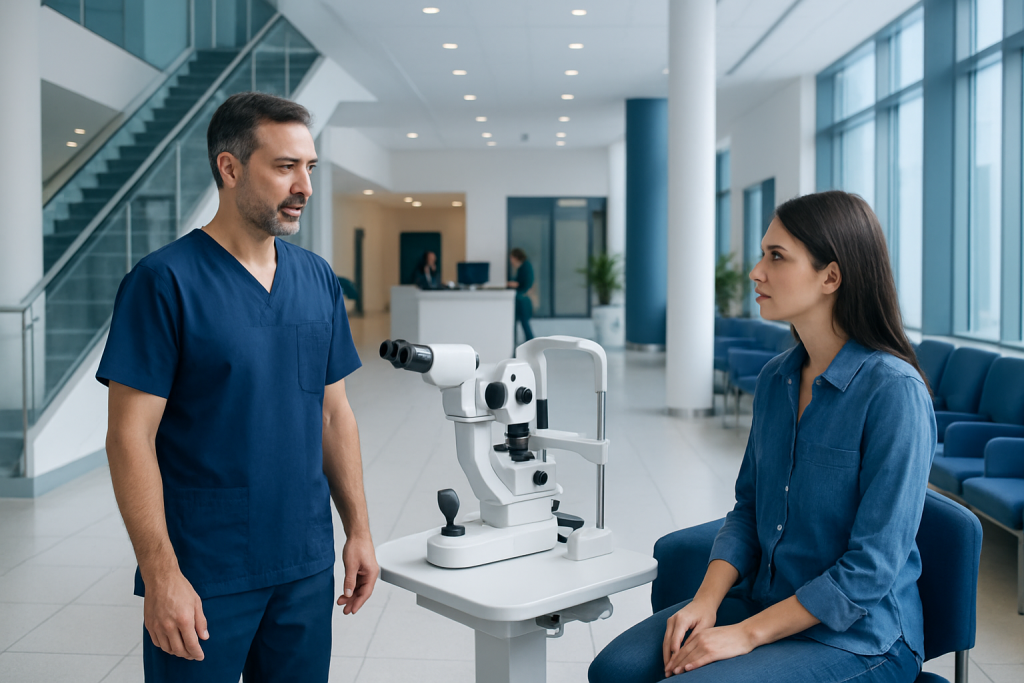
Laser surgery can correct many cases of regular astigmatism by changing the cornea’s curvature. LASIK, PRK, and SMILE may be options, but the best procedure depends on individual eye measurements.
Key Takeaways
- Laser surgery can correct many cases of regular astigmatism by changing the cornea’s curvature.
- LASIK, PRK, and SMILE may be options, but the best procedure depends on individual eye measurements.
- Most people notice improved vision quickly, while complete visual stabilization can take weeks to months.
- Laser eye surgery is generally not painful during the procedure because numbing drops are used.
- Results are usually long-lasting, but aging-related vision changes and some need for glasses can still occur.
Laser refractive surgery can reduce or correct astigmatism by precisely reshaping the cornea, often decreasing reliance on glasses or contact lenses. Whether it is suitable depends on the stability of the prescription, corneal health, eye measurements, and a person’s visual needs.
Can laser surgery cure astigmatism?
Yes. For many suitable adults, laser refractive surgery can permanently reduce or correct astigmatism by reshaping the front surface of the eye, called the cornea. This changes how light enters the eye so it can focus more accurately on the retina, improving clarity without glasses or contact lenses.
Laser surgery does not remove every possible cause of blurred vision, and it is not suitable for everyone with astigmatism. A detailed eye assessment is needed to confirm that the astigmatism is regular, the prescription is stable, and the cornea is healthy enough for treatment.
Astigmatism commonly occurs alongside short-sightedness or long-sightedness. The aim of surgery is usually to reduce dependence on corrective lenses rather than to promise perfect vision in every situation. Some people may still prefer glasses for night driving, close work, or later age-related changes in vision.
How laser treatment reshapes the eye
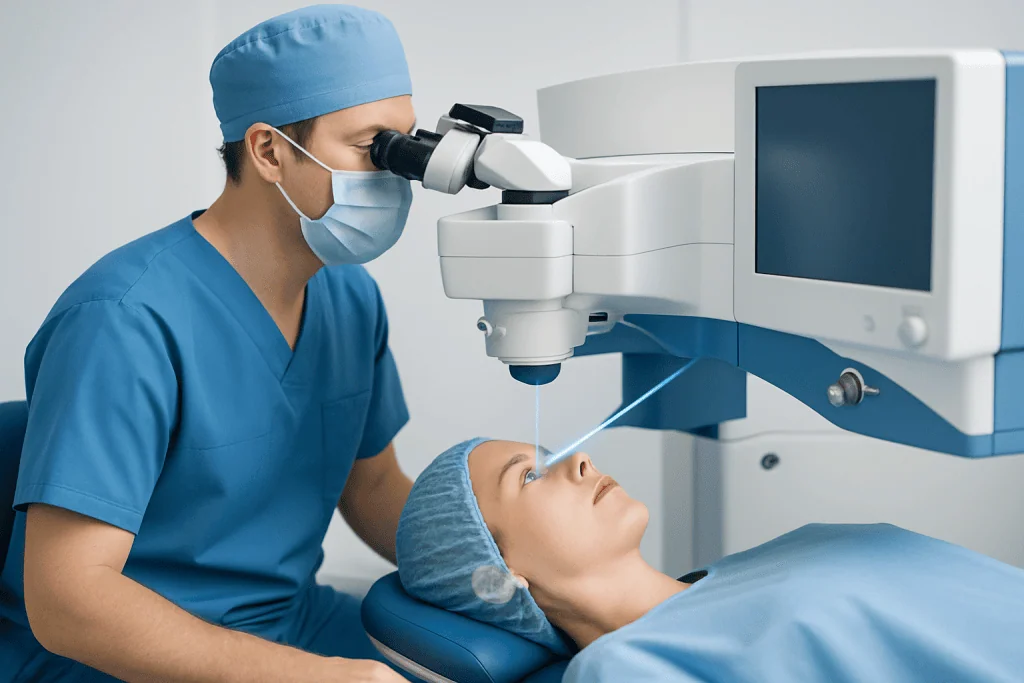
Astigmatism occurs when the cornea, or less commonly the lens inside the eye, has an uneven curve. Instead of focusing light at one clear point, the eye focuses it unevenly, which may cause blurred or distorted vision at both near and far distances.
Laser procedures use computer-guided measurements to remove microscopic amounts of corneal tissue in a planned pattern. This makes the cornea more symmetrical and improves the way it focuses light. Laser eye surgery includes several techniques, and the choice is based on corneal thickness, prescription, lifestyle, dry-eye symptoms, and clinical findings.
LASIK creates a thin corneal flap before laser reshaping. PRK reshapes the corneal surface after removing its outermost cell layer, while SMILE uses a small incision to remove a tiny piece of corneal tissue. An ophthalmologist can explain which approach is medically appropriate and whether a non-laser option is preferable.
Who may be a candidate for astigmatism laser surgery?

Good candidates are generally adults whose glasses or contact lens prescription has been stable for at least a year. They should have healthy eyes, adequate corneal thickness, and realistic expectations about what surgery can achieve. The assessment includes refraction testing, corneal mapping, corneal thickness measurement, tear-film evaluation, and a review of overall eye health.
Laser surgery may be postponed or avoided when there is an unstable prescription, significant dry eye, corneal scarring, keratoconus or suspected corneal weakness, untreated cataract, active eye inflammation, or certain retinal conditions. Pregnancy and breastfeeding can temporarily affect refraction, so surgeons commonly recommend waiting until vision has stabilized.
Irregular astigmatism needs particularly careful investigation because it can be associated with corneal conditions such as keratoconus. In these cases, standard laser vision correction may not be safe. Treatments such as corneal cross-linking or specialty contact lenses may instead be considered.
- Stable vision prescription
- Healthy corneas with suitable thickness and shape
- No active eye infection or uncontrolled eye disease
- Understanding that reading glasses may still be needed with age
What happens during the procedure?
Before treatment, the surgeon confirms measurements and discusses the planned procedure, benefits, limitations, and possible complications. Contact lens wear may need to be stopped in advance because lenses can temporarily alter the shape of the cornea and affect testing accuracy.
On the day, numbing eye drops are applied. The person remains awake and is asked to look at a fixation light while the laser tracks small eye movements. In LASIK, the surgeon creates and lifts a thin flap, applies the excimer laser, then returns the flap to position. In PRK, the surface layer is removed before laser treatment; in SMILE, tissue is removed through a small incision.
The laser portion is brief, although the full visit takes longer because of preparation and immediate postoperative checks. Vision is often blurry directly afterward, so patients need someone to take them home and should follow the prescribed eye-drop and protection instructions closely.
Benefits, limits and possible risks
The main potential benefit is clearer uncorrected vision and less need for glasses or contact lenses. For people who find lenses inconvenient for sport, travel, work, or daily routines, this can improve convenience and comfort. Laser surgery can also correct short-sightedness or long-sightedness at the same time when appropriate.
All surgery has risks. Temporary dry eye, fluctuating vision, glare, halos around lights, light sensitivity, and reduced quality of night vision can occur during healing. Less commonly, there may be infection, inflammation, incomplete correction, overcorrection, flap-related complications after LASIK, or a need for enhancement treatment.
A thorough preoperative evaluation helps identify avoidable risks, but no procedure can guarantee a specific visual outcome. People should discuss their occupations, night-driving needs, contact sports, medications, and previous eye problems with an ophthalmologist before deciding.
What is the success rate of laser surgery for astigmatism?
Laser surgery for regular astigmatism has a strong record of improving uncorrected distance vision in appropriately selected patients. However, a single success rate is not meaningful for every person because outcomes vary with the amount and type of astigmatism, the selected procedure, corneal characteristics, healing response, and the presence of other vision conditions.
Success is often described in several ways: achieving the intended refractive target, reducing dependence on glasses or contact lenses, and maintaining good visual quality. Many people achieve substantial correction, but a small residual prescription can remain, and some individuals may need glasses for certain activities or an additional procedure after healing.
The surgeon should explain outcome expectations using the individual’s measurements rather than relying only on general figures. They should also discuss how presbyopia, the normal age-related decline in near focusing, may affect vision later even when distance astigmatism has been corrected.
How long does it take to recover from astigmatism surgery?
Recovery depends mainly on the procedure. After LASIK, many people can see well enough for routine activities within one or two days, though vision may fluctuate and dry-eye symptoms can continue for several weeks. After SMILE, functional vision often improves over the first few days, with ongoing refinement during the following weeks.
PRK generally has a longer early recovery because the corneal surface must regrow. Discomfort and blurred vision are more noticeable during the first several days, and useful vision may take one to several weeks to develop. Full stabilization after any laser procedure can take several weeks to a few months.
Follow-up appointments are important for monitoring healing and checking vision. During recovery, patients should use prescribed drops, avoid rubbing the eyes, protect the eyes from water and dust as advised, and wait for medical clearance before swimming, contact sports, eye makeup, or strenuous exercise.
How painful is astigmatism surgery?
Laser surgery itself is usually not painful because anesthetic eye drops numb the surface of the eye. A person may feel light pressure, notice bright lights, and hear the laser equipment, but should not feel sharp pain. The care team provides instructions throughout the procedure to help the person remain comfortable.
After LASIK or SMILE, there may be temporary burning, watering, scratchiness, or a sensation of something in the eye for several hours. PRK commonly causes more surface discomfort for the first few days while the epithelium heals. Prescribed drops and other clinician-recommended measures can help manage this period.
Severe or worsening pain, rapidly decreasing vision, increasing redness, or discharge are not expected recovery symptoms and should be assessed promptly by the treating eye team.
Is laser eye surgery worth it if you have astigmatism?
Whether laser eye surgery is worthwhile is a personal decision based on eye suitability, visual goals, comfort with glasses or lenses, work and recreation, and acceptance of the procedure’s risks and limitations. For an appropriate candidate who wants reduced reliance on corrective lenses, it can be a valuable option. Others may prefer glasses, toric contact lenses, or to wait until their visual needs change.
It is helpful to consider the possibility of future vision changes. Even with excellent distance vision after surgery, most people eventually develop presbyopia and may need reading glasses. Cataracts can also develop later in life and can change vision independently of previous laser treatment.
Acibadem International’s multidisciplinary eye specialists at JCI-accredited hospitals assess refractive errors and discuss suitable treatment pathways for international patients. An individualized consultation can help compare laser correction with alternatives such as refractive lens exchange when lens-based treatment is more appropriate.
When to seek medical care
Anyone with new blurred vision, a sudden change in vision, eye pain, significant redness, flashes of light, a curtain-like shadow, or a sudden increase in floaters should seek urgent medical assessment. These symptoms are not typical signs of simple astigmatism and can require prompt evaluation.
Before considering laser surgery, an eye examination is recommended for anyone with changing prescriptions, contact lens intolerance, dry-eye symptoms, previous eye surgery, diabetes, autoimmune disease, or a family history of corneal disorders. A qualified ophthalmologist can determine whether refractive surgery is safe and suitable.
After laser treatment, patients should contact their eye team without delay if pain worsens, vision declines after initially improving, or they develop discharge, marked sensitivity to light, or increasing redness. Scheduled follow-up visits should be attended even when recovery appears straightforward.
Frequently asked questions
Can LASIK fix astigmatism permanently?
LASIK can permanently reshape the cornea and often provides long-lasting correction of regular astigmatism. However, vision can still change over time because of aging, changes in the eye’s lens, or other eye conditions. Some people may have a small residual prescription or later need glasses for particular tasks.
Can everyone with astigmatism have laser eye surgery?
No. Suitability depends on corneal shape and thickness, prescription stability, dry-eye status, age, and overall eye health. People with irregular astigmatism, keratoconus, active eye disease, or certain other conditions may need different treatment approaches.
What is the best laser procedure for astigmatism?
There is no single best procedure for every person. LASIK, PRK, and SMILE each have different advantages and limitations. The most appropriate option is chosen after detailed corneal measurements and an ophthalmology examination.
Will astigmatism come back after laser surgery?
The corneal reshaping achieved by surgery is intended to be permanent. However, the eye can undergo natural changes over time, and some people may develop a new or residual prescription. Age-related near-vision changes are common and are separate from recurrent corneal astigmatism.
Can laser surgery correct high astigmatism?
Laser surgery may correct a range of astigmatism levels, but there are safe treatment limits based on corneal thickness, shape, and the amount of tissue that would need to be removed. Higher prescriptions may require an alternative procedure or may not be suitable for refractive surgery.
How soon can someone return to work after astigmatism surgery?
After LASIK, many people return to desk-based work within one or two days, depending on visual comfort and their clinician’s advice. PRK often requires more time away from work because early healing is slower. Jobs involving dust, physical contact, driving, or intensive screen use may require specific precautions.
References
- American Academy of Ophthalmology
- U.S. Food and Drug Administration
- National Eye Institute
- Royal College of Ophthalmologists
This article is for general information only and is not a substitute for professional medical advice. Please consult a qualified doctor about your individual situation.
Laser Surgery in Turkey — costs, top hospitals & a free quote
JCI-accredited · board-certified surgeons · reply within 24h

Ophthalmology
Comprehensive eye care from laser vision correction to retina, cornea and cataract surgery.
75 specialists in this unit