

Eye Drops for Laser Eye Surgery: Procedure, Recovery and Results

Only use the eye drops and schedule provided by the operating ophthalmologist. Preservative-free artificial tears are commonly recommended after LASIK and other laser vision procedures because temporary dry eye is common.
Key Takeaways
- Only use the eye drops and schedule provided by the operating ophthalmologist.
- Preservative-free artificial tears are commonly recommended after LASIK and other laser vision procedures because temporary dry eye is common.
- Recovery speed varies by procedure: many LASIK patients see clearly within days, while full visual stability can take weeks to months.
- Avoid rubbing the eyes, swimming, eye makeup and dusty environments for the period advised by the surgeon.
- Increasing pain, worsening vision, marked redness or discharge should be assessed promptly.
Eye drops for laser eye surgery are an essential part of aftercare. Most people use prescribed antibiotic and anti-inflammatory drops for a limited period, alongside preservative-free lubricating drops to ease dryness and support comfortable healing.
Overview: Why eye drops matter after laser eye surgery
Eye drops for laser eye surgery help protect the eye while its surface heals. After procedures such as LASIK, PRK, SMILE or laser treatment of the retina, the exact drops needed depend on the procedure, the condition being treated and the individual’s eye health. The operating ophthalmologist provides the safest plan because different drops have different roles and durations.
After corneal laser vision correction, patients are commonly prescribed an antibiotic drop to lower infection risk and an anti-inflammatory drop to control postoperative inflammation. Preservative-free artificial tears are also often used frequently because laser procedures can temporarily reduce tear production or alter corneal sensation, leading to dryness, burning, fluctuating vision or a gritty feeling.
It is important not to use leftover prescription drops, drops recommended by friends, or “redness-relief” products unless the ophthalmologist specifically advises them. Some over-the-counter drops can irritate a healing ocular surface or mask symptoms that need medical assessment.
How laser eye surgery works and who may be suitable
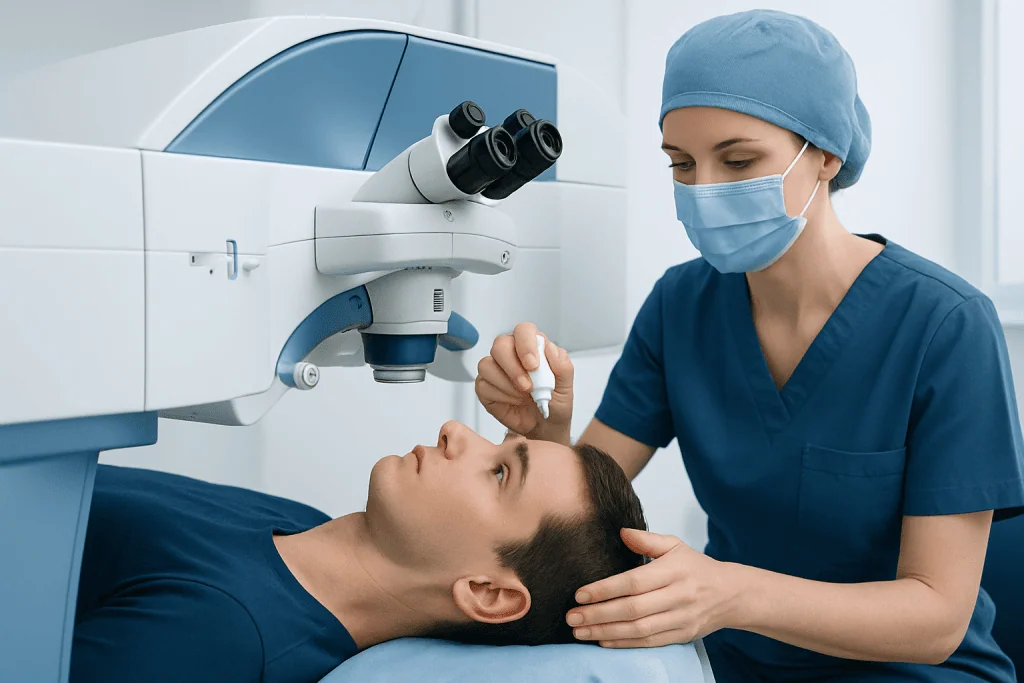
Laser vision correction reshapes the cornea, the clear front surface of the eye, so that light focuses more accurately on the retina. It may reduce dependence on glasses or contact lenses for nearsightedness, farsightedness or astigmatism. LASIK creates a thin corneal flap before laser reshaping; PRK treats the surface layer before reshaping; and SMILE removes a small piece of corneal tissue through a small incision.
A detailed preoperative assessment is needed to determine suitability. The ophthalmologist measures corneal thickness and shape, checks the prescription is stable, evaluates tear function and examines the retina and overall eye health. People with significant dry eye, certain corneal disorders, uncontrolled diabetes, active eye disease, pregnancy-related prescription changes or unrealistic expectations may need treatment first or may be advised to consider another approach.
Laser vision correction is not the same as laser treatment for eye disease. For example, retinal laser procedures may be used in selected cases of diabetic retinopathy, while glaucoma laser procedures aim to improve fluid drainage. Their aftercare and eye-drop plans differ from LASIK-type procedures.
Step-by-step: what happens during and after the procedure
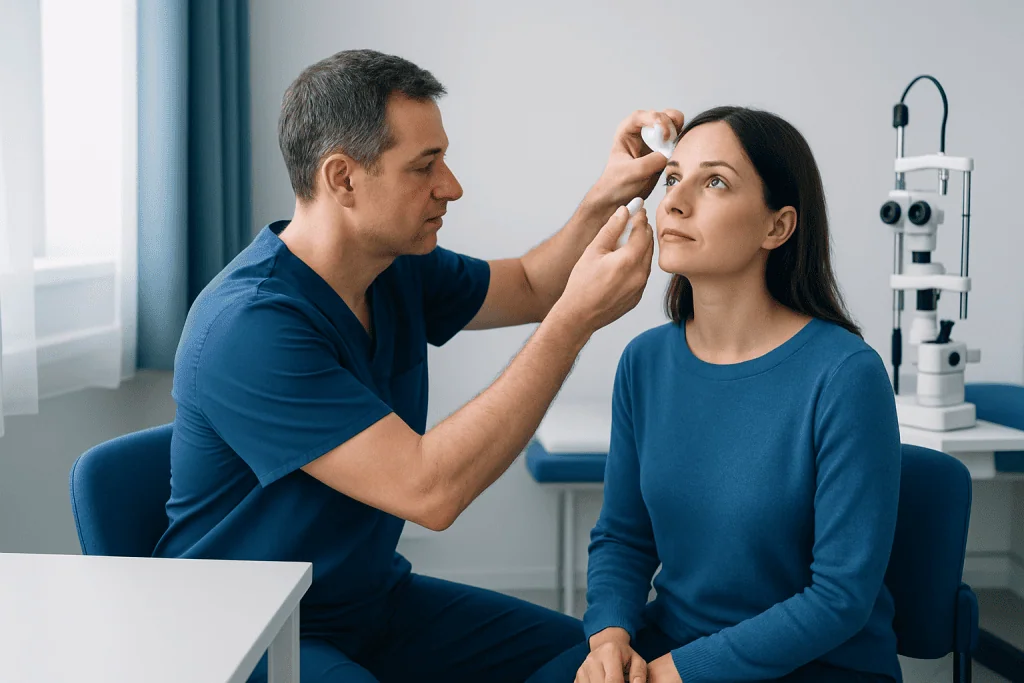
Before laser vision correction, the eye is numbed with anesthetic drops. The patient remains awake and is asked to look at a fixation light while the laser treatment is performed. Modern systems track eye movement, but the clinical team also guides the patient throughout. The laser part itself is usually brief, although preparation and checks take longer.
After LASIK, the corneal flap is carefully repositioned. After PRK, a protective contact lens may be placed while the surface layer regrows. The patient will usually rest briefly before going home with written instructions, protective eyewear where appropriate and prescribed drops. Driving home is generally not advised on the day of surgery because vision can be blurred and sedating medication may occasionally be used.
At home, hands should be washed before using any drops. The bottle tip should not touch the eye, eyelashes, fingers or other surfaces. When more than one drop is prescribed, leaving several minutes between products helps prevent one medicine from washing the other away. A clinician can demonstrate the technique and clarify the exact timing plan.
- Use prescription drops exactly as directed, including on weekends and while vision seems good.
- Close the eye gently after instilling a drop; do not squeeze or rub it.
- Use preservative-free lubricating drops if recommended, especially during screen use or in dry air.
- Attend scheduled follow-up appointments even if recovery seems uncomplicated.
What are some good eye drops to use after laser eye surgery?
The best eye drops after laser eye surgery are the ones prescribed or approved by the operating ophthalmologist. For many people having LASIK, PRK or SMILE, this includes a short course of antibiotic drops, anti-inflammatory drops and preservative-free artificial tears. The prescription and duration differ between procedures, so there is no single product that is appropriate for everyone.
Preservative-free artificial tears are often preferred for frequent use because preservatives may irritate a sensitive healing eye surface. They can reduce dryness, stinging and temporary blur related to tear-film instability. Gel drops or ointments may sometimes be suggested for nighttime dryness, but these can blur vision temporarily and should be used only as advised.
“Get the red out” vasoconstrictor drops are usually not a routine part of laser eye surgery recovery. Likewise, steroid drops should never be continued, restarted or shared without medical guidance, as inappropriate use can raise eye pressure or delay recognition of complications. Patients should contact their surgeon before adding any eye medication, including allergy drops.
What eye drops should I use after laser eye treatment?
The right drops depend on what “laser eye treatment” means. After corneal refractive surgery, patients commonly receive infection-prevention and anti-inflammatory drops, plus lubrication. After retinal laser treatment, the ophthalmologist may recommend lubricating drops for irritation, but many patients do not need the same medications used after LASIK. Following glaucoma laser treatment, pressure-lowering or anti-inflammatory drops may be used in selected cases.
Therefore, an eye-drop plan cannot safely be copied from one laser procedure to another. The treating ophthalmologist considers the target tissue, the type of laser used, eye pressure, corneal health, medication allergies and other eye conditions before making recommendations.
For people exploring vision correction, LASIK eye surgery assessment includes discussion of postoperative medicines and dry-eye management. An ophthalmologist can also explain whether another refractive procedure may better fit the person’s prescription, corneal measurements and lifestyle.
How many days will it take for your eyes to recover after laser eye surgery?
Recovery time depends on the laser procedure. After LASIK, many people notice meaningful improvement in vision within 24 to 48 hours and can often return to desk-based activities within a few days, if their surgeon agrees. Mild dryness, light sensitivity, glare or fluctuating sharpness can continue for several weeks while the tear film and corneal nerves recover.
PRK usually has a slower early recovery because the corneal surface needs time to regrow. Discomfort and blur are often more noticeable during the first several days, and vision may improve gradually over weeks. Full visual refinement after any refractive laser procedure can take several weeks or occasionally longer, particularly with higher prescriptions or pre-existing dry eye.
Follow-up visits are the most reliable way to confirm that healing is progressing as expected. A person should avoid comparing their timeline closely with someone else’s, since age, procedure type, prescription, tear quality and adherence to aftercare can all influence recovery.
How to make eyes heal faster after LASIK
There is no safe shortcut that guarantees faster healing after LASIK. The most helpful approach is protecting the healing cornea and following the surgeon’s individual instructions carefully. Using prescribed drops on time, lubricating with approved preservative-free tears, resting when the eyes feel strained and attending follow-up appointments all support normal recovery.
Patients should avoid rubbing or pressing on their eyes, especially during the early healing period. They should also follow advice on showering, swimming, hot tubs, contact sports, makeup and exposure to smoke, dust or wind. Wearing any protective shield supplied for sleep and using sunglasses outdoors can add comfort and reduce accidental eye rubbing.
Regular blinking and brief screen breaks may lessen dryness during computer or phone use. Drinking fluids as usual and maintaining general health can be useful, but supplements, herbal products or non-prescribed drops should not be used as a substitute for clinical aftercare. Persistent dry eye can be evaluated and treated with a tailored plan.
Risks, benefits and when to seek medical care
The potential benefit of laser vision correction is reduced reliance on glasses or contact lenses. Many patients achieve improved uncorrected vision, but results vary and some people still need glasses for certain tasks. Reading glasses commonly become necessary with age because of presbyopia, even after successful distance correction.
Expected short-term effects can include tearing, scratchiness, light sensitivity, halos around lights, glare and fluctuating vision. More significant complications are uncommon but can include infection, inflammation, delayed healing, corneal flap problems after LASIK, elevated eye pressure from steroid drops, undercorrection or overcorrection, and persistent dry eye. Careful assessment and follow-up reduce risk but cannot remove it completely.
When to seek medical care: Patients should contact their ophthalmologist promptly if they develop increasing or severe pain, sudden worsening of vision, increasing redness, significant swelling, pus-like discharge, new flashes or floaters, or a curtain-like shadow in vision. These symptoms do not always mean a serious problem, but they require timely assessment rather than waiting for a routine appointment.
Acibadem International’s multidisciplinary eye specialists and JCI-accredited hospitals provide assessment and treatment for international patients considering laser vision correction and other eye care needs.
Frequently asked questions
Can I use artificial tears immediately after LASIK?
Many surgeons recommend preservative-free artificial tears soon after LASIK to relieve dryness and support comfort. However, patients should follow their own postoperative instructions, including the recommended product and frequency. If several drops are being used, they should usually be spaced apart by a few minutes.
How long do I need prescription eye drops after LASIK?
The duration varies according to the procedure, the eye’s healing response and the surgeon’s protocol. Antibiotic drops are commonly used for a limited early period, while anti-inflammatory drops may be adjusted over time. Artificial tears may be needed for weeks or longer if dryness persists.
Why is my vision blurry after putting in eye drops?
Temporary blur is common immediately after lubricating drops, especially thicker gel formulations or ointments. Dry eye itself can also cause vision to fluctuate between blinks during recovery. Persistent, worsening or sudden vision loss should be reported promptly to an ophthalmologist.
Can I use redness-relief drops after laser eye surgery?
Redness-relief drops are not usually recommended unless the treating ophthalmologist specifically approves them. They may not address the cause of redness and can irritate the eye surface with repeated use. Preservative-free lubricating drops are often a more appropriate option for postoperative dryness or mild irritation.
When can I return to work after laser eye surgery?
Many people return to desk work within a few days after LASIK, depending on comfort, visual clarity and their surgeon’s advice. PRK often requires a longer recovery before work and driving feel comfortable. Jobs involving dust, heavy physical activity, water exposure or eye injury risk may require additional precautions.
Is dry eye normal after laser eye surgery?
Temporary dry-eye symptoms are common after laser vision correction because the corneal nerves and tear film need time to recover. Symptoms may include burning, grittiness, tearing, light sensitivity and variable vision. Persistent or troublesome symptoms should be discussed at follow-up because targeted treatment is available.
References
- American Academy of Ophthalmology
- U.S. Food and Drug Administration
- National Eye Institute
- Royal College of Ophthalmologists
This article is for general information only and is not a substitute for professional medical advice. Please consult a qualified doctor about your individual situation.
Eye Surgery in Turkey — costs, top hospitals & a free quote
JCI-accredited · board-certified surgeons · reply within 24h

Ophthalmology
Comprehensive eye care from laser vision correction to retina, cornea and cataract surgery.
75 specialists in this unitMore from the Health Library



Related Specialists

Assoc. Prof. Dr. Murat Sezer
Pulmonary Medicine
Assoc. Prof. Dr. Selma Aktaş
Pediatrics
Dr. Begench Orazgeldıyev
Anesthesiology
Prof. Dr. Ayşe Sağduyu Kocaman
Neurology