

Can You Have Sex While on Chemo: How It Works, Results and What to Expect

Sex is often possible during chemotherapy, but comfort, energy levels, blood counts and treatment-specific advice matter. Chemotherapy can affect desire, arousal, erections, vaginal comfort, body image and emotional closeness; these changes are common and treatable.
Key Takeaways
- Sex is often possible during chemotherapy, but comfort, energy levels, blood counts and treatment-specific advice matter.
- Chemotherapy can affect desire, arousal, erections, vaginal comfort, body image and emotional closeness; these changes are common and treatable.
- Condoms or other barrier methods may be recommended during and shortly after chemotherapy because small amounts of some drugs can be present in body fluids.
- Pregnancy should generally be avoided during chemotherapy because treatment can harm a developing fetus.
- Fever, unusual bleeding, sores, severe pain or signs of infection should be discussed promptly with the oncology team.
Can you have sex while on chemo? Many people can have sex during chemotherapy if they feel comfortable and their care team has not advised otherwise. Intimacy can take many forms, and a few practical precautions can help protect both partners while treatment is underway.
Overview: Can You Have Sex While on Chemo?
Can you have sex while on chemo? In many cases, yes. Sexual activity is usually safe during chemotherapy when a person feels well enough and their oncology team has not identified a reason to avoid it, such as very low blood counts, active infection, bleeding, or recent surgery.
There is no single rule that fits every cancer treatment plan. Chemotherapy, the type of cancer, other treatments, medicines and a person’s overall health can all affect what feels comfortable and safe. Open communication with a partner and the cancer care team can help people make choices that support both intimacy and wellbeing.
Sex does not need to mean intercourse. Kissing, touching, cuddling, massage and spending quiet time together can preserve closeness when fatigue, nausea, pain or concerns about body changes make intercourse less appealing. There is no “right” level of sexual activity during treatment.
How Chemotherapy Affects Sex and Intimacy
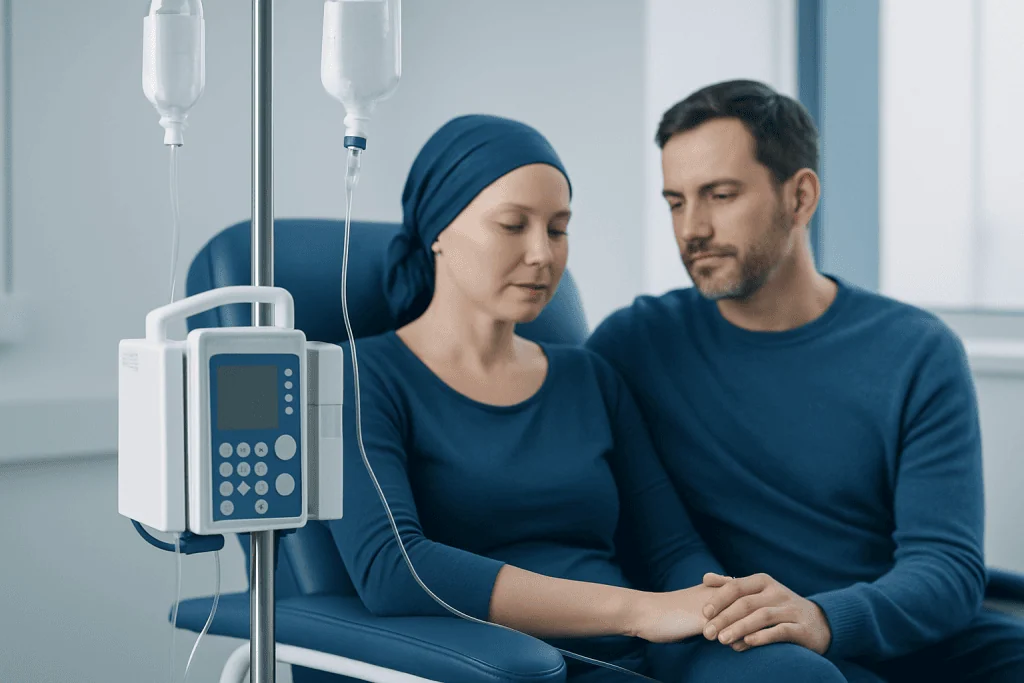
Chemotherapy works by damaging or stopping rapidly dividing cells. While this helps treat cancer, it can also affect healthy cells and lead to side effects that influence sexuality. These effects vary widely, may come and go between treatment cycles, and can improve after treatment ends.
Fatigue, nausea, pain, sleep disruption, anxiety and low mood can lower sexual desire. Some people feel less confident because of hair loss, weight changes, scars, skin changes or medical devices. Others may want intimacy but need more time, privacy, reassurance or a gentler approach.
Physical changes can include vaginal dryness or tightness, pain during penetration, reduced arousal, difficulty reaching orgasm, erectile difficulties, lower testosterone or menopause-like symptoms. Cancer itself, surgery, radiation, hormone therapy and medicines such as pain relievers or antidepressants may also contribute. A clinician can assess persistent symptoms and discuss supportive options.
How does chemo affect sex?
Chemo may affect sex through temporary tiredness and illness, changes in hormones or nerve function, and emotional stress related to cancer. It does not affect everyone in the same way, and desire may be lower at some times than others. Choosing times when energy is better, using lubricant when appropriate, and discussing concerns early can make intimacy more comfortable.
Safety, Candidacy and Practical Precautions

Before having sex during chemotherapy, it is helpful to consider how the person feels that day and whether the care team has given any restrictions. Sexual activity may need to be postponed if there is severe fatigue, uncontrolled symptoms, fever, an active infection, significant bleeding, painful sores, or recovery from a procedure.
Low white blood cell levels can increase susceptibility to infection. Low platelet levels can increase bruising or bleeding, while low red blood cell levels may cause breathlessness or dizziness with exertion. The oncology team may review blood test results and advise whether intercourse, penetration or other activities should be modified or avoided for a period of time.
Some chemotherapy drugs can be present in semen and vaginal fluids for a limited time after treatment. The exact advice depends on the medicine, but many oncology teams recommend using a condom or other barrier method during sex while on chemotherapy and for a specified period after each treatment. Barriers can also reduce exposure to blood or body fluids if there are sores or bleeding.
- Use contraception consistently if pregnancy is possible.
- Ask the oncology team for treatment-specific advice about barrier protection and timing.
- Use a water- or silicone-based lubricant if dryness or friction is a concern, unless a clinician recommends otherwise.
- Stop if there is pain, bleeding, dizziness or feeling unwell.
Can I Kiss My Husband During Chemo?
Yes, ordinary kissing and affection are generally safe during chemotherapy. Chemotherapy is not contagious and cannot be passed from one person to another through kissing, hugging, sharing a bed or everyday contact.
Extra care may be appropriate if the person receiving chemotherapy has mouth sores, oral bleeding, an active infection, or a very low white blood cell count. A partner who has a cold, flu, fever, cold sore or another contagious illness should avoid close contact until they are well, because chemotherapy can weaken immune defenses.
Good hand hygiene is useful for everyone in the household. If there are questions about a specific infection exposure or an individual treatment plan, the oncology nurse or doctor can provide personal guidance.
Sexual Activity During Treatment: What to Expect
There is no procedure to follow for sex during chemotherapy; the safest approach is to let comfort and medical advice guide the experience. Some people prefer intimacy on days farther from an infusion, when nausea and tiredness may be less intense. Others may not want sexual activity at all for a time, which is also normal.
Planning can reduce pressure. Resting beforehand, choosing a comfortable position, allowing extra time for arousal, and stopping whenever needed can help. For vaginal dryness, lubricant or a vaginal moisturizer may be useful; a gynecologist or oncology clinician can advise which products are suitable. Erectile changes may be assessed by a doctor, as treatment depends on the cause and a person’s medical history.
Partners can benefit from speaking openly about boundaries, fears and preferences. It can be reassuring to agree that affection does not have to lead to intercourse. Counseling, sexual health support, gynecology, urology, pelvic floor therapy or psycho-oncology care may be appropriate when concerns are ongoing.
For people receiving cancer care, cancer treatment planning should include a conversation about fertility, contraception and sexual health before therapy begins whenever possible.
Does Sex Reduce the Chance of Cancer?
Sex is not a treatment for cancer and has not been shown to reduce the chance that cancer will develop, return or spread. During chemotherapy, sexual activity should be viewed as a personal form of intimacy and quality-of-life support rather than a way to influence cancer outcomes.
Some sexual-health choices can reduce the risk of infections that are linked with certain cancers. For example, safer sex practices and human papillomavirus vaccination, when appropriate, can help reduce the risk of HPV-related disease. These preventive measures are different from treating an existing cancer or changing the effectiveness of chemotherapy.
People should continue recommended cancer screening, follow-up appointments and treatment plans. Questions about cancer risk, recurrence or prevention are best discussed with the oncology team, which can tailor advice to the cancer type and personal history.
Recovery Timeline, Benefits and Possible Risks
Sexual wellbeing may change throughout treatment and recovery. Some people notice improvement within weeks after chemotherapy ends, particularly as fatigue and nausea settle. Hormonal changes, nerve effects, early menopause, surgical recovery and emotional adjustment can last longer, and recovery may be gradual rather than linear.
Potential benefits of consensual intimacy include emotional connection, relaxation, comfort and a sense of normality. However, sex should never feel like an obligation. Taking a break from sexual activity does not harm a relationship, and partners can find other ways to stay connected while symptoms are difficult.
The main risks are discomfort, bleeding, infection exposure, unintended pregnancy and possible exposure of a partner to chemotherapy drugs through body fluids. These can often be reduced with individualized medical advice, barrier protection, contraception and gentler forms of intimacy. Painful penetration, significant dryness, erection problems or reduced desire deserve support rather than silence.
Acibadem International’s multidisciplinary specialists and JCI-accredited hospitals can help international patients address cancer treatment and related sexual-health concerns in coordination with their oncology care.
When to Seek Medical Care
Contact the oncology team promptly for fever, chills, new sores in the mouth or genital area, unusual discharge, burning with urination, new rash, or signs of infection. These symptoms can be especially important during periods when white blood cell counts may be low.
Medical advice is also needed for unexpected or heavy bleeding, severe pain during or after sex, persistent pelvic or testicular pain, fainting, severe shortness of breath, chest pain, or dizziness. Urgent symptoms should be assessed without delay according to the care team’s instructions.
It is also appropriate to ask for help with less urgent but troubling concerns, including low desire, vaginal dryness, painful sex, difficulty with erections, orgasm changes, body-image worries or relationship stress. These are common parts of cancer care, and clinicians can offer practical treatment and referrals.
Frequently asked questions
Can you have sex while on chemo?
Many people can have sex while receiving chemotherapy if they feel well and their oncology team has not advised against it. The safest choice depends on blood counts, infection risk, symptoms, recent procedures and the specific medicines being used. Barrier protection and contraception may be recommended.
Should a condom be used during chemotherapy?
Many cancer teams advise using condoms or another barrier method during chemotherapy and for a treatment-specific period afterward. This can reduce a partner’s exposure to small amounts of chemotherapy medicine that may be present in semen or vaginal fluids. The oncology team can explain the timing that applies to the individual regimen.
Can chemotherapy be passed to a partner through sex?
Chemotherapy itself is not contagious, and cancer cannot be passed to a partner through sex. However, traces of certain chemotherapy drugs may remain in body fluids temporarily. This is why a clinician may recommend barrier protection.
Can a person get pregnant while on chemotherapy?
Pregnancy can still be possible during chemotherapy, even if periods become irregular or stop. Because chemotherapy may harm a developing fetus, reliable contraception is generally advised throughout treatment and for a period afterward as directed by the oncology team. Anyone considering future pregnancy should also discuss fertility preservation and timing with a specialist.
What if sex is painful during chemo?
Painful sex can occur because of vaginal dryness, tissue sensitivity, infection, treatment-related menopause or emotional tension. It is important to stop if sex hurts and speak with the oncology team, gynecologist or urologist. Lubricants, moisturizers, medication changes or specialist support may help depending on the cause.
Is low sexual desire normal during chemotherapy?
Yes. Fatigue, nausea, pain, stress, altered body image and hormonal changes can all lower desire during treatment. Desire may return gradually, but persistent concerns can be discussed with a clinician, counselor or sexual-health specialist.
References
- American Cancer Society
- National Cancer Institute
- Macmillan Cancer Support
- Cancer Research UK
- American Society of Clinical Oncology
This article is for general information only and is not a substitute for professional medical advice. Please consult a qualified doctor about your individual situation.
Oncology care in Turkey — second opinion and treatment plan
JCI-accredited · board-certified surgeons · reply within 24h
Add us as a Preferred Source to see more of our trusted health content across Google Search, AI Overviews and Discover.

More from the Health Library

Related Specialists

Prof. Dr. Deniz Gökalp
Endocrinology
Assoc. Prof. Dr. Tunay Erden
Orthopedic Surgery & Traumatology
Dr. Suna Tuzcu
Acibadem Life Clinical Service
Dt. Bilge Baş
Oral & Dental Health