Cardiac Catheterization Operation: Procedure, Recovery and Results

Cardiac catheterization is usually performed using local anesthetic and light sedation rather than open-heart surgery. It can diagnose narrowed coronary arteries, valve problems, abnormal heart pressures, and some congenital heart conditions.
Key Takeaways
- Cardiac catheterization is usually performed using local anesthetic and light sedation rather than open-heart surgery.
- It can diagnose narrowed coronary arteries, valve problems, abnormal heart pressures, and some congenital heart conditions.
- Many people go home the same day after a diagnostic procedure, while treatment during catheterization may require an overnight stay.
- Bruising and tenderness at the wrist or groin access site are common; worsening pain, bleeding, swelling, or chest symptoms need urgent medical assessment.
- Results may be available immediately, but the care team explains what they mean and whether further treatment is needed.
A cardiac catheterization operation is a minimally invasive procedure in which a cardiologist guides a thin tube through an artery or vein to examine the heart and blood vessels, measure pressures, or provide treatment. Recovery is usually brief, but the right timeline and precautions depend on the access site, findings, and whether treatment such as angioplasty was performed.
Overview: what is a cardiac catheterization operation?
A cardiac catheterization operation, often called a heart cath, is a procedure that allows a cardiologist to evaluate the heart from inside the blood vessels. A narrow, flexible tube called a catheter is inserted through an artery or vein, most often at the wrist or groin, and guided to the heart using continuous X-ray imaging. It is not open-heart surgery, and most procedures use local anesthetic with medication to help the person relax.
The procedure may be purely diagnostic or may include treatment. For example, contrast dye can show the coronary arteries on X-ray, a test known as coronary angiography. The cardiologist may also measure pressures in the heart chambers, assess heart valve function, take a small tissue sample in selected situations, or perform an intervention such as balloon angioplasty and stent placement when appropriate.
A heart catheterization can help clarify symptoms and guide care for suspected coronary artery disease, coronary artery disease, heart valve disease, heart failure, abnormal heart rhythms, or certain congenital heart conditions. The exact purpose, expected benefits, alternatives, and individual risks should be discussed with the cardiology team before the procedure.
How it works and who may need it
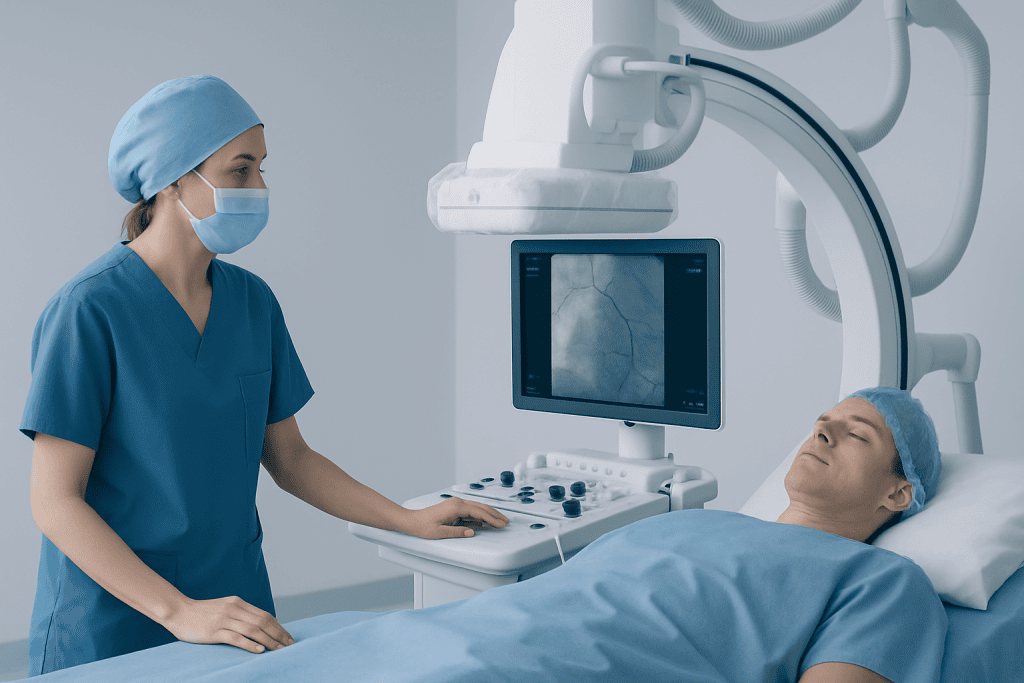
During catheterization, the care team uses fluoroscopy, a type of real-time X-ray, to guide the catheter through the blood vessel. Contrast dye may be injected to make arteries, heart chambers, or valves visible. Measurements obtained through the catheter can reveal how efficiently the heart pumps, whether pressures are elevated, and whether blood flow is restricted.
A clinician may recommend cardiac catheterization when noninvasive tests, such as an electrocardiogram, echocardiogram, stress test, or CT scan, suggest a possible heart problem or do not provide a clear answer. It may also be used urgently in some people with a heart attack or ongoing symptoms concerning for reduced blood flow to the heart.
Not everyone with chest discomfort needs a catheterization. The decision is individualized and considers symptoms, test findings, medical history, kidney function, medication use, allergies to contrast dye, pregnancy status, and the likelihood that the result will change treatment. People taking blood thinners, diabetes medicines, or medications that affect kidney function should receive specific pre-procedure instructions rather than stopping medicines on their own.
When narrowed coronary arteries are found and treatment is indicated, the same session may include coronary angioplasty and stent placement. In other cases, the safest and most useful approach may be medication, lifestyle measures, monitoring, surgery, or another specialist-led procedure.
What happens step by step during the procedure

Before the procedure, the team reviews the person’s health history, medications, allergies, and recent test results. Blood tests may be arranged, and patients are commonly asked not to eat or drink for a period beforehand. An intravenous line is placed, and monitoring equipment tracks heart rhythm, blood pressure, and oxygen levels throughout the procedure.
In the catheterization laboratory, the wrist or groin is cleaned and covered with sterile drapes. Local anesthetic numbs the insertion area. The person may feel brief pressure when the catheter is introduced, but sharp pain is not expected. Sedation may make a person feel sleepy, although many remain awake enough to follow simple instructions.
The cardiologist advances the catheter to the required area and performs the planned tests. When contrast dye is used, some people notice a temporary warm or flushed sensation. A diagnostic catheterization commonly takes about 30 minutes to an hour, but timing varies. Procedures that include treatment, multiple tests, or complex heart conditions may take longer.
When the catheter is removed, the insertion site is sealed using pressure, a compression device at the wrist, or a closure device at the groin. The patient then moves to a monitored recovery area. The team checks the access site, pulse, blood pressure, comfort, and ability to drink and move safely before discharge or admission.
Results, benefits, and possible risks
Some findings are visible immediately, particularly during coronary angiography. The cardiologist may be able to explain whether the coronary arteries are narrowed, whether heart pressures are abnormal, or whether an intervention was performed. A complete interpretation may take longer when laboratory measurements, tissue analysis, or input from other specialists is needed.
The main benefit of a cardiac catheterization operation is that it can provide detailed information that other tests cannot always supply. It may identify a cause of symptoms, help avoid unnecessary treatment, and allow certain problems to be treated promptly. Results can support a personalized plan that may include medication, cardiac rehabilitation, follow-up testing, valve treatment, or procedures to improve blood flow.
Cardiac catheterization is generally considered safe, but it is an invasive procedure and has potential complications. Common minor effects include bruising, soreness, or a small lump at the access site. Less common risks include bleeding, blood vessel injury, irregular heartbeat, allergic reaction to contrast, kidney problems related to contrast, infection, heart attack, stroke, or emergency surgery. The risk level depends on the reason for the procedure and the person’s overall health.
Clinicians take steps to reduce risk, including reviewing kidney function and allergies, using sterile technique, monitoring closely, and selecting the most appropriate access route. Patients should ask what risks apply in their own situation, especially if they have kidney disease, bleeding disorders, diabetes, severe vascular disease, or previous reactions to contrast dye.
Recovery timeline and activity restrictions
Recovery begins with observation in a recovery area. After a wrist procedure, people can often sit up and walk sooner, while a groin procedure may require lying flat for several hours to reduce bleeding risk. A diagnostic catheterization is frequently an outpatient procedure, provided the access site is stable and there are no concerns that require monitoring.
Most people feel well enough to return to light routines within one or two days after an uncomplicated diagnostic heart cath. Fatigue can occur after sedation, travel, anxiety, or the procedure itself. If angioplasty, stent placement, or another intervention is carried out, recovery instructions may be different and an overnight hospital stay may be recommended.
For the first day, patients are generally advised to rest, drink fluids if their clinician has not limited fluid intake, and have a responsible adult available after sedation. They should avoid driving, alcohol, signing important documents, strenuous exercise, and heavy lifting for the period specified by the care team. Care instructions vary by wrist versus groin access and by the type of treatment performed.
The access site should be kept clean and checked for bleeding, enlarging swelling, increasing redness, warmth, drainage, numbness, or a cool or pale hand or leg. A small bruise is often expected. However, persistent bleeding, rapidly expanding swelling, severe pain, fainting, chest pain, shortness of breath, or stroke-like symptoms require emergency medical care.
Common questions about rest, seriousness, and feeling better
How long should you rest after a cardiac catheterization? Most patients rest for the remainder of the procedure day and resume gentle activities the next day after a straightforward diagnostic catheterization. The care team may recommend longer limits after groin access, a complex procedure, angioplasty, stent placement, or a complication. Following the individual discharge instructions is more important than using a single timetable.
Is a heart cath a serious operation? A heart cath is a serious medical procedure because it involves the heart and blood vessels, but it is minimally invasive rather than open surgery. It is performed routinely by specialist teams in catheterization laboratories, with close monitoring before, during, and after the procedure. The treating cardiologist can explain the person’s individual risk based on the reason for catheterization and their health conditions.
Do you feel better after cardiac catheterization? A diagnostic catheterization itself is mainly used to obtain information, so it may not directly improve symptoms. People may feel better if a treatable problem is addressed during the procedure, such as opening a significantly narrowed coronary artery. Even then, symptom improvement varies, and ongoing medication, heart-healthy habits, and follow-up remain important.
What should you not do after a heart catheterization? Patients should not drive or operate machinery after sedation until their clinician says it is safe, usually for at least the rest of the day. They should avoid strenuous activity, heavy lifting, and activities that strain the access arm or leg until cleared. They should also not ignore new bleeding or concerning symptoms, and should not stop prescribed medicines, including antiplatelet medication after a stent, without medical advice.
When to seek medical care
Patients should contact their care team promptly if the puncture site continues to ooze blood, becomes more swollen or painful, develops redness or discharge, or if fever occurs. They should also seek advice for new numbness, tingling, weakness, coldness, or color changes in the hand or leg used for access.
Emergency medical care is needed for bleeding that does not stop with firm pressure, sudden chest pain, severe shortness of breath, fainting, a fast or irregular heartbeat with feeling unwell, or symptoms of stroke such as facial drooping, arm weakness, or trouble speaking. It is safer to seek urgent assessment rather than wait for a scheduled appointment when these symptoms occur.
Follow-up is an important part of recovery. The cardiology team reviews findings, confirms medication plans, and discusses any further care. Depending on the results, this may include evaluation for heart valve surgery, rehabilitation, risk-factor management, or ongoing monitoring.
Acibadem International’s multidisciplinary specialists and JCI-accredited hospitals diagnose and treat heart conditions for international patients, with care plans based on each person’s clinical findings and needs.
Frequently asked questions
Will I be awake during a cardiac catheterization operation?
Many people are awake but relaxed during the procedure because local anesthetic is used at the catheter entry site and sedation may be given. They may feel pressure at the access site or brief warmth when contrast dye is injected. The team continuously monitors comfort and can adjust medication when appropriate.
How painful is a heart catheterization?
The local anesthetic injection may sting briefly, and there can be pressure when the catheter is inserted. The catheter moving through blood vessels is usually not painful. Mild soreness or bruising at the wrist or groin can last for several days afterward.
Can a cardiac catheterization show blocked arteries?
Yes. Coronary angiography performed during catheterization can show narrowing or blockage in the coronary arteries. The images help the cardiologist assess the location and severity of disease and decide whether medication, a stent, surgery, or another approach is appropriate.
How long does it take to get cardiac catheterization results?
The cardiologist can often discuss major findings shortly after the procedure, especially when angiography is performed. Some results may take longer if additional measurements, laboratory testing, or tissue analysis is required. A follow-up discussion is used to explain the findings and next steps clearly.
Can I shower after a heart catheterization?
Shower timing depends on the access site and the dressing or closure device used. Many patients can shower after a short period, but soaking in a bath, pool, or hot tub is often restricted until the puncture site has healed. The discharge instructions should be followed because recommendations can differ.
What medicines should be taken after cardiac catheterization?
Medication needs depend on the procedure results and whether treatment was performed. Some people continue their usual medicines, while others may need antiplatelet medication, cholesterol-lowering therapy, or other heart medicines. A person should follow the discharge list carefully and ask the cardiology team before stopping or changing any medication.
References
- American Heart Association
- American College of Cardiology
- National Heart, Lung, and Blood Institute
- Mayo Clinic
- Society for Cardiovascular Angiography and Interventions
This article is for general information only and is not a substitute for professional medical advice. Please consult a qualified doctor about your individual situation.
Heart care in Turkey — expert evaluation and treatment
JCI-accredited · board-certified surgeons · reply within 24h
Add us as a Preferred Source to see more of our trusted health content across Google Search, AI Overviews and Discover.
Check your numbers in seconds
BMI, calories, due date, blood pressure and 30+ more clinical calculators — free, instant, doctor-reviewed ranges.