Ecp Medical Treatment: How It Works, Results and What to Expect

EECP is a noninvasive treatment mainly considered for chronic stable angina that remains troublesome despite standard care. Inflating and deflating leg cuffs in time with the heartbeat may increase blood flow to the coronary circulation and reduce the heart's workload.
Key Takeaways
- EECP is a noninvasive treatment mainly considered for chronic stable angina that remains troublesome despite standard care.
- Inflating and deflating leg cuffs in time with the heartbeat may increase blood flow to the coronary circulation and reduce the heart's workload.
- Treatment is usually delivered in multiple outpatient sessions over several weeks rather than as a single procedure.
- EECP can improve symptoms for some people but does not open, remove, or bypass blocked coronary arteries.
- A cardiology assessment is important because EECP is not appropriate for everyone, including some people with certain rhythm, vascular, or bleeding conditions.
ECP medical treatment usually refers to enhanced external counterpulsation (EECP), a noninvasive therapy used for selected people with persistent angina. It uses timed pressure cuffs around the legs and buttocks to support blood flow to the heart and may help reduce symptoms and improve daily activity tolerance.
Overview: What Is ECP Medical Treatment?
ECP medical treatment commonly means enhanced external counterpulsation, or EECP. It is a noninvasive outpatient therapy that may be offered to carefully selected people with chronic stable angina—chest discomfort caused by reduced blood supply to the heart muscle—when symptoms continue despite medicines, lifestyle measures, or previous heart procedures.
During EECP, inflatable cuffs placed around the calves, thighs, and buttocks gently compress the lower body in a pattern coordinated with the heartbeat. The aim is to improve blood flow back toward the heart during its resting phase and reduce the resistance the heart works against when it pumps. It is not surgery, does not involve a catheter inside an artery, and does not require general anesthesia.
EECP is generally considered an add-on approach rather than a replacement for guideline-based care. A cardiologist may review symptoms, medicines, heart function, and coronary artery disease before deciding whether this treatment is suitable.
How EECP Works in the Body
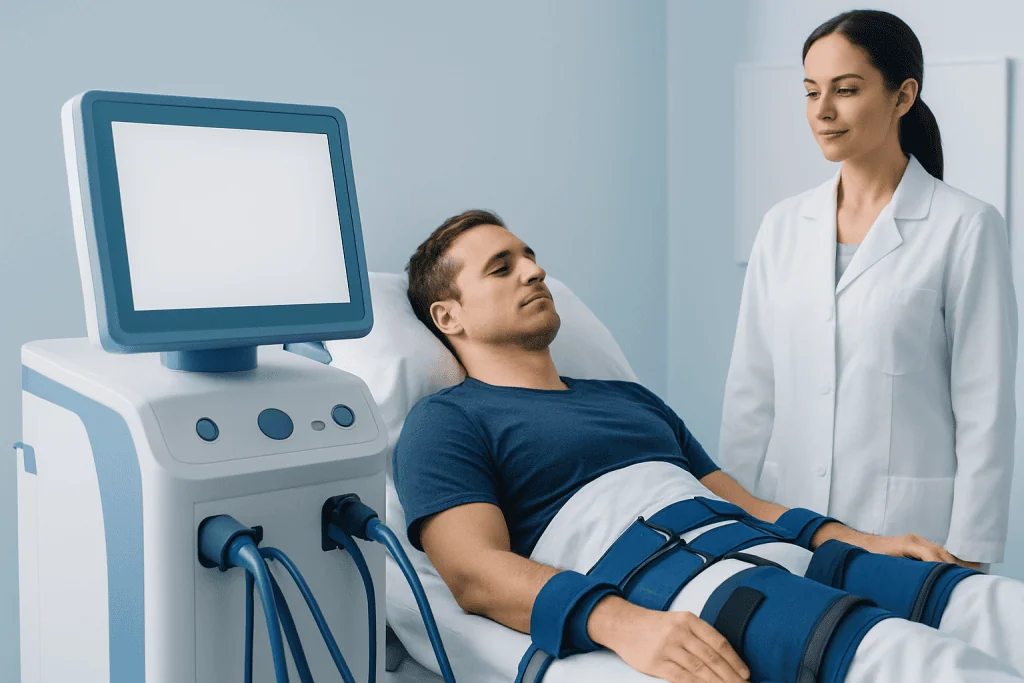
The cuffs are connected to a computer that uses an electrocardiogram (ECG) signal to time inflation and deflation precisely. The cuffs inflate sequentially from the calves upward just after the heart contracts. This movement helps return blood from the legs toward the chest and may increase blood flow during the part of the heartbeat when the coronary arteries receive much of their blood supply.
Just before the next heartbeat, the cuffs rapidly deflate. This may reduce the pressure the heart must overcome to pump blood forward. Over repeated sessions, the combination of improved circulation and reduced cardiac workload may help some people exercise or carry out daily activities with less angina.
The exact reasons benefits persist after a course of therapy are still being studied. Proposed effects include improved function of blood vessel lining, development of small alternative blood-flow channels, and better exercise tolerance. These possible effects do not mean that EECP physically clears plaque from coronary arteries.
Who May Be a Candidate for EECP?

EECP may be considered for people with chronic stable angina whose symptoms continue to affect quality of life despite appropriate medicines and risk-factor management. It can be particularly relevant when coronary procedures such as stenting or bypass surgery are not suitable, have already been performed, or are not expected to provide sufficient symptom relief.
A cardiology team will first confirm that the symptoms are stable and assess the underlying heart condition. This may involve a medical history, examination, ECG, echocardiogram, exercise or other stress testing, and review of coronary imaging where appropriate. People with coronary artery disease may need a broader treatment plan that addresses both symptoms and long-term cardiovascular risk.
EECP may not be suitable for everyone. Clinicians take particular care in people with severe peripheral artery disease, significant aortic valve leakage, uncontrolled high blood pressure, active blood clots in the legs, serious arrhythmias that interfere with treatment timing, major bleeding risks, or severe skin problems where cuffs are applied. Pregnancy and certain forms of heart failure also require individualized assessment.
What Happens During an EECP Procedure?
Before treatment, the person usually changes into comfortable clothing and lies on a padded treatment table. ECG electrodes are placed on the chest so the machine can coordinate cuff activity with each heartbeat. Blood pressure and symptoms are monitored, and the care team can adjust cuff pressure for comfort and safety.
Three sets of cuffs are wrapped around the calves, upper thighs, and buttocks. Once treatment begins, the cuffs rhythmically inflate and deflate. The sensation is often described as firm, repeated squeezing of the legs and lower body. A session commonly lasts about one hour, and the person remains awake throughout.
A full course is often scheduled as a series of weekday sessions over several weeks, although the exact schedule varies with the treatment plan and the person’s tolerance. There is usually no recovery room stay, and most people can return home after each appointment. The team should be told promptly about chest pain, shortness of breath, dizziness, leg pain, numbness, or skin discomfort during treatment.
Benefits, Results and Recovery Timeline
The main purpose of EECP is symptom relief. Some people experience fewer angina episodes, reduced need for short-acting angina medicine, improved walking or exercise capacity, and better ability to take part in everyday life. Improvements may appear gradually during the treatment course or in the weeks afterward, rather than immediately after the first session.
Results vary. Benefits are more likely to be judged by changes in symptoms, activity tolerance, and quality of life than by an assumption that coronary artery disease has been cured. Follow-up with the cardiology team remains important to monitor angina, blood pressure, medicines, cholesterol, diabetes, and other contributors to heart risk.
There is generally little physical recovery after a session. Mild muscle fatigue, skin irritation, bruising, or temporary leg discomfort can occur, particularly early in the course. People should continue prescribed heart medicines unless their clinician advises otherwise and should follow their individualized plan for physical activity, nutrition, smoking cessation, and cardiac rehabilitation.
What Is the Success Rate of EECP?
There is no single success rate that applies to every person receiving EECP. Studies and clinical experience suggest that many appropriately selected people with chronic stable angina report meaningful improvement in angina severity or daily activity after completing a full course, but the degree and duration of benefit differ between individuals.
Success should be discussed in practical terms: fewer or less intense episodes of chest discomfort, improved ability to walk or exercise, and better day-to-day quality of life. EECP is not expected to work equally well for everyone, and it should not be presented as a cure for coronary artery disease or a proven way to prevent heart attacks in all patients.
A cardiologist can help set realistic expectations based on the cause and stability of symptoms, prior treatments, heart function, and other health conditions. New or changing chest symptoms always need medical assessment rather than being assumed to be part of chronic angina.
What Are the Disadvantages of EECP Treatment?
The main practical disadvantage is the time commitment. EECP typically requires many appointments over several weeks, which can be demanding for people who work, travel long distances, or have mobility limitations. Treatment sessions may also feel uncomfortable because of repeated strong cuff pressure.
Possible side effects include bruising, skin irritation, muscle or joint aches, leg swelling, fatigue, and discomfort from the cuffs. These effects are often manageable, but they should be discussed with the treatment team. Rarely, treatment may need to be paused or stopped if symptoms or medical concerns arise.
Another limitation is that EECP does not replace treatments that address high-risk coronary disease directly. Depending on the clinical situation, a person may still need medication changes, coronary angioplasty and stent treatment, or coronary artery bypass surgery. The best choice depends on coronary anatomy, symptoms, overall health, and personal treatment goals.
Is EECP Treatment Worth It, and Can EECP Remove Blockage?
Whether EECP is worth it depends on the individual. It may be worthwhile for someone with persistent, stable angina who has been assessed by a cardiologist and wants a noninvasive option to improve symptoms and function. It is less likely to be appropriate when chest pain is new, worsening, occurring at rest, or linked to an urgent heart problem.
EECP cannot remove blockage from coronary arteries. It does not dissolve plaque, place a stent, or create a surgical bypass around a narrowed artery. Instead, it aims to support circulation and reduce the heart’s workload, which may make angina less limiting for some people.
For international patients, Acibadem International’s multidisciplinary specialists and JCI-accredited hospitals can assess chronic angina and discuss appropriate options, including EECP and other cardiovascular treatments. Decisions should be made after a full clinical evaluation, with attention to both symptom relief and long-term heart health.
When to Seek Medical Care
Anyone with new chest pain, pressure, tightness, or unexplained shortness of breath should seek prompt medical advice. Emergency care is needed when chest discomfort is severe, lasts more than a few minutes, occurs at rest, or is accompanied by sweating, nausea, fainting, marked breathlessness, or pain spreading to the arm, jaw, back, or shoulder.
People already diagnosed with angina should contact their clinician if episodes become more frequent, occur with less activity than usual, last longer, or no longer respond as expected to their prescribed plan. These changes can signal unstable symptoms that require urgent assessment rather than EECP scheduling.
Before and during EECP, patients should report calf pain, sudden leg swelling, unusual bruising, skin breakdown, palpitations, dizziness, or worsening breathlessness. Regular follow-up helps ensure that treatment remains safe and that other evidence-based measures for heart health are not overlooked.
Frequently asked questions
What is ECP medical treatment?
ECP medical treatment usually refers to enhanced external counterpulsation, also called EECP. It is a noninvasive therapy that uses timed inflatable cuffs on the legs and buttocks to support blood flow and reduce the heart's workload in selected people with chronic stable angina.
What is the success rate of EECP?
There is no single success rate because response depends on the person, the cause of symptoms, and other heart conditions. Many appropriately selected patients report less angina and improved daily activity after a full course, but benefits vary and EECP is not a cure for coronary artery disease.
What are the disadvantages of EECP treatment?
EECP requires repeated outpatient visits over several weeks and may be uncomfortable because the cuffs inflate firmly and repeatedly. Bruising, skin irritation, leg discomfort, fatigue, or swelling can occur, and the treatment is not suitable for everyone.
Is EECP treatment worth it?
EECP may be worth considering when chronic stable angina continues despite standard treatment and a cardiologist believes the person is a suitable candidate. Its value is usually measured by symptom relief and improved quality of life, not by removal of artery plaque.
Can EECP remove blockage?
No. EECP does not remove plaque or physically open a blocked coronary artery. It may improve circulation and reduce angina symptoms, while procedures such as stenting or bypass surgery are used when direct treatment of a blockage is needed.
How long does EECP treatment take?
A session commonly lasts about one hour, and treatment is usually delivered through multiple sessions over several weeks. The exact number and schedule are individualized by the cardiology team based on health status and treatment tolerance.
References
- American Heart Association
- American College of Cardiology
- European Society of Cardiology
- Mayo Clinic
- National Heart, Lung, and Blood Institute
This article is for general information only and is not a substitute for professional medical advice. Please consult a qualified doctor about your individual situation.
Heart care in Turkey — expert evaluation and treatment
JCI-accredited · board-certified surgeons · reply within 24h
Add us as a Preferred Source to see more of our trusted health content across Google Search, AI Overviews and Discover.
Check your numbers in seconds
BMI, calories, due date, blood pressure and 30+ more clinical calculators — free, instant, doctor-reviewed ranges.

More from the Health Library



Related Specialists

Prof. Dr. Merve Gürsoy Bulut
Radiology
Dr. Emre Furkan Aydin
Emergency Service
Assoc. Prof. Dr. Özlem Karabudak Abuaf
Dermatology
Yaren Kasal
Physical Medicine & Rehabilitation