Eye Exercises for Double Vision: An Evidence-Based Guide for Patients

Double vision, also called diplopia, has many possible causes, and exercises help only some of them. A medical eye exam is important before starting exercises, especially if symptoms are sudden, painful, or accompanied by other neurological symptoms.
Key Takeaways
- Double vision, also called diplopia, has many possible causes, and exercises help only some of them.
- A medical eye exam is important before starting exercises, especially if symptoms are sudden, painful, or accompanied by other neurological symptoms.
- Exercises are most often used for specific eye-movement or binocular vision problems such as convergence insufficiency.
- Prism glasses, patching, medications, or surgery may be more appropriate depending on the cause.
- Home exercises should follow advice from an ophthalmologist, orthoptist, or neuro-ophthalmology specialist.
Eye exercises for double vision can be helpful in selected cases, especially when a specialist has identified a problem with eye teaming or convergence. However, exercises are not a universal treatment, and new or persistent double vision should be medically assessed to find and treat the underlying cause.
Overview: Can eye exercises help double vision?
Eye exercises for double vision may help some patients, but only when the double vision is caused by a problem that exercises can realistically improve. In practice, this usually means a binocular vision issue such as poor eye coordination, reduced convergence, or difficulty keeping both eyes aligned during near work. For these situations, a clinician may recommend a structured program rather than general internet-based exercises.
Double vision, or diplopia, is a symptom rather than a diagnosis. It can arise from eye muscle imbalance, nerve problems, refractive issues, cataracts, thyroid eye disease, head injury, diabetes-related nerve palsy, stroke, or other neurological conditions. Because the treatment depends on the cause, a patient should not assume that exercises alone are the answer.
An evidence-based approach begins with identifying whether the double vision is monocular or binocular. Monocular double vision continues when one eye is covered and often points to a problem within that eye, such as lens or corneal changes. Binocular double vision goes away when either eye is covered and is more likely to involve alignment problems, which are the situations where exercises may sometimes play a role.
What double vision feels like
People describe double vision in different ways. Some see two images side by side, while others notice one image above the other or slightly diagonal. Symptoms may happen only when looking in certain directions, reading, driving, using a screen, or when tired.
Double vision may also come with blurred vision, eye strain, headaches, difficulty focusing at near, dizziness, nausea, or a sense that the eyes are not working together. In children, the signs may be less direct and can include squinting, closing one eye, head tilting, poor reading stamina, or avoiding close work.
These details matter because they help doctors narrow down the cause. For example, near-work symptoms can suggest convergence problems, while double vision that worsens in one direction of gaze may point toward weakness in a specific eye muscle or its nerve supply. A careful history often guides the next step in diagnosis.
When exercises may help and when they usually do not

Exercises are most useful when double vision is related to how the eyes coordinate with each other rather than to a structural problem inside the eye or a serious neurological disorder. A well-known example is convergence insufficiency, in which the eyes have difficulty turning inward together for close tasks. In this setting, office-based vision therapy with home reinforcement may improve symptoms in selected patients.
Exercises may also be considered for some people recovering from a stable eye movement problem, depending on the specialist’s assessment. The goal can be to improve fusion, reduce eye strain, and help the brain and eye muscles work together more comfortably. Even then, progress is usually gradual, and not every patient responds in the same way.
By contrast, exercises usually do not correct double vision caused by cataracts, corneal disease, retinal disease, significant thyroid eye disease, acute cranial nerve palsy, stroke, or other urgent neurological problems. In these situations, treating the underlying condition is the priority. Some patients instead benefit from prism lenses, temporary patching, medication, or surgery such as strabismus surgery after full evaluation.
Common causes and risk factors behind double vision
Double vision can begin for many reasons, and understanding the cause is the most important step in choosing the right treatment. Binocular double vision often comes from misalignment of the eyes due to eye muscle imbalance, nerve palsy, prior childhood strabismus, thyroid eye disease, myasthenia gravis, or problems affecting the brainstem or cranial nerves. Some patients may have an associated condition such as strabismus that became more noticeable with age, fatigue, or illness.
Monocular double vision usually has a different explanation. It may be linked to cataract, dry eye, irregular astigmatism, corneal disease, or lens changes inside one eye. In these cases, eye exercises are not expected to help because the symptom does not come from poor teaming between the two eyes.
Risk factors can include diabetes, high blood pressure, thyroid disease, autoimmune conditions, previous eye surgery, trauma, migraine, and neurological illness. Age also matters, since some causes become more common in older adults. A person with sudden-onset double vision and vascular risk factors should be assessed promptly because the symptom can sometimes reflect a nerve palsy or a brain-related problem.
- More likely to respond to exercises: convergence insufficiency, certain stable binocular coordination problems
- Less likely to respond to exercises: cataract, corneal disease, stroke, acute nerve palsy, thyroid eye disease with restriction
- Needs urgent assessment: sudden onset, pain, drooping eyelid, weakness, numbness, speech trouble, severe headache
How doctors diagnose the cause before recommending exercises
A proper assessment usually starts with questions about when the double vision began, whether it is constant or intermittent, and whether it disappears when one eye is covered. Doctors also ask about recent infection, trauma, headache, thyroid problems, diabetes, fluctuating weakness, or changes in speech or balance. These clues help separate routine eye teaming problems from conditions that need urgent attention.
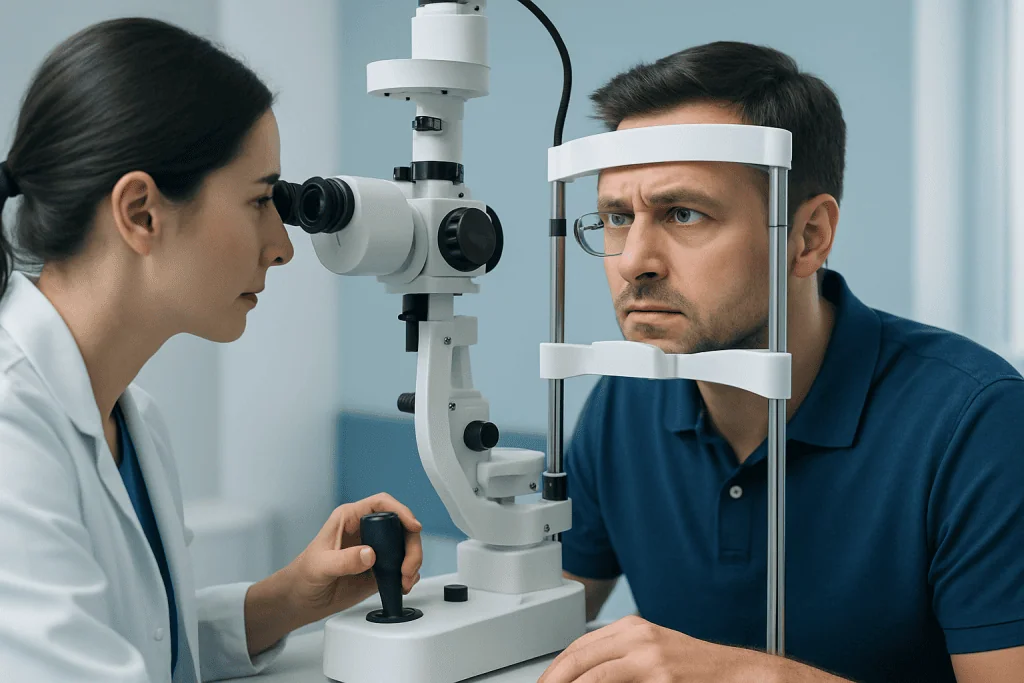
The eye examination may include visual acuity, refraction, eye alignment testing, cover tests, assessment of eye movements, pupil examination, and slit-lamp evaluation. In some patients, doctors measure how the eyes work together at near and distance and test convergence ability in detail. If the pattern is complex or there are neurological features, referral to neuro-ophthalmology or imaging may be needed.
Further testing depends on the suspected cause. A patient may need blood tests for thyroid or autoimmune disease, scans of the brain or orbit, or assessment for myasthenia gravis. This step is why evidence-based care does not begin with exercises alone. It begins with a diagnosis, then matches treatment to that diagnosis.
Evidence-based treatment options, including exercises
If a specialist decides exercises are appropriate, they are usually specific, structured, and monitored. Programs for convergence insufficiency may include office-based therapy, guided home tasks, or both. The aim is to improve convergence, eye coordination, and the ability to maintain single vision during reading or screen use. Patients should know that exercises are generally prescribed for a defined reason, not as a universal remedy for all diplopia.
Other non-surgical treatments may be more suitable depending on the diagnosis. These can include treating dry eye, updating glasses, prescribing prism lenses, using temporary patching to reduce symptoms, or addressing an underlying medical disorder. In selected cases, clinicians may recommend neuro-ophthalmology evaluation to coordinate care when eye findings may reflect a nerve, muscle, or brain-related condition.
When alignment remains stable but troublesome, surgery can sometimes improve eye position and reduce double vision. If there is a problem inside the eye itself, treatment may focus there instead; for example, some patients with lens-related causes may benefit from cataract surgery. The best outcome usually comes from treating the actual source of the symptom rather than trying several exercises without a diagnosis.
Patients should also be realistic about what exercises can and cannot do. Improvement may take weeks, and some people experience only partial relief. If symptoms worsen, shift in pattern, or fail to improve as expected, the care plan should be reviewed rather than continued indefinitely.
Self-care and practical tips for daily life
While waiting for assessment or starting treatment, simple measures may help reduce discomfort. Good lighting, regular breaks during reading or screen use, and attention to sleep and general health can make symptoms easier to manage. If a doctor has advised temporary occlusion, patching one eye or using a lens fogging method may reduce disabling diplopia in the short term.
It is sensible to avoid self-prescribing online exercise routines unless a clinician has explained why they fit the patient’s diagnosis. Some exercises are harmless but unhelpful; others may increase frustration if they are not matched to the underlying problem. Keeping a brief symptom diary can be useful, noting when the double vision occurs, whether it is horizontal or vertical, and what activities trigger it.
Patients should also take care with activities that require clear single vision, such as driving, climbing stairs, cycling, or operating machinery. A doctor or eye specialist can advise whether these activities are safe during evaluation and treatment. Near the end of the care pathway, multidisciplinary specialists at Acibadem International and its JCI-accredited hospitals can assess and treat double vision for international patients when coordinated ophthalmic and neurological expertise is needed.
When to seek medical care
Double vision should be medically evaluated if it is new, persistent, or unexplained. Even if symptoms seem mild, a professional assessment is important because treatment varies greatly depending on the cause. An eye doctor may identify a straightforward binocular vision issue, but they may also detect signs of a problem that requires broader medical care.
Urgent medical attention is especially important if double vision begins suddenly or comes with severe headache, eye pain, drooping eyelid, weakness, numbness, trouble speaking, imbalance, confusion, or recent head injury. These features can signal a neurological emergency or a serious eye condition. Children with suspected double vision should also be assessed promptly because early treatment can be important for visual development.
If a person has known thyroid disease, diabetes, autoimmune disease, or recent infection and develops new diplopia, it is wise not to delay. Early evaluation can clarify whether the symptom is related to a temporary problem, a treatable nerve issue, or a condition needing urgent management.
Frequently asked questions
Do eye exercises cure double vision?
Not usually in every case. Eye exercises can help selected patients whose double vision is caused by a binocular coordination problem, but they do not cure many structural or neurological causes. A medical diagnosis should come first.
What kind of double vision is most likely to improve with exercises?
Exercises are most often used when the eyes have trouble working together, such as in convergence insufficiency. They may help reduce symptoms during near work like reading or screen use. A specialist decides this based on an eye alignment and binocular vision assessment.
Can I try online eye exercises at home without seeing a doctor?
It is better to have an eye examination first. Double vision can sometimes be caused by conditions that need different treatment or urgent medical care. Home exercises are most useful when they are tailored to a confirmed diagnosis.
How do I know if my double vision is serious?
Sudden double vision, especially with headache, pain, eyelid drooping, weakness, numbness, speech problems, or recent trauma, needs urgent medical attention. Even without these warning signs, persistent or unexplained double vision should be evaluated. The cause cannot be confirmed by symptoms alone.
Are prism glasses better than exercises?
They serve different purposes. Prism glasses can help align the images and reduce symptoms, while exercises aim to improve how the eyes work together in specific cases. Some patients need one approach, and others may benefit from a combination.
Can dry eye or cataracts cause double vision?
Yes. Dry eye, cataracts, corneal irregularities, and other problems within one eye can cause monocular double vision. In these situations, treating the eye condition is usually more helpful than doing eye exercises.
References
- American Academy of Ophthalmology
- National Eye Institute
- American Association for Pediatric Ophthalmology and Strabismus
- National Health Service
- American Academy of Neurology
This article is for general information only and is not a substitute for professional medical advice. Please consult a qualified doctor about your individual situation.
Explore treatments in Turkey — costs, top hospitals & a free quote
JCI-accredited · board-certified surgeons · reply within 24h
Check your numbers in seconds
BMI, calories, due date, blood pressure and 30+ more clinical calculators — free, instant, doctor-reviewed ranges.