Histotripsy Treatment: How It Works, Results and What to Expect

Histotripsy uses focused ultrasound pulses to disrupt targeted tissue without surgical incisions or thermal ablation. It is currently used primarily for selected liver tumors and is not appropriate for every tumor type, size or location.
Key Takeaways
- Histotripsy uses focused ultrasound pulses to disrupt targeted tissue without surgical incisions or thermal ablation.
- It is currently used primarily for selected liver tumors and is not appropriate for every tumor type, size or location.
- Planning imaging and real-time ultrasound guidance help clinicians target the tumor while protecting nearby structures.
- Most people return home the same day or after short observation, but follow-up scans are essential to assess treatment response.
- Possible risks include pain, bruising, bleeding, fever, liver-related complications and incomplete tumor treatment.
Histotripsy treatment is a noninvasive procedure that uses precisely focused ultrasound energy to mechanically break down targeted tissue, most commonly selected liver tumors. It may offer an incision-free option for carefully assessed patients, although suitability depends on the tumor, liver function, overall health and available expertise.
Overview: What Is Histotripsy Treatment?
Histotripsy treatment is a noninvasive, image-guided procedure that uses concentrated ultrasound waves to break apart targeted tissue. Unlike surgery, it does not require an incision. Unlike heat-based ablation, it does not destroy tissue by heating or freezing it; instead, short ultrasound pulses create tiny gas bubbles that rapidly form and collapse, mechanically fragmenting the selected tissue.
The procedure is most established for carefully selected liver tumors, including some primary liver cancers and cancers that have spread to the liver. A treatment team uses imaging to plan the target and guide the ultrasound beam. The body then gradually clears the treated tissue over time.
Histotripsy is an emerging option rather than a replacement for all cancer treatments. Surgery, systemic treatment, radiation therapy, embolization and other local ablation methods may still be more appropriate depending on the individual situation. Decisions are best made by a multidisciplinary liver and oncology team.
How Histotripsy Works
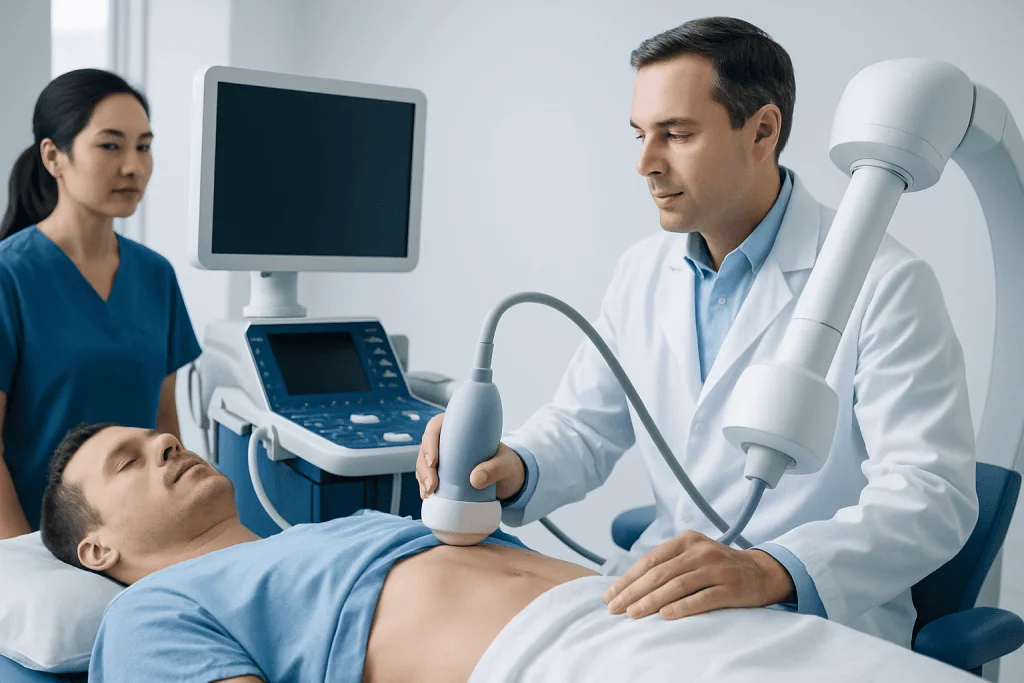
A histotripsy system focuses acoustic energy from outside the body onto a small, planned area within the liver. The energy passes through the skin and soft tissues and converges at the treatment target. At this focal point, very rapid pressure changes create microscopic bubbles in fluid-containing tissue. Their collapse breaks down the targeted cells and tissue structure.
Because the effect is mechanical rather than primarily heat-based, histotripsy may be useful when avoiding thermal injury is important. However, the ultrasound beam still needs a safe route to the target. Structures such as the ribs, lungs, bowel, gallbladder, major blood vessels and bile ducts are considered carefully during treatment planning.
Ultrasound imaging is commonly used during the procedure to visualize the liver and confirm targeting. CT or MRI scans before and after treatment are also important. These tests show tumor size and location, help evaluate whether treatment is technically feasible, and monitor the treated area afterward.
Who May Be a Candidate?

Candidacy for histotripsy treatment is individualized. A person may be considered when they have one or more liver tumors that can be safely reached with the focused ultrasound beam and when a local treatment approach is clinically appropriate. It may be discussed for patients who are not suitable for surgery or who need an alternative or complementary local treatment strategy.
The team considers the type of cancer, number and size of tumors, exact tumor location, prior treatments, liver function, blood-clotting status and general health. They also assess whether the disease is limited to the liver or present elsewhere, as this influences the goals of treatment and the role of systemic therapies.
Histotripsy is not suitable for every liver lesion. Tumors that cannot be clearly targeted, are too close to vulnerable organs, are obscured by bone or gas, or require a different cancer-control strategy may need another approach. Related liver conditions, such as liver cancer, are evaluated with specialist assessment and detailed imaging before a treatment plan is recommended.
A consultation should include a discussion of expected benefits, alternatives and uncertainties. For some people, the objective is to destroy a localized tumor; for others, it may be to control a lesion, reduce symptoms or complement other cancer treatments.
What Happens During the Procedure?
Before treatment, the patient undergoes imaging and a clinical review. Blood tests may be requested to check liver function, kidney function and clotting. The care team reviews medications, including blood thinners, diabetes medicines and supplements, and provides individual instructions about whether any need to be adjusted before the procedure.
On the day of treatment, the patient is positioned on a treatment table while the team identifies the target with imaging. Histotripsy is usually performed with anesthesia or sedation so that the patient can remain comfortable and still. The type of anesthesia depends on the treatment plan, health status and local clinical practice.
The treating physician aligns the focused ultrasound beam with the planned target and delivers pulses in a controlled pattern. The treatment duration varies according to tumor size, location and number of areas being treated. There are no surgical cuts, but the team continuously monitors positioning, breathing and vital signs throughout the procedure.
Afterward, the patient is observed in a recovery area. The team checks pain, blood pressure, oxygen level and any symptoms such as nausea or abdominal discomfort. Imaging may be performed immediately or scheduled at a later follow-up visit to assess the treatment zone.
Benefits, Limitations and Possible Risks
A potential benefit of histotripsy is that it treats a selected internal target without an incision, needles placed through the liver or heat delivered directly to the tumor. This may mean less disruption of skin and surrounding tissues than some invasive procedures. It may also be considered when other local therapies are difficult to perform, although this depends on anatomy and tumor characteristics.
Its limitations are equally important. Histotripsy does not treat cancer that cannot be targeted, and it does not replace systemic treatment when cancer has spread or requires whole-body therapy. Long-term outcomes and the best use of histotripsy alongside surgery, chemotherapy, immunotherapy, radiation and other liver-directed treatments continue to be studied.
Possible side effects include temporary abdominal discomfort, fatigue, nausea, bruising and a mild fever. More serious but less common complications can include bleeding, infection, injury to nearby organs or structures, bile duct problems, liver-related complications, anesthesia reactions, blood clots, or incomplete treatment of the tumor. The risk profile varies with the tumor site, liver condition and other health factors.
Patients should ask how clinicians will monitor treatment response and what alternative options are available if the tumor does not respond as expected. Other local approaches may include liver tumor ablation, while the wider cancer plan may involve surgery, systemic therapy or radiation-based treatment depending on the diagnosis.
Recovery Timeline and Follow-Up
Recovery after histotripsy treatment is often shorter than recovery after open surgery because there is no incision to heal. Many patients are discharged the same day or after a short period of observation, depending on the procedure, anesthesia used, symptoms and medical history. A responsible adult may be needed to accompany the patient home after sedation or anesthesia.
During the first few days, mild fatigue, soreness or abdominal discomfort can occur. The care team provides individualized guidance about pain relief, hydration, meals, activity, driving and returning to work. Patients should avoid assuming that an incision-free procedure requires no recovery; rest and adherence to discharge instructions remain important.
Follow-up imaging is a central part of care. CT or MRI scans are used to evaluate the treated area, look for residual or recurrent tumor and guide future decisions. The timing of scans varies, and the first scan may not provide the final picture because the body needs time to process the treated tissue.
Ongoing follow-up may include oncology, hepatology, interventional radiology, surgery and other specialists. Where appropriate, care plans may also include chemotherapy or other treatments to address cancer elsewhere in the body or reduce the chance of progression.
When to Seek Medical Care
After histotripsy, patients should contact their treating team promptly if they develop worsening abdominal pain, persistent vomiting, fever, chills, increasing weakness, dizziness, new jaundice, unusual swelling or redness, or difficulty keeping fluids down. These symptoms do not always indicate a serious complication, but they need timely clinical advice.
Emergency medical care is needed for severe or sudden abdominal pain, fainting, shortness of breath, chest pain, confusion, uncontrolled bleeding, black stools, or signs of a severe allergic reaction. People should follow the emergency instructions provided by their care team and seek local emergency help when needed.
Before pursuing histotripsy, anyone with a known or suspected liver tumor should seek medical assessment rather than relying on symptoms alone. Liver tumors can have few symptoms in earlier stages, and high-quality imaging and specialist review are needed to establish a diagnosis and determine whether histotripsy or another treatment is appropriate.
Acibadem International’s multidisciplinary specialists and JCI-accredited hospitals evaluate and treat liver tumors for international patients, coordinating imaging, oncology and procedural care when histotripsy or another evidence-based option is being considered.
Frequently asked questions
Is histotripsy treatment the same as ultrasound imaging?
No. Standard ultrasound imaging uses sound waves to create pictures of internal structures. Histotripsy uses specially controlled, high-energy focused ultrasound pulses to mechanically disrupt a planned area of tissue, while imaging helps guide the procedure.
Can histotripsy cure liver cancer?
Histotripsy may destroy a selected liver tumor, but whether it can be part of curative treatment depends on the cancer type, stage, tumor number, liver function and whether cancer is present elsewhere. A multidisciplinary team can explain the goal of treatment in each individual case.
Is histotripsy painful?
The procedure is generally performed with sedation or anesthesia to keep the patient comfortable. Some people have temporary abdominal soreness, tiredness or nausea afterward, but the experience varies and the care team can provide individualized symptom-management advice.
How long does recovery from histotripsy take?
Many patients have a relatively short recovery and may go home the same day or after brief observation. However, recovery depends on the treatment area, anesthesia, underlying liver health and any complications, so patients should follow their own discharge instructions.
What tests are needed before histotripsy?
Assessment commonly includes CT or MRI imaging, ultrasound evaluation, blood tests and a review of medical history and medications. These checks help the team confirm the diagnosis, map the tumor and determine whether a safe ultrasound path to the target is available.
Does histotripsy replace surgery or chemotherapy?
Not usually. Histotripsy is one local treatment option and may be used alone or alongside other therapies in selected circumstances. Surgery, systemic treatment, radiation therapy and other liver-directed procedures may be recommended based on the full cancer assessment.
References
- U.S. Food and Drug Administration
- National Cancer Institute
- American Cancer Society
- European Society for Medical Oncology
- Radiological Society of North America
This article is for general information only and is not a substitute for professional medical advice. Please consult a qualified doctor about your individual situation.
Persistent digestive symptoms? Get evaluated in Turkey
JCI-accredited · board-certified surgeons · reply within 24h