Hollywood smile Before & After: What Realistic Results Look Like

A Hollywood smile is a personalized cosmetic dental plan, not one fixed treatment. Realistic results aim for improved balance, color, shape and symmetry while preserving a natural appearance.
Key Takeaways
- A Hollywood smile is a personalized cosmetic dental plan, not one fixed treatment.
- Realistic results aim for improved balance, color, shape and symmetry while preserving a natural appearance.
- Healthy gums, stable teeth and good oral hygiene are important before cosmetic treatment begins.
- Mock-ups, digital smile design and temporary restorations can help patients preview planned changes.
- Veneers and crowns may require removal of some enamel and need long-term maintenance or replacement.
- Pain, swelling or damage to a new restoration should be assessed promptly by a dentist.
Hollywood smile before and after results are most realistic when they show a healthier-looking, natural smile rather than perfectly identical white teeth. The final appearance depends on the starting condition of the teeth, gum health, facial proportions and whether veneers, crowns, whitening, orthodontics or a combination is used.
Hollywood Smile Before and After: What Changes Are Realistic?
A Hollywood smile before and after comparison commonly shows brighter teeth, more even shapes, reduced gaps, improved alignment and a more balanced smile line. However, realistic results do not mean every tooth becomes extremely white, perfectly uniform or identical in size. A successful result should suit the person’s face, lip movement, skin tone, age and natural tooth character.
The term “Hollywood smile” is not a single clinical procedure. It is an informal term for a smile makeover that may combine professional whitening, bonding, veneers, crowns, orthodontic treatment, gum contouring or restorative care. The appropriate approach depends on what is causing the concern and how much healthy tooth structure is available.
Before-and-after photographs can be useful for discussing style preferences, but they cannot predict an identical outcome for another person. Differences in enamel color, gum position, bite, tooth wear and facial anatomy mean every plan should be individualized. Patients can learn more about the overall approach through Hollywood smile treatment.
How a Smile Makeover Works
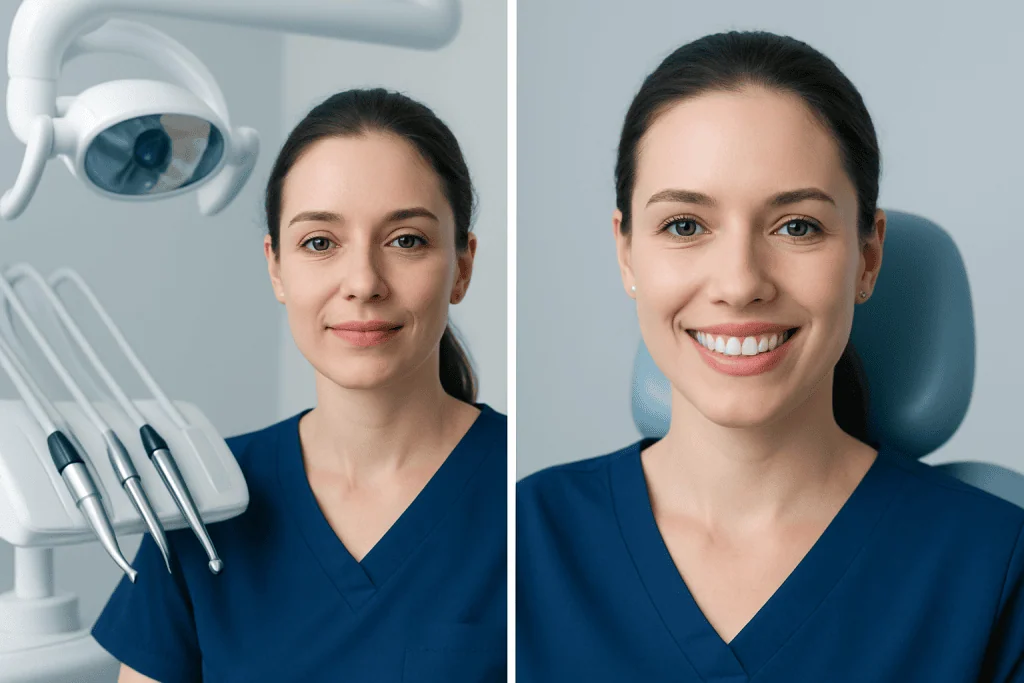
A smile makeover begins with an assessment of oral health and smile function, followed by planning for appearance. The dentist evaluates the teeth, gums, bite and jaw relationship, as well as the way the lips frame the teeth during speaking and smiling. Photographs, scans, X-rays and digital planning tools may be used where appropriate.
The plan may be conservative when the main concern is staining, minor chips or small spaces. Professional whitening, composite bonding or limited orthodontics may help in selected cases. More substantial changes in tooth color, contour or damaged enamel may require ceramic veneers or crowns. Missing teeth, gum disease, active decay and unstable bite problems generally need treatment before purely cosmetic work.
Good planning respects both aesthetics and function. Teeth must meet comfortably when biting, and restorations should be designed to support clear speech, cleaning and long-term oral health. A treatment plan should explain which changes are cosmetic, which are medically needed and what maintenance will be required.
Who May Be a Candidate?
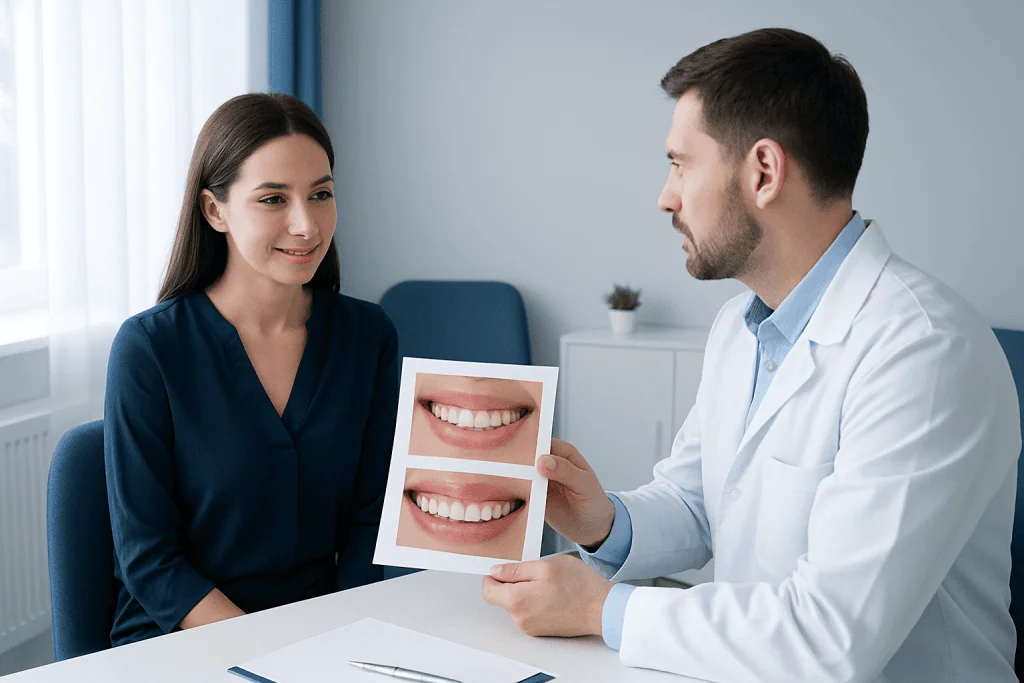
Many adults who are bothered by tooth discoloration, uneven edges, mild spacing, worn teeth, old visible fillings or irregular tooth proportions may be candidates for a cosmetic dental assessment. Candidacy is based on dental examination rather than appearance alone. Strong teeth, healthy gums and realistic expectations provide the best foundation for treatment.
People with untreated cavities, gum inflammation, gum disease, tooth infection, significant enamel loss or uncontrolled teeth grinding may need care first. For example, gum disease can cause bleeding, recession and tooth mobility, which may affect the appearance and durability of cosmetic restorations. Treating underlying oral problems is an essential part of responsible smile planning.
Bruxism, or repeated clenching and grinding, does not always prevent cosmetic dentistry, but it may affect the materials selected and the need for a night guard. Patients who smoke, use tobacco or frequently consume staining drinks should also discuss how these habits may influence color stability and gum health.
What Happens During the Procedure?
The exact sequence depends on the chosen plan. At the first consultation, the dentist discusses the patient’s concerns, examines the mouth and may take photographs, scans or impressions. Together, the patient and dental team can discuss preferred tooth shade, tooth length, contour and the level of natural variation desired.
Digital smile design, wax models or a temporary “mock-up” may be used to demonstrate proposed changes. This is particularly helpful before irreversible work because it lets the patient comment on tooth length, shape and overall style. A mock-up is a planning aid rather than a guarantee that the final result will look exactly the same under all lighting and facial expressions.
If veneers or crowns are selected, the dentist may prepare the teeth by removing a small amount of enamel or existing restoration material when necessary. Temporary restorations can be placed while custom ceramic restorations are made. At a later visit, the dentist checks fit, bite, shade and appearance before bonding or cementing the final restorations.
Some plans include whitening before veneers or bonding so that untreated teeth can match the chosen shade. Orthodontic treatment may be recommended before restorations when tooth movement can improve alignment while preserving more natural enamel. The clinician should explain alternatives, benefits and limitations before treatment starts.
Realistic Before-and-After Examples
A realistic result for yellowing with otherwise healthy, well-shaped teeth may be a noticeably brighter smile after whitening, while preserving subtle color variation. Whitening does not change the color of existing crowns, veneers or fillings, so these may need to be considered when planning an even appearance.
For small gaps or chipped edges, composite bonding or veneers may create smoother contours and more balanced spacing. The most natural outcome often avoids making every tooth exactly the same length or making the front teeth disproportionately large. Small variations can make teeth look more individual and harmonious.
For worn, shortened teeth, restorations may restore length and improve the visible smile while also considering bite forces. In a person with uneven gum levels, gum treatment or contouring may be discussed if clinically appropriate. These examples illustrate why the same “after” style is not suitable for everyone.
Patients should ask to see examples relevant to their own starting point, such as discoloration, spacing, wear or uneven shapes. They should also ask whether photographs show the result immediately after treatment or after healing, and whether image lighting, filters or editing may influence the appearance.
Benefits, Limits and Possible Risks
A carefully planned smile makeover can improve the apparent color, proportion, alignment and symmetry of the teeth. It may also repair chips, replace worn restorations and help some people feel more comfortable smiling. The aim is not to create a standard look, but to achieve an appearance that is healthy-looking and appropriate for the individual.
Cosmetic dentistry has limits. Veneers and crowns cannot cure gum disease, stop tooth grinding without protective measures or replace daily oral hygiene. Ceramic and composite materials can stain, chip, loosen or wear over time, and future repair or replacement may be needed. Color can also appear different under daylight, indoor lighting and in photographs.
Possible risks depend on the treatment. Tooth preparation can cause temporary sensitivity and, in some cases, may increase the likelihood that a tooth will eventually need further restorative treatment. Poorly fitting restorations or an unbalanced bite can cause discomfort, gum irritation or damage. These risks are reduced through appropriate diagnosis, careful planning and follow-up.
- Ask how much natural enamel, if any, must be removed.
- Discuss non-invasive or more conservative options first.
- Ask how the bite and gum health will be assessed.
- Understand the expected lifespan and maintenance needs of each material.
Recovery, Aftercare and Maintaining Results
Recovery is usually short for whitening and bonding, although temporary sensitivity can occur. After veneer or crown preparation, teeth may feel sensitive until final restorations are fitted. Once permanent restorations are bonded, most people can return to usual activities quickly, but the dentist may recommend avoiding very hard or sticky foods for a short time.
Long-term care is similar to caring for natural teeth: brush twice daily with fluoride toothpaste, clean between teeth every day and attend regular dental reviews. A soft toothbrush and non-abrasive toothpaste can help protect polished surfaces. Regular professional cleaning helps maintain gum health and remove external staining.
Patients should avoid using teeth to open packages, bite nails or chew hard objects such as ice. A custom night guard may be recommended for people who grind their teeth. Coffee, tea, red wine and tobacco can contribute to staining on natural teeth and some restorative materials, so moderation and good hygiene can support a more stable result.
Acibadem International’s multidisciplinary dental specialists and JCI-accredited hospitals assess and treat oral health and cosmetic dental concerns for international patients. Individual advice should always follow a clinical examination and discussion of the patient’s goals.
When to Seek Medical Care
Before starting cosmetic dental treatment, patients should arrange a dental assessment if they have bleeding gums, persistent bad breath, tooth pain, sensitivity, swelling, loose teeth, frequent jaw discomfort or difficulty chewing. These symptoms may indicate a condition that needs treatment before a smile makeover can be considered.
After treatment, prompt dental advice is appropriate if there is severe or worsening pain, facial swelling, fever, a broken or loose veneer or crown, a bite that feels significantly uneven, or a restoration that causes persistent irritation. These issues are usually manageable, especially when evaluated early.
Routine follow-up is also important when changes are gradual, such as new staining, worn edges, gum recession or repeated chipping. Regular review helps the dental team protect both the appearance of the smile and underlying oral health.
Frequently asked questions
How long does a Hollywood smile last?
Longevity depends on the treatments used, the material, oral hygiene, bite forces and lifestyle habits. Whitening often needs periodic maintenance, while bonding, veneers and crowns may need repair or replacement over time. A dentist can explain the expected maintenance needs for an individual plan.
Will a Hollywood smile look natural?
It can look natural when the plan is matched to the person’s facial features, gums, lip movement and existing teeth. Natural-looking results usually include an appropriate shade and proportion rather than an excessively bright or uniform appearance. A mock-up or temporary preview can support shared decision-making.
Are veneers always needed for a Hollywood smile?
No. Some people may benefit from whitening, bonding, orthodontics, gum care or replacing old restorations instead. Veneers may be considered when changes in tooth shape, color or surface cannot be addressed conservatively. The best choice depends on the condition of the teeth and the desired outcome.
Does getting veneers hurt?
The procedure is commonly performed with local anesthesia when tooth preparation is needed, so discomfort during treatment is usually controlled. Mild sensitivity may occur afterward, particularly while temporary restorations are in place. Persistent pain should be assessed by a dentist.
Can teeth be whitened after veneers or crowns?
Whitening products change the color of natural tooth enamel but do not lighten ceramic veneers or crowns. For this reason, dentists may recommend whitening natural teeth before selecting the shade of new restorations. Existing restorations may need replacement if their color no longer matches surrounding teeth.
Can a Hollywood smile fix crooked teeth?
Cosmetic restorations can sometimes improve the appearance of mild irregularity, but they do not move teeth into a healthier position. Orthodontic treatment may be a more suitable option for significant crowding, bite problems or tooth rotation. A dentist can explain whether alignment treatment should come before cosmetic work.
References
- American Dental Association
- FDI World Dental Federation
- National Institute of Dental and Craniofacial Research
- NHS
- Mayo Clinic
This article is for general information only and is not a substitute for professional medical advice. Please consult a qualified doctor about your individual situation.
Explore treatments in Turkey — costs, top hospitals & a free quote
JCI-accredited · board-certified surgeons · reply within 24h