How to Get Rid of a Double Chin? Causes, Explanations, and Next Steps

A double chin is often a normal, harmless cosmetic concern rather than a disease. Common causes include submental fat, loose skin with aging, genetics, and posture.
Key Takeaways
- A double chin is often a normal, harmless cosmetic concern rather than a disease.
- Common causes include submental fat, loose skin with aging, genetics, and posture.
- Not all fullness under the chin is fat; thyroid problems, swollen glands, cysts, or other neck masses can look similar.
- Treatment may include weight management, posture and skin-care measures, or cosmetic procedures chosen after an evaluation.
- Medical review is important if swelling appears suddenly, is painful, feels firm, or comes with trouble swallowing, fever, or breathing symptoms.
Medically reviewed by the Acıbadem International Medical Board — July 24, 2026
In many people, a double chin is harmless and related to body fat distribution, skin laxity, posture, or inherited facial structure. The best way to address it depends on the cause, and a doctor should assess any new, painful, one-sided, or rapidly changing swelling under the chin.
Overview: what a double chin usually means
For most people, a double chin is a harmless change in the area beneath the jaw. It commonly happens when soft tissue under the chin becomes more noticeable because of body fat distribution, loose skin, normal aging, or the shape of the jaw and neck. In these situations, it is usually a cosmetic concern rather than a sign of illness.
How to get rid of a double chin depends first on identifying what is actually causing the fullness. If the area is due to extra fat under the chin, lifestyle changes or aesthetic treatments may help. If it is caused by loose skin, muscle banding, or a neck mass, the next steps are different.
It is also important to know that not all under-chin fullness is a “double chin” in the cosmetic sense. Swollen lymph nodes, salivary gland problems, cysts, and some thyroid or neck conditions can create a similar appearance. That is why a persistent, new, or unusual swelling should be checked by a qualified doctor before any treatment is chosen.
What a double chin can look and feel like
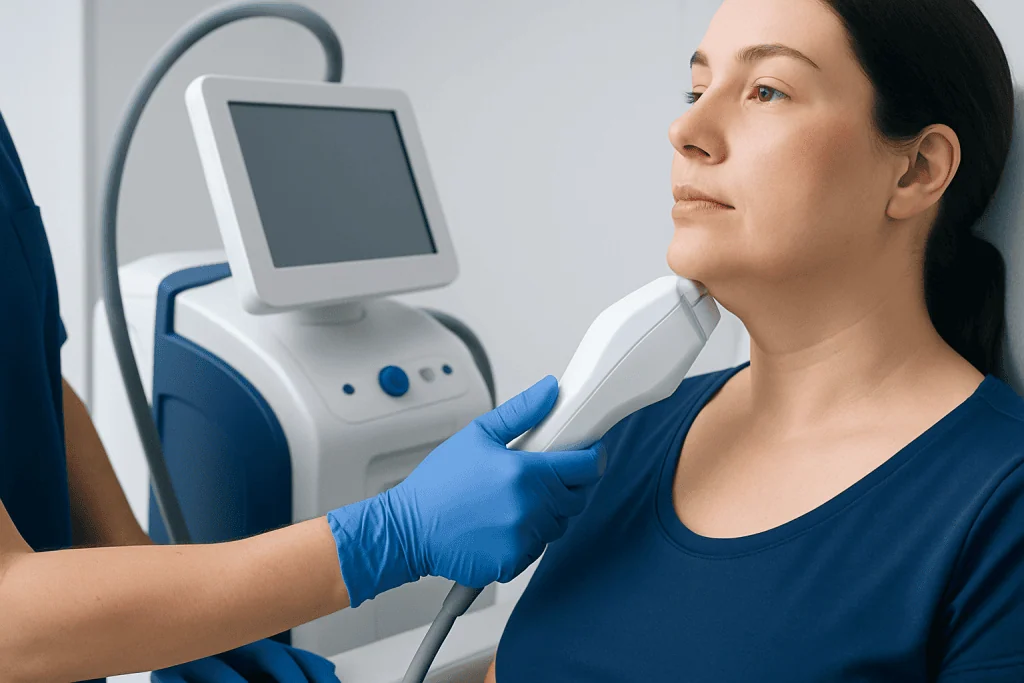
A typical double chin appears as fullness or a soft fold beneath the chin, especially when looking down, speaking, or taking photos from certain angles. The contour between the chin and the neck may seem less defined. Many people notice that it becomes more visible with age, weight gain, or certain head positions.
When the cause is mostly submental fat, the area usually feels soft and moves naturally with the surrounding tissue. When skin laxity is the main issue, the neck may look less firm or more creased, even if the person is not overweight. In others, inherited facial structure can make the chin-neck angle appear fuller despite a healthy body weight.
Some features suggest that the fullness may not be a routine double chin. Medical review is more important if there is a lump that is one-sided, firm, tender, rapidly enlarging, or associated with redness, fever, dental symptoms, hoarseness, swallowing difficulty, or shortness of breath.
Causes: fat, skin, posture, anatomy, and medical conditions

The most common cause is submental fat, meaning a build-up of fat beneath the chin. This can happen with overall weight gain, but it does not always match body size exactly. Some people develop fullness under the chin even at a stable or healthy weight because genetics influence where the body stores fat.
Aging also plays a major role. Over time, skin naturally loses elasticity, and deeper supporting tissues change. This can soften the jawline and create the appearance of a double chin even without much extra fat. Poor forward-head posture may make the area look more prominent by changing how the neck and jawline are held, although posture is rarely the only cause.
Anatomy matters as well. A smaller or less projected chin, a naturally shorter neck, or inherited facial proportions can make the chin-neck area appear fuller. In some cases, people seeking contour improvement are evaluated for procedures that address the underlying structure, such as chin augmentation or other facial contour options.
Less commonly, fullness under the chin is related to a medical condition rather than cosmetic tissue. Examples include enlarged lymph nodes from infection, salivary gland disorders, cysts, lipomas, and some thyroid-related neck swelling such as goiter. Rarely, a persistent neck mass may need assessment for more serious causes, including thyroid cancer or other head and neck conditions.
How doctors tell a harmless double chin from a neck problem
Doctors begin by asking when the fullness started, whether it changes over time, and whether there are symptoms such as pain, fever, recent infection, dental problems, weight changes, swallowing difficulty, or voice changes. They also ask about family history, past surgery, smoking, and whether the concern is mainly cosmetic or accompanied by other symptoms.
The physical examination focuses on the jawline, chin projection, skin quality, fat distribution, and the location of any swelling. A soft, symmetrical fullness under the chin is more likely to be a routine double chin. A discrete lump, tenderness, asymmetry, or an enlarged gland points toward another cause that needs further work-up.
If a doctor suspects a structural or medical issue, imaging may be recommended. Ultrasound is commonly used to evaluate neck lumps, salivary glands, thyroid enlargement, and soft tissue changes. Depending on the findings, laboratory tests or referral to an ENT, endocrinology, dermatology, or plastic surgery specialist may be appropriate.
This step matters because the right treatment depends on the diagnosis. For example, cosmetic fat reduction will not help an inflamed gland or thyroid-related swelling, and loose skin may need a different approach than fat alone.
How to get rid of a double chin: practical treatment options
For a true double chin caused mainly by excess fat, gradual weight loss can reduce fullness in some people, especially when it is part of overall fat loss. However, targeted fat loss from one body area is not something exercise alone can guarantee. Even with healthy habits, some people continue to have under-chin fullness because of genetics or skin laxity.
Non-surgical options may help selected patients. These can include clinician-guided injectable treatments that reduce submental fat, skin-tightening technologies, or combination approaches. A specialist will consider skin elasticity, the amount of fat present, the position of the hyoid and jawline, and whether there is muscle banding before recommending any procedure.
When fullness is more pronounced or when loose skin is a major factor, surgery may provide a more defined result. Depending on the anatomy, options can include liposuction beneath the chin, neck contouring, or procedures that tighten deeper tissues. In some patients, a broader facial assessment leads to discussion of neck lift or facelift techniques to improve the jawline and neck contour together.
The best approach is individualized. People should be cautious about unproven home gadgets, aggressive massage, or online claims of permanent results without evaluation. A qualified doctor can explain the likely cause, the expected degree of improvement, recovery considerations, and the limits of each option.
What can help at home
Home measures are most useful when the double chin is mild and related to general body composition or posture. A balanced eating pattern, regular physical activity, good sleep, and long-term weight stability can improve overall body fat distribution and may reduce fullness under the chin over time. These habits also support general health even when cosmetic change is modest.
Posture can make a visible difference for some people. Keeping screens at eye level, avoiding prolonged forward-head positioning, and strengthening the upper back and neck can improve how the jawline appears in daily life. This will not remove submental fat, but it may lessen the appearance of compression and skin folding.
Skin care may support the look of the area, especially if fine lines and laxity are contributing factors. Gentle sun protection and a simple skin-care routine can help preserve skin quality. It is reasonable to expect subtle, supportive benefits rather than dramatic contour change from creams or facial exercises.
- Maintain a healthy, sustainable weight if advised by a doctor.
- Limit long periods of looking down at phones or laptops.
- Use supportive skin care and daily sun protection.
- Avoid smoking, which can worsen skin aging.
- Seek professional advice before trying cosmetic devices or injectables.
When to seek medical care
A double chin that has been present for a long time and changes gradually is often harmless. Even so, medical review is a good idea if the fullness is new, grows quickly, or does not fit the pattern of ordinary soft tissue under the chin. This is especially true when only one side is affected.
Prompt evaluation is recommended if there is pain, redness, warmth, fever, dental infection, sore throat, trouble swallowing, voice changes, unexplained weight loss, or any breathing difficulty. A firm lump, a mass that does not move normally, or swelling that persists after an infection has cleared also deserves attention.
In these cases, the goal is not to cause alarm but to make sure the right cause is identified early. Doctors may examine the neck and mouth, feel the salivary glands and lymph nodes, and order ultrasound or other tests when needed. If treatment is cosmetic rather than medical, that conclusion is strongest after a proper assessment.
Next steps and specialist care
If someone is wondering how to get rid of a double chin, the next step is to decide whether the concern seems cosmetic, medical, or both. A cosmetic concern that has developed gradually may start with lifestyle review and a consultation with an experienced dermatologist, ENT specialist, or plastic surgeon. A new or unusual swelling should be assessed medically first.
During consultation, it helps to discuss goals clearly: whether the person wants subtle improvement, a sharper jawline, or treatment for a suspected neck problem. Photos over time can help show whether the issue is stable or changing. Asking what is causing the fullness, what options match that cause, and what realistic improvement to expect can guide decision-making.
For international patients, Acibadem International’s multidisciplinary specialists in JCI-accredited hospitals evaluate both cosmetic and medical causes of under-chin fullness and plan treatment accordingly. This may include assessment for aesthetic contouring or investigation of neck conditions when symptoms suggest another diagnosis.
Frequently asked questions
Is a double chin always caused by being overweight?
No. A double chin can happen in people of many body types because genetics, facial structure, aging, and skin laxity all affect the area under the chin. Weight gain can contribute, but it is not the only reason.
Can exercise get rid of a double chin?
Exercise can support overall fat loss and improve posture, which may make the area look better in some people. However, it cannot reliably target fat under the chin alone, and it will not correct loose skin or structural anatomy.
How do I know if fullness under my chin is not a normal double chin?
Warning signs include sudden swelling, pain, tenderness, redness, fever, a one-sided lump, or trouble swallowing or breathing. If the area feels firm, grows quickly, or persists after an infection, it should be checked by a doctor.
What doctor should I see for a double chin?
If the concern is mainly cosmetic, a dermatologist or plastic surgeon may be appropriate. If there is a lump, pain, or other symptoms, a primary care doctor, ENT specialist, or endocrinologist may be the better starting point.
Are non-surgical treatments effective for a double chin?
They can be effective for selected people, especially when there is mild to moderate submental fat and reasonably good skin elasticity. The best option depends on whether the main issue is fat, loose skin, muscle banding, or jawline structure.
Can a double chin be caused by a thyroid problem?
Sometimes, swelling in the front of the neck from thyroid enlargement can be mistaken for a double chin. A doctor can usually tell the difference by examining the area and, if needed, using ultrasound or other tests.
References
- American Academy of Dermatology
- American Academy of Otolaryngology–Head and Neck Surgery
- National Institute on Aging
- Mayo Clinic
- National Health Service
This article is for general information only and is not a substitute for professional medical advice. Please consult a qualified doctor about your individual situation.
Explore treatments in Turkey — costs, top hospitals & a free quote
JCI-accredited · board-certified surgeons · reply within 24h