Infant Sleep Terrors: An Evidence-Based Guide for Patients

Infant sleep terrors are rare in young babies and are more common in toddlers and preschool children. During an episode, a child may cry, appear frightened, and be hard to console because they are not fully awake.
Key Takeaways
- Infant sleep terrors are rare in young babies and are more common in toddlers and preschool children.
- During an episode, a child may cry, appear frightened, and be hard to console because they are not fully awake.
- Sleep terrors are different from nightmares and usually are not remembered the next day.
- Keeping sleep routines regular and reducing overtiredness may help lower episodes.
- Frequent, severe, or unusual events should be assessed to rule out seizures, reflux, breathing problems, or other sleep disorders.
Infant sleep terrors are uncommon episodes in which a baby or very young child seems distressed during sleep but is not fully awake. They are different from nightmares, often brief, and usually improve with age, though repeated or unusual episodes should be discussed with a doctor.
Overview: What infant sleep terrors are
Infant sleep terrors are sudden episodes of distress that happen during sleep, usually when a child is partly aroused from deep non-REM sleep. A baby or young child may cry out, sit up, seem frightened, sweat, breathe faster, or look confused, yet remain difficult to wake or comfort. In most cases, the episode ends on its own and the child settles back to sleep.
The term can be confusing because true sleep terrors are uncommon in infants. They are seen more often in toddlers and preschool-age children, while many nighttime crying spells in younger babies are related to normal sleep transitions, hunger, discomfort, illness, or conditions such as reflux. For that reason, repeated nighttime events in an infant deserve careful description and, at times, medical review before they are labeled as sleep terrors.
Sleep terrors belong to a group of sleep behaviors called parasomnias. They are different from nightmares, which occur during dreaming sleep and usually wake the child fully. In a sleep terror, the child is in a mixed state between sleeping and waking, so they may appear awake but are not truly alert or responsive.
How sleep terrors look in babies and young children
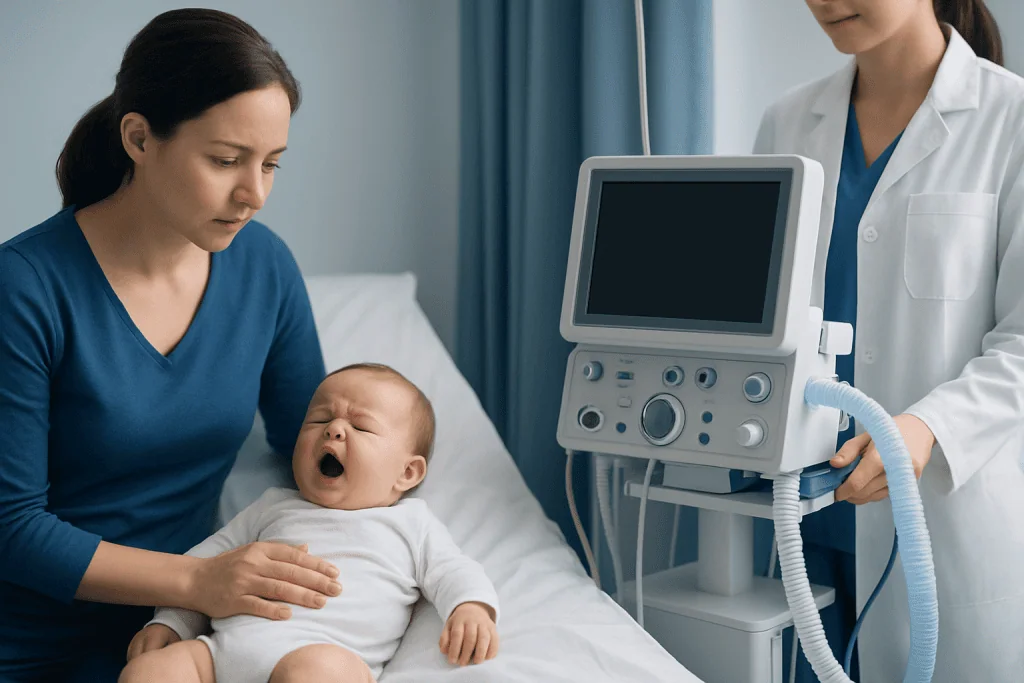
A typical sleep terror starts suddenly, often within the first few hours after falling asleep. A child may cry loudly, stare, thrash, arch the back, kick, or seem intensely frightened. Their eyes may be open, and their heart rate and breathing can be faster than usual. Even so, they often do not recognize a parent and may resist soothing.
Episodes can last a few minutes and sometimes longer. Afterward, the child usually settles and returns to sleep without fully waking. The next morning, there is generally no memory of what happened. This lack of recall is one feature that helps distinguish sleep terrors from nightmares.
In infants, the picture may be less clear than in older children. Crying, stiffening, grimacing, and abrupt movements during sleep can also happen with normal arousals, gas, fever, teething discomfort, or epileptic seizures and other medical conditions. A home video of the event, along with notes about timing and triggers, can help a clinician decide what is most likely.
Causes and risk factors
Sleep terrors are linked to incomplete arousal from deep sleep rather than to emotional trauma or frightening dreams. The exact reason they happen is not always clear, but a child may be more prone to them when sleep is disrupted. Overtiredness, an irregular sleep schedule, fever, stress, unfamiliar sleep environments, and illness can all increase the chance of an episode.
Family tendency also appears to play a role. Children with relatives who had sleep terrors, sleepwalking, or other parasomnias may be more likely to have them. As the nervous system matures, these episodes often become less frequent and may stop completely.
Some nighttime events that seem like sleep terrors are actually caused or worsened by another sleep or medical problem. These can include snoring and obstructed breathing, reflux, medication effects, or less commonly seizure disorders. If a child has loud snoring, pauses in breathing, unusual stiffening, bluish color, repeated vomiting, poor growth, or events at many times during the night, a doctor may consider evaluation for problems such as sleep apnea or other conditions.
Sleep terrors vs. nightmares and other nighttime events
Parents often worry that a distressed nighttime episode means a nightmare. Nightmares usually happen later in the night during REM sleep, when dreaming is most common. A child who has had a nightmare is generally awake, aware of the parent, and may be able to calm with comfort. Older children may describe the dream afterward.
Sleep terrors are different. They often occur earlier in the night, arise out of deep sleep, and involve confusion and poor responsiveness. Trying to wake the child fully may not help and can sometimes prolong the episode. Most children return to sleep quickly and have no memory of it in the morning.
Other conditions can resemble sleep terrors, especially in infants. Possibilities include normal brief arousals, breath-holding after waking, reflux-related discomfort, febrile reactions, and seizures. In some children, a doctor may recommend further assessment through a pediatric or neurology evaluation if the pattern is unusual, very frequent, or concerning.
How doctors evaluate infant sleep terrors
Diagnosis usually begins with a detailed history. Parents may be asked when the episodes happen, how long they last, what the child looks like during them, whether there is snoring or fever, and whether the child is easy to awaken. The child’s age, sleep schedule, development, medications, and family history also matter.
A physical examination may look for signs of ear infection, respiratory illness, enlarged tonsils, reflux, or neurological concerns. If the episodes fit a classic pattern and the child is otherwise well, special tests are often not needed. However, the doctor may suggest keeping a sleep diary and recording events on video.
Further testing is considered when episodes are very frequent, involve concerning movements, happen many times a night, or are linked to breathing problems. Depending on the findings, the child might be referred for pediatric neurology assessment or a sleep-focused evaluation. In selected cases, a sleep study may help if an underlying breathing disorder or another sleep condition is suspected.
Treatment and practical care at home
For most children, treatment focuses on safety, sleep habits, and identifying triggers. During an episode, the main goal is to stay calm, keep the child from injury, and avoid trying to force them fully awake. Speaking softly, staying nearby, and making sure the sleep area is safe are usually enough until the event passes.
Improving sleep routine can make a meaningful difference. Children are more likely to have parasomnias when they are overtired, so regular bedtimes and age-appropriate total sleep are important. Helpful measures include a consistent bedtime routine, a quiet sleep environment, and avoiding overstimulation close to bedtime.
If episodes happen around the same time on many nights, some clinicians suggest scheduled awakenings: gently waking the child shortly before the usual episode time for a brief period, then allowing them to fall back asleep. This strategy may reduce episodes in some children, though it is best discussed with a pediatrician first. Medicines are not routinely needed for typical sleep terrors.
When another condition is contributing, treatment is directed at the cause. For example, children with significant snoring or breathing pauses may need assessment by an ear, nose, and throat specialist or a sleep specialist. Treating the underlying problem often improves sleep quality and reduces nighttime events.
Prevention and self-care for families
Parents cannot always prevent sleep terrors, but a few habits may lower the chance of episodes. The most useful step is protecting healthy sleep. A child who gets enough rest on a regular schedule is less likely to have incomplete arousals from deep sleep.
Families may find it useful to notice patterns. Episodes sometimes cluster during illness, after travel, or when a nap was missed. A simple sleep log can track bedtime, naps, fever, medications, feeding changes, and the timing of events. This can reveal practical triggers and provide valuable information for a healthcare visit.
- Keep bedtime and wake time as consistent as possible.
- Use a calming bedtime routine.
- Reduce overtiredness by protecting naps and nighttime sleep.
- Limit sleep disruption from noise, light, and late stimulating activity.
- Record unusual episodes on video if safe to do so.
If a parent feels anxious after witnessing an event, reassurance is important: the child is usually not suffering emotional harm during a typical sleep terror. Still, because true infant sleep terrors are relatively uncommon, persistent or unclear nighttime episodes should be reviewed with a qualified clinician rather than assumed to be benign.
When to seek medical care
Medical advice is appropriate if nighttime episodes are frequent, severe, or difficult to identify. Parents should contact a doctor if events begin in a very young infant, if they happen several times a week, or if the child has developmental regression, daytime sleepiness, poor feeding, or poor weight gain. Review is also sensible when there is loud snoring, breathing pauses, unusual body stiffening or jerking, blue color, or events that occur at many different times rather than mainly early in the night.
Urgent care is needed for breathing difficulty, prolonged unresponsiveness, injury, fever in a young infant, or any episode that raises concern for a seizure or another acute illness. A doctor can help sort out whether the pattern fits a parasomnia or whether another cause should be investigated. If specialist input is needed, Acibadem International’s multidisciplinary specialists in JCI-accredited hospitals evaluate and treat sleep-related and neurological conditions for international patients.
Prompt assessment can be especially helpful when symptoms overlap with other disorders, because treatment depends on the cause. A clear diagnosis often brings reassurance and a safer, more effective care plan for both child and family.
Frequently asked questions
Are infant sleep terrors common?
True sleep terrors are not very common in infants and are seen more often in toddlers and preschool-age children. Many nighttime crying episodes in young babies have other causes, so repeated events should be described carefully to a pediatrician.
What is the difference between infant sleep terrors and nightmares?
Nightmares happen during dream sleep, usually later in the night, and the child typically wakes and can be comforted. Sleep terrors occur during partial arousal from deep sleep, often earlier in the night, and the child may seem awake but remain confused and hard to console.
Should a parent wake a baby during a sleep terror?
Usually, it is better not to try to force a child fully awake during a typical sleep terror. The safest approach is to stay nearby, prevent injury, and let the episode pass while keeping the environment calm.
Can teething or reflux cause something that looks like a sleep terror?
Yes. In infants, discomfort from teething, reflux, gas, illness, or normal sleep transitions can cause nighttime crying and movements that may resemble a sleep terror. This is one reason why a medical review may be helpful if episodes are frequent or unclear.
Do sleep terrors mean a child has emotional problems?
No. Sleep terrors are a sleep-arousal phenomenon and are not usually a sign of psychological trauma or a mental health disorder. Stress and overtiredness can contribute in some children, but most improve as sleep patterns and nervous system maturity develop.
When should a doctor check for seizures or another medical cause?
A doctor should assess events that are frequent, very unusual, happen many times a night, involve stiffening or rhythmic jerking, or are linked to breathing problems or color change. Evaluation is also important when episodes start in a very young infant or the child has poor growth, developmental concerns, or daytime symptoms.
References
- American Academy of Pediatrics
- American Academy of Sleep Medicine
- National Institute of Neurological Disorders and Stroke
- National Health Service
- Merck Manual Consumer Version
This article is for general information only and is not a substitute for professional medical advice. Please consult a qualified doctor about your individual situation.
Explore treatments in Turkey — costs, top hospitals & a free quote
JCI-accredited · board-certified surgeons · reply within 24h
Check your numbers in seconds
BMI, calories, due date, blood pressure and 30+ more clinical calculators — free, instant, doctor-reviewed ranges.