

Lash Growth Serum — Explained by Medical Evidence, Not Myths

Lash growth serum is not one single product type; formulas vary widely in ingredients and evidence. Prescription lash treatments have stronger clinical evidence than many over-the-counter cosmetic serums.
Key Takeaways
- Lash growth serum is not one single product type; formulas vary widely in ingredients and evidence.
- Prescription lash treatments have stronger clinical evidence than many over-the-counter cosmetic serums.
- Side effects can include irritation, redness, allergy, skin darkening, or changes around the eyes in some users.
- Lash thinning may be related to rubbing, cosmetics, eyelid inflammation, skin disease, nutritional issues, or other medical causes.
- A doctor or eye specialist should assess sudden lash loss, eye irritation, or changes in one eye.
Lash growth serum can help some people achieve longer- or fuller-looking eyelashes, but the outcome depends on the active ingredients and the cause of lash thinning. Medical evidence supports certain prescription treatments more strongly than cosmetic serums, and safety matters because these products are used close to the eyes.
What a lash growth serum can and cannot do
A lash growth serum is a product applied along the lash line or directly to the eyelashes with the aim of improving lash appearance. In practical terms, some serums may help lashes look longer, thicker, darker, or less brittle over time. However, not every product has the same ingredients, and not every ingredient has the same level of scientific support.
Medical evidence does not treat all lash serums as equal. Prescription treatments that affect the eyelash growth cycle have been studied more rigorously than many cosmetic products sold over the counter. By contrast, non-prescription serums often rely on conditioning ingredients such as peptides, humectants, or plant extracts, which may improve lash feel or reduce breakage but may not truly stimulate growth in the same way.
It is also important to understand expectations. Eyelashes grow in cycles, so any improvement usually takes weeks rather than days. A serum cannot correct every cause of lash thinning, especially if the underlying issue is eyelid inflammation, hair-pulling, skin disease, or another health condition. When lash loss is persistent or unusual, medical evaluation can be more useful than switching from one cosmetic product to another.
How eyelashes grow and why they may thin
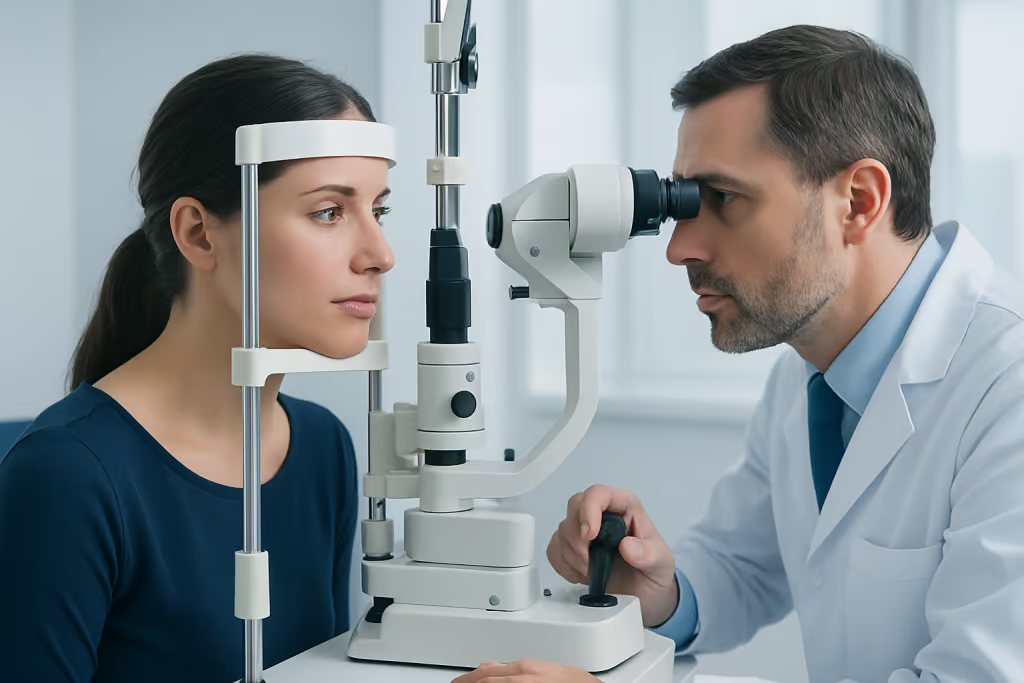
Eyelashes, like scalp hair, go through a repeating growth cycle. This includes a growth phase, a transition phase, and a resting phase before the hair sheds naturally. Because lashes have a shorter growth cycle than scalp hair, they do not grow indefinitely. This is one reason why visible changes take time and why results from any lash product are gradual.
Lash thinning can happen for many reasons. Common non-medical causes include aging, repeated rubbing, harsh makeup removal, frequent use of eyelash extensions, and irritation from cosmetics. Mechanical stress can make lashes break or fall out before they complete their natural cycle.
Medical causes should also be considered. Blepharitis, allergic reactions, some skin conditions, thyroid disorders, nutritional deficiencies, and certain medications may contribute to eyelash loss. In some cases, lash shedding can occur together with eyebrow or scalp hair loss, which may suggest a broader issue such as alopecia areata or another hair disorder. Identifying the cause helps determine whether a lash serum is likely to help.
Ingredients in lash growth serum: what the evidence suggests

The most important question is which ingredient a lash growth serum contains. Prescription products used for eyelash enhancement have the strongest evidence because they are designed to influence the lash growth cycle. These treatments can increase the proportion of lashes in the growth phase, which may improve length, thickness, and darkness over time. Because they are active medications, they should be used under medical guidance.
Many over-the-counter serums contain peptides, amino acids, panthenol, hyaluronic acid, biotin, or botanical extracts. These ingredients may condition the lash shaft, reduce dryness, and make lashes appear healthier or less fragile. That can be worthwhile, especially for lashes damaged by makeup or extensions, but it is different from proven growth stimulation.
Consumers should also read labels carefully. Some non-prescription products may contain prostaglandin analogs or related compounds marketed under cosmetic language. These ingredients may have stronger effects, but they may also carry more risk around the eyes. Others are essentially moisturizers for lashes. In other words, the name “lash growth serum” can describe very different products, which is why ingredient review matters more than marketing claims.
A careful approach includes patch awareness and realistic expectations. If a product promises dramatic results very quickly, the claim deserves caution. Reliable improvement tends to be modest and gradual, and a serum should not sting, blur vision, or cause persistent redness.
Potential benefits, side effects, and myths
The main potential benefit of a lash growth serum is improved lash appearance. Some users notice longer-looking lashes, more density, or less breakage after consistent use. Cosmetic serums may be most helpful when lashes are dry, brittle, or stressed by makeup habits. Prescription options may be more appropriate when the goal is true enhancement and there is no contraindication.
Because these products are used close to the eyes, side effects deserve special attention. Possible problems include itching, burning, redness, contact dermatitis, watery eyes, and swelling of the eyelids. Certain active ingredients may also lead to skin darkening along the lash line or changes in the tissues around the eye. Not every user experiences these effects, but they are important enough that people should stop the product and seek advice if symptoms develop.
Several common myths can be misleading. One myth is that “natural” always means safer; plant-based products can still cause allergy or irritation. Another is that more frequent application gives faster results; overuse can increase irritation without improving benefit. A third is that every case of lash thinning is cosmetic. In reality, persistent loss can reflect eyelid disease, skin inflammation, or other medical issues.
- Possible benefits: improved conditioning, reduced breakage, longer- or fuller-looking lashes
- Possible side effects: irritation, allergy, redness, darkening of the skin, discomfort around the eyes
- Common myths: natural equals risk-free, all serums are evidence-based, and lash loss is always just a beauty concern
How to choose and use a lash growth serum safely
Safe use starts with choosing the right product for the person’s goal. Someone who wants conditioning after cosmetic damage may do well with a simple serum focused on moisturizing and reducing breakage. Someone with marked thinning should think beyond cosmetics and consider whether an eye doctor or dermatologist should first check for eyelid inflammation, allergy, infection, or hair loss disorders.
Before use, the eye area should be clean and dry, and contact lenses should be handled according to the product instructions. Application should be light and precise. Putting more product on the skin or inside the eye does not improve effectiveness and may increase the chance of irritation. Eye makeup tools should also be kept clean to reduce contamination.
People should avoid sharing lash products and should stop using any serum that causes discomfort, redness, rash, or vision symptoms. It also helps to review other products used around the eyes, such as adhesives, waterproof mascaras, or harsh removers, because these can contribute to irritation and lash breakage. For those with recurring eyelid sensitivity or eczema, a clinician may recommend evaluation for skin or eyelid disease, and some people benefit from assessment in services such as dermatology or ophthalmology.
When lash loss may point to an underlying condition
A lash growth serum is not the best first step when eyelash loss is sudden, patchy, one-sided, or accompanied by inflammation. These patterns can suggest a medical cause rather than simple cosmetic thinning. Examples include blepharitis, contact allergy, autoimmune hair loss, fungal infection, or self-induced hair pulling. In these situations, treating the cause matters more than trying another serum.
Associated symptoms offer useful clues. Itching, scaling at the eyelid margin, crusting, burning, eye dryness, or repeated styes may point to eyelid disease. Red, irritated skin around the eye can suggest eczema or allergic contact dermatitis. Hair loss elsewhere on the body, nail changes, or scalp patches can indicate a broader hair or autoimmune condition, including alopecia areata.
Evaluation may include a history of cosmetics, skin care, medications, stress, and hair-pulling habits, as well as examination of the eyelids and surrounding skin. Sometimes referral is appropriate, especially if there are signs of chronic inflammation, infection, or changes in vision. If a procedure or specialized treatment is needed for a separate eyelid concern, care may involve fields such as oculoplastic surgery when clinically relevant.
When to seek medical care
Medical care is advisable if lash loss is sudden, severe, or persistent despite stopping irritating products. An assessment is also important when only one eye is affected, when there is pain, swelling, discharge, or when the skin around the eye becomes very red or darkened. Vision changes, light sensitivity, or symptoms suggesting infection need prompt professional review.
People with a history of eye disease, glaucoma treatment, chronic allergies, eczema, or previous reactions to cosmetic products should be especially cautious. A clinician can help decide whether a cosmetic serum is reasonable, whether a prescription option is appropriate, or whether the person needs treatment for an underlying disorder instead.
For international patients who need coordinated assessment, Acibadem International’s multidisciplinary specialists and JCI-accredited hospitals provide diagnosis and treatment for eye, skin, and hair-related concerns in a structured medical setting.
Frequently asked questions
Do lash growth serums really work?
Some do, but effectiveness depends on the ingredients. Prescription products have stronger clinical evidence, while many cosmetic serums mainly condition lashes and reduce breakage rather than directly stimulating growth.
How long does a lash growth serum take to show results?
Visible change usually takes several weeks because eyelashes grow in cycles. Results are gradual, and continued use may be needed to maintain the effect.
Are lash growth serums safe for sensitive eyes?
They can be irritating for some people, especially those with allergies, eczema, dry eye, or a history of reactions to cosmetics. Any product that causes redness, burning, swelling, or blurred vision should be stopped and reviewed by a clinician.
Can a lash growth serum help if eyelashes are falling out?
It may help when the problem is mild breakage or cosmetic damage, but it will not treat every cause of eyelash loss. Sudden, patchy, or inflamed lash loss should be medically assessed to look for eyelid disease, allergy, or other conditions.
What side effects can occur with lash growth serum?
Possible side effects include itching, redness, irritation, watery eyes, and allergic reactions. Some active ingredients may also darken the skin near the lash line or cause other changes around the eyes.
Is a natural lash serum better than a medicated one?
Not necessarily. Natural ingredients are not automatically safer or more effective, and medicated products may have better evidence when true lash enhancement is the goal. The best option depends on the ingredients, the person’s eye health, and the reason for lash thinning.
References
- American Academy of Ophthalmology
- American Academy of Dermatology
- National Eye Institute
- U.S. Food and Drug Administration
- Mayo Clinic
This article is for general information only and is not a substitute for professional medical advice. Please consult a qualified doctor about your individual situation.
Explore treatments in Turkey — costs, top hospitals & a free quote
JCI-accredited · board-certified surgeons · reply within 24h

More from the Health Library


Related Specialists
Prof. Dr. Fikret Aksoy
General Surgery
Dr. G. Pınar Özeren
Gynecology & Obstetrics
Dr. Mehmet Noyan Zenger
Radiology
Fzt. Yaren Yıldız
Physical Medicine and Rehabilitation