Memory and Thinking Changes After Brain Injury: When Neuropsychological Testing Helps

Brain injury can affect memory, attention, language, planning, and emotional regulation in different ways. Neuropsychological testing measures cognitive strengths and weaknesses using structured tasks and interviews.
Key Takeaways
- Brain injury can affect memory, attention, language, planning, and emotional regulation in different ways.
- Neuropsychological testing measures cognitive strengths and weaknesses using structured tasks and interviews.
- Testing can help explain symptoms, guide rehabilitation, and support return-to-work or school planning.
- A normal brain scan does not always rule out meaningful cognitive changes after injury.
- Early evaluation is not always necessary, but persistent or worsening symptoms should be assessed by a qualified clinician.
Memory, attention, and problem-solving can change after a brain injury, even when scans look reassuring. Neuropsychological testing helps clarify which thinking skills are affected and supports a practical plan for treatment, rehabilitation, school, work, and daily life.
Overview
After a brain injury, some people notice changes in memory, concentration, word-finding, speed of thinking, organization, or emotional control. These changes may appear after a traumatic brain injury, concussion, stroke, brain surgery, lack of oxygen, infection, or other neurological illness. They can be mild and temporary, or they may last longer and interfere with work, school, relationships, and everyday tasks.
Neuropsychological testing is a detailed way to understand how the brain is functioning in daily life. It does not simply ask whether a person has symptoms. Instead, it uses interviews, questionnaires, and standardized tasks to measure specific abilities such as attention, learning, recall, language, visual-spatial skills, processing speed, and executive functions like planning and judgment.
This kind of testing is often helpful when symptoms are not fully explained by a scan or routine exam. CT or MRI can show structural injury, but they may not capture all of the subtle effects on thinking and behavior. Neuropsychological evaluation can show patterns of strengths and weaknesses that help clinicians, patients, and families better understand what is happening and what support may help most.
Common Memory and Thinking Changes After Brain Injury
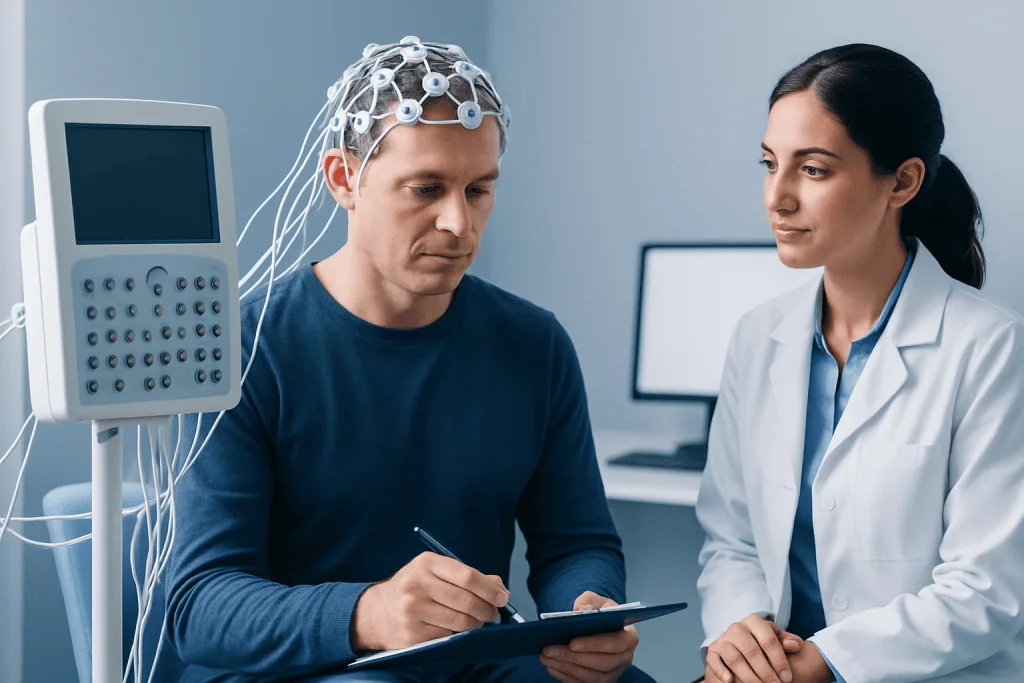
The effects of brain injury vary widely. Some people mainly feel mentally slower or more easily distracted. Others have trouble learning new information, remembering appointments, following conversations, or multitasking. Executive function problems are also common and may show up as difficulty planning, organizing, starting tasks, shifting between activities, or controlling impulses.
Changes are not always limited to cognition. Mood and behavior can also be affected. A person may become more irritable, anxious, fatigued, emotionally sensitive, or less aware of their own difficulties. Sleep disturbance, headaches, pain, stress, and depression can worsen concentration and memory, so symptoms often have more than one cause.
Examples of common concerns include:
- Forgetting recent conversations or instructions
- Losing focus during reading or meetings
- Needing more time to think or respond
- Difficulty finding words or following complex language
- Trouble managing schedules, finances, or medications
- Mental fatigue that increases later in the day
These symptoms can overlap with conditions such as stroke or traumatic brain injury, but they can also occur after injuries that seem mild at first. For that reason, a person’s day-to-day function often provides important clues that complement imaging and neurological examination.
When Neuropsychological Testing Helps
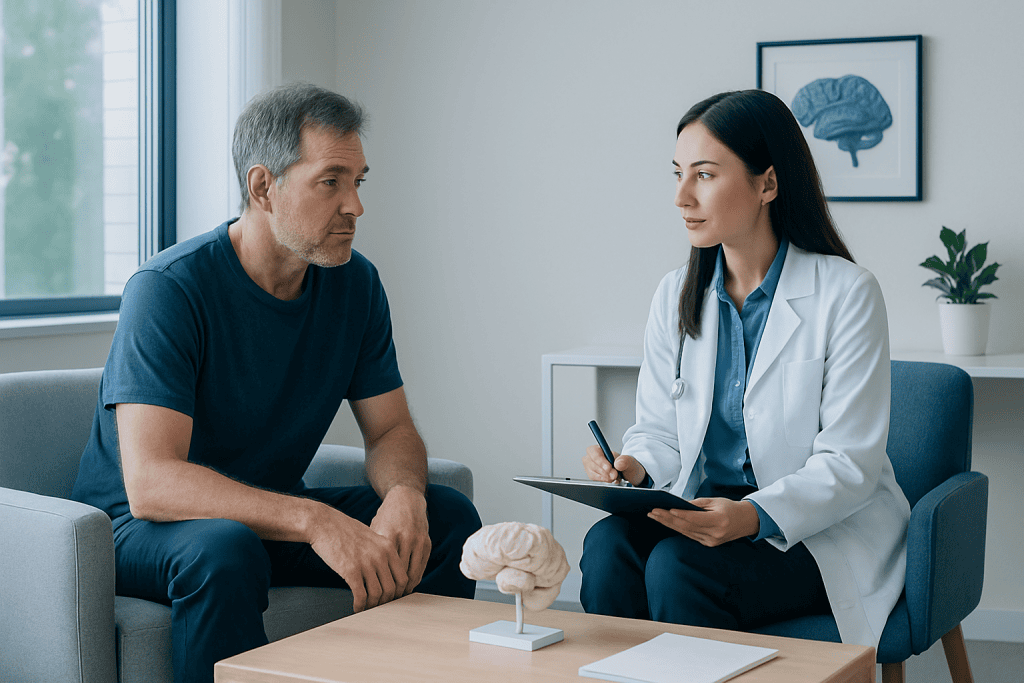
Neuropsychological testing is most useful when there is a practical question to answer. For example, a patient may be struggling to return to work, keep up with school demands, drive safely, manage medications, or understand why recovery feels slower than expected. Testing can help identify whether these difficulties are related to attention, memory, processing speed, mood, fatigue, or another factor.
It may also help when symptoms persist after the early healing period, when family members notice changes the patient does not fully recognize, or when different specialists need a clearer picture of brain function. In some cases, testing provides a baseline that can be compared with later evaluations to track recovery over time.
Doctors may recommend testing if there are concerns about:
- Ongoing memory or concentration problems
- Changes in work, school, or daily functioning
- Unclear symptoms despite normal or stable imaging
- Decision-making capacity or safety
- Planning individualized rehabilitation
- Distinguishing cognitive effects from depression, anxiety, sleep problems, or pain
Testing is not always needed immediately after an injury. In the very early stage, rest, symptom monitoring, and medical stabilization may be the main priorities. But if symptoms continue, interfere with life, or raise questions about the best next step, a formal evaluation can be very valuable.
What the Evaluation Involves
A neuropsychological evaluation is usually performed by a clinical neuropsychologist. It begins with a detailed review of medical history, education, occupation, medications, mood symptoms, sleep, and the events surrounding the injury. Input from family members can be helpful, especially if they have noticed changes in memory, personality, or daily function.
The testing itself uses paper-and-pencil or computer-based tasks. These are designed to measure different cognitive skills in a structured way. The tasks are not an exam that someone passes or fails. Instead, they help show which abilities are preserved, which are affected, and how the pattern compares with what would be expected for the person’s age and background.
Areas commonly assessed include attention, working memory, learning and recall, language, visual-spatial processing, motor speed, and executive function. Emotional health is often assessed too, because anxiety, depression, stress, and poor sleep can strongly affect cognitive performance. In selected cases, the evaluation may be combined with neurological care, imaging, or neurological rehabilitation planning.
After testing, the neuropsychologist interprets the results and prepares recommendations. These may include cognitive rehabilitation strategies, academic or workplace accommodations, psychotherapy, sleep treatment, medication review, speech-language therapy, occupational therapy, or follow-up with neurology, rehabilitation, or psychiatry.
How Results Guide Treatment and Recovery
The main value of neuropsychological testing is that it helps turn symptoms into an action plan. If memory is the main issue, the person may benefit from external reminders, repetition strategies, and structured routines. If slowed processing speed is more important, reducing multitasking and allowing extra time may be more useful. If attention and fatigue are central, treatment may focus on sleep, pacing, and environmental changes.
Testing can also support referrals for targeted therapies. Depending on the pattern of findings, doctors may recommend cognitive rehabilitation, speech-language therapy, occupational therapy, counseling, headache management, or treatment for mood and sleep disorders. Some patients also need a broader rehabilitation plan after more significant neurological injury, including brain rehabilitation.
Results are often especially helpful for school and work planning. A clear report can support temporary accommodations such as reduced workload, scheduled breaks, quiet workspaces, extra time, written instructions, or a gradual return-to-duty schedule. These recommendations are usually more effective when they are linked to specific test findings rather than general symptom descriptions.
Near the end of the care pathway, repeat testing may be used to track progress, especially when return to driving, complex work, or independent living is being considered. At Acibadem International, multidisciplinary specialists in JCI-accredited hospitals evaluate and treat cognitive and neurological problems for international patients as part of coordinated brain injury care.
Limits of Testing and Other Factors That Matter
Neuropsychological testing is an important tool, but it is only one part of a full assessment. Results need to be interpreted in the context of the person’s medical history, neurological examination, imaging, education, language background, and emotional state. A test score alone does not define a person’s potential or predict recovery with certainty.
Performance can be influenced by many factors besides the injury itself. Pain, poor sleep, medication side effects, vision or hearing problems, anxiety, depression, and fatigue may all reduce concentration and memory. That is why a good evaluation looks at the whole person rather than focusing only on one symptom.
In some situations, testing may be postponed or adapted. For example, severe confusion, delirium, active psychiatric crisis, or major communication difficulties can make standard testing less reliable. The specialist may recommend medical treatment first, then formal cognitive assessment once the person is stable enough to participate meaningfully.
Self-care, Daily Strategies, and Family Support
Recovery from brain injury often improves when medical treatment is combined with simple daily strategies. Keeping a regular sleep schedule, pacing activities, reducing overstimulation, and taking planned breaks can help mental endurance. Many people benefit from calendars, phone reminders, written checklists, and keeping important items in the same place each day.
Families and caregivers also play a key role. Support is often most effective when it is calm, specific, and consistent. Rather than repeating several instructions at once, it may help to give one step at a time, write down important information, and allow extra time for responses. Encouragement matters, because frustration can worsen symptoms and confidence often drops after injury.
Helpful self-care approaches may include:
- Using one planner or digital reminder system consistently
- Breaking large tasks into smaller steps
- Limiting multitasking
- Protecting sleep and managing stress
- Staying physically active as medically advised
- Following up regularly with rehabilitation and medical teams
If symptoms change suddenly, become more severe, or are accompanied by new neurological problems, self-care is not enough and prompt medical review is needed.
When to See a Doctor
A doctor should be consulted if memory or thinking problems continue after a head injury or other brain event, especially if they affect work, school, safety, finances, driving, medication use, or independent living. It is also wise to seek assessment if family members notice changes in judgment, personality, or daily functioning that the patient may not fully recognize.
Urgent medical attention is needed after a recent injury if there is worsening headache, repeated vomiting, severe drowsiness, seizures, new weakness, trouble speaking, loss of consciousness, or sudden confusion. These symptoms may point to a complication that needs immediate care.
For ongoing but non-emergency concerns, a primary care doctor, neurologist, rehabilitation specialist, or neuropsychologist can advise on the next steps. They may recommend imaging, medical treatment, therapy, or formal testing depending on the timing of the injury and the pattern of symptoms. Seeking help early for persistent difficulties can make recovery planning clearer and more effective.
Frequently asked questions
What is neuropsychological testing after brain injury?
It is a structured evaluation of thinking, memory, attention, language, and problem-solving after a brain injury or neurological event. A neuropsychologist uses interviews and standardized tasks to understand which abilities are affected and which remain strong.
Can someone have cognitive problems even if the brain scan is normal?
Yes. CT or MRI may not show every change that affects day-to-day thinking, especially after milder injuries. Neuropsychological testing can sometimes identify functional difficulties that are not obvious on imaging.
How soon after a brain injury should testing be done?
The timing depends on the type of injury, symptom severity, and the reason for testing. Some people are assessed later if early symptoms are expected to improve, while others need earlier evaluation when safety, work, school, or treatment planning is a concern.
Does poor performance on testing mean permanent brain damage?
Not necessarily. Test results can be affected by fatigue, pain, sleep loss, stress, depression, medications, and many other factors. The results need to be interpreted by a qualified clinician in the context of the full medical picture.
What happens after the test results are reviewed?
The specialist explains the pattern of strengths and weaknesses and gives practical recommendations. These may include rehabilitation therapies, cognitive strategies, treatment for mood or sleep problems, and accommodations for work or school.
Is neuropsychological testing useful for children and teenagers after brain injury?
Yes, it can be very helpful for young people because brain injury may affect learning, attention, behavior, and social function. Testing can guide school supports and help families understand how the injury is affecting development.
References
- World Health Organization
- Centers for Disease Control and Prevention
- National Institute of Neurological Disorders and Stroke
- American Psychological Association
- Brain Injury Association of America
This article is for general information only and is not a substitute for professional medical advice. Please consult a qualified doctor about your individual situation.
Explore treatments in Turkey — costs, top hospitals & a free quote
JCI-accredited · board-certified surgeons · reply within 24h
Add us as a Preferred Source to see more of our trusted health content across Google Search, AI Overviews and Discover.