Minimally Invasive Knee Replacement: Procedure, Recovery and Results

Minimally invasive knee replacement is an approach to partial or total knee replacement, not a different implant or cure for every type of knee pain. Eligibility depends on knee damage, anatomy, body size, prior surgery, deformity and the surgeon’s assessment.
Key Takeaways
- Minimally invasive knee replacement is an approach to partial or total knee replacement, not a different implant or cure for every type of knee pain.
- Eligibility depends on knee damage, anatomy, body size, prior surgery, deformity and the surgeon’s assessment.
- Most people begin standing and walking with assistance on the day of surgery or the following day, while meaningful recovery takes weeks to months.
- Pain is expected early after surgery but is managed with a personalized, multimodal plan and regular movement exercises.
- Smaller incisions do not automatically mean fewer complications or a better long-term result for every patient.
Minimally invasive knee replacement is a surgical approach that replaces damaged knee joint surfaces through a shorter incision and with less disruption of surrounding soft tissues in selected patients. It may support an earlier return to movement, but long-term results depend more on accurate implant placement, rehabilitation and individual health than incision size alone.
Overview: What Is Minimally Invasive Knee Replacement?
Minimally invasive knee replacement is a way of performing knee replacement surgery through a relatively shorter incision and with techniques intended to limit disruption of muscles and other soft tissues around the knee. The surgeon removes damaged cartilage and a small amount of underlying bone, then places precisely sized metal and plastic components to create smooth joint surfaces.
The operation may be used for total knee replacement, in which all main compartments of the knee are resurfaced, or for partial knee replacement when arthritis is limited to one compartment. It is most often considered for advanced osteoarthritis causing persistent pain, stiffness and reduced daily function after non-surgical care has not provided enough relief. Knee replacement surgery is planned individually, based on symptoms, imaging, health needs and personal goals.
“Minimally invasive” describes the surgical exposure rather than the extent of joint replacement. A smaller incision can be appealing, but it should never compromise visibility, alignment or secure positioning of the implant. The appropriate approach is the one that allows the surgical team to perform the operation safely and accurately.
How It Works and Who May Be a Candidate
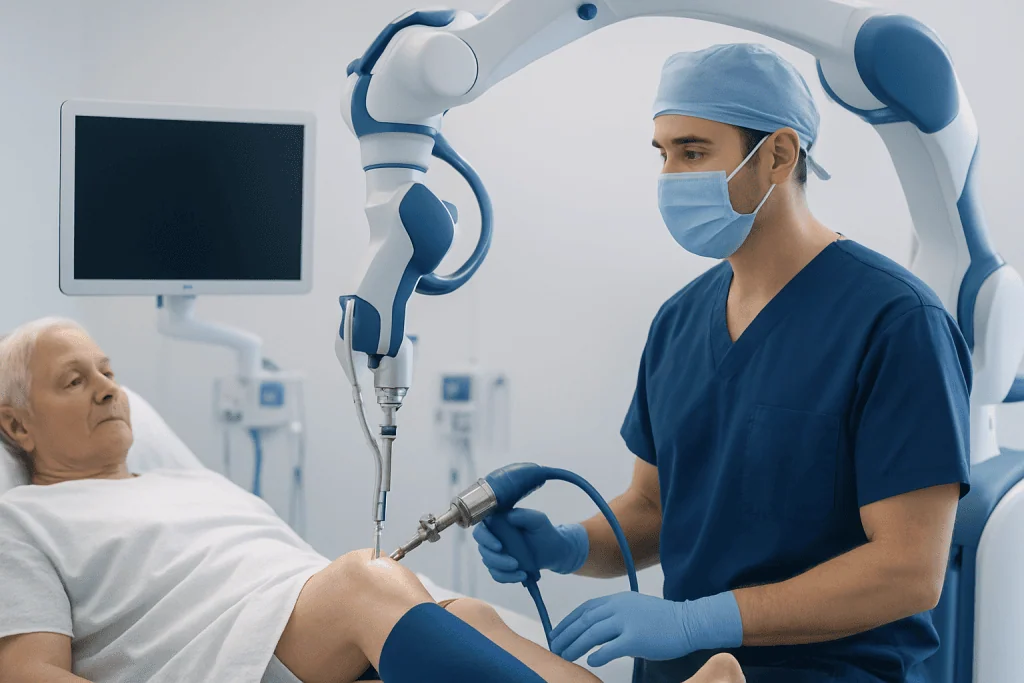
Knee replacement is designed to reduce pain from severely worn joint surfaces and improve mobility. During surgery, the damaged surfaces of the thigh bone and shin bone are prepared, and sometimes the back of the kneecap is resurfaced. The components are fixed in place using cement or, in selected cases, a surface designed to allow bone to grow into it over time.
Potential candidates commonly have severe knee osteoarthritis confirmed by examination and X-rays, pain that limits walking, sleep, work or self-care, and insufficient benefit from measures such as exercise therapy, weight management where appropriate, activity adjustments, walking aids, medicines or injections. People with osteoarthritis may consider surgery when symptoms and loss of function have become substantial, rather than based on imaging findings alone.
Not every person is suited to a minimally invasive approach. Marked knee deformity, complex anatomy, previous major knee operations, extensive scarring, severe stiffness, some body habitus considerations or the need for complex revision surgery can make a conventional exposure safer. The surgeon may also need to enlarge the incision during surgery if this is necessary for a reliable result.
- Orthopedic assessment includes medical history, examination and knee X-rays.
- Blood tests, heart or anesthesia review, and medication planning may be needed before surgery.
- Smoking cessation, good nutrition and management of diabetes or other long-term conditions can help reduce surgical risk.
Step by Step: What Happens During the Procedure
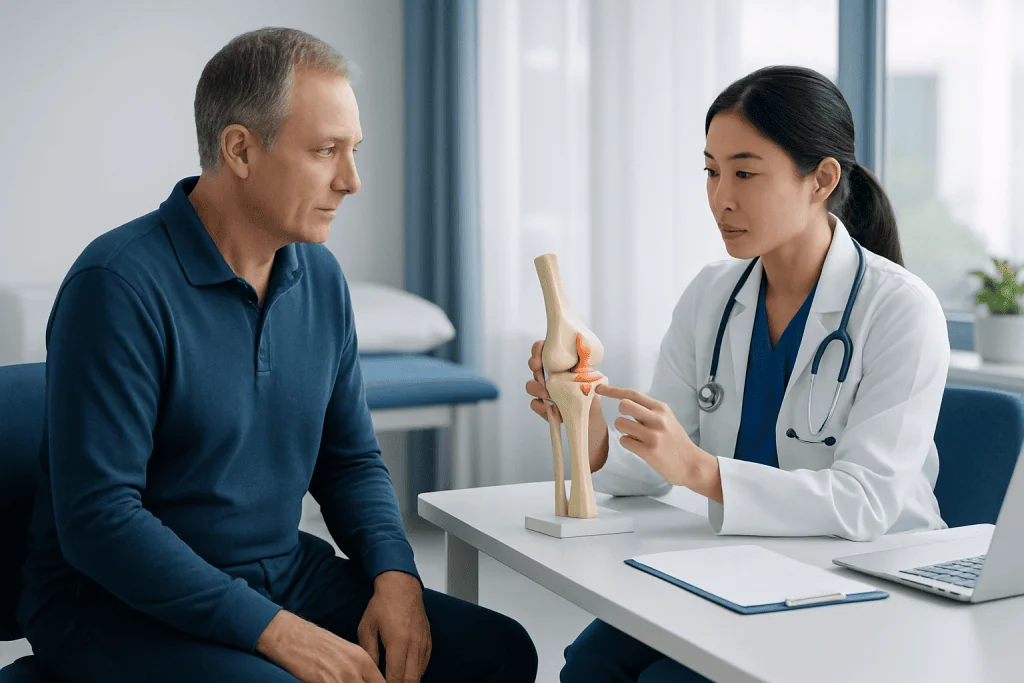
Before surgery, the patient meets the anesthesia team and orthopedic surgeon to review the plan, allergies, medicines and expected recovery. Knee replacement may be performed under spinal anesthesia, general anesthesia or a combination, often with nerve blocks or local anesthetic techniques to support pain control after the operation.
Once anesthesia is in effect, the knee is cleaned and covered with sterile drapes. The surgeon makes an incision, carefully reaches the joint while protecting key soft tissues, removes damaged cartilage and bone surfaces, and uses specialized guides or technology where appropriate to align the components. Trial components are checked for fit, stability and range of motion before the final implant is placed.
The wound is closed and covered with a dressing. The operation length varies with whether the procedure is partial or total replacement, the complexity of the knee and any additional work required. Afterward, the patient is observed in the recovery area while the team monitors comfort, circulation, breathing and early movement of the foot and ankle.
Recovery Timeline After Minimally Invasive Knee Replacement
Recovery begins soon after surgery. Many patients are encouraged to stand and take a few supported steps on the day of surgery or the next day, depending on their health, anesthesia and surgical plan. A physiotherapist teaches safe transfers, walking with a walker or crutches, knee exercises and stair practice when needed.
During the first two weeks, swelling, bruising, sleep disruption and limited bending are common. Regular short walks, prescribed exercises, elevation and cold therapy when recommended can help manage swelling and rebuild movement. The surgical team provides wound-care instructions and may prescribe medicine to prevent blood clots for a defined period.
By about four to six weeks, many people are walking more confidently and managing basic household activities, although they may still need a cane and can tire easily. Return to driving, work and other routines depends on which knee was operated on, medication use, strength, reaction time and the physical demands of the activity. Continued gains in strength, flexibility and comfort commonly occur over three to six months, and some recovery continues for up to a year.
Rehabilitation is central to the outcome. Physical therapy and rehabilitation can help restore knee motion, leg strength, balance and confidence with everyday movement. Patients should follow their individual program rather than comparing their pace with someone else’s.
Benefits, Limits and Possible Risks
For appropriately selected patients, knee replacement can provide substantial relief from arthritis-related pain and improve walking, sleep and participation in daily activities. A minimally invasive approach may result in a shorter scar and may allow some people to mobilize sooner, particularly when combined with modern anesthesia, blood-management and rehabilitation practices.
However, evidence does not show that a smaller incision alone consistently produces superior long-term implant function or durability. Recovery is influenced by the severity of arthritis, baseline fitness, muscle strength, pain sensitivity, surgical technique, rehabilitation participation and other medical conditions. The goal is not the smallest possible incision; it is a stable, well-aligned knee replacement with safe recovery.
All knee replacement procedures carry potential risks. These include infection, blood clots, bleeding, wound-healing problems, stiffness, nerve or blood-vessel injury, persistent pain, instability, fracture and reactions to anesthesia. Over years, an implant can wear, loosen or become infected and may require further surgery. The orthopedic team discusses individual risks and the steps used to lower them before surgery.
How Long Does It Take to Recover From a Minimally Invasive Knee Replacement?
Most patients make noticeable progress during the first six to twelve weeks, but full recovery from minimally invasive knee replacement usually takes several months. People often begin assisted walking within one day, can manage many basic activities within a few weeks and continue to gain strength and endurance for three to six months or longer.
A minimally invasive technique does not eliminate the need for rehabilitation. The knee joint has still been resurfaced, and tissues need time to heal while the muscles relearn to support normal movement. Consistent exercises, gradual activity progression and follow-up appointments are important for recovery.
Recovery may take longer in people with severe preoperative stiffness, weaker thigh muscles, other painful joints, diabetes, heart or lung disease, or complications such as excessive swelling or wound problems. The care team can adapt the recovery plan to the patient’s progress and safety needs.
How Painful Is a Knee Replacement on a Scale of 1 to 10?
There is no single accurate pain score for knee replacement because pain differs from person to person and changes throughout the day. In the first few days, many patients experience moderate to severe discomfort, especially during exercises or when getting up from a chair, but the aim is to keep pain manageable enough to allow rest, breathing comfortably and safe movement.
Modern care commonly uses multimodal pain management, meaning several approaches may be combined to reduce reliance on any one medicine. These can include regional anesthesia, local anesthetic around the knee, non-opioid pain medicines when suitable, short-term stronger pain relief if needed, ice, elevation and paced physiotherapy.
Patients should tell their team if pain is uncontrolled, suddenly worsening or preventing basic movement. Taking medication only as directed and doing prescribed exercises at an achievable pace can support recovery. Pain typically improves gradually over the first weeks, although brief flares after activity are common while the knee heals.
Is Minimally Invasive Knee Replacement Better?
Minimally invasive knee replacement is not automatically better for every patient. It can be a suitable option when the surgeon can safely obtain accurate alignment, balance the knee and position the implant without excessive tissue disruption. For selected patients, it may offer a smaller scar and potentially earlier early-stage mobility.
Its advantages should be balanced against technical considerations. Limited exposure can make surgery more demanding, and an approach that is too restrictive may affect accuracy or increase complications. A surgeon may appropriately use a standard incision or extend a shorter incision to achieve the best surgical view and implant placement.
Patients can ask their orthopedic surgeon why a particular approach is recommended, how it fits their anatomy and arthritis pattern, and what recovery plan will be used. The decision should be based on safety, expected function and durable results rather than on scar length alone.
What Is the Hardest Day After Knee Replacement?
There is no universal hardest day after knee replacement, but many people find the first several days challenging. As anesthesia and nerve-block effects fade, discomfort and swelling can become more noticeable, while the patient is also learning to move, sleep and use the bathroom safely with a newly operated knee.
Others find days three to five difficult because swelling may peak and exercises can feel demanding. This does not necessarily mean recovery is going poorly. Regular pain-management measures, short frequent walks, gentle prescribed exercises, hydration and rest between activities can make this period more manageable.
It is important to contact the surgical team promptly for severe or escalating pain not relieved by the prescribed plan, fever or chills, increasing redness or drainage from the wound, new calf pain or swelling, chest pain, shortness of breath, or sudden inability to move the foot. These symptoms need timely clinical assessment.
When to Seek Medical Care
Before considering surgery, medical evaluation is appropriate for knee pain that lasts for weeks, repeatedly limits walking or sleep, causes loss of function, follows a significant injury, or is associated with swelling, instability or a change in knee shape. A clinician can identify whether arthritis, injury or another condition is contributing and discuss suitable treatment options.
After knee replacement, planned follow-up visits are important even when recovery is smooth. Urgent medical advice is needed for warning signs such as fever, worsening wound redness, warmth or drainage, persistent calf swelling or pain, chest pain, breathing difficulty, a sudden new weakness, or rapidly worsening knee pain. These symptoms are uncommon but should not be managed at home without professional guidance.
Acibadem International’s multidisciplinary specialists and JCI-accredited hospitals assess and treat knee arthritis and knee replacement needs for international patients, with care plans that include surgical evaluation and rehabilitation support.
Frequently asked questions
Is minimally invasive knee replacement the same as robotic knee replacement?
No. Minimally invasive knee replacement refers mainly to the size and nature of the surgical exposure. Robotic or computer-assisted systems are planning and guidance tools that may be used with either minimally invasive or conventional surgical approaches.
Will a smaller incision mean less pain after knee replacement?
A smaller incision may reduce some soft-tissue disruption for selected patients, but it does not guarantee less pain. Pain after surgery is influenced by many factors, including the operation itself, anesthesia, swelling, individual pain response and rehabilitation.
How soon can a person walk after minimally invasive knee replacement?
Many people are helped to stand and walk with a walker or crutches on the day of surgery or the following day. Timing depends on the patient’s overall condition, anesthesia plan, balance and the surgeon’s instructions.
Can both knees be replaced at the same time with a minimally invasive technique?
In selected patients, both knees may be replaced during one anesthetic, but this is not suitable for everyone. It can involve a more demanding early recovery and requires careful assessment of general health, support at home and rehabilitation needs.
How long does a knee replacement implant last?
Modern knee implants are designed for long-term use, but their lifespan varies between individuals. Activity level, body weight, implant positioning, bone quality and complications can all affect durability, and long-term follow-up remains important.
What activities are usually recommended after knee replacement?
Walking, cycling, swimming, gentle strength training and other low-impact activities are often encouraged after recovery, with approval from the surgical team. High-impact activities and sports involving frequent twisting or collision may not be advised because they can increase stress on the implant.
References
- American Academy of Orthopaedic Surgeons
- National Institute for Health and Care Excellence
- American Association of Hip and Knee Surgeons
- Centers for Disease Control and Prevention
- World Health Organization
This article is for general information only and is not a substitute for professional medical advice. Please consult a qualified doctor about your individual situation.
Minimally Invasive in Turkey — costs, top hospitals & a free quote
JCI-accredited · board-certified surgeons · reply within 24h

Robotic Surgery
Robot-assisted procedures across urology, gynecology and general surgery for greater precision and faster recovery.