Pain at the Corner of the Eye: Common Causes, Related Conditions, and When to See a Doctor

Pain at the corner of the eye can come from the inner corner, outer corner, eyelid, tear duct, or eye surface. Common causes include dry eye, allergies, blepharitis, styes, conjunctivitis, and blocked tear drainage.
Key Takeaways
- Pain at the corner of the eye can come from the inner corner, outer corner, eyelid, tear duct, or eye surface.
- Common causes include dry eye, allergies, blepharitis, styes, conjunctivitis, and blocked tear drainage.
- The exact location of the pain and any associated symptoms help narrow the cause.
- Urgent evaluation is important if pain is severe or comes with vision changes, fever, marked swelling, or eye injury.
- Self-care may help mild irritation, but persistent symptoms should be checked by an eye specialist.
Pain at the corner of the eye is commonly linked to irritation of the eyelid, tear drainage system, eye surface, or nearby skin. Many causes are mild and temporary, but pain with swelling, discharge, vision changes, or increasing redness should be assessed by a doctor.
Overview: What pain at the corner of the eye may mean
Pain at the corner of the eye usually does not come from the eyeball alone. It often starts in nearby structures such as the eyelid margin, the tear duct opening, the skin around the eye, or the surface of the eye. This is why the exact spot matters: discomfort in the inner corner may suggest tear drainage problems, while pain in the outer corner may be more related to irritation, inflammation, or skin conditions.
In many people, the cause is relatively minor, such as dryness, rubbing the eyes, allergies, or inflammation along the eyelid edge. However, eye pain should never be dismissed if it is strong, getting worse, or paired with blurred vision, significant redness, thick discharge, swelling, or sensitivity to light. Those features can point to a deeper infection or another condition that needs prompt medical attention.
The area around the eye is small, but several tissues are packed closely together. A problem in one structure can feel as though it is coming from another. For example, a blocked tear duct may feel like tenderness at the inner corner, while a stye can create soreness that seems to spread toward the edge of the eye.
Where the pain is felt: inner corner, outer corner, or eyelid edge
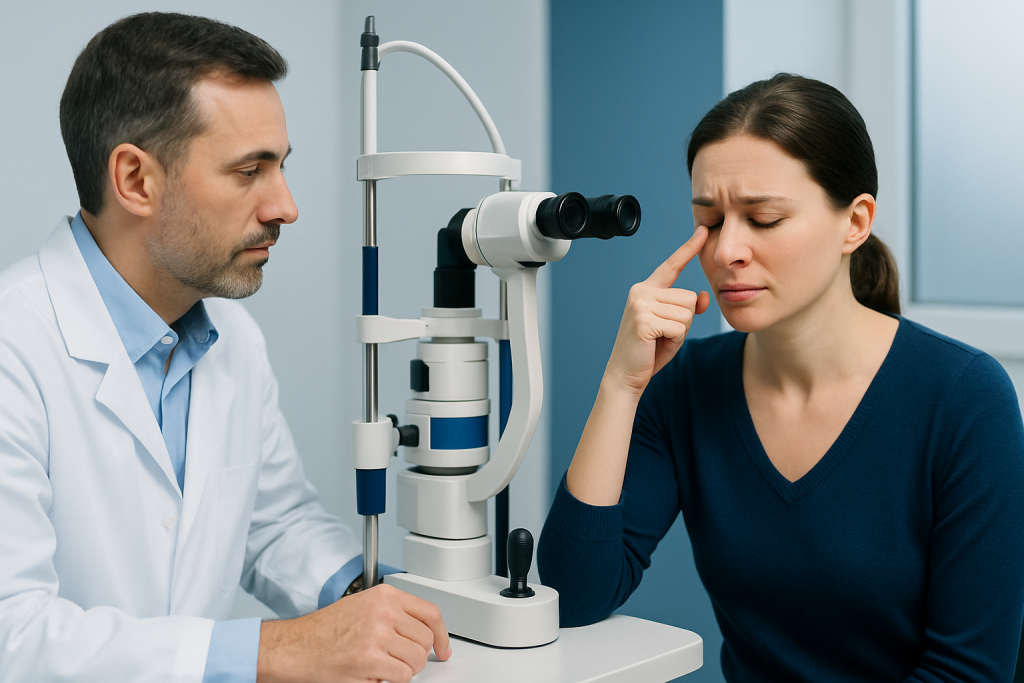
The inner corner of the eye, near the nose, contains the openings that drain tears into the tear ducts. Pain here can happen when the tear drainage pathway becomes inflamed or blocked. This may lead to tenderness, watery eyes, swelling, and sometimes discharge. Infections in this area can become quite uncomfortable and often need medical care.
The outer corner of the eye is less associated with tear drainage and more often affected by surface irritation, skin inflammation, rubbing, or strain from dryness. Some people notice burning or stinging at the outer corner after prolonged screen use, wind exposure, contact lens wear, or seasonal allergies.
Pain can also come from the eyelid margin itself. Blepharitis, a stye, meibomian gland dysfunction, and eczema of the eyelids can all create soreness that feels localized to one corner. A person may describe this as sharp tenderness when blinking, touching the area, or washing the face.
Because symptoms overlap, doctors usually ask whether the discomfort is aching, burning, itching, stabbing, or pressure-like, and whether it is felt mostly on the skin, eyelid, or in the eye itself. That description can be very helpful in identifying the cause.
Common causes of pain at the corner of the eye

One common reason for pain at the corner of the eye is dryness or irritation of the eye surface. Tears help protect and lubricate the eye, and when they are reduced or evaporate too quickly, the corners of the eyes may sting or burn. Long periods of reading or screen use, air conditioning, smoke, and wind can make symptoms more noticeable. Dry eye can also cause redness, fluctuating vision, and a gritty feeling.
Inflammation of the eyelid margin, called blepharitis, is another frequent cause. It can lead to soreness, crusting, itching, and a foreign-body sensation, especially near the corners. Styes and blocked oil glands may create a more localized, tender bump on the eyelid, sometimes with swelling and pain when blinking.
Infections can involve the conjunctiva, eyelids, or tear drainage system. Conjunctivitis may cause redness and discharge, while infection of the tear sac near the inner corner can cause pain, swelling, and watering. People with recurrent tearing or tenderness by the nose may have a drainage blockage that needs specialist assessment. Conjunctivitis and other inflammatory eye conditions may look similar at first, so worsening symptoms should be examined.
Allergies, contact lens irritation, skin conditions such as eczema, and minor trauma from rubbing can also produce corner pain. Less commonly, pain near the eye may come from nearby sinus inflammation, shingles affecting the face, or a deeper eye problem. Rare but important causes include corneal injury, severe infection, or inflammation inside the eye.
Related conditions and risk factors
Several conditions make pain at the corner of the eye more likely. Dry eye is more common in older adults, people who spend many hours on screens, contact lens wearers, and those in dry or windy environments. Some medicines and medical conditions can also reduce tear quality or quantity, making irritation more likely.
Eyelid and lash conditions are another major contributor. People with dandruff-like skin conditions, rosacea, oily skin, or poor eyelid gland function may develop recurring blepharitis or styes. Frequent eye rubbing, heavy eye makeup, or not removing makeup fully may aggravate the eyelid edges and gland openings.
Allergies and recent upper respiratory infections can irritate the eyes and surrounding tissues. Bacterial or viral conjunctivitis may spread through hand-to-eye contact, shared towels, or contaminated cosmetics. In children, blocked tear ducts are a well-known cause of watering and irritation, while in adults a blockage can develop later because of inflammation or narrowing of the drainage passage.
Underlying eye conditions can sometimes be part of the picture. For example, a person with chronic irritation may also have glaucoma or another eye disorder being monitored, even though glaucoma itself does not typically cause isolated corner pain in its common chronic form. A full eye examination helps sort out what is related and what is not.
How doctors diagnose the cause
Diagnosis begins with a careful history. A doctor will ask when the pain started, whether it is in the inner or outer corner, and whether there is redness, swelling, discharge, itchiness, tearing, blurred vision, fever, or light sensitivity. Recent contact lens use, trauma, cosmetics, allergies, and previous eye conditions are also important details.
The examination usually includes checking vision, inspecting the eyelids and lashes, and looking closely at the eye surface and tear drainage openings. The doctor may gently press the area near the inner corner to see whether there is tenderness or discharge from the tear duct. In some cases, fluorescein dye may be used to detect scratches, dryness, or abnormalities on the cornea.
If there is concern for blocked tear drainage, eyelid disease, infection, or deeper eye inflammation, referral to an eye specialist may be recommended. Some patients benefit from detailed testing during a comprehensive eye examination. Imaging is not usually needed for minor irritation, but it may be considered when there is marked swelling, recurrent infection, trauma, or concern about structures around the eye.
Treatment options for corner-of-eye pain
Treatment depends on the cause rather than the symptom alone. Mild dryness or irritation may improve with preservative-free lubricating drops, limiting exposure to smoke or wind, taking screen breaks, and avoiding rubbing the eyes. If contact lenses are being worn, a doctor may advise stopping them temporarily until the eye has settled.
Blepharitis and stye-related discomfort often respond to warm compresses and gentle eyelid hygiene. In some cases, doctors prescribe medicated drops or ointments if bacterial infection or significant inflammation is suspected. Allergic irritation may improve with avoiding triggers and using doctor-recommended allergy eye drops.
When the inner corner is painful because the tear drainage system is blocked or infected, treatment may require more than home care. Antibiotics may be needed for infection, and persistent blockage can sometimes require a procedure. Depending on the underlying problem, an ophthalmologist may discuss options related to oculoplastic surgery or a tear drainage procedure such as dacryocystorhinostomy.
If symptoms are due to a broader eye disease, treatment is directed at that condition. In more complex situations, care may involve both medical and surgical specialists. Near the end of the diagnostic pathway, some patients may be referred for specialist management at centers such as Acibadem International, where multidisciplinary specialists in JCI-accredited hospitals evaluate and treat eye conditions for international patients.
Self-care and prevention
Good eye habits can reduce the chance of recurring corner pain. Taking regular breaks during screen use, blinking more often, and using appropriate room humidity can help prevent dryness. Sunglasses may reduce irritation from wind and bright light when outdoors.
Simple eyelid care is helpful for people prone to blepharitis or styes. Warm compresses, gentle cleaning of the eyelid margins, and careful makeup removal can keep oil glands functioning better. Contact lenses should be used exactly as instructed, with proper cleaning and replacement schedules.
It is also wise to avoid sharing eye makeup, towels, or eyedrops, especially if there is redness or discharge. People with known allergies may benefit from reducing exposure to triggers such as dust, pollen, or pet dander. If symptoms keep returning, self-care alone may not be enough, and medical advice is appropriate.
When to seek medical care
Medical care is recommended if pain at the corner of the eye lasts more than a few days, keeps coming back, or does not improve with simple measures. A person should also be assessed if there is increasing redness, swelling, discharge, or a tender lump near the inner corner of the eye.
Prompt or urgent medical evaluation is especially important when pain is severe or is accompanied by blurred vision, double vision, light sensitivity, fever, significant eyelid swelling, facial rash, or trouble moving the eye. The same applies after an eye injury, exposure to chemicals, or if a contact lens wearer develops marked pain or redness.
Because different eye problems can feel similar at first, professional evaluation helps prevent delayed treatment. Early diagnosis is particularly important when infection, tear duct blockage, corneal injury, or deeper eye inflammation is possible.
Frequently asked questions
Why does the inner corner of the eye hurt?
Pain in the inner corner of the eye is often related to the tear drainage area near the nose. Common causes include irritation, inflammation, or blockage of the tear duct, but eyelid problems and conjunctivitis can also cause similar discomfort.
Is pain at the corner of the eye usually serious?
Not usually. Many cases are caused by dryness, allergies, blepharitis, or a small stye, but symptoms become more concerning if there is severe pain, vision change, marked swelling, or fever.
Can dry eye cause pain at the corner of the eye?
Yes. Dry eye can cause burning, stinging, grittiness, and soreness that may be felt more strongly at the inner or outer corners, especially after screen use or in dry environments.
What home care may help mild corner-of-eye pain?
For mild irritation, a person may benefit from lubricating eye drops, warm compresses, screen breaks, and avoiding rubbing the eyes. Contact lenses should usually be paused until symptoms improve and a doctor has advised it is safe to resume them.
When should someone see a doctor for eye corner pain?
A doctor should be seen if symptoms persist, recur, or worsen, or if there is redness, swelling, discharge, or tenderness near the tear duct area. Urgent care is needed for severe pain, injury, light sensitivity, or any change in vision.
Can allergies make the corner of the eye hurt?
Yes. Allergies can inflame the eye surface and eyelids, leading to itchiness, watering, and soreness around the corners of the eyes. Rubbing the eyes can further increase irritation and pain.
References
- American Academy of Ophthalmology
- National Eye Institute
- Mayo Clinic
- Merck Manual Consumer Version
This article is for general information only and is not a substitute for professional medical advice. Please consult a qualified doctor about your individual situation.
Explore treatments in Turkey — costs, top hospitals & a free quote
JCI-accredited · board-certified surgeons · reply within 24h

More from the Health Library



Related Specialists

Prof. Dr. Nefise Çağla Tarhan
Radiology
Assoc. Prof. Dr. Mehmet Sürmeli
Otorhinolaryngology
Dr. Fatmanur Yildirim
Physical Medicine & Rehabilitation
Dr. Hüsnü Mert Arinalp
Anesthesiology