Pulsed Dye Laser: How It Works, Results and What to Expect

Pulsed dye laser targets blood vessels while aiming to limit effects on nearby skin. It is commonly used for facial redness, rosacea-related vessels, port-wine stains, scars and some other vascular skin concerns.
Key Takeaways
- Pulsed dye laser targets blood vessels while aiming to limit effects on nearby skin.
- It is commonly used for facial redness, rosacea-related vessels, port-wine stains, scars and some other vascular skin concerns.
- Temporary redness, swelling and bruise-like discoloration are common after treatment and usually settle over days to weeks.
- Results are gradual, and many people need more than one session for meaningful clearing or fading.
- A dermatologist should assess the skin concern, medical history, skin type and treatment expectations before laser therapy.
Pulsed dye laser is a dermatologic treatment that uses focused light to treat visible blood vessels and redness in the skin. It may help conditions such as rosacea, port-wine stains, certain scars and broken capillaries, with the number of sessions and results varying by concern and skin response.
Pulsed Dye Laser: What Is It and How Does It Work?
Pulsed dye laser (PDL) is a non-surgical skin treatment that delivers short, controlled bursts of yellow light. The light is absorbed mainly by hemoglobin, the pigment in red blood cells. This allows the laser to heat selected small blood vessels so that the body can gradually clear or reduce them, while minimizing injury to surrounding skin.
People often ask, “pulsed dye laser what is it?” It is a vascular laser, meaning it is designed primarily for redness and blood-vessel-related skin changes rather than for removing hair or deeply resurfacing the skin. Depending on the setting and the concern being treated, it may also influence redness and vascular activity within some scars.
PDL may be recommended for port-wine stains, facial telangiectasia (visible small blood vessels), persistent redness related to rosacea, cherry angiomas, certain birthmarks, and red or thick scars. It is sometimes used as part of a broader dermatology treatment plan rather than as a stand-alone solution.
Who May Be a Candidate for Pulsed Dye Laser?
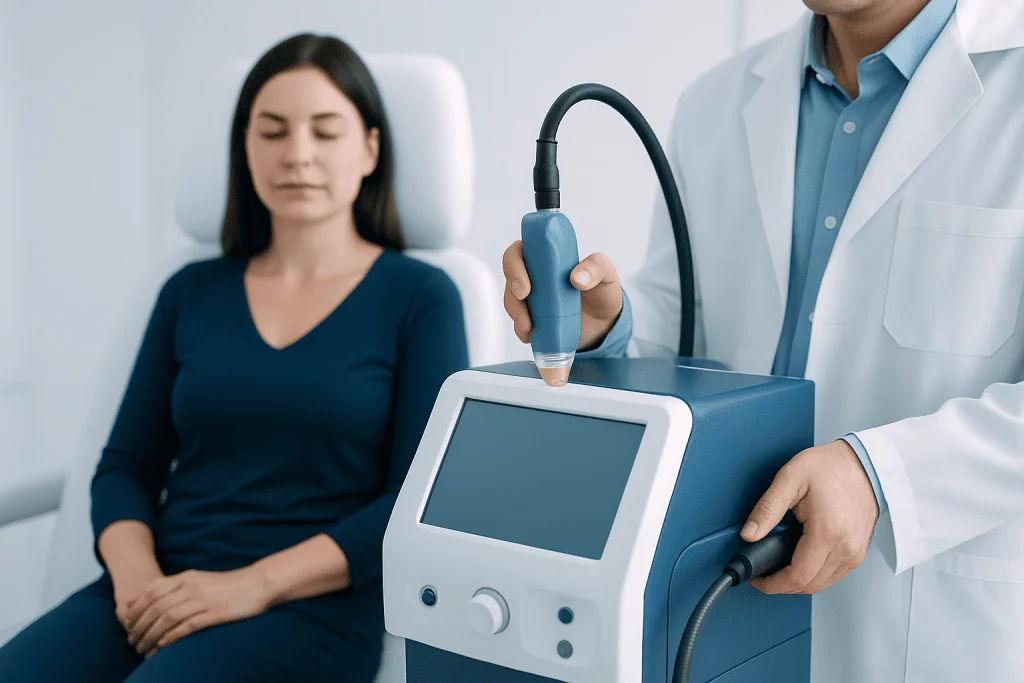
A suitable candidate has a concern that is likely to respond to vascular laser treatment and has realistic expectations about gradual improvement. A dermatologist examines the skin, confirms the diagnosis and discusses whether PDL is appropriate for the area, skin tone and type of redness or lesion involved.
PDL can be used in children and adults when clinically appropriate. For example, early treatment may be discussed for some vascular birthmarks, while adults may seek care for facial vessels, flushing or scar redness. The ideal timing and treatment approach are individualized.
Before treatment, patients should tell the clinician about pregnancy, a history of cold sores, bleeding disorders, skin infections, keloid or abnormal scarring, recent tanning, and all medicines or supplements. Drugs that affect bleeding or increase light sensitivity may require special planning; patients should not stop prescribed medication unless their own clinician advises it.
People with recently tanned skin or an active rash, infection, sunburn or open wound in the treatment area may need to postpone care. Darker skin tones can be treated in selected cases, but careful laser settings and experienced assessment are particularly important to reduce pigment-related side effects.
What to Expect During a Pulsed Dye Laser Procedure
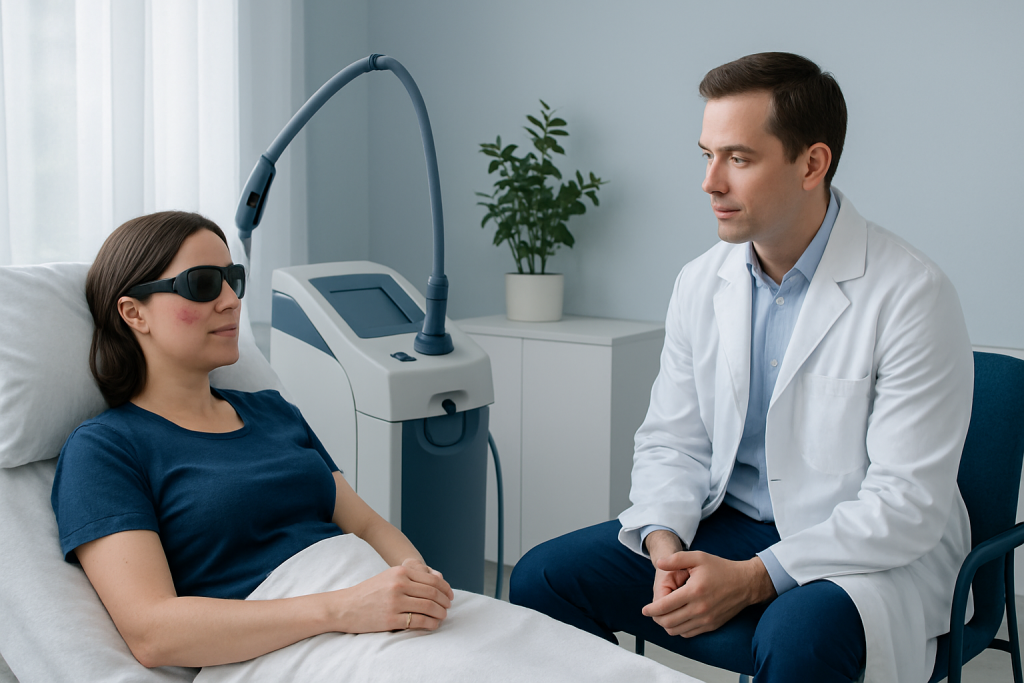
At the consultation, the clinician reviews the treatment goal, medical history and expected number of sessions. Photographs may be taken to help track changes over time. The skin is cleaned, and protective eyewear is worn by the patient and treatment team.
During the procedure, the laser handpiece is placed against or close to the skin and delivers brief pulses. Many devices include cooling before, during or after each pulse to improve comfort and protect the skin surface. Sensations are often described as a quick snap or warm sting. Topical numbing cream, cooling or other comfort measures may be considered for sensitive areas or larger treatments.
Sessions can take from a few minutes for a small spot to longer for a larger area. The treated skin may look red, swollen or darker immediately afterward. Some treatments intentionally cause temporary purple or bruise-like spots, known as purpura, because this can indicate vessel targeting; other settings aim to reduce this visible bruising. The preferred approach depends on the diagnosis, location and desired downtime.
Patients can usually return home the same day. A dermatologist may recommend dermatology assessment and treatment planning when redness, vascular lesions or scars need expert evaluation before laser care.
Benefits, Limits and Possible Risks
The main potential benefit of pulsed dye laser is a reduction in unwanted visible redness or blood vessels without surgery. It may make a vascular lesion, rosacea-related vessels or red scar appear less noticeable. For some people, reducing visible vascular changes can also improve comfort or confidence, although response differs from person to person.
PDL does not remove the underlying tendency toward all conditions. Rosacea, for example, is a chronic condition that can flare over time, and new blood vessels may develop. A patient may need skin-care measures, trigger management, medication or future laser maintenance in addition to laser sessions. Persistent facial redness should be assessed because it can be related to rosacea or another skin condition.
Expected short-term effects include redness, swelling, warmth, tenderness and temporary darkening of treated vessels. Bruising may occur and is more common with certain treatment settings. Less commonly, blistering, crusting, infection, pigment changes, burns or scarring can occur. These risks are reduced, but not eliminated, through appropriate patient selection, eye protection, careful settings and aftercare.
A qualified clinician should explain the likely benefit for the specific concern, alternatives and possible adverse effects. Results cannot be guaranteed, and a laser that works well for one type of redness may not be the best choice for another.
How Long Does It Take to Heal After a Pulsed Dye Laser?
Pulsed dye laser healing time depends on the treatment area, laser settings and individual skin response. Mild redness and swelling often improve within several hours to a few days. If bruising or purpura occurs, the purple or red-brown marks may take roughly one to two weeks to fade, and occasionally longer.
Gentle skin care supports recovery. Patients are usually advised to use cool compresses if needed, avoid picking or scrubbing the treated area, use a mild cleanser and moisturizer, and protect the skin from sunlight. Broad-spectrum sunscreen and physical sun protection are important because sun exposure can worsen discoloration while the skin heals.
Makeup may be appropriate after the skin is intact and comfortable, but the clinician’s individual instructions should take priority. Patients should avoid using exfoliants, retinoids, strong acids, fragranced products or other potentially irritating products on the area until advised that healing is complete.
Contact the treating team if there is increasing pain, spreading redness, pus, fever, extensive blistering, or a wound that does not appear to be healing. These symptoms are uncommon but should be assessed promptly.
How Soon Can I Expect to See Results From a Pulsed Dye Laser Treatment?
Pulsed dye laser results time varies by indication. Some vessels may appear lighter after swelling and bruising settle, but the body continues to clear treated vessels over the following weeks. For many concerns, the clearest early change is assessed around four to six weeks after treatment.
Port-wine stains, diffuse facial redness and established blood vessels commonly require a series of sessions. Scar redness may also fade gradually over several treatments as part of scar management. The clinician generally spaces sessions apart to allow healing and to evaluate the response before deciding on further treatment.
Photos taken in consistent lighting can be more useful than day-to-day mirror checks, since early redness or bruising can temporarily obscure improvement. The outcome depends on the diagnosis, vessel depth, lesion color, location, skin characteristics, laser settings and adherence to aftercare.
For redness associated with inflammatory skin disease, laser treatment may be combined with a plan to control inflammation and reduce triggers. This helps set realistic expectations: PDL can improve visible vessels, but it may not fully prevent future flares or new redness.
Is Pulse Dye Laser Worth It?
Whether pulse dye laser is worth it depends on the condition being treated, the degree of visible change a person hopes to achieve, the likely number of sessions and their willingness to accept temporary downtime. It is often considered worthwhile when a dermatologist expects the redness or vascular lesion to respond and when the person understands that improvement is usually gradual rather than immediate.
It may be especially helpful for well-defined vascular concerns such as visible capillaries, cherry angiomas and many port-wine stains. It can also be useful for redness in scars or rosacea, though those conditions may require ongoing medical and skin-care treatment. A consultation is the best setting to compare PDL with observation, topical therapies, other laser technologies or other procedures.
Patients should ask what change is realistic, how many sessions may be needed, whether bruising is expected, and how the clinician will monitor results. A careful discussion of benefits, limits and alternatives is more useful than judging treatment value by before-and-after photographs alone.
Acibadem International’s multidisciplinary specialists and JCI-accredited hospitals can assess vascular and inflammatory skin concerns and discuss appropriate laser and medical treatment options for international patients.
How Much Does a Pulse Dye Laser Cost and When to Seek Medical Care
Pulse dye laser cost varies substantially by country, clinic, clinician expertise, size and location of the area treated, diagnosis, equipment, anesthesia or comfort measures, and the number of planned sessions. A treatment quote should clearly explain what is included and whether follow-up appointments, medications or additional sessions may involve separate charges. Cost should not be the only factor when choosing laser care; appropriate diagnosis and safe treatment planning are essential.
Medical assessment is important for a new, changing, bleeding, painful or rapidly growing skin lesion rather than assuming it is a cosmetic vascular mark. A dermatologist should also assess persistent facial redness, recurrent flushing, eye irritation with facial redness, or a scar that is painful, itchy, thickening or limiting movement.
After a PDL procedure, urgent medical advice is appropriate for severe swelling affecting the eyes or breathing, intense or worsening pain, large blisters, signs of infection, or any concerning reaction. Most temporary redness and swelling are expected, but patients should follow the specific aftercare advice provided by their treatment team.
Frequently asked questions
What is pulsed dye laser used for?
Pulsed dye laser is mainly used for skin concerns involving visible blood vessels or redness. Examples include port-wine stains, facial telangiectasia, rosacea-related visible vessels, cherry angiomas and redness in selected scars. A dermatologist can determine whether the specific concern is likely to respond.
Does pulsed dye laser hurt?
Most people feel brief snapping, stinging or warmth during each laser pulse. Cooling built into the device and other comfort measures can make treatment more tolerable. The level of discomfort varies with the body area, treatment size and individual sensitivity.
How long does it take to heal after a pulsed dye laser?
Mild redness and swelling often settle within a few days. If the treatment causes bruise-like purple spots, these commonly fade in about one to two weeks. Healing can take longer after more intensive treatment or in sensitive areas.
Is pulse dye laser worth it?
It can be worthwhile for people whose redness or vascular skin lesion is likely to respond and who have realistic expectations. Several sessions may be needed, and results vary. A consultation helps weigh expected benefit, downtime, alternatives and cost for the individual concern.
How soon can I expect to see results from a pulsed dye laser treatment?
Early improvement may become easier to see once initial redness or bruising resolves. Many people are assessed at around four to six weeks because vessel clearance continues gradually during that period. A series of treatments is often needed for more complete improvement.
How much does a pulse dye laser cost?
The cost depends on the treatment area, diagnosis, clinic location, clinician, laser settings and number of sessions required. A reputable provider should offer an individualized estimate after examining the skin and discussing the treatment plan. Patients should also ask what follow-up care is included.
References
- American Academy of Dermatology Association
- DermNet
- National Health Service
- Mayo Clinic
- Society for Pediatric Dermatology
This article is for general information only and is not a substitute for professional medical advice. Please consult a qualified doctor about your individual situation.
Explore treatments in Turkey — costs, top hospitals & a free quote
JCI-accredited · board-certified surgeons · reply within 24h