Rehabilitation After Hip Replacement: Exercises and Recovery Milestones

Recovery after hip replacement is gradual, and milestones vary depending on age, health, surgical approach, and pre-surgery mobility. Early movement, walking, and simple exercises help reduce stiffness, improve circulation, and rebuild strength.
Key Takeaways
- Recovery after hip replacement is gradual, and milestones vary depending on age, health, surgical approach, and pre-surgery mobility.
- Early movement, walking, and simple exercises help reduce stiffness, improve circulation, and rebuild strength.
- Hip precautions, wound care, pain control, and fall prevention are important parts of safe rehabilitation.
- Physical therapy should be individualized; patients should not force movements or progress faster than advised.
- New or worsening pain, fever, wound drainage, calf swelling, chest symptoms, or a fall should be reported promptly.
Hip replacement rehabilitation helps patients regain walking ability, strength, balance, and confidence after surgery. A structured plan, guided by the surgical and physiotherapy team, supports safe healing and a gradual return to daily activities.
Overview: Why Rehabilitation Matters After Hip Replacement
Total hip replacement, also called total hip arthroplasty, is a surgery that replaces damaged parts of the hip joint with artificial components. Rehabilitation after hip replacement is the step-by-step process that helps the new joint function well in everyday life. It usually begins on the day of surgery or the day after, depending on the patient’s medical condition and the hospital’s protocol.
The goals of hip replacement rehabilitation are to reduce stiffness, improve walking, strengthen the muscles around the hip, and help the patient return to safe daily activities. The first phase focuses on gentle movement, getting in and out of bed safely, using a walker or crutches, and preventing complications related to inactivity. Later phases add endurance, balance, and functional activities such as climbing stairs or getting into a car.
Every recovery plan should be individualized. A person who was active before surgery may progress differently from someone who had limited mobility, osteoporosis, another joint problem, or a heart or lung condition. The surgeon and physiotherapist will guide the pace of recovery and explain which movements are safe based on the surgical approach and implant stability.
Typical Recovery Milestones
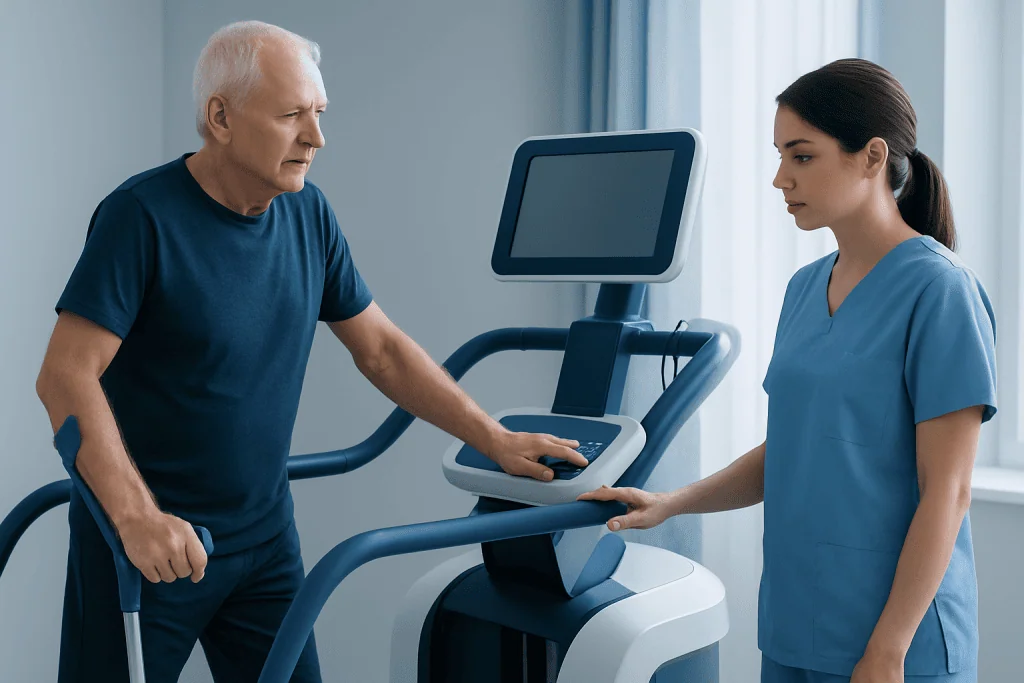
Recovery milestones are useful guideposts, but they are not strict deadlines. Some patients walk short distances with assistance within the first day or two, while others need more time because of pain, dizziness, medical conditions, or reduced strength before surgery. The priority is safe, steady progress rather than speed.
In the first days after surgery, common goals include standing with help, walking a short distance with a walker or crutches, learning how to transfer from bed to chair, and practicing basic exercises. Before leaving the hospital, many patients are taught how to use stairs if needed, how to protect the hip, and how to continue exercises at home.
During the first 2 to 6 weeks, many people gradually increase walking distance, reduce reliance on stronger pain medication as advised, and become more independent with bathing, dressing, and light household activities. A walking aid may still be needed until gait is safe and balanced. Driving, work, and travel should be discussed with the surgeon because timing depends on the operated side, medications, reaction time, and overall recovery.
From about 6 to 12 weeks and beyond, rehabilitation often focuses on endurance, balance, and strengthening. Many patients return to low-impact activities such as longer walks, stationary cycling, or swimming once the wound is healed and the doctor approves. High-impact activities and heavy lifting may not be suitable for every patient and should be discussed with the orthopedic team.
Early Hip Replacement Exercises

Early exercises are designed to be gentle and controlled. They help circulation, reduce stiffness, and wake up the muscles that support the hip. Patients should perform exercises exactly as taught by their physiotherapist, stop if sharp pain occurs, and avoid holding the breath during effort.
Common early exercises may include ankle pumps, which involve moving the feet up and down while lying or sitting; quadriceps sets, which tighten the thigh muscle while the leg is straight; and gluteal sets, which gently squeeze the buttock muscles. Heel slides may be used to bend the knee and hip within a comfortable range, and gentle hip abduction may be practiced by sliding the leg out to the side and back while lying down.
Walking is also an exercise after hip replacement. Short, frequent walks are usually preferred over long, tiring sessions in the beginning. The walking aid should be adjusted correctly, and patients should use the pattern taught by the physiotherapist, often moving the device first, then the operated leg, then the stronger leg.
Exercise should feel like controlled effort, not punishment. Mild soreness can occur when muscles begin working again, but increasing pain, new swelling, dizziness, or a feeling that the hip is unstable should be reported. Rest periods, ice if recommended, and elevation may be used as part of the recovery routine.
Progressive Strength, Balance, and Functional Training
As healing progresses, the rehabilitation program usually becomes more active. The physiotherapist may add standing hip movements, mini-squats, step-ups, balance practice, and exercises to improve posture and walking symmetry. The aim is to build strength around the hip, pelvis, knees, and core so the new joint is supported during daily movement.
Functional training is an important part of recovery. Patients learn how to sit down and stand up from a chair, get in and out of bed, use the toilet safely, climb stairs, and move around the kitchen or bathroom. Practicing these tasks with correct technique can reduce the risk of falls and protect the healing tissues.
A typical progression may include:
- Increasing walking distance gradually while maintaining a smooth gait.
- Practicing stairs with the recommended sequence and handrail support.
- Improving balance before reducing or stopping the walking aid.
- Adding low-impact conditioning such as a stationary bike when approved.
- Returning to hobbies in stages, avoiding sudden twisting or heavy loads early on.
Progression should be based on quality of movement, not only the number of exercises completed. Limping, leaning heavily on the walking aid, or fatigue-related poor form may mean the body needs more time at the current level. The physiotherapist can adjust the plan to keep rehabilitation safe and effective.
Hip Precautions and Safe Movement
Hip precautions are movement guidelines intended to reduce stress on the healing hip. They may vary depending on whether the surgery was performed through a posterior, lateral, anterior, or another approach. Because recommendations differ, patients should follow the specific instructions given by their surgeon and physiotherapist rather than relying on general advice alone.
Some patients are advised for a period of time to avoid deep bending at the hip, crossing the legs, twisting the operated leg, or sitting in very low chairs. Others may have fewer restrictions, especially with certain surgical approaches, but safe movement still matters. A raised chair, firm armrests, a toilet seat adapter, or a long-handled reacher may be recommended to make daily activities easier.
Fall prevention is a key safety priority. At home, loose rugs, clutter, slippery bathroom floors, and poor lighting can increase the risk of tripping. Supportive shoes, keeping frequently used items within reach, and using the walking aid until cleared to stop can help patients move with confidence.
Patients should also be careful with pets, crowded spaces, and uneven outdoor surfaces during early recovery. If a movement feels uncertain, it is better to ask the rehabilitation team for a safer technique than to improvise. Confidence usually improves as strength, balance, and walking pattern recover.
Pain, Swelling, Wound Care, and Daily Self-Care
Some pain, bruising, and swelling are common after hip replacement and usually improve gradually. Pain management supports rehabilitation because it allows patients to move, sleep, and participate in therapy. Medicines should be taken only as prescribed, and patients should ask their doctor before adding over-the-counter pain relievers or supplements, especially if they take blood thinners or have kidney, stomach, liver, or heart conditions.
Swelling may be helped by balancing activity with rest, elevating the leg as advised, and using cold therapy if recommended by the healthcare team. Gentle ankle movement and walking also support circulation. Sitting for very long periods without movement is usually discouraged during early recovery unless the medical team gives different instructions.
Wound care instructions should be followed carefully. The dressing should be kept clean and dry according to the hospital’s guidance, and patients should avoid soaking the incision until the surgeon confirms it is safe. Redness that spreads, increasing warmth, unpleasant drainage, fever, or wound opening should be reported promptly.
Nutrition, hydration, and sleep also influence recovery. Protein-containing foods, fruits, vegetables, and adequate fluids support healing, while constipation prevention may be needed when activity is reduced or certain pain medicines are used. Patients with diabetes or other chronic conditions should follow their medical plan closely because good overall health supports rehabilitation.
When to See a Doctor During Recovery
Patients should contact their surgeon, rehabilitation team, or local emergency service if symptoms suggest a complication or if progress suddenly changes. Warning signs include fever, increasing wound drainage, severe or worsening hip pain, a new inability to bear weight, a fall, or a feeling that the hip has shifted or become unstable. New calf pain, marked swelling in one leg, sudden shortness of breath, chest pain, or fainting also require urgent medical assessment.
It is also appropriate to seek advice when pain is not improving, exercises feel unclear, walking becomes more difficult, or the patient is unsure when to return to driving, work, sex, sports, or travel. Rehabilitation is most effective when questions are addressed early and the plan is adjusted to the person’s needs.
Follow-up appointments are important even when recovery seems smooth. The surgeon checks wound healing, hip function, implant position when imaging is needed, and any concerns about medications or restrictions. The physiotherapist monitors strength, balance, gait, and readiness for the next stage of activity.
For international patients, Acibadem International offers multidisciplinary orthopedic and rehabilitation care in JCI-accredited hospitals, including assessment and treatment planning for hip replacement recovery. Patients should still follow the individualized instructions provided by their own treating doctor and rehabilitation team.
Frequently asked questions
How soon does rehabilitation start after hip replacement?
Rehabilitation often begins on the day of surgery or the following day, depending on the patient’s condition and the hospital protocol. Early therapy usually includes breathing and circulation exercises, gentle leg movements, standing, and short walks with assistance. The surgical team decides when it is safe to begin.
How long does it take to walk normally after a hip replacement?
Many patients improve noticeably during the first few weeks, but walking normally can take longer depending on strength, balance, pain control, and pre-surgery mobility. A walking aid should be used until the physiotherapist or surgeon confirms that gait is safe. Rushing to stop the aid can increase limping or fall risk.
Which exercises are best after hip replacement?
Common early exercises include ankle pumps, thigh squeezes, buttock squeezes, heel slides, gentle hip abduction, and short walks. Later exercises may include standing hip movements, step-ups, balance practice, and low-impact conditioning. The best program is individualized and should follow the instructions of the rehabilitation team.
What movements should be avoided after hip replacement?
Restrictions depend on the surgical approach and the surgeon’s preference. Some patients may be told to avoid deep hip bending, crossing the legs, twisting, or sitting in low chairs for a period of time. Patients should follow their own hip precautions rather than general advice.
Is pain normal during hip replacement rehabilitation?
Mild to moderate soreness can occur as tissues heal and muscles begin working again. Pain should gradually become more manageable, and exercises should not cause sharp, severe, or worsening pain. If pain suddenly increases or is associated with swelling, fever, wound changes, or difficulty bearing weight, medical advice is needed.
When can a patient return to work after hip replacement?
Return to work depends on the type of job, commute, energy level, pain control, and the surgeon’s advice. Desk-based work may be possible earlier than physically demanding work that involves lifting, climbing, or prolonged standing. A gradual return or modified duties may be recommended.
Can patients travel after hip replacement surgery?
Travel should be discussed with the surgeon, especially long car rides or flights soon after surgery. Patients may need guidance about walking breaks, blood clot prevention, wound care, and safe seating positions. Travel plans should also consider follow-up appointments and access to medical care if concerns arise.
References
- American Academy of Orthopaedic Surgeons
- National Institute for Health and Care Excellence
- American Physical Therapy Association
- NHS
- Mayo Clinic
This article is for general information only and is not a substitute for professional medical advice. Please consult a qualified doctor about your individual situation.
Hip Replacement in Turkey — costs, top hospitals & a free quote
JCI-accredited · board-certified surgeons · reply within 24h

More from the Health Library



Related Specialists

Fzt. Semih Kızıltan
Physical Medicine and Rehabilitation
Prof. Dr. Serkan Erkanlı
Gynecology & Obstetrics
Dr. Yilmaz Kılıç
Neurosurgery
Assoc. Prof. Dr. Onur Dülgeroğlu
General Surgery