Shingles on Head: An Evidence-Based Guide for Patients

Shingles on head is caused by reactivation of the varicella-zoster virus, the same virus that causes chickenpox. Early treatment works best, ideally within 72 hours of rash onset or sooner if eye or ear symptoms are present.
Key Takeaways
- Shingles on head is caused by reactivation of the varicella-zoster virus, the same virus that causes chickenpox.
- Early treatment works best, ideally within 72 hours of rash onset or sooner if eye or ear symptoms are present.
- Pain, tingling, burning, and a one-sided blistering rash on the scalp or face are common signs.
- Shingles near the eye or ear needs urgent medical assessment to help prevent vision, hearing, or nerve problems.
- Vaccination can lower the risk of shingles and its long-term complications in eligible adults.
Shingles on head is a form of herpes zoster that affects the scalp, forehead, face, or ear area after the chickenpox virus becomes active again. It can cause pain, burning, and a blistering rash, and it deserves prompt medical attention because involvement of the eye or ear can lead to complications.
Overview: what shingles on head means
Shingles on head refers to shingles that affects the scalp, forehead, face, or sometimes the area around the ear. It happens when the varicella-zoster virus, which remains inactive in nerve tissue after a person has had chickenpox, becomes active again later in life. The virus then travels along a nerve and causes pain, sensitivity, and a rash in the skin served by that nerve.
When shingles appears on the head, the main concern is not only the rash itself but also which nearby structures may be affected. If the virus involves nerves connected to the eye, ear, or facial muscles, complications can develop without timely care. This is why shingles on head is usually treated as a condition that should be assessed promptly rather than watched for several days at home.
Many people first notice abnormal skin sensations before any rash appears. Burning, tingling, itching, or sharp pain on one side of the scalp or forehead may begin one to five days before blisters form. Because the scalp can hide early skin changes, the diagnosis may not be obvious at first, especially if hair covers the affected area.
Shingles is not the same as a first-time chickenpox infection, but the fluid in shingles blisters can spread the varicella-zoster virus to someone who has never had chickenpox or has not been vaccinated. In that case, the exposed person would develop chickenpox, not shingles. Careful hygiene and covering the rash help reduce this risk.
How shingles on the head can feel and look
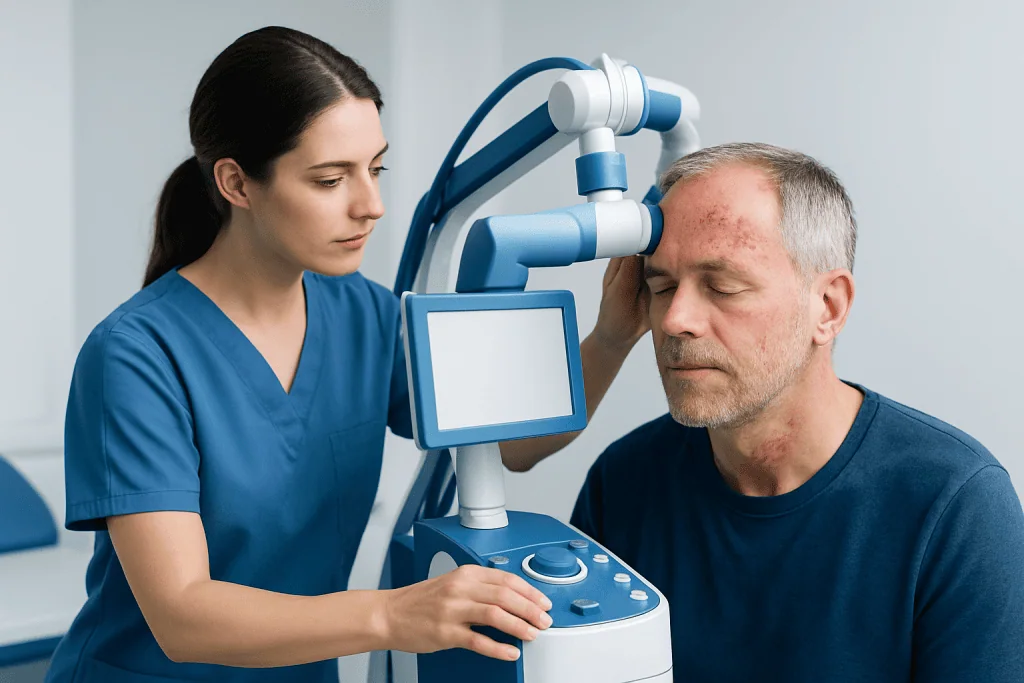
The symptoms of shingles on head often begin with discomfort rather than a visible rash. A person may feel burning, throbbing, stabbing, itching, or unusual sensitivity of the scalp, forehead, temple, or ear region. Some also develop headache, fatigue, or a general feeling of being unwell before the rash appears.
The rash usually develops on one side of the head or face and follows a strip-like or patchy pattern rather than spreading evenly. It often starts as red spots and quickly becomes clusters of clear, fluid-filled blisters. Over several days, these blisters may break, crust over, and slowly heal. On the scalp, the lesions may be hidden by hair but still cause significant pain or tenderness when brushing, washing, or touching the area.
Depending on which nerve is involved, additional symptoms can occur. These may include:
- Forehead or eyelid rash
- Scalp tenderness or pain when combing hair
- Swelling around the eye
- Ear pain or rash on the outer ear
- Changes in hearing, balance, or taste
- Facial weakness in rare cases
- Persistent nerve pain after the rash starts to heal
If shingles affects the eye area, it may be part of a condition known as shingles. If it affects the ear and facial nerve, symptoms can overlap with Ramsay Hunt syndrome. These forms need especially prompt medical care because they can affect vision, hearing, or facial movement.
Causes and risk factors

Shingles on head is caused by reactivation of the varicella-zoster virus. After chickenpox, the virus stays in nerve cells near the brain and spinal cord for many years. Doctors do not always know why it becomes active again in one person and not another, but it is more common when the immune system is less able to keep the virus under control.
Age is one of the most important risk factors. Shingles becomes more common with increasing age, especially after 50. People with weakened immune systems also have a higher risk. This may include those receiving chemotherapy, long-term steroid treatment, certain immune-suppressing medicines, or people living with conditions that affect immune function.
Other factors that may contribute include physical stress, recent illness, major surgery, or emotional stress, although these are not always direct causes. Most cases happen in people who have had chickenpox in the past, even if that infection occurred many years earlier and seemed mild at the time.
Shingles on the head does not mean a person has done something wrong or has poor hygiene. It is a viral nerve condition that can occur even in otherwise healthy adults. The main goals are to recognize it early, start appropriate treatment, and monitor for complications in sensitive areas such as the eye and ear.
Why prompt diagnosis matters
Doctors often diagnose shingles on head based on the pattern of pain and rash, especially when the eruption is limited to one side of the face or scalp. During the visit, the doctor usually asks when the pain began, when the rash appeared, and whether there are any eye, ear, or facial muscle symptoms. A close skin and nerve examination helps identify which nerve branch may be involved.
In some cases, the diagnosis is straightforward. In others, it may be less obvious, especially if the rash is hidden in the hair, if there is severe pain before the rash appears, or if the lesions are few. When needed, a sample from a blister can be tested to confirm varicella-zoster virus. Blood tests are less useful for diagnosing a typical case.
Prompt diagnosis matters because antiviral treatment is most effective when started early, ideally within 72 hours after the rash begins. Treatment may still be helpful beyond that window if new blisters are appearing, if the pain is significant, or if the eye or ear is involved. If the symptoms suggest eye involvement, the person may also need an urgent eye examination. Related testing may be arranged through services such as a medical check-up or specialized eye examination when appropriate.
Clinicians also look for signs of complications, such as corneal inflammation, facial weakness, hearing loss, or secondary bacterial skin infection. Early assessment allows treatment to be tailored to the location and severity of the disease rather than focusing only on the rash.
Treatment options and recovery
The main treatment for shingles on head is antiviral medication prescribed by a doctor. These medicines help limit viral activity, shorten the course of the illness, and may reduce the risk of complications when started early. They are not the same as antibiotics, which do not treat shingles unless there is also a bacterial skin infection.
Pain relief is also an important part of treatment. Depending on the person and the severity of symptoms, doctors may recommend over-the-counter pain relievers or other medicines for nerve-related pain. Cool compresses, loose head coverings, and gentle skin care may help improve comfort. Blisters should generally be kept clean and dry, and scratching should be avoided to reduce irritation and infection risk.
If the eye is affected, treatment may involve close follow-up with an ophthalmologist. If the ear or facial nerve is involved, an ear, nose, and throat specialist or neurologist may also be involved. For some patients, imaging or further assessment may be needed if symptoms are unusual or if another diagnosis is being considered, sometimes with support from MRI or related evaluations.
Most rashes crust over within about 7 to 10 days and continue healing over the following weeks, but nerve pain can last longer. Some people develop postherpetic neuralgia, a lingering pain that persists after the rash has resolved. Recovery is often gradual, and follow-up is important if pain, sensitivity, or nerve symptoms continue. Near the end of the care pathway, multidisciplinary specialists at Acibadem International’s JCI-accredited hospitals also evaluate and treat shingles-related complications in international patients when specialist input is needed.
Self-care, prevention, and reducing spread
Home care can support healing, but it should not replace medical evaluation when shingles affects the head. Gentle washing, avoiding harsh hair products, and applying cool, clean compresses may soothe the skin. Rest, hydration, and regular meals can also help a person cope with the discomfort and fatigue that sometimes accompany shingles.
To reduce the risk of spreading varicella-zoster virus to others, the rash should be covered when possible, hands should be washed after touching the area, and towels or grooming items should not be shared. Contact should be limited with pregnant people who are not immune to chickenpox, newborns, and anyone with a weakened immune system until the blisters have crusted over.
The most effective prevention strategy for eligible adults is shingles vaccination. Vaccination does not treat an active outbreak, but it can lower the chance of developing shingles and reduce the risk of long-lasting nerve pain. People who have already had shingles may still be candidates for vaccination later, depending on their doctor’s advice and local vaccine guidance.
General immune health also matters. Managing chronic medical conditions, getting adequate sleep, and discussing immune-suppressing medicines with a doctor may help with overall risk assessment. However, because shingles can still occur in healthy people, vaccination remains the most direct preventive measure for many adults.
When to seek medical care
Shingles on head should be assessed by a healthcare professional as soon as possible, ideally within 72 hours of the rash appearing. Early treatment is especially important because the affected nerves are close to the eye, ear, and brain, and because prompt antiviral therapy can improve outcomes. If the person has pain or tingling on one side of the scalp or face and then notices a new rash, they should arrange care without delay.
Urgent medical attention is needed if there is a rash on the eyelid, near the eye, on the tip of the nose, or if the eye becomes red, painful, or sensitive to light. Medical care is also important right away for ear rash, hearing changes, dizziness, severe headache, confusion, facial drooping, or weakness. These features may signal more complex involvement and should not be managed only at home.
People with a weakened immune system, older adults, pregnant individuals, and anyone with widespread rash or severe pain should also contact a doctor promptly. Even if the rash seems mild, shingles on the head deserves early assessment because scalp and facial lesions can be less visible while deeper nerve pain is significant.
If symptoms are uncertain, worsening, or not improving as expected, a clinician can help confirm the diagnosis and rule out other causes of scalp pain or rash. Conditions such as contact dermatitis, bacterial infection, migraine-related pain, or other skin disorders may sometimes mimic early shingles.
Frequently asked questions
Is shingles on head dangerous?
Shingles on head can be more serious than shingles on other body areas because it may affect nerves connected to the eye or ear. Most people recover well with prompt treatment, but early medical assessment is important to help prevent complications.
What does shingles on the scalp look like?
It often starts as red patches or bumps on one side of the scalp, forehead, or face and then develops into clusters of fluid-filled blisters. On the scalp, hair may hide the rash, so pain, tenderness, or burning may be more noticeable than the skin changes at first.
Can shingles on head cause headache?
Yes. Some people with shingles on head have headache along with burning skin pain, tingling, or sensitivity of the scalp or face. A severe or unusual headache, especially with fever, confusion, eye symptoms, or weakness, should be assessed urgently.
How long does shingles on head last?
The rash usually begins to crust within about 7 to 10 days and often heals over the next few weeks. Pain may improve as the skin heals, but some people have lingering nerve pain for longer, especially older adults.
Is shingles on head contagious?
A person with shingles cannot give another person shingles directly. However, the fluid from the blisters can spread the chickenpox virus to someone who is not immune, which may cause chickenpox in that person.
Should someone go to the doctor if shingles is near the eye or ear?
Yes. Shingles near the eye or ear should be evaluated promptly because it can affect vision, hearing, balance, or facial nerves. Treatment started early gives the best chance of reducing complications.
References
- Centers for Disease Control and Prevention
- National Institute of Neurological Disorders and Stroke
- American Academy of Dermatology
- American Academy of Ophthalmology
- Mayo Clinic
This article is for general information only and is not a substitute for professional medical advice. Please consult a qualified doctor about your individual situation.
Shingles in Turkey — costs, top hospitals & a free quote
JCI-accredited · board-certified surgeons · reply within 24h

More from the Health Library



Related Specialists

Dr. Burcu Kesmez Evirgen
Pediatrics
Dr. Cem Tekin Baran
Orthopedic Surgery & Traumatology
Dt. Ayça Aydın Kilavuz
Oral & Dental Health
Assoc. Prof. Dr. Emel Ur Özçelik
Neurology