Single Leg Squat: What Patients Need to Know
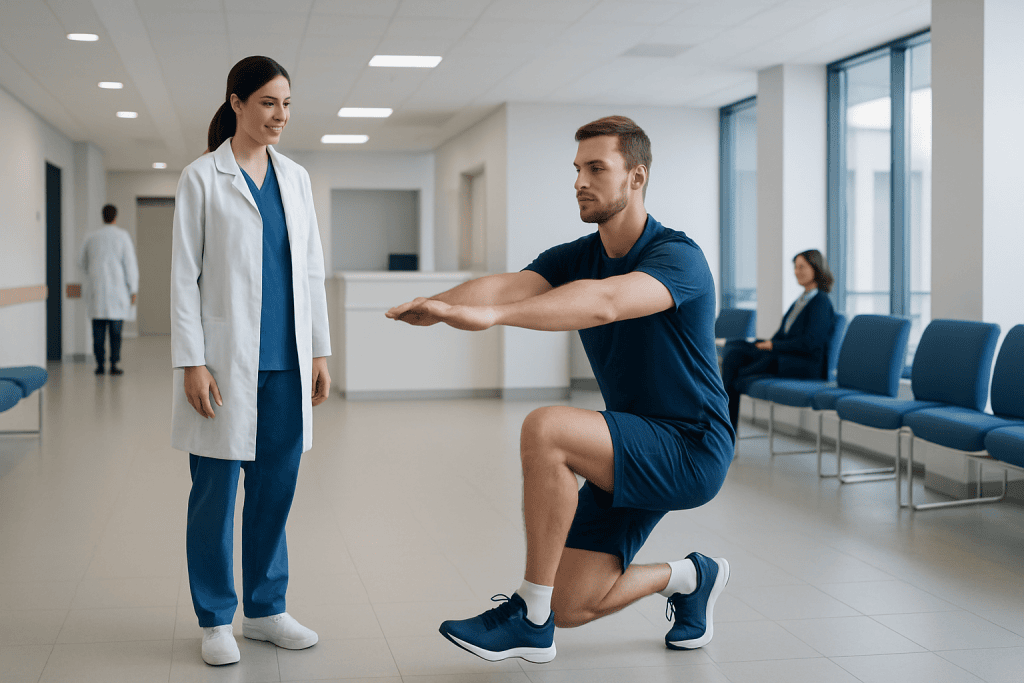
The single leg squat is both an exercise and a simple functional movement screen. Good technique matters more than depth, speed, or repetition count.
Key Takeaways
- The single leg squat is both an exercise and a simple functional movement screen.
- Good technique matters more than depth, speed, or repetition count.
- Pain is not a normal training goal; persistent knee, hip, or ankle pain deserves medical assessment.
- Common problems include knee valgus, trunk leaning, heel lifting, and loss of balance.
- Beginners often do best with supported versions, partial range of motion, and gradual progression.
A single leg squat is a one-leg exercise used to assess and train strength, balance, and control through the hip, knee, ankle, and core. When performed with correct form and appropriate progression, it can support lower-limb function, but pain, instability, or repeated collapse of the knee inward should be assessed by a qualified clinician.
Overview: what a single leg squat shows
A single leg squat is a squat performed while standing on one leg. It asks the body to control movement at the hip, knee, ankle, and trunk at the same time, which is why clinicians, physiotherapists, and trainers often use it to observe balance, coordination, and lower-limb strength. In everyday terms, it is similar to the control needed for climbing stairs, getting out of a chair, stepping off a curb, or landing from a small jump.
For patients, the value of the single leg squat is not only athletic. It can help reveal whether one side is weaker, less stable, or more painful than the other. A careful observer may notice that the knee drifts inward, the pelvis drops, the heel lifts, or the trunk leans excessively. These movement patterns do not always mean there is an injury, but they can point to reduced control or a need for rehabilitation.
The movement should be tailored to the individual. Some people can safely perform a deep squat on one leg, while others should start with a chair touch, countertop support, or a smaller bending range. The aim is controlled motion, steady breathing, and alignment rather than pushing through discomfort.
How to do a single leg squat with good form
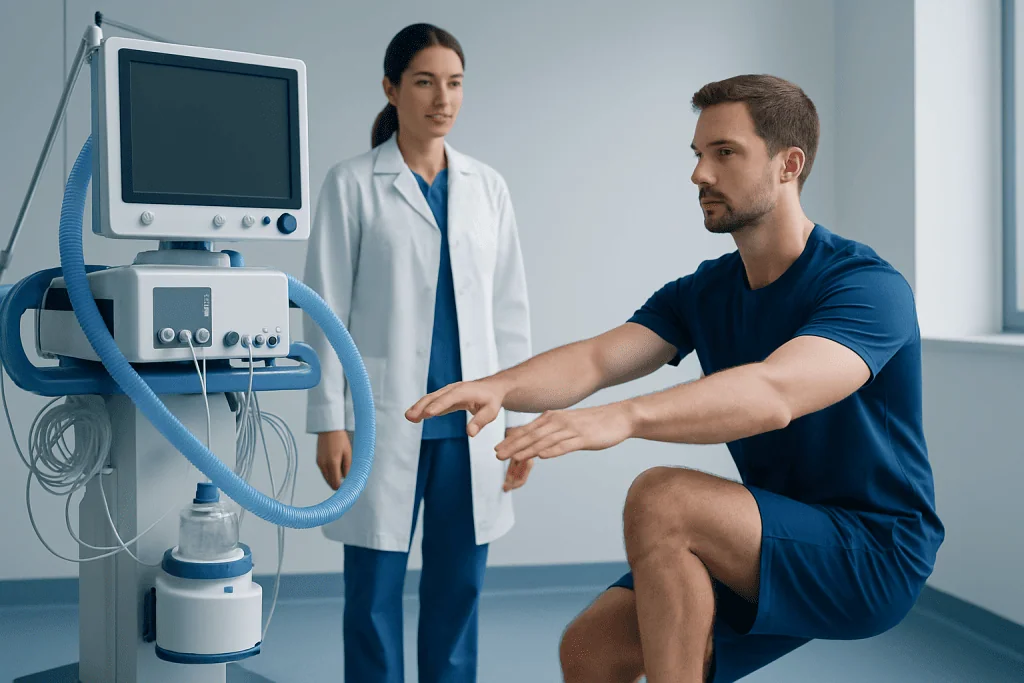
To begin, a person stands tall on one leg with the foot pointing forward and the knee soft rather than locked. The other leg may stay slightly in front or behind the body without touching the floor. The chest stays lifted, the pelvis level, and the gaze forward. Then the hips move back as the standing knee bends, lowering the body a short distance before returning to standing in a slow, controlled way.
Most patients benefit from thinking about three simple cues: keep the knee roughly in line with the second toe, keep the foot tripod grounded through the heel and forefoot, and keep the pelvis as level as possible. Depth is less important than control. A partial squat done well is usually more helpful than a deep squat done with twisting, wobbling, or pain.
Common mistakes include the knee collapsing inward, the arch of the foot flattening excessively, the heel lifting, or the trunk folding far forward to compensate. These patterns often reflect weakness, stiffness, poor motor control, or all three. If needed, using a wall, rail, or stable support can make practice safer while preserving the basic movement pattern.
- Start with 5 to 8 controlled repetitions on each side.
- Use a mirror if available to check knee and pelvis position.
- Stop if sharp pain, catching, or giving way occurs.
- Progress range of motion gradually rather than forcing depth.
Muscles worked and potential benefits
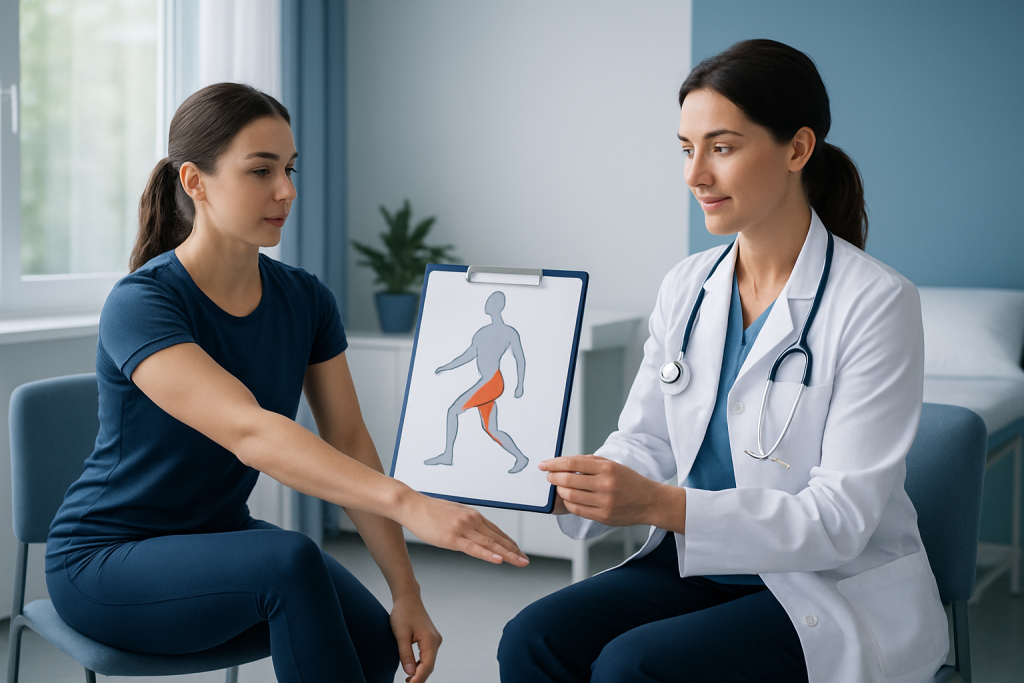
The single leg squat mainly challenges the gluteal muscles, quadriceps, hamstrings, calf muscles, and core. The hip abductors and external rotators are especially important because they help keep the thigh and pelvis stable as the body lowers and rises. Smaller muscles around the ankle and foot also work to maintain balance and control.
When used appropriately, this exercise can support functional strength, side-to-side symmetry, proprioception, and movement efficiency. It is commonly included in rehabilitation and conditioning programs for people returning to walking, running, court sports, or other activities that involve weight transfer and landing on one leg. Because it combines strength and balance, it can be a useful bridge between simple exercises and more demanding movement.
It may also help identify movement patterns associated with overuse symptoms. For example, poor hip control during a single leg squat may be seen in people with front-of-knee pain, while limited ankle mobility may lead to heel rise or the knee moving off line. In these cases, the exercise is most useful when combined with an individualized plan rather than treated as a one-size-fits-all solution.
Why it can feel difficult: common causes of poor control or pain
Many people find the single leg squat surprisingly difficult, even if they are generally active. The challenge often comes from a combination of reduced hip strength, limited ankle mobility, weak foot control, balance deficits, or uncertainty with the movement itself. Fatigue can also make form worsen, especially after exercise or during recovery from an injury.
Pain during the movement may come from several areas. The knee is a common site, particularly with patellofemoral pain, irritation around the kneecap, or overload related to poor alignment. Hip discomfort may be linked to weakness, tendon irritation, or reduced control around the pelvis. At the ankle, stiffness or past sprains can make it hard to bend and balance normally. Patients with persistent symptoms may also have conditions such as knee pain or meniscus injury that need proper assessment.
Not every inward-moving knee or wobble means disease. Temporary asymmetry can happen with deconditioning, recent inactivity, or simply being new to the exercise. However, repeated pain, swelling, locking, giving way, or an obvious difference between sides should not be ignored. A clinician can help determine whether the issue is mainly technique-related or whether there is an underlying joint, tendon, or ligament problem.
How clinicians assess the single leg squat
Healthcare professionals may use the single leg squat as part of a broader musculoskeletal assessment. They look at how the pelvis, hip, knee, ankle, and trunk move together, and whether symptoms appear during the task. The movement is rarely judged in isolation. Instead, it is interpreted alongside medical history, walking pattern, strength testing, joint mobility, and any swelling or tenderness.
If symptoms suggest a structural injury, additional evaluation may be needed. A doctor may examine the knee ligaments, meniscus, cartilage, or tendons, or assess the hip and ankle for stiffness and instability. Imaging is not always necessary, but it can be helpful when there is significant trauma, persistent swelling, mechanical locking, severe pain, or concern for internal joint damage. In some cases, evaluation may include MRI scanning to better understand soft-tissue problems.
Assessment also guides safe progression. One patient may need hip strengthening and balance work, while another may benefit more from mobility exercises, activity modification, or treatment of a specific injury. This personalized approach is especially important if a person is returning to sport, recovering after surgery, or managing a chronic pain condition.
Treatment and exercise progression
If the goal is to improve performance of a single leg squat, treatment usually starts with the cause of the difficulty. For some people, the answer is simple coaching: reducing the squat depth, widening the base slightly, or holding on for support. Others need a structured rehabilitation program focused on hip and thigh strength, ankle mobility, foot control, and progressive balance work.
Typical starting exercises may include sit-to-stand drills, step-downs, split squats, bridges, side-lying hip work, calf raises, and balance practice. As control improves, the person may progress to assisted single leg squats, deeper range of motion, and eventually dynamic movements such as hopping or landing drills when appropriate. For patients with pain related to sports injuries or joint disorders, a specialist may recommend physical therapy and rehabilitation as the main treatment approach.
When pain reflects a more specific problem, treatment depends on the diagnosis. Tendon irritation may respond to load modification and gradual strengthening. After ligament injury, targeted rehabilitation is often essential, and some patients may require orthopedic review. In selected cases involving instability or structural damage, evaluation by a team experienced in orthopedics and traumatology may be appropriate. The aim is always to restore safe function, not only to achieve a certain exercise milestone.
Self-care, prevention, and safe practice
For people using the single leg squat as part of general exercise, a gradual approach is the safest strategy. Warming up before lower-body training, choosing stable footwear when needed, and avoiding sudden spikes in activity can reduce overload. Practicing near a wall or chair may help beginners feel more secure and improve quality of movement.
It also helps to work on the components that support the movement. Regular hip strengthening, calf and ankle mobility exercises, and balance training can improve form over time. If one side is clearly weaker, the stronger leg should not determine the progression for both sides. Symmetry often returns with patient, consistent practice.
People with known arthritis, recent injury, or ongoing pain should not force through symptoms in order to achieve depth. Mild muscle effort is expected, but sharp pain, catching, or swelling afterward suggests the load may be too high. If symptoms continue despite rest and modified exercise, medical review is sensible. Near the end of a patient’s care journey, centers such as Acibadem International may coordinate assessment and treatment through multidisciplinary specialists in JCI-accredited hospitals for international patients.
When to seek medical care
Medical advice is appropriate if a single leg squat causes repeated pain in the knee, hip, ankle, or lower back, especially if the pain interferes with walking, stairs, work, or exercise. Care is also important if the joint swells, locks, clicks painfully, or feels as if it may give way. These symptoms can signal an injury that needs more than technique correction.
Urgent assessment is recommended after a fall, twist, or sports injury if there is significant swelling, inability to bear weight, marked instability, or a sudden loss of motion. Patients should also seek help if symptoms persist for more than a few weeks, recur each time activity increases, or do not improve with rest and gradual modification. Early evaluation can help prevent a minor problem from becoming a longer-lasting limitation.
A doctor, sports medicine physician, orthopedic specialist, or physiotherapist can identify whether the issue is mainly deconditioning, movement control, or an underlying condition. A clear diagnosis often makes rehabilitation more effective and more reassuring for the patient.
Frequently asked questions
What is a single leg squat used for?
A single leg squat is used to build and assess lower-body strength, balance, and movement control. Clinicians and therapists also use it to observe how the hip, knee, ankle, and trunk work together during a functional task.
Is it normal to feel knee pain during a single leg squat?
No. Muscle effort and mild fatigue can be normal, but pain is a sign that the movement may be too demanding, the form may need correction, or an underlying problem may be present. Persistent or sharp knee pain should be assessed by a qualified clinician.
Why does my knee move inward during a single leg squat?
This is often related to reduced hip strength, poor movement control, foot instability, or fatigue. It does not automatically mean there is a serious injury, but repeated inward collapse can increase joint stress and is worth addressing with exercise coaching or rehabilitation.
How deep should a single leg squat be?
Only as deep as a person can go while maintaining control, alignment, and comfort. A partial squat is completely acceptable, especially for beginners or during rehabilitation, and depth can be increased gradually over time.
Can beginners do single leg squats?
Yes, but many beginners should start with easier versions such as holding a support, sitting back to a chair, or doing step-down exercises. These approaches help build confidence and technique before progressing to a full unsupported movement.
When should someone stop doing single leg squats and seek help?
They should stop if the movement causes sharp pain, swelling, locking, or a feeling that the joint is giving way. Medical advice is also sensible if symptoms keep returning, one side remains much weaker than the other, or progress stalls despite careful practice.
References
- American Academy of Orthopaedic Surgeons
- National Institute of Arthritis and Musculoskeletal and Skin Diseases
- American Physical Therapy Association
- National Health Service
- Mayo Clinic
This article is for general information only and is not a substitute for professional medical advice. Please consult a qualified doctor about your individual situation.
Joint and spine care in Turkey — expert assessment & treatment
JCI-accredited · board-certified surgeons · reply within 24h