

Sleep Apnea in Children: Snoring, Tonsils, and Treatment Choices

Not every child who snores has sleep apnea, but frequent loud snoring should be discussed with a pediatrician or ENT specialist. Enlarged tonsils and adenoids are a leading cause of obstructive sleep apnea in children.
Key Takeaways
- Not every child who snores has sleep apnea, but frequent loud snoring should be discussed with a pediatrician or ENT specialist.
- Enlarged tonsils and adenoids are a leading cause of obstructive sleep apnea in children.
- Diagnosis may require an overnight sleep study, especially when symptoms are significant or the child has other medical conditions.
- Treatment options include adenotonsillectomy, CPAP therapy, allergy treatment, weight management, orthodontic approaches, or careful monitoring in mild cases.
- Timely evaluation can support better sleep, daytime functioning, growth, and overall wellbeing.
Sleep apnea in children is a treatable sleep-related breathing problem that often appears as loud snoring, restless sleep, or daytime behavior and learning difficulties. Enlarged tonsils and adenoids are common causes, but treatment choices depend on the child’s age, symptoms, examination, and sleep study results.
Overview
Sleep apnea in children is a condition in which breathing repeatedly becomes partly or completely blocked during sleep. The most common type is pediatric obstructive sleep apnea, where the upper airway narrows or closes for short periods. These breathing interruptions can disturb sleep quality even when a child does not fully wake up or remember anything in the morning.
Parents often first notice snoring, noisy breathing, pauses in breathing, or restless sleep. In children, sleep apnea can look different from adult sleep apnea. Instead of obvious daytime sleepiness, a child may become hyperactive, irritable, have difficulty concentrating, or struggle at school.
Childhood sleep apnea is usually manageable once the cause is identified. Enlarged tonsils and adenoids are common contributors, but nasal allergies, facial and jaw structure, weight, neuromuscular conditions, and certain genetic syndromes may also play a role. A careful medical evaluation helps match the treatment to the child’s needs.
Symptoms: When Snoring May Be More Than Snoring
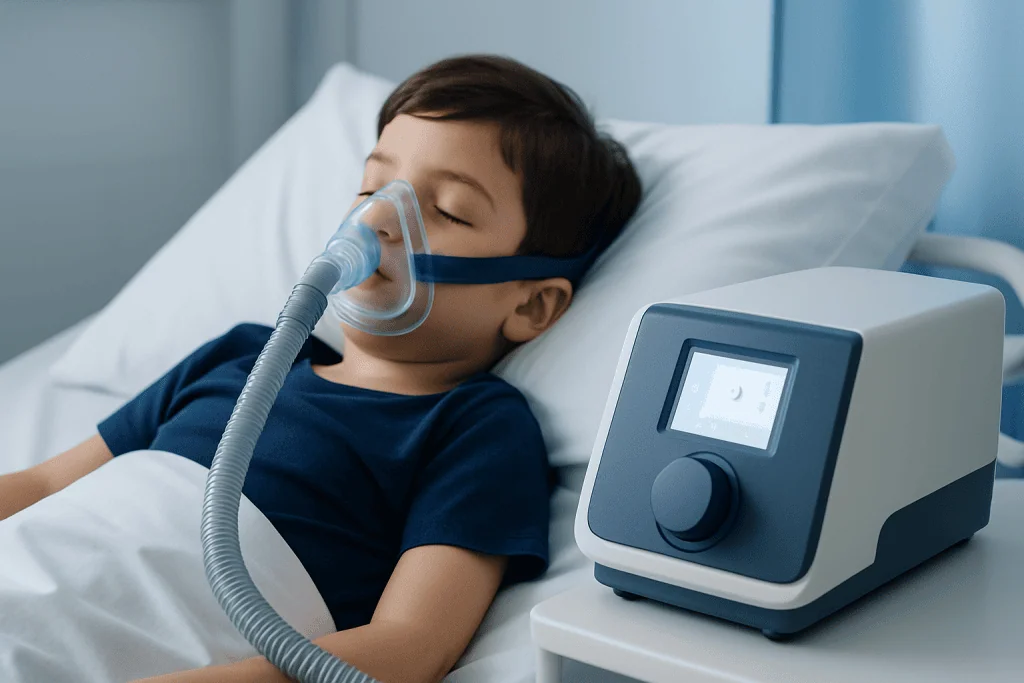
Snoring is common in childhood, especially during colds or allergies, and it does not always mean a child has sleep apnea. However, loud snoring on most nights, gasping, choking sounds, or witnessed pauses in breathing should be taken seriously. Parents may also notice the child sleeping with the mouth open, sweating at night, tossing and turning, or sleeping in unusual positions to keep the airway open.
Nighttime symptoms can be accompanied by daytime changes. A child may wake with headaches, have difficulty getting up, seem tired during the day, or have problems with attention and behavior. Some children show bedwetting, slowed growth, or poor appetite. Because these signs can overlap with other pediatric concerns, evaluation by a qualified clinician is important.
- Frequent loud snoring, especially when not associated with a cold
- Breathing pauses, gasping, or choking during sleep
- Restless sleep, mouth breathing, or sleeping with the neck extended
- Morning headaches, daytime fatigue, irritability, or hyperactivity
- Learning, attention, or behavior difficulties
Parents can help by keeping a brief sleep diary and, when safe and appropriate, recording short videos of concerning sleep sounds or breathing patterns. These observations do not replace medical testing, but they can guide the discussion with the pediatrician or ENT specialist.
Causes and Risk Factors
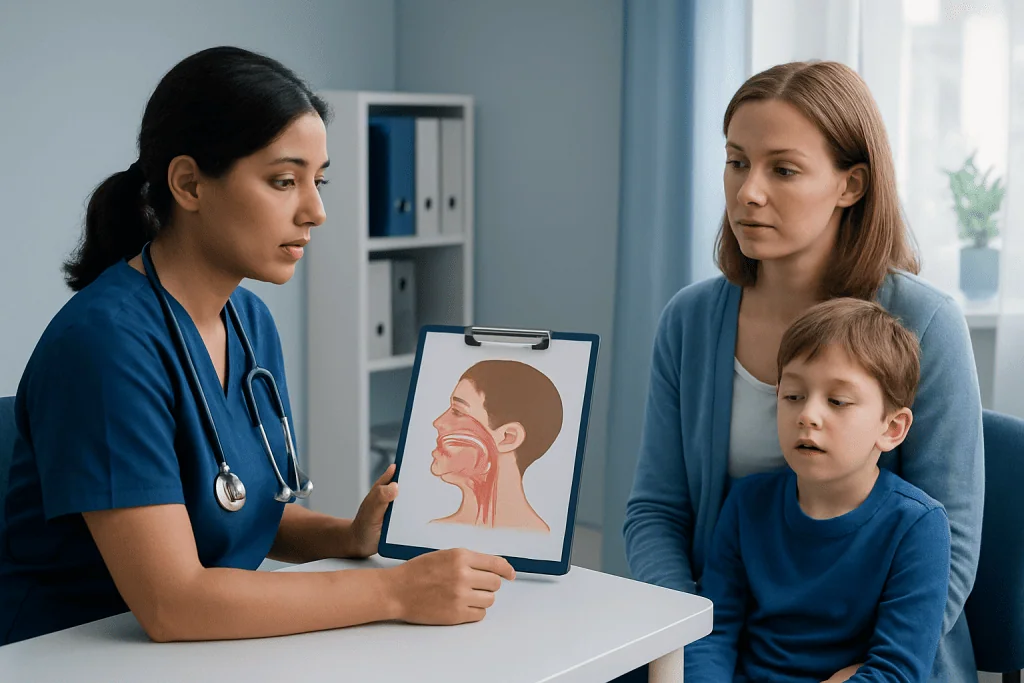
The leading cause of obstructive sleep apnea in many children is enlarged tonsils and adenoids. Tonsils sit at the back of the throat, while adenoids are located higher behind the nose. When these tissues are large, they can narrow the airway during sleep, especially when the muscles of the throat naturally relax.
Other factors may increase the likelihood of sleep apnea or make it more persistent. These include obesity, chronic nasal congestion, allergic rhinitis, asthma, gastroesophageal reflux, and exposure to tobacco smoke. Some children are at higher risk because of craniofacial differences, a small jaw, neuromuscular disorders, Down syndrome, or other medical conditions that affect airway tone or anatomy.
Age also matters. Preschool and early school-age children commonly have enlarged tonsils and adenoids, while adolescents may have risk factors that resemble adult sleep apnea, including excess weight. Premature birth and a family history of sleep-disordered breathing may also be relevant. Because risk factors vary, treatment is most effective when it is individualized.
Diagnosis
Diagnosis begins with a medical history and physical examination. The doctor may ask about snoring frequency, breathing pauses, sleep position, bedtime routines, daytime behavior, school performance, allergies, growth, and other medical conditions. Examination may include the tonsils, nose, jaw, palate, neck, and growth measurements.
The most reliable test for pediatric obstructive sleep apnea is an overnight sleep study, also called polysomnography. During this study, sensors measure breathing, oxygen levels, heart rate, sleep stages, movement, and airflow while the child sleeps. It helps confirm the diagnosis, estimate severity, and guide treatment choices.
In some cases, doctors may use additional tools, such as overnight oxygen monitoring, questionnaires, or imaging of the airway, but these do not always replace a full sleep study. Children with complex medical conditions, very young age, obesity, or uncertain symptoms often benefit from formal testing before treatment decisions are made.
A careful diagnosis is important because snoring, insomnia, restless sleep, and behavioral concerns can have more than one cause. Identifying the exact pattern helps avoid unnecessary treatment and supports a safe, practical plan for the child and family.
Treatment Options
Treatment for sleep apnea in children depends on severity, the child’s age, underlying causes, and overall health. For many children with enlarged tonsils and adenoids, adenotonsillectomy, which removes both tissues, is considered a standard treatment. This procedure can improve airway space during sleep, but children still need follow-up because symptoms may persist or return, especially when other risk factors are present.
For children who are not candidates for surgery, who still have sleep apnea after surgery, or who have certain medical conditions, positive airway pressure therapy may be recommended. CPAP or BiPAP devices deliver gentle air pressure through a mask to keep the airway open during sleep. Success often improves with child-friendly mask fitting, gradual practice, family support, and follow-up with a sleep team.
Some children with mild symptoms or contributing nasal inflammation may benefit from medical treatment such as allergy management or prescribed nasal anti-inflammatory therapy. Weight management may be part of the plan for children with overweight or obesity, always using age-appropriate, supportive guidance rather than restrictive dieting. Orthodontic or dental approaches may be considered in selected children with jaw or palate-related airway narrowing.
- Adenotonsillectomy for enlarged tonsils and adenoids
- CPAP or BiPAP therapy when airway support is needed
- Allergy and nasal congestion treatment when inflammation contributes
- Healthy weight support, nutrition, and physical activity when relevant
- Orthodontic evaluation in selected cases
- Observation with close follow-up for carefully selected mild cases
Recovery, Follow-Up, and Long-Term Outlook
Many children improve with the right treatment, but follow-up is an important part of care. After adenotonsillectomy, families receive instructions on pain control, hydration, diet, activity, and signs that require medical attention. Recovery time varies, and parents should follow the surgical team’s guidance closely.
Some children need repeat evaluation after treatment, especially if snoring continues, symptoms return, or the child has risk factors such as obesity, severe sleep apnea, craniofacial differences, neuromuscular conditions, or Down syndrome. A repeat sleep study may be advised to confirm that breathing has improved adequately.
For children using CPAP or BiPAP, regular follow-up helps with mask comfort, device settings, skin irritation, nasal dryness, and adherence. Children grow quickly, so equipment and settings may need adjustment. Supportive coaching often makes therapy easier and less stressful for both the child and family.
With timely care, many children sleep more quietly, feel more rested, and show improvements in daytime functioning. Outcomes depend on the cause and severity of the condition, so families should maintain ongoing communication with their pediatrician, ENT specialist, or sleep medicine team.
Prevention, Self-Care, and When to See a Doctor
Not all cases of sleep apnea in children can be prevented, especially when anatomy or enlarged tonsils and adenoids are involved. Still, healthy sleep routines and attention to nasal breathing can support overall sleep quality. A regular bedtime, limited screens before sleep, and a calm sleep environment can help children rest, although these habits do not cure obstructive sleep apnea.
Parents can reduce contributing factors by managing allergies with medical guidance, avoiding exposure to tobacco smoke, encouraging regular physical activity, and supporting balanced nutrition. If a child has frequent nasal congestion, mouth breathing, or recurrent throat infections, a pediatric or ENT evaluation may be helpful.
Families should seek medical advice if a child snores loudly most nights, has pauses in breathing, gasps during sleep, shows persistent mouth breathing, or has unexplained daytime behavior, learning, or growth concerns. Urgent care is appropriate if a child has severe breathing difficulty, bluish lips, extreme sleepiness, or other acute symptoms.
International families seeking evaluation may consult pediatric, ENT, and sleep medicine specialists at centers experienced in childhood airway disorders. Acibadem International’s multidisciplinary teams and JCI-accredited hospitals diagnose and treat sleep apnea in children, including care coordination for international patients. Any treatment decision should be made after an individualized medical assessment.
Frequently asked questions
Is snoring normal in children?
Occasional snoring during a cold can be normal. Frequent loud snoring, especially on most nights, should be discussed with a pediatrician because it may be a sign of sleep-disordered breathing or obstructive sleep apnea.
Do enlarged tonsils always need to be removed?
No. Tonsil size alone does not determine treatment. Doctors consider symptoms, examination findings, sleep study results, age, overall health, and whether enlarged adenoids or other factors are contributing.
What is the best test for sleep apnea in children?
An overnight sleep study, called polysomnography, is the most complete test for diagnosing pediatric obstructive sleep apnea. It measures breathing, oxygen levels, sleep stages, and other body functions during sleep.
Can sleep apnea affect school performance or behavior?
Yes. Poor sleep quality can affect attention, mood, learning, and behavior. Some children with sleep apnea appear hyperactive rather than sleepy, which can make the condition less obvious without careful evaluation.
What happens if a child still snores after tonsil and adenoid surgery?
Persistent snoring should be reassessed. Some children may need a repeat sleep study, CPAP therapy, allergy treatment, weight management support, or evaluation for other airway factors.
Can children use CPAP safely?
CPAP can be used in children when prescribed and monitored by a qualified sleep medicine team. Proper mask fitting, gradual adjustment, and regular follow-up are important for comfort, safety, and long-term success.
References
- American Academy of Pediatrics
- American Academy of Sleep Medicine
- American Academy of Otolaryngology-Head and Neck Surgery
- National Heart, Lung, and Blood Institute
- Mayo Clinic
This article is for general information only and is not a substitute for professional medical advice. Please consult a qualified doctor about your individual situation.
Sleep Apnea in Turkey — costs, top hospitals & a free quote
JCI-accredited · board-certified surgeons · reply within 24h
Check your numbers in seconds
BMI, calories, due date, blood pressure and 30+ more clinical calculators — free, instant, doctor-reviewed ranges.

More from the Health Library



Related Specialists

Dr. Macit Dokur
Inpatient Clinic Physicians Clinical Service
Prof. Dr. Emel Öztürk Durmaz
Dermatology
Assoc. Prof. Dr. Firat Tülek
Gynecology & Obstetrics
Dr. Yasemin Kural
Dermatology