Speech and Language Therapy for 2 Year Olds: How It Works, Results and What to Expect
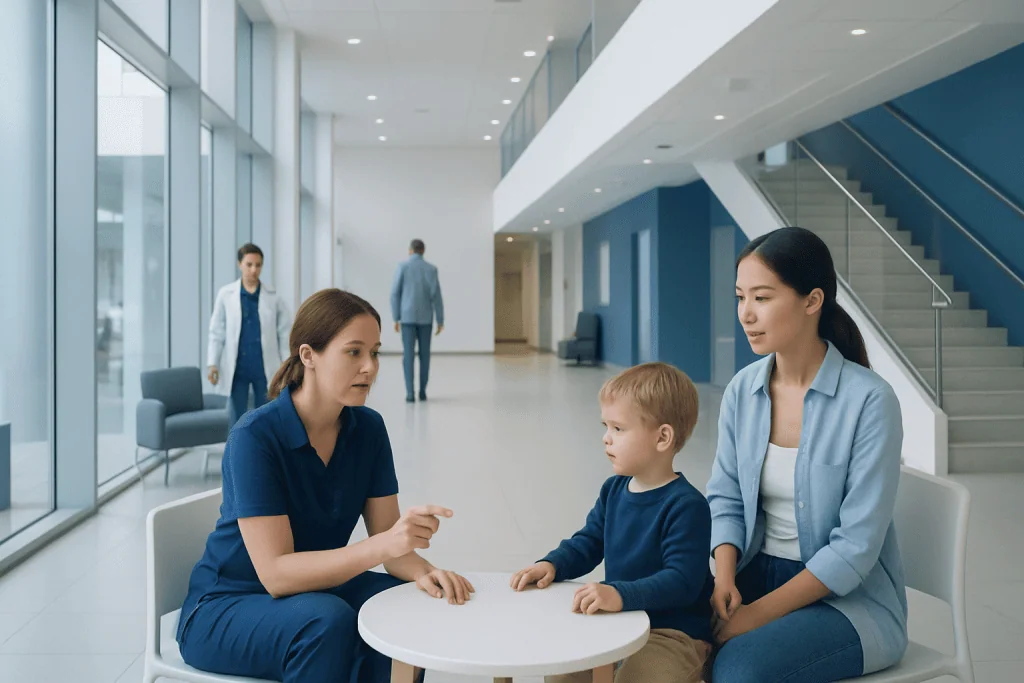
Speech and language therapy for toddlers is usually play-based and tailored to the child’s developmental profile. A two-year-old may benefit from assessment when speech, understanding, interaction or communication progress is a concern.
Key Takeaways
- Speech and language therapy for toddlers is usually play-based and tailored to the child’s developmental profile.
- A two-year-old may benefit from assessment when speech, understanding, interaction or communication progress is a concern.
- Therapy can include spoken words, gestures, signs, play skills, listening and parent-child interaction—not only pronunciation.
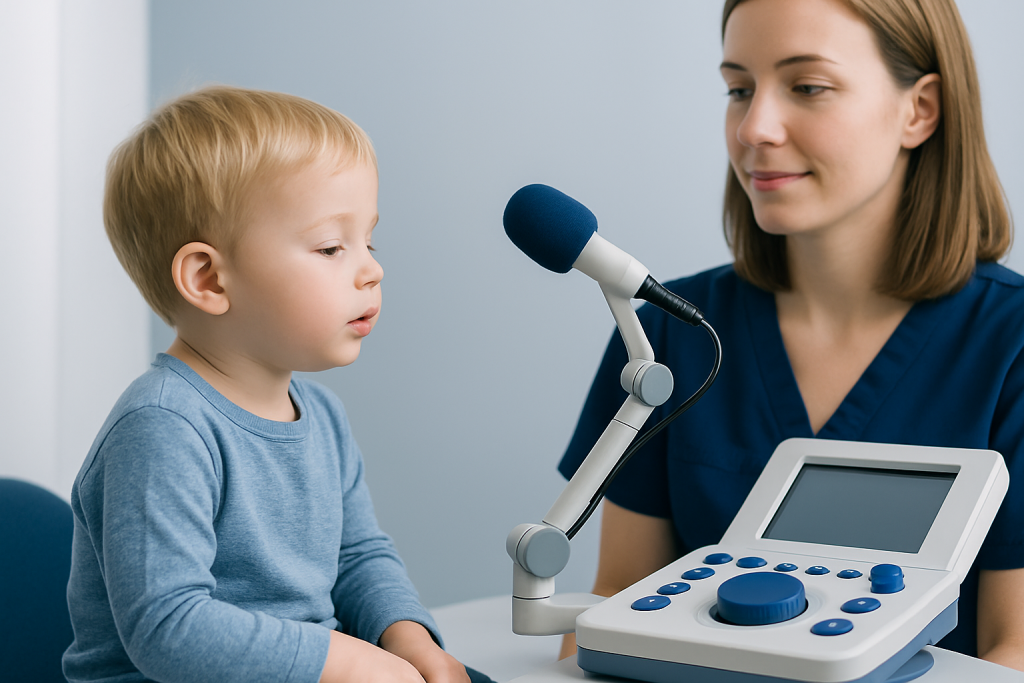
- Hearing assessment is commonly considered because hearing changes can affect speech and language development.
- Progress varies by the child’s needs, frequency of practice and any underlying developmental, hearing or medical factors.
- Early support and caregiver involvement can help children develop functional communication skills in everyday life.
Speech and language therapy for 2 year olds is a play-based, individualized service that supports a toddler’s understanding, talking, gestures, social communication and early interaction skills. It begins with an assessment and often includes parent coaching, so helpful communication strategies can be used throughout daily routines.
Overview: How Speech and Language Therapy Helps at Age Two
Speech and language therapy for 2 year olds helps toddlers develop practical ways to communicate. A speech-language pathologist, also called a speech therapist, assesses how a child understands words, uses sounds or words, communicates through gestures and play, and interacts with familiar adults. The therapist then creates goals that match the child’s abilities and family priorities.
At this age, therapy is not a formal classroom lesson. It is commonly built around play, books, songs, toys, movement and everyday routines such as meals, bath time and getting dressed. The aim is to make communication easier, more enjoyable and more successful for the child.
Language development varies widely at age two. Some children begin combining words earlier than others, and bilingual or multilingual children may distribute words across their languages. A slower start does not by itself establish a diagnosis, but an assessment can clarify whether a child would benefit from support and what next steps may be useful.
Who May Benefit From an Assessment
A referral is not required in every setting, but parents or caregivers can speak with a pediatrician or speech-language pathologist whenever communication development feels concerning. Assessment may be helpful if a two-year-old uses few words, is not adding new words, has difficulty understanding familiar requests, rarely points or gestures to share interest, or becomes frequently frustrated when trying to communicate.
Other reasons to seek advice include limited eye contact or shared attention, challenges joining in simple play, loss of words or social skills already learned, unclear speech that consistently prevents familiar caregivers from understanding the child, or a history of recurrent ear infections. These signs can have many explanations, and they should be considered in the child’s overall development rather than interpreted alone.
Therapy may support children with an isolated language delay as well as children whose communication differences occur alongside hearing loss, developmental differences, autism spectrum disorder, motor challenges or other health conditions. A developmental assessment can be part of a broader care plan when appropriate. Information about autism spectrum disorder may be relevant for families whose child has wider differences in social communication and behavior.
- Children growing up with more than one language can receive therapy while continuing to learn and use their family languages.
- Using two languages does not cause a speech or language disorder.
- Assessment should consider the child’s exposure to, and skills in, all languages used at home.
How the Evaluation and Therapy Process Works
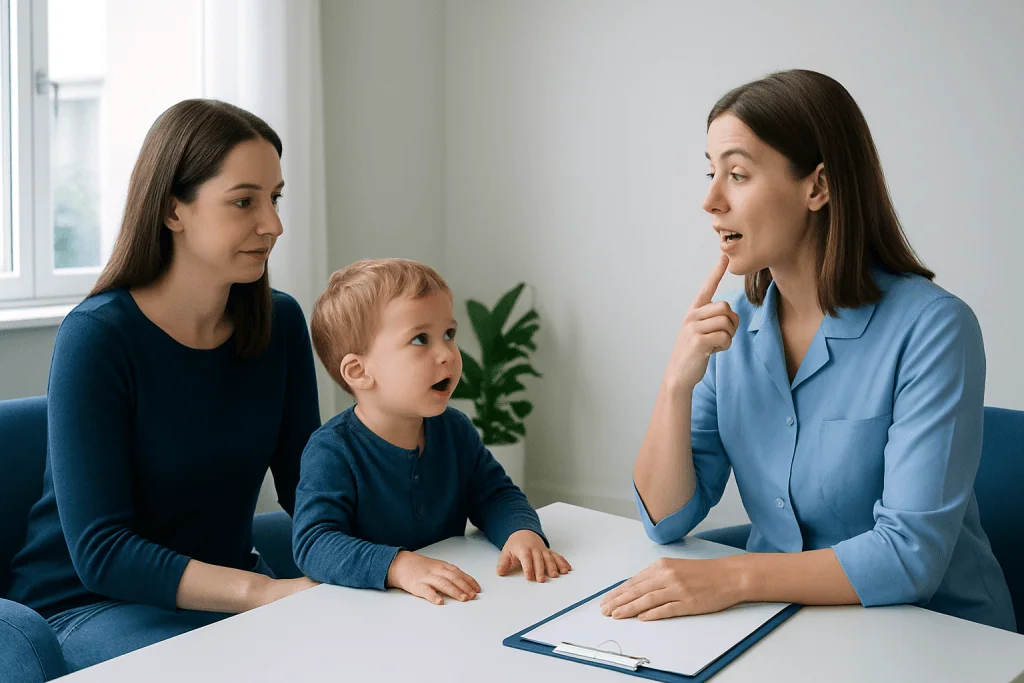
The first appointment generally starts with a detailed conversation. The therapist asks about pregnancy and birth history, health, hearing, developmental milestones, languages spoken at home, family history, daycare experience and the family’s main concerns. Caregivers may be asked which words, gestures or routines the child uses most successfully.
The therapist then observes the toddler during age-appropriate play and interaction. They may offer toys, pictures, simple directions and turn-taking activities to explore understanding, expressive language, imitation, speech sounds, gesture use, play and social engagement. Standardized tools may be used when suitable, but observation and caregiver information are especially important for a young child.
After the assessment, the therapist explains the findings in clear terms and agrees on realistic, functional goals. For example, a goal may be helping a child request help, take turns in a game, understand common action words, use more gestures, learn new words or begin combining words. If hearing has not been evaluated recently, the clinician may recommend a formal hearing assessment through an ear, nose and throat specialist or audiologist.
Sessions are commonly short and regular, with the exact plan based on the child’s needs and local service model. The therapist may demonstrate a technique, practice it with the child and coach the caregiver on how to repeat it during ordinary family activities. This caregiver partnership is an important part of early intervention.
What Happens During Sessions and at Home
A typical session follows the child’s interests while gently creating opportunities to communicate. A therapist might pause before giving a desired toy, model a simple word or gesture, expand on what the child says, describe actions during play, or use choices such as “ball or car?” These approaches encourage communication without placing unrealistic pressure on the child to perform.
For children who are not yet using many spoken words, therapy may include gestures, pictures, signs or other forms of augmentative and alternative communication. These methods provide a way to express needs and ideas. They do not prevent speech from developing; for some children, they can reduce frustration and support language learning while speech skills are emerging.
Home activities are usually brief and woven into the day rather than treated as lengthy drills. Caregivers may be encouraged to follow the child’s lead in play, use short repeated phrases, wait for a response, share picture books, name objects in routines and acknowledge every communication attempt. The therapist should adapt recommendations to the family’s language, culture, routines and available time.
Children usually do not need physical recovery time after therapy. They can return to daycare, play and normal activities immediately. Some toddlers may be tired, shy or less cooperative in a new setting at first; this is common, and the therapist can adjust the pace, environment and activities accordingly.
Expected Results, Benefits and Limitations
The main benefit of therapy is improved functional communication: helping a child share needs, interests and feelings with others. Depending on the child’s profile, progress may be seen in attention, understanding, gestures, vocabulary, combining words, play, interaction or clearer speech. Improved communication can also lessen frustration for children and caregivers.
There is no fixed timetable for results. Some children make noticeable gains over weeks or months, while others need longer-term support. Progress depends on the child’s learning profile, hearing, developmental needs, consistency of opportunities to communicate, caregiver involvement and whether any associated condition needs additional care.
Speech therapy is supportive rather than a guarantee of a particular outcome. It cannot replace treatment for hearing loss, neurological conditions or other medical concerns, but it can be an important part of multidisciplinary care. Regular review helps ensure that goals remain meaningful and that the therapy approach changes as the child develops.
Risks are generally low because sessions are noninvasive and child-led. A child may occasionally feel frustrated, overwhelmed or reluctant to engage, particularly in unfamiliar environments. Therapists reduce this by using familiar play, allowing breaks, respecting the child’s communication style and working with caregivers to create a comfortable routine.
Supporting Communication Between Appointments
Families do not need special toys or long practice sessions to support language development. The most useful opportunities often occur during ordinary interaction. Caregivers can get down to the child’s level, notice what captures their attention, comment on it with simple language and allow time for the child to respond in any way they can.
Reading together, singing familiar songs, narrating routines and giving simple choices can encourage shared attention and language. Instead of repeatedly asking a child to “say” a word, it is usually more helpful to model the word naturally and respond positively to sounds, looks, pointing, signs and attempts to communicate.
Screen media should not replace responsive conversation and play with adults. Video calls with caring relatives may be meaningful when interactive, but young children learn language especially well through real-life back-and-forth exchanges. For children with persistent speech clarity concerns, information about speech sound disorder may help families understand one possible reason for difficulty being understood.
Caregivers should continue using the language or languages in which they feel most comfortable and expressive. Rich, warm interaction in a home language supports connection and communication, and the speech-language pathologist can advise how to build skills across more than one language.
When to Seek Medical Care
Parents and caregivers should arrange a developmental discussion with the child’s pediatrician or a qualified speech-language pathologist if they are worried about communication at any age. It is especially important to seek timely assessment if a child loses words, gestures, social interest or other skills that were previously present.
Prompt medical advice is also appropriate when there are concerns about hearing, frequent ear infections, poor response to sounds, feeding or swallowing difficulty, major changes in behavior, or delays affecting several areas of development. A pediatrician can coordinate hearing testing and referrals to relevant specialists, such as audiology, ENT, developmental pediatrics, occupational therapy or psychology.
There is usually no need to wait for a child to “grow out of it” when concerns are ongoing. Early assessment does not label a child; it helps families understand strengths and needs, access support where indicated and make informed decisions. Acibadem International’s multidisciplinary specialists and JCI-accredited hospitals can assess and support communication and developmental needs for international patients.
Frequently asked questions
Is it normal for a 2-year-old to have unclear speech?
Some unclear speech is common at age two because speech sounds develop gradually. However, an assessment may be useful if familiar caregivers regularly cannot understand the child, communication is causing frustration, or language development also seems delayed. A speech-language pathologist can distinguish typical variation from a need for support.
What does speech and language therapy for 2 year olds involve?
Therapy usually uses play, everyday routines, books, songs and interaction with caregivers. The therapist may work on understanding words, using gestures, building vocabulary, turn-taking, early phrases or speech clarity. Parent coaching is often included so strategies can be used at home.
How long will a toddler need speech therapy?
The length of support varies considerably. It depends on the child’s communication profile, hearing, developmental needs, response to therapy and opportunities to practice skills in daily life. The therapist should review progress regularly and update goals with the family.
Will using signs or picture cards stop my child from talking?
No. Gestures, signs and picture-based communication do not prevent spoken language development. They can give a child a reliable way to communicate, reduce frustration and support understanding while speech develops.
Should bilingual toddlers receive speech therapy in both languages?
A bilingual child can benefit from therapy, and learning more than one language does not cause language delay. Assessment should consider all languages the child hears and uses. Families are generally encouraged to continue speaking the language or languages they use most naturally at home.
Does a child need a hearing test before starting speech therapy?
A recent hearing assessment is often recommended when there is a speech or language concern, particularly if there is a history of ear infections or inconsistent response to sound. Hearing differences can affect how children access spoken language. A pediatrician, audiologist or ENT specialist can advise on the appropriate testing.
References
- American Speech-Language-Hearing Association
- American Academy of Pediatrics
- Centers for Disease Control and Prevention
- National Institute on Deafness and Other Communication Disorders
This article is for general information only and is not a substitute for professional medical advice. Please consult a qualified doctor about your individual situation.
Explore treatments in Turkey — costs, top hospitals & a free quote
JCI-accredited · board-certified surgeons · reply within 24h
Add us as a Preferred Source to see more of our trusted health content across Google Search, AI Overviews and Discover.