What Does OD Mean in Eye Care? Ophthalmologist, Optometrist, and Eye Exam Basics

In eye charts and prescriptions, OD usually means the right eye. After a clinician’s name, OD means Doctor of Optometry.
Key Takeaways
- In eye charts and prescriptions, OD usually means the right eye.
- After a clinician’s name, OD means Doctor of Optometry.
- OS refers to the left eye, and OU means both eyes.
- Optometrists and ophthalmologists have different training and roles in eye care.
- A routine eye exam checks vision, eye health, and whether further treatment is needed.
OD is a common abbreviation in eye care, but its meaning depends on context. It may refer to the right eye on a prescription or chart, or it may refer to a doctor of optometry when used after a clinician’s name.
Overview: What OD Means in Eye Care
The abbreviation OD has two common meanings in eye care. On an eye prescription, chart, or exam form, OD usually means oculus dexter, a Latin term for the right eye. When OD appears after a healthcare professional’s name, it usually means Doctor of Optometry, a licensed eye care provider who examines vision, prescribes glasses or contact lenses, and helps detect eye problems.
This can understandably be confusing, especially for patients reading a prescription or trying to choose the right eye specialist. The meaning becomes clear by looking at the context. If OD is listed next to lens measurements, it refers to the right eye. If it follows a person’s name, it refers to that person’s professional qualification.
Eye care also uses other abbreviations that often appear alongside OD. OS means the left eye, and OU means both eyes. Learning these basic terms can make prescriptions, appointment summaries, and exam results easier to understand and can help patients feel more confident during their eye care visits.
OD, OS, and OU: Common Eye Prescription Terms
Eye prescriptions often include abbreviations because they are a quick way to note which eye is being measured. OD stands for the right eye, OS stands for the left eye, and OU stands for both eyes. These labels may appear next to values showing nearsightedness, farsightedness, astigmatism, reading correction, or prism correction.
Patients may also notice terms such as SPH for sphere, CYL for cylinder, and Axis for the direction of astigmatism correction. A prescription is not simply a measure of eyesight; it is a personalized description of how each eye focuses light. For example, a person may have different prescriptions in the right and left eye, which is why OD and OS are so important.
Understanding these abbreviations can be especially helpful when discussing glasses, contact lenses, or refractive correction. If astigmatism is present, a clinician may explain options such as glasses, toric contact lenses, or procedures related to astigmatism care. If any part of a prescription seems unclear, patients should feel comfortable asking for a plain-language explanation.
- OD = right eye
- OS = left eye
- OU = both eyes
- Rx = prescription
- VA = visual acuity, or clarity of vision
What Does OD Mean After a Doctor’s Name?

When OD appears after a clinician’s name, it means Doctor of Optometry. Optometrists are trained to perform eye exams, assess vision, prescribe glasses and contact lenses, diagnose many common eye conditions, and monitor ongoing eye health. In many settings, they are the main point of contact for routine vision care.
Optometrists can also identify signs of medical eye disease and determine when a patient should see an ophthalmologist. During a visit, they may evaluate symptoms such as blurred vision, dry eyes, eye strain, headaches related to focusing, or difficulty seeing at night. They often help manage common concerns and coordinate referral if a patient needs further testing or specialized treatment.
For people who use contacts, an optometrist may also perform a contact lens fitting and discuss safe wear habits, lens type, comfort, and hygiene. Depending on the patient’s needs, this may include advice about contact lenses as part of a broader eye care plan.
Ophthalmologist vs Optometrist: What Is the Difference?
An optometrist and an ophthalmologist both care for eyes, but their training and scope are different. An optometrist performs comprehensive eye exams, checks vision, prescribes glasses or contacts, and manages many common eye problems. An ophthalmologist is a medical doctor who specializes in eye and vision care, including medical treatment and eye surgery.
Ophthalmologists diagnose and treat a wide range of eye diseases, from cataracts and glaucoma to retinal and corneal conditions. They may prescribe medication, perform procedures, and carry out surgery when needed. For example, if a patient has vision loss caused by lens clouding, an ophthalmologist may discuss options such as cataract surgery. If a nerve-related vision problem is suspected, a referral to neuro-ophthalmology may be appropriate.
Many patients benefit from care that involves both professionals. A person may have routine eye exams with an optometrist and then see an ophthalmologist for surgery or advanced disease management. This team-based approach can help ensure that vision changes are assessed promptly and that treatment is matched to the patient’s specific needs.
What Happens During a Basic Eye Exam?
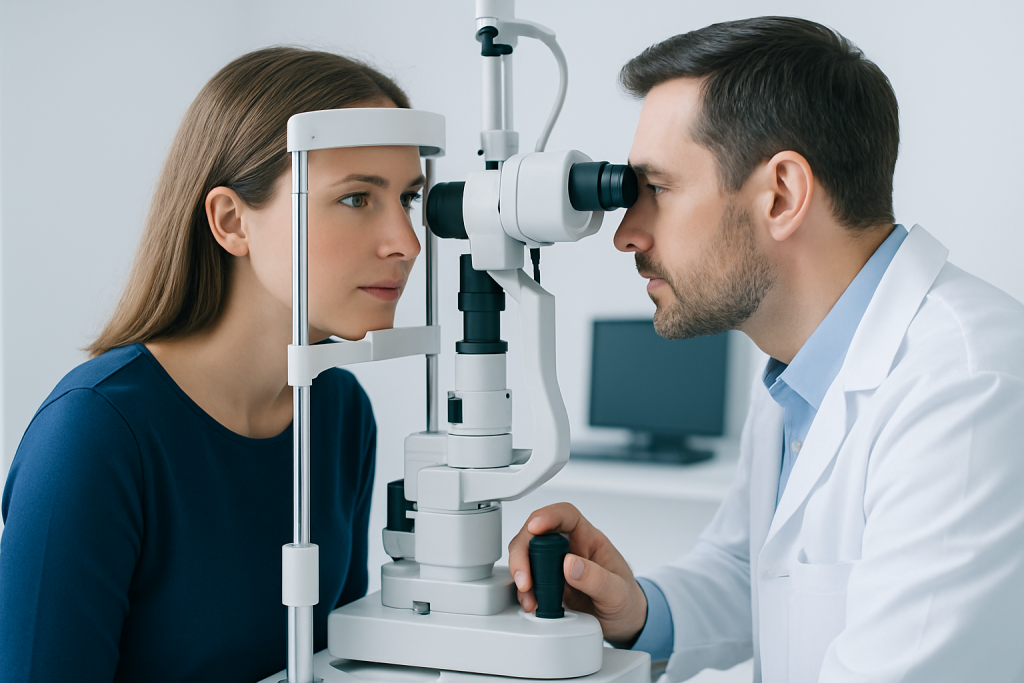
A basic eye exam is usually straightforward, painless, and tailored to the patient’s age, symptoms, and visual needs. It commonly begins with a discussion of medical history, current symptoms, medications, use of glasses or contact lenses, family history of eye disease, and any concerns such as headaches, double vision, or trouble reading.
The clinician then measures visual acuity, often using a letter chart. Refraction may be performed to determine whether glasses or contact lenses could improve focus. The exam may also include tests of eye movements, pupil responses, peripheral vision, eye pressure, and the front and back of the eye. Sometimes dilating drops are used so the retina and optic nerve can be examined more clearly.
Eye exams can detect more than the need for a new prescription. They may reveal signs of cataracts, glaucoma, diabetes-related eye changes, or problems affecting children’s visual development. In children, issues such as reduced vision in one eye may need evaluation for amblyopia treatment, while adults with diabetes may need monitoring for diabetic retinopathy.
Why Regular Eye Exams Matter
Regular eye exams help protect both vision and overall eye health. Some eye conditions develop gradually and do not cause obvious symptoms at first. A person may feel that vision is acceptable while early disease is already affecting the eye. Routine exams can identify these changes sooner, when management may be simpler and more effective.
Eye examinations can also uncover health issues beyond the eyes. Changes in the blood vessels, retina, or optic nerve may sometimes reflect broader medical conditions such as diabetes, high blood pressure, autoimmune disease, or neurologic disorders. This is one reason why eye care is an important part of preventive health, even when a person does not currently wear glasses.
The ideal timing of exams depends on age, symptoms, medical history, and risk factors. Children, older adults, people with diabetes, those with a family history of eye disease, and anyone with sudden or persistent vision changes may need more frequent evaluation. A qualified eye care professional can recommend a schedule based on individual circumstances.
When to See an Optometrist or Ophthalmologist
A patient may choose an optometrist for routine vision checks, updated glasses or contact lens prescriptions, eye strain, mild dry eye, or a general eye health review. This is often the right first step for people who notice gradual changes in vision, need school or work screening, or want preventive care.
An ophthalmologist may be needed if there is a known eye disease, significant injury, severe pain, flashes and floaters, sudden vision loss, double vision, or a concern that surgery or advanced medical treatment may be necessary. Conditions such as cataracts, glaucoma, retinal disease, or complex neurologic visual symptoms typically require medical specialist assessment.
People should seek urgent medical attention for sudden loss of vision, eye trauma, a chemical splash, a painful red eye with reduced vision, or new flashes and a curtain-like shadow in the visual field. Near the end of the care journey, some patients may also seek coordinated specialist evaluation; Acibadem International’s multidisciplinary eye specialists in JCI-accredited hospitals diagnose and treat eye conditions for international patients when more advanced assessment is needed.
Frequently asked questions
Does OD always mean the right eye?
Not always. On prescriptions and charts, OD usually means the right eye, but after a clinician’s name it usually means Doctor of Optometry. The surrounding words and layout usually make the meaning clear.
What is the difference between OD, OS, and OU?
OD refers to the right eye, OS refers to the left eye, and OU refers to both eyes. These abbreviations are commonly used in prescriptions, exam notes, and treatment instructions. They help clinicians record information accurately for each eye.
Should someone see an optometrist or an ophthalmologist first?
For routine eye exams, glasses prescriptions, contact lens checks, and many common vision concerns, an optometrist is often a good first choice. If there is a serious eye disease, sudden vision change, significant pain, injury, or a likely need for surgery, an ophthalmologist may be more appropriate. An optometrist can also refer a patient when specialist care is needed.
Can an eye exam detect diseases even if vision seems normal?
Yes. Some eye diseases develop slowly and may not affect daily vision at first. A comprehensive eye exam can detect early changes in the retina, optic nerve, lens, or eye pressure before symptoms become obvious.
What should a person bring to an eye exam?
It is helpful to bring current glasses, contact lenses if worn, a list of medications, and any previous eye records if available. Patients should also be ready to describe symptoms, medical conditions, and family history of eye disease. If dilation may be used, arranging transportation can sometimes be helpful.
Are eye prescriptions and contact lens prescriptions the same?
No. A glasses prescription and a contact lens prescription are related but not identical. Contact lenses require additional measurements and fitting details because the lens sits directly on the eye.
References
- American Academy of Ophthalmology
- American Optometric Association
- National Eye Institute
- Centers for Disease Control and Prevention
- World Health Organization
This article is for general information only and is not a substitute for professional medical advice. Please consult a qualified doctor about your individual situation.
Explore treatments in Turkey — costs, top hospitals & a free quote
JCI-accredited · board-certified surgeons · reply within 24h