What Is the Best Treatment for Arthritis in the Neck: How It Works, Results and What to Expect

Neck arthritis, often called cervical spondylosis, is age-related wear affecting the joints and discs of the cervical spine. Most people improve without surgery through guided exercise, activity modification and symptom-relieving treatments.
Key Takeaways
- Neck arthritis, often called cervical spondylosis, is age-related wear affecting the joints and discs of the cervical spine.
- Most people improve without surgery through guided exercise, activity modification and symptom-relieving treatments.
- Imaging is not always needed initially, but MRI or other tests may be important for weakness, persistent nerve symptoms or signs of spinal cord compression.
- Steroid or diagnostic injections can provide temporary relief for selected pain patterns, while surgery is reserved for carefully assessed cases.
- New weakness, walking or balance problems, loss of hand coordination, or bladder and bowel changes need urgent medical assessment.
The best treatment for arthritis in the neck is usually a personalized, stepwise plan that combines staying active, targeted physical therapy, posture and activity changes, and appropriate pain relief. Injections or surgery may be considered when symptoms remain severe or when nerves or the spinal cord are affected.
What Is the Best Treatment for Arthritis in the Neck?
For most people, the best treatment for arthritis in the neck is not one single procedure or medicine. It is a tailored plan that keeps the neck moving safely, improves strength and posture, reduces pain, and addresses daily activities that trigger symptoms. Physical therapy, home exercises, heat or cold, and clinician-guided pain medicines are often effective first steps.
Neck arthritis is commonly known as cervical spondylosis or cervical osteoarthritis. It develops as the discs, small facet joints, ligaments and bones of the neck change over time. Treatment depends on whether symptoms are limited to neck stiffness and pain or include nerve-related symptoms such as pain traveling into an arm, tingling, numbness or weakness.
Some people need additional treatment, such as an image-guided injection, if pain persists despite conservative care. Surgery is uncommon for uncomplicated neck arthritis, but it can be important when there is significant nerve compression, spinal cord compression, progressive weakness, or disabling pain that has not responded to appropriate non-surgical treatment.
How Neck Arthritis Causes Symptoms
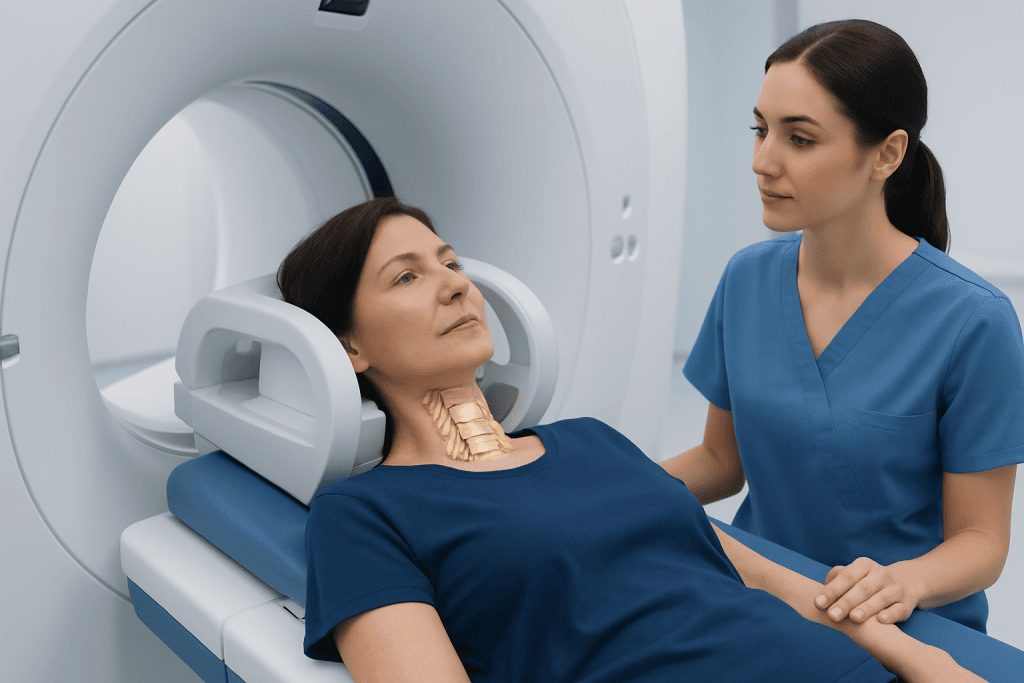
The cervical spine consists of seven neck bones, cushioning discs, facet joints and supporting muscles and ligaments. With time, discs can lose height and hydration, and the facet joints may develop cartilage wear and bony overgrowths. These changes can make the neck feel stiff or painful, particularly after prolonged positions or certain movements.
Symptoms vary widely. Some people have imaging changes without pain, while others have recurring discomfort that affects sleep, work, driving or exercise. Neck pain may be accompanied by headache at the base of the skull, a grinding sensation with movement, or reduced range of motion.
If narrowing develops around a spinal nerve, pain, tingling or numbness can extend into the shoulder, arm or hand. This is often called cervical radiculopathy. More rarely, pressure on the spinal cord can cause cervical myelopathy, which may affect balance, walking, hand dexterity or bladder and bowel function.
- Local neck pain and stiffness are common.
- Muscle tension can contribute to discomfort and headaches.
- Arm symptoms suggest possible irritation or compression of a cervical nerve.
- Balance or coordination changes require timely medical evaluation.
What Do Doctors Do for Arthritis in the Neck?

Doctors begin by listening to the person’s symptoms, medical history, work and activity demands, and treatment goals. A physical examination checks neck movement, muscle tenderness, strength, reflexes, sensation, hand coordination and walking. This helps distinguish mechanical neck pain from nerve or spinal cord involvement.
Many people do not need imaging straight away. X-rays can show alignment changes, disc-space narrowing and bone spurs. MRI may be recommended for persistent arm symptoms, weakness, suspected spinal cord compression, unexplained severe symptoms, or when surgery is being considered. CT may help assess bony anatomy in specific situations.
Treatment commonly starts with education, activity adjustment and a structured rehabilitation program. Clinicians may recommend short-term pain-relieving medicines when appropriate for the individual’s health history. A pain specialist may consider carefully selected diagnostic or therapeutic injections for persistent facet-joint or nerve-related pain. Surgery is considered after specialist assessment when there is a clear structural cause for serious or ongoing neurological symptoms.
Non-Surgical Treatment: How It Works and Who It Suits
Non-surgical care aims to reduce irritation while helping the neck regain comfortable, confident movement. Physical therapy may include gentle range-of-motion work, strengthening of the neck, shoulder-blade and upper-back muscles, ergonomic advice, and gradual return to valued activities. The exact program should be adjusted if exercises increase arm symptoms, numbness or weakness.
Heat may ease muscle tightness for some people, while a cold pack can be useful after an activity flare. Attention to workstations, phone use, pillows, carrying loads and driving positions can reduce repeated strain. Regular low-impact activity, such as walking or swimming when comfortable, supports general fitness and joint function.
Over-the-counter or prescription pain medicines may have a role, but the safest option depends on factors such as kidney disease, stomach ulcers, heart disease, blood-thinning medicines and other treatments. A doctor or pharmacist can advise whether a medicine is suitable. Soft collars are generally used only for short periods when specifically recommended, because prolonged use may weaken supporting muscles.
People with uncomplicated neck pain and stiffness are usually good candidates for conservative management. Those with severe pain, persistent arm symptoms or functional limitations may still start with non-surgical care, but should be monitored more closely and may need imaging or specialist review.
Injections and Surgery: Step by Step, Benefits, Risks and Recovery
When well-delivered conservative treatment has not provided enough relief, an image-guided injection may be discussed. Depending on the suspected pain source, this may target a facet joint, the small nerves serving the facet joints, or the space around an irritated nerve root. Imaging guidance improves accuracy and helps clinicians avoid nearby structures. These procedures are usually outpatient treatments, and the immediate plan includes observation, post-procedure instructions and follow-up to assess benefit.
Injections may reduce inflammation or help confirm which structure is producing pain, but they do not reverse joint wear. Relief can be temporary and varies between individuals. Potential risks include temporary pain flare, bleeding, infection, allergic reaction and, rarely, nerve or blood-vessel injury; the treating clinician reviews individual risks before proceeding.
Surgery may be recommended when spinal cord or nerve compression is causing progressive weakness, myelopathy, disabling arm symptoms, or pain that remains severe despite appropriate non-surgical care. Procedures may remove pressure from nerves or the spinal cord and, when needed, stabilize the spine with fusion or preserve movement with selected alternatives. The choice depends on the affected levels, alignment, symptoms and overall health.
After surgery, hospital stay and recovery time vary by procedure and personal health. Walking often begins early, while return to desk work, driving, lifting and sport is guided by the surgeon and rehabilitation team. Benefits may include relief of nerve-related pain and protection of neurological function, but surgery also carries risks such as infection, blood clots, swallowing difficulty, persistent symptoms, adjacent-level degeneration and the possible need for further treatment. Cervical spine surgery should be considered through shared decision-making with an experienced spine team.
Can Arthritis in Your Neck Be Reversed?
Arthritis-related structural changes in the neck generally cannot be reversed. Cartilage loss, disc degeneration and bone spurs do not usually return to their earlier state. However, symptoms can often be reduced substantially, and many people maintain an active, comfortable life with appropriate treatment.
The goal is to improve function rather than to promise a cure on an X-ray or MRI. Better muscle support, movement habits, sleep positioning, pacing of activities and management of pain flares can all reduce the impact of neck arthritis. Symptoms may fluctuate, so treatment plans often need adjustment over time.
Maintaining overall health also matters. Regular physical activity, avoiding tobacco, supporting bone health, managing body weight where relevant and addressing stress or poor sleep can help recovery and day-to-day resilience. A clinician can help identify other conditions that may be adding to neck pain.
How Serious Is Arthritis in the Neck?
Arthritis in the neck is often manageable and is not automatically dangerous. Many people have mild stiffness or episodic pain that responds to conservative care. The seriousness depends less on an imaging report alone and more on symptoms, neurological examination findings and the effect on daily function.
It becomes more concerning when degenerative changes narrow the spaces for spinal nerves or the spinal cord. Arm weakness, worsening numbness, loss of balance, clumsy hands, frequent falls, or difficulty with buttons and handwriting may indicate nerve or spinal cord involvement. These symptoms deserve prompt medical assessment.
Severe pain after a fall, road-traffic collision or other injury should also be assessed urgently, especially in older adults or people with osteoporosis. A doctor can determine whether symptoms are due to arthritis alone or whether another condition needs attention.
What Not to Do With Arthritis in the Neck and When to Seek Medical Care
People with neck arthritis should generally avoid pushing through movements that cause sharp, spreading or progressively worsening pain. Repeated heavy lifting above shoulder level, prolonged bent-neck phone or computer use, and sudden forceful neck movements can aggravate symptoms. High-velocity neck manipulation should not be undertaken without medical assessment, particularly when there are arm symptoms, neurological signs, osteoporosis, prior neck surgery or known spinal narrowing.
Complete rest for long periods is usually not helpful. It can increase stiffness and reduce muscle conditioning. Instead, gentle movement within tolerable limits, regular position changes and a gradual activity plan are usually safer. A physical therapist can show how to perform exercises correctly and modify them when symptoms flare.
Medical care should be arranged for neck pain that lasts several weeks, repeatedly disrupts sleep or daily life, or is accompanied by pain traveling down the arm, tingling or numbness. Urgent assessment is needed for new or worsening weakness, walking or balance difficulty, poor hand coordination, loss of bladder or bowel control, fever with severe neck pain, unexplained weight loss, or symptoms after significant trauma.
Acibadem International’s multidisciplinary specialists and JCI-accredited hospitals assess and treat cervical spine conditions for international patients, coordinating rehabilitation, pain management and surgical care when clinically appropriate.
Frequently asked questions
What is the best treatment for arthritis in the neck?
For most people, the best treatment is a personalized combination of physical therapy, gentle exercise, activity and posture changes, and suitable pain relief. If symptoms persist or involve a nerve, a doctor may discuss imaging, injections or referral to a spine specialist. Surgery is generally reserved for selected cases with significant nerve or spinal cord compression or symptoms that do not improve with non-surgical treatment.
Can arthritis in the neck cause dizziness or headaches?
Neck pain and muscle tension can contribute to headaches, often felt around the back of the head. Dizziness has many possible causes and should not automatically be attributed to neck arthritis. A clinician can assess whether dizziness needs evaluation for ear, neurological, cardiovascular or medication-related causes.
How long does a neck arthritis flare last?
A flare may last from several days to a few weeks, depending on the trigger and the person’s underlying condition. Gentle movement, pacing activities and a treatment plan recommended by a healthcare professional can help. Persistent, worsening or recurrent flares should be reviewed.
Will I need surgery for neck arthritis?
Most people with neck arthritis do not need surgery. Surgery is usually considered only when there is clear pressure on a nerve or the spinal cord, progressive neurological symptoms, or disabling symptoms despite appropriate conservative care. A spine surgeon can explain whether the expected benefits outweigh the risks in an individual case.
Is exercise safe with arthritis in the neck?
In most cases, appropriately chosen exercise is helpful because it supports mobility, muscle strength and posture. Exercises should be gradual and should not cause worsening arm pain, numbness or weakness. A physical therapist can provide an individualized program, especially when symptoms are persistent or complex.
Can sleeping position make neck arthritis worse?
An uncomfortable sleeping position can aggravate neck pain and stiffness, although it does not cause the underlying arthritis. A pillow that keeps the neck in a neutral, supported position may be more comfortable than one that forces the neck too far forward or backward. People may need to try small adjustments in pillow height and sleeping position to find what suits them.
References
- American Academy of Orthopaedic Surgeons
- American Association of Neurological Surgeons
- National Institute of Neurological Disorders and Stroke
- NHS
- Mayo Clinic
This article is for general information only and is not a substitute for professional medical advice. Please consult a qualified doctor about your individual situation.
Arthritis in Turkey — costs, top hospitals & a free quote
JCI-accredited · board-certified surgeons · reply within 24h
Add us as a Preferred Source to see more of our trusted health content across Google Search, AI Overviews and Discover.

Orthopedics & Spine
Care for bones, joints and the musculoskeletal system, including joint replacement, sports injuries and trauma.
125 specialists in this unit