White Pimple on Bottom of Toe: A Complete Medical Overview
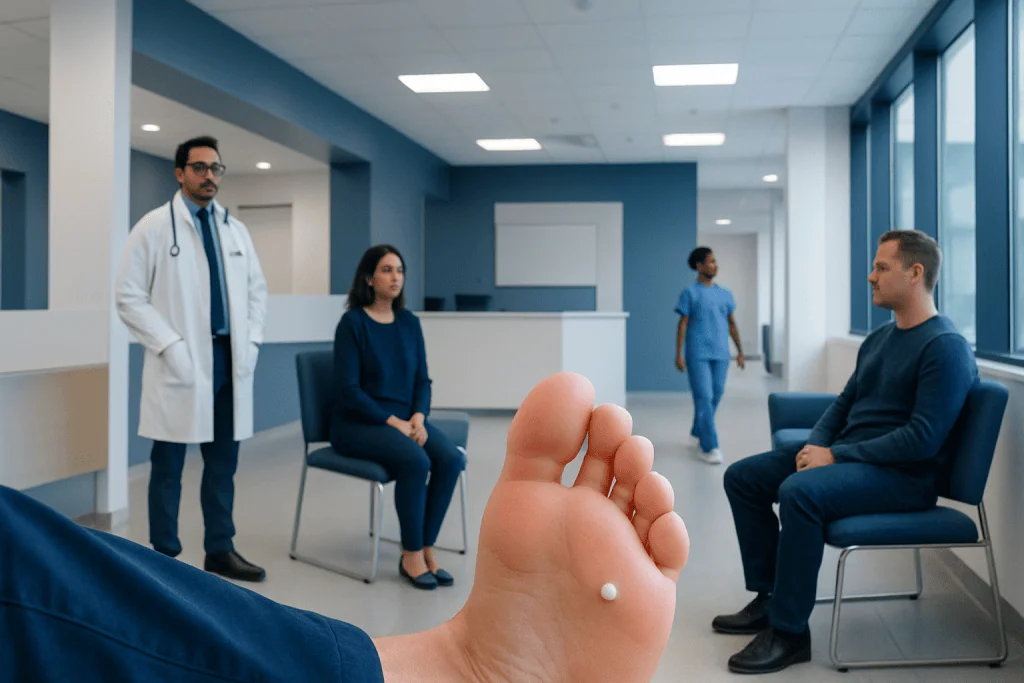
A white pimple on bottom of toe is commonly caused by pressure, friction, a wart, a corn, or a mild infection rather than acne. Pain with walking, a rough surface, fluid inside, redness, or drainage can help point to the cause.
Key Takeaways
- A white pimple on bottom of toe is commonly caused by pressure, friction, a wart, a corn, or a mild infection rather than acne.
- Pain with walking, a rough surface, fluid inside, redness, or drainage can help point to the cause.
- Do not cut, squeeze, or pop a toe lesion at home, especially if there is diabetes, poor circulation, or reduced feeling in the feet.
- Medical evaluation is important if the bump lasts more than a few weeks, becomes very painful, or shows signs of infection.
- Proper footwear, dry feet, and daily skin checks can help prevent many toe skin problems.
A white pimple on bottom of toe is usually not a true acne pimple. It is more often caused by friction, a blister, a corn, a plantar wart, a small cyst, or a minor skin infection, and the best next step depends on its appearance, pain level, and how long it has been present.
Overview: What a White Pimple on the Bottom of a Toe Usually Means
A white pimple on bottom of toe is a common description for a small raised spot that appears pale, white, or yellowish on the skin under a toe. In many cases, it is not a pimple in the acne sense because the soles and undersides of the toes do not have the same oil glands that typically form acne lesions. Instead, this kind of bump often reflects pressure, trapped fluid, thickened skin, or irritation.
The most common possibilities include a friction blister, a corn, a plantar wart, a small callused area, or a minor infection around a tiny break in the skin. Less often, it may represent eczema, a foreign body reaction, a cyst-like lesion, or inflammation related to sweating and skin maceration. The exact cause matters because each condition is treated differently.
Looking at the bump’s texture, tenderness, and duration can help. A smooth fluid-filled spot may act more like a blister, while a rough lesion with small dark dots may suggest a wart. A firm central core can fit a corn, especially if shoes rub in the same place repeatedly. If the area is red, warm, and draining, an infection becomes more likely.
Common Signs and Symptoms to Notice
The appearance of a white bump under a toe can vary. Some people notice a tiny pearl-like spot, while others find a round raised area with thick white skin over it. The bump may be painless at first or become noticeable only when walking, running, or wearing tight shoes. Pressure-related lesions often hurt most when weight is placed directly on them.
Other symptoms can offer clues. A blister may contain clear or cloudy fluid and feel tender. A wart may have a rough, grainy surface and interrupt the normal skin lines. A corn may feel hard and concentrated, almost like stepping on a small pebble. An infected lesion may become increasingly painful and may produce warmth, redness, swelling, or pus.
It can help to note whether the bump changes over time. Useful details include whether it appeared after a long walk, new shoes, sports activity, sweating, or a small injury. Also important is whether there are multiple spots, itching, scaling, or similar lesions elsewhere on the foot, as these features can suggest a broader skin condition rather than a single pressure point.
- Pain with pressure or walking
- Fluid, drainage, or crusting
- Rough or thickened skin
- Redness, warmth, or swelling
- Itching, burning, or tenderness
- Persistence for several weeks
Possible Causes and Risk Factors

Friction and pressure are among the most frequent causes. Tight footwear, repeated rubbing, long periods of standing, sports activity, and foot shape can create blisters or corns on the underside of the toes. A blister forms when the upper layers of skin separate and fill with fluid. A corn develops when skin thickens to protect itself from repeated pressure.
Plantar warts are another common cause. These are caused by certain types of human papillomavirus entering through tiny breaks in the skin. Unlike a simple blister, a wart often grows inward because of pressure from walking. It may look white after soaking or after the overlying thick skin absorbs moisture. Readers interested in the broader condition may find it helpful to learn about plantar warts.
Infections are also possible, especially if there is a cut, splinter, athlete’s foot, or skin softening from moisture. Bacterial infection may lead to a pustule-like bump, while fungal problems can trigger scaling, cracking, and irritation that make the skin more vulnerable. Conditions such as excessive sweating, poor foot hygiene, shared locker room exposure, and walking barefoot in public wet areas can increase risk.
Certain health factors make careful evaluation more important. Diabetes, poor circulation, immune suppression, nerve damage, and foot deformities increase the chance that a small lesion could become complicated or heal slowly. In these cases, even a minor bump should not be dismissed. Some patients may also have overlapping skin concerns such as diabetic foot problems, where early attention helps prevent more serious issues.
How Doctors Tell the Difference
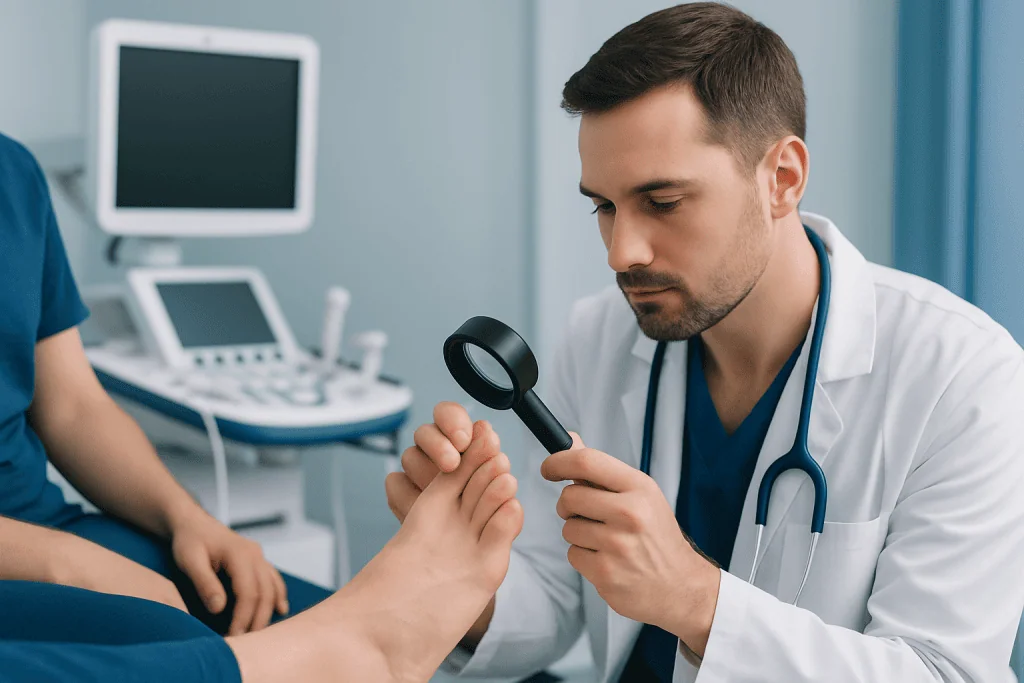
Diagnosis usually begins with a careful history and physical examination. A clinician will ask when the lesion first appeared, whether it is painful, whether there has been rubbing from shoes, and whether there are signs of drainage, bleeding, or growth. They may also ask about sports, recent travel, public pool exposure, skin conditions, diabetes, and circulation problems.
During the exam, the doctor looks at the size, shape, firmness, and surface pattern of the lesion. Skin lines crossing the bump may suggest a corn or callus, while interrupted lines and pinpoint dark spots may fit a wart. Soft fluid-filled areas lean toward a blister. Redness, warmth, and pus are more concerning for infection. Sometimes gentle trimming of thickened dead skin in a clinical setting helps reveal the underlying cause more clearly.
Most cases do not need extensive testing. However, if the diagnosis is uncertain or the lesion is persistent, a doctor may use dermoscopy, take a sample, or order tests to rule out uncommon problems. If there is significant swelling, deep pain, spreading infection, or concern about bone involvement, imaging and blood tests may be considered. In selected cases, patients may be referred for dermatology evaluation or podiatry care to guide diagnosis and treatment safely.
Treatment Options Based on the Cause
Treatment depends on what the white bump actually is. A simple friction blister often improves with protection, reduced rubbing, and time. Covering the area with a clean dressing or blister pad can reduce pressure while the skin heals. In general, people should avoid popping a blister unless specifically advised by a clinician, because opening the skin can increase infection risk.
Corns and calluses are managed by reducing pressure and friction. This may include better-fitting footwear, moisture-wicking socks, shoe inserts, or protective padding. A clinician may carefully pare down thickened skin if needed. Plantar warts can be treated in several ways, including topical therapies, freezing, or other office procedures, but treatment choice depends on lesion size, location, symptoms, age, and overall health.
If infection is suspected, medical treatment may include cleansing, drainage when appropriate, and prescription medication. Home attempts to squeeze out pus or cut the area can make infection worse, especially on weight-bearing skin. When an underlying foot structure problem contributes to repeated pressure, supportive assessment may be useful. In some cases, orthopedic evaluation or physical therapy and rehabilitation can help address gait, footwear, or pressure distribution issues that keep lesions coming back.
For people with diabetes, circulation problems, or loss of sensation, treatment should be supervised promptly. These patients may not feel worsening damage early, and delayed care can lead to deeper skin breakdown. Near the end of the care pathway, some patients choose specialist assessment at centers such as Acibadem International, where multidisciplinary teams in JCI-accredited hospitals evaluate and treat foot and skin conditions for international patients.
Prevention and Self-Care at Home
Many toe lesions can be prevented by reducing moisture, friction, and repeated pressure. Shoes should fit well, with enough room in the toe box to avoid rubbing. Socks that wick moisture and are changed regularly can help keep the skin drier. People who exercise often may benefit from rotating shoes, using protective pads where needed, and checking the feet after activity.
Daily foot inspection is a simple but valuable habit. Looking for white spots, thickened skin, blisters, cracks, peeling, or small cuts helps catch problems early. Feet should be washed and dried carefully, especially between the toes. If skin tends to become hard or callused, gentle moisturizing can help, though very moist skin trapped inside shoes may worsen friction.
It is safest not to cut, shave, or pick at a white bump on the toe at home. Over-the-counter wart or corn products may not be suitable for everyone, especially for people with diabetes, poor circulation, or sensitive skin. If there is uncertainty about the diagnosis, professional guidance is better than self-treatment because the wrong product can injure healthy skin and delay healing.
When to Seek Medical Care
A white pimple on bottom of toe should be evaluated if it does not improve within a few weeks, keeps returning, or becomes painful enough to change the way a person walks. Medical attention is also appropriate if there is spreading redness, warmth, swelling, bleeding, pus, or a foul odor. These features can point to infection or another problem that needs directed treatment.
Prompt evaluation is especially important for people with diabetes, poor circulation, immune system problems, or numbness in the feet. In these situations, even a small lesion can become more serious if ignored. Any dark discoloration, rapid growth, unexplained ulceration, or lesion that looks unusual should be assessed by a qualified clinician rather than treated as a simple blister or corn.
- The bump lasts longer than 2 to 4 weeks
- Walking becomes painful or difficult
- There is redness, pus, fever, or increasing swelling
- The lesion bleeds, changes color, or grows quickly
- There is diabetes, neuropathy, or poor circulation
- Home care has not helped or the diagnosis is unclear
Frequently asked questions
Is a white pimple on the bottom of a toe usually serious?
Most cases are not serious and are caused by friction, thickened skin, a wart, or a small blister. It becomes more important to seek care if it is very painful, infected, persistent, or if the person has diabetes or poor circulation.
Can a white bump under a toe be a wart?
Yes. Plantar warts can appear on the underside of the toes and may look white when the skin is thick or moist. They often feel rough and may hurt with pressure from walking.
Should it be popped or squeezed at home?
In most cases, no. Popping, squeezing, or cutting the lesion can damage the skin and raise the risk of infection, especially on a weight-bearing area. If drainage or removal is needed, it is safer for a clinician to assess it first.
How can someone tell the difference between a blister and a corn?
A blister is usually softer, may contain fluid, and often follows rubbing or intense activity. A corn is typically firmer, more focused in one spot, and linked to repeated pressure from footwear or toe alignment.
What if the white pimple hurts only when walking?
Pain mainly with pressure often points to a corn, wart, or another pressure-related lesion rather than a surface rash. Because several conditions can feel similar, persistent pain with walking should be checked if it does not settle with shoe changes and basic protection.
When should a person with diabetes worry about a toe bump?
A person with diabetes should take any new foot lesion seriously, even if it seems small. Prompt medical review is wise if there is redness, drainage, skin breakdown, numbness, swelling, or any delay in healing.
References
- American Academy of Dermatology
- American Podiatric Medical Association
- Mayo Clinic
- National Health Service
- Centers for Disease Control and Prevention
This article is for general information only and is not a substitute for professional medical advice. Please consult a qualified doctor about your individual situation.
Explore treatments in Turkey — costs, top hospitals & a free quote
JCI-accredited · board-certified surgeons · reply within 24h