

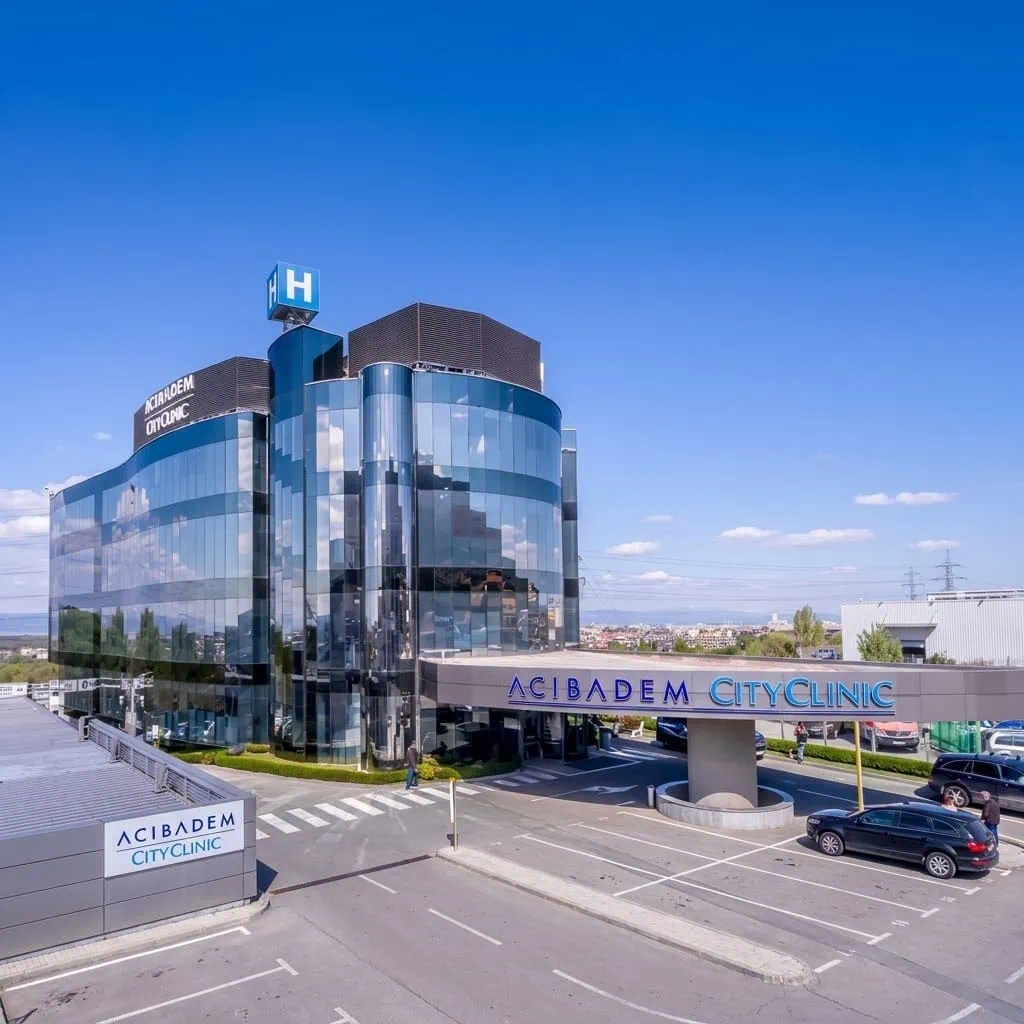
Acibadem City Clinic Ortopedia Hospital
Sofia, Bulgaria
Get directions →
Acibadem City Clinic Ortopedia Hospital at a Glance
Acibadem City Clinic Ortopedia Hospital is the newest building in the group's Sofia system: a university hospital opened in May 2025 as the City Clinic family's dedicated orthopaedic campus, surgical treatment of orthopaedics and traumatology, sports injuries and spine health across five floors and 4,000 m², staffed by roughly 145 professionals including 20 physicians, 10 resident doctors and more than 40 nurses. Beside the surgical hospital runs a Diagnostic and Consultative Center where nearly…
The Hospital in Numbers
Facility Highlights
Opened in May 2025 as Acibadem City Clinic's dedicated orthopedics, trauma, sports injury and spine campus.
Five floors: about 50 inpatient beds, two anaesthesiology and intensive care units with 15 beds, 5 operating theatres and 20 consultation rooms.
3-Tesla MRI, 128-slice CT, X-ray and ultrasound systems; GE OEC Elite and Philips Veradius mobile C-arms in theatre.
Arthrex Synergy arthroscopy tower and ZEISS TIVATO 700 surgical microscope for minimally invasive procedures.
Acibadem City Clinic Ortopedia Hospital, in depth
Acibadem City Clinic Ortopedia Hospital is the newest building in the group’s Sofia system: a university hospital opened in May 2025 as the City Clinic family’s dedicated orthopaedic campus, surgical treatment of orthopaedics and traumatology, sports injuries and spine health across five floors and 4,000 m², staffed by roughly 145 professionals including 20 physicians, 10 resident doctors and more than 40 nurses. Beside the surgical hospital runs a Diagnostic and Consultative Center where nearly 40 specialist physicians practise across cardiology, obstetrics and gynaecology, urology, dermatology, neurosurgery, neurology, angiology, endocrinology, allergology and psychology, with imaging and clinical laboratory departments closing the diagnostic loop on site.
What this building is organised around
Ortopedia applies the specialty-hospital logic the group already proved in Adana: point every floor at one anatomy. The theatres, imaging, rehabilitation staff, six physiotherapists and rehabilitation specialists on the roster, with operating-room and anaesthesiology nursing counted separately because the design takes them seriously, all serve the musculoskeletal range: the joints, the spine, the injuries of sport. Around that core, the Diagnostic and Consultative Center makes the campus useful to its neighbourhood daily, because an orthopaedic hospital’s patients arrive with hearts, hormones and skin too, and a building that can assess the whole patient operates more safely on the part.
Quality and safety: the honest frame
The hospital runs on the Acıbadem group’s audited protocols, surgical checklists, medication safety, infection control and credentialing, inside Bulgaria’s City Clinic university-hospital family, whose Sofia campus holds JCI accreditation among the group’s seven accredited hospitals. A hospital opened in May 2025 makes its case honestly: not with decades it does not yet have, but with the system it was born into: a university-hospital culture, a staffing plan the corporate record publishes down to the autoclave operators, and the group’s rule that surgery is proposed from imaging and examination, never from enthusiasm.
Joints, spine, sport: the named range
The surgical programme covers orthopaedics and traumatology in their operative width, joint surgery, fracture and trauma care, with sports injuries and spine health named as the campus’s two focal programmes. The unit logic the group applies everywhere applies here in full: the scan decides, alternatives are weighed aloud, rehabilitation is planned before the operation rather than after it, and the operation not needed is the one not performed. Neurosurgery in the consultative centre carries the spine’s shared border, so a disc or stenosis question is read by both disciplines before anyone proposes a theatre date.
The Diagnostic and Consultative Center
The DCC is the campus’s second identity: nearly 40 specialists across the disciplines a working neighbourhood actually consults, cardiology, obstetrics and gynaecology, urology, dermatology and venereology, neurology, angiology, endocrinology and metabolic diseases, allergology, psychology, supported by diagnostic imaging and a clinical laboratory staffed with radiology technologists and laboratory technicians. For patients this means two honest things: pre-operative assessment happens completely and on site, and the building serves daily medicine even when no operation is in question.
The musculoskeletal node of the Sofia system
Ortopedia completes the group’s Sofia division of labour: City Clinic Tokudathe JCI-accredited, 550-bed general hospital, carries the full surgical width including its own joint-replacement and scoliosis lists at scale; Mladost concentrates cancer; Vitosha the cardiovascular axis. One records culture routes between the campuses: a bone-tumour question is planned with Mladost’s boards, a cardiac-risk patient is assessed with Vitosha’s floors, and the rare case needing an Istanbul flagship travels with its file and a stated reason.
Technology, honestly framed
The campus states what it is: a purpose-built 2025 surgical hospital with imaging and laboratory departments on site and a consultative centre beside the theatres. What it does not claim is stated as plainly: the group’s robotic joint systems, heavy oncology machines and flagship-scale intensive care live at other campuses, and when a plan genuinely needs them the coordinators say so first. For a hospital in its first years, that discipline is the credential that matters most.
International patients at the newest campus
The group’s records-first process applies from day one: send reports and imaging, receive a written surgical opinion and cost estimate, travel once, with interpreter support arranged and discharge notes written for the clinician continuing rehabilitation at home. Orthopaedics rides on imaging, an MRI usually settles whether surgery is warranted before any flight, and Sofia’s EU location makes the planned visit short for the region’s patients. The honest note a new hospital owes its readers: complex revision and robotic cases may be placed at Tokuda or a flagship, and that routing is said before travel, not after.
Getting here
The hospital stands on Okolovrasten Pat: Sofia’s Ring Road, in the capital’s southern belt, with the full address, map link and phone in the identity card at the top of this page. Sofia’s airport connects across Europe, and for planned visits the coordinators arrange transfers as standard.
How to decide whether Ortopedia is your hospital
Choose Ortopedia when the problem is musculoskeletal and the decision is surgical or nearly so: a joint that needs a surgeon’s judgment, a sports injury, a spine question weighed honestly against conservative care, or when you want the whole-patient assessment its consultative centre exists for. Choose Tokuda for scale and the full surgical width, Mladost for cancer, Vitosha for the heart, and an Istanbul flagship for what only it houses, every routing said aloud, file included. A young hospital inside an old system gets to be both new and proven; that is the point of a group.
Frequently asked questions
What kind of hospital is Acibadem City Clinic Ortopedia?
The group’s dedicated orthopaedic university hospital in Sofia, orthopaedics and traumatology, sports injuries and spine health, opened in May 2025.
How new is the hospital?
It opened in May 2025, following the expansion of the City Clinic family: the newest building in the group’s Sofia system.
How big is the campus?
Five floors and 4,000 m², staffed by roughly 145 professionals including 20 physicians, 10 residents and more than 40 nurses.
What surgery is performed here?
The operative range of orthopaedics and traumatology, joint surgery, fracture and trauma care, with sports injuries and spine health as the named focal programmes.
Is spine surgery available?
Yes, spine health is a focal programme, with neurosurgery in the consultative centre reading the shared border so disc and stenosis questions are weighed by both disciplines.
What is the Diagnostic and Consultative Center?
The campus’s outpatient half: nearly 40 specialists across cardiology, gynaecology, urology, dermatology, neurology, angiology, endocrinology, allergology and psychology, with imaging and laboratory on site.
Is the hospital JCI-accredited?
Honestly framed: the group’s seven JCI-accredited hospitals include the City Clinic university campus in Sofia and Sistina in Skopje; Ortopedia, opened in 2025, runs on the same group-audited protocols from its first day.
Why choose a brand-new hospital?
Because it was born into a proven system: group protocols, a university-hospital culture and purpose-built floors, with the honesty that complex cases are routed to the campuses that already do them at scale.
Is rehabilitation available after surgery?
Yes, physiotherapists and rehabilitation specialists are part of the core roster, and rehabilitation is planned before the operation, not improvised after it.
Can sports injuries be assessed from abroad?
Unusually well, sports orthopaedics rides on MRI, so a records-based written opinion usually settles whether surgery is warranted before any flight is booked.
Which languages are supported?
Bulgarian and English routinely, with other languages arranged through the international office.
How does the records-first process work?
Reports and imaging reviewed remotely, a written surgical opinion and cost estimate, and scheduling coordinated so the visit is as short as the medicine allows.
Can my insurance be used here?
The hospital works with Bulgarian coverage in defined scopes and with private and international insurers, confirm your coverage in writing before planned care.
How does payment work?
A written estimate precedes planned surgery; the financial picture is settled before the theatre date is.
Can my companion stay with me?
Yes: the campus is built for accompanied stays, and the coordinators state current arrangements when your visit is planned.
Is pre-operative assessment done on site?
Completely: the consultative centre’s cardiology, internal specialties and laboratory floor assess surgical fitness before any date is set.
What happens if my case is more than orthopaedic?
It is planned across the Sofia system: Tokuda for the general range, Mladost for cancer boards, Vitosha for cardiac risk, through one records culture, with the routing stated.
Are children’s orthopaedic problems treated?
Paediatric questions are assessed case by case, with the group’s honesty about which campus best serves a given child’s operation.
Is trauma care available?
Fracture and trauma surgery are core work; major multi-system emergencies belong to Tokuda’s emergency floors, and the routing between campuses is immediate.
What imaging is available on site?
A diagnostic imaging department with radiology technologists on staff, plus the clinical laboratory: the set orthopaedic and pre-operative decisions actually require.
Do you repeat tests I already had?
Only for a stated reason, existing imaging is integrated wherever usable, exactly as across the group.
Can I get a second opinion here?
Yes, written and records-based, and if the honest answer is that surgery is not warranted, that is the answer you will receive.
Who staffs the operating theatres?
Dedicated operating-room and anaesthesiology nursing alongside the surgical teams: the corporate record publishes the staffing plan down to the sterilisation supervisors, which is its own kind of transparency.
Do patients come from outside Bulgaria?
Yes: Sofia’s EU location and short connections make planned orthopaedic visits practical for the region, with the records-first process doing the heavy lifting before travel.
Can psychology support be part of treatment?
Yes, psychology is among the consultative centre’s disciplines, because long injuries and long recoveries carry mental weight too.
How fast can surgery be scheduled?
Coordinator-managed and quick once records are reviewed: the honest variable is the completeness of your imaging.
Will my doctor at home receive a handover?
Always, operative notes, imaging and the rehabilitation protocol are written for the clinician continuing your care.
What should I bring to a consultation?
Your MRI and X-rays in any format, prior reports, a complete medication list, and your written questions: the records-first rule.
How do I reach the hospital?
It stands on Sofia’s Ring Road in the southern belt; transfers for planned visits are arranged by the coordinators, and the identity card at the top of this page carries the map link.
Why a dedicated orthopaedic hospital in Sofia?
Because focus compounds, theatres, imaging and rehabilitation pointed at one anatomy, and because the group’s Sofia system supplies everything else one Ring Road exit away.
Send your reports: a physician-reviewed plan comes back before you travel.
Free · No obligation · Reply within 24 hours