

Acıbadem Health Point: How Our International Patient Service Works

Acibadem Health Point is the international patient service of Acibadem. It coordinates your journey from first contact to follow-up: collecting and directing your medical records to the right specialty, helping you plan travel dates and length of stay, arranging interpreter support, guiding you through registration and appointments in Turkey, and organising discharge documents and communication after you return home.
Who do you contact first when the treatment you need is in another country? That single question stops many people before they start. If you are planning care from abroad, Acibadem Health Point is the international patient service that carries you from first contact to arrival, treatment and follow-up with one clear line of coordination. This guide explains what the service does, what it does not do, and how each stage of the journey actually works.
You get practical support with the flow of medical information, travel logistics, language assistance and communication at every stage. What you do not get is a diagnosis from a distance, and it is worth understanding that distinction before you begin.
At a glance
- Best for: International patients arranging care at Acibadem hospitals in Turkey
- What it covers: Medical record coordination, specialty review, travel and accommodation guidance, interpreter support and follow-up communication
- When it starts: From your first enquiry, when your records are collected and directed to the relevant specialty
- Support during your stay: Registration, appointment sequencing, interpreter assistance and day-to-day practical help
- After treatment: Discharge documents, report sharing and a channel for post-treatment questions
- What it is not: A remote diagnosis service, final treatment decisions usually require in-person assessment
What Acibadem Health Point is
Acibadem Health Point is the coordination service built for patients who come to Acibadem from another country. Instead of managing medical questions, hospital scheduling, language needs and travel planning as separate problems, you have one pathway that connects them. If you are new to the group itself, it helps to read what Acibadem is and how the group is organised before you go further, because Health Point sits on top of that hospital network rather than replacing any part of it.
In practical terms, the service supports you in three phases: before you travel, while you are in Turkey, and after you return home. Depending on your situation, that can mean collecting your medical reports, arranging specialist review of your file, explaining what the next steps are likely to be, organising interpreter support, and guiding you through admission, appointments and discharge.
For many patients, the biggest benefit is clarity. When you are dealing with a health concern away from home, knowing who to contact, which documents to prepare and what to expect at each stage removes much of the anxiety that has nothing to do with medicine. Health Point exists to be that fixed point of reference: a coordination layer, not a clinical department.
Two limits are worth stating plainly. First, Health Point coordinates; it does not diagnose. Your medical care is delivered by specialist teams inside the hospitals. Second, some decisions genuinely cannot be made from records alone. A responsible service tells you which parts of your plan are provisional until you are examined in person, and that honesty is part of how the process is designed.
How your journey usually begins
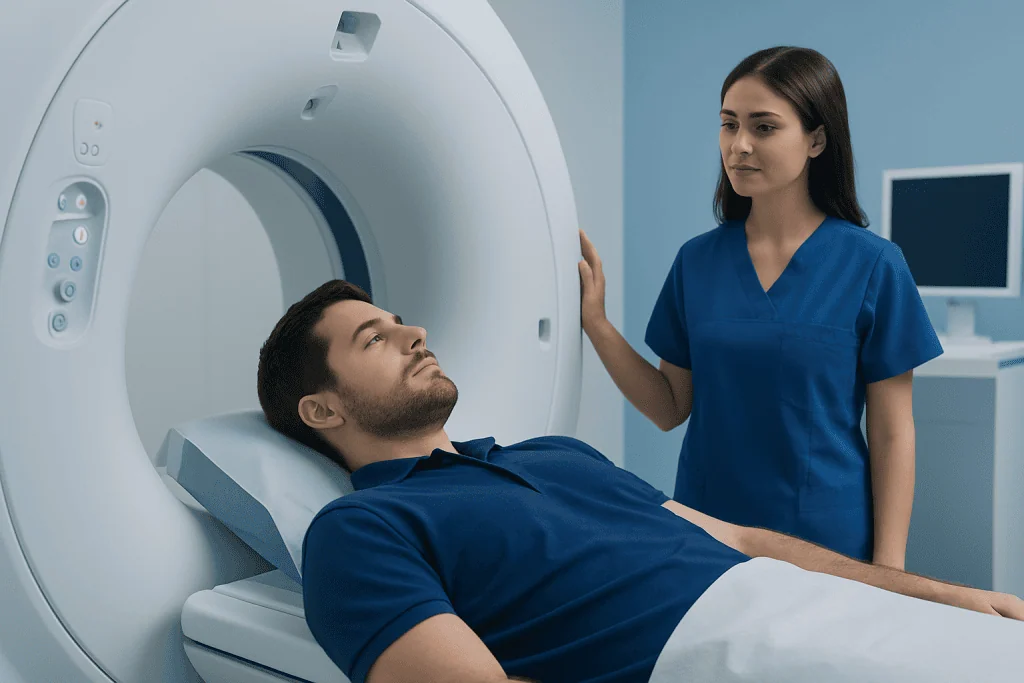
The process starts when you share your request together with any relevant medical information. That usually means previous test results, written reports, imaging, a list of the medications you take, and a short description of your symptoms or existing diagnosis. The more complete and current your documents are, the easier it is for the coordination team to understand what your case involves and where it belongs.
Once your information is received, it is directed to the appropriate specialty team for review. This stage answers three practical questions: which department or multidisciplinary team is most suitable for your case, whether further evaluation will be needed after you arrive, and what kind of timeline is realistic. It is a routing and planning step, not a final diagnosis at a distance, and no serious hospital service should present it as one.
Early conversations also cover the practical side: your preferred travel dates, whether a companion will come with you, the language you want to communicate in, and whether you need guidance on accommodation or airport-to-hospital transfers. Raising these points at the start almost always makes the rest of the process smoother. The mechanics of the first contact itself, what to send, in what format, and what happens next, are covered in detail in how to book an appointment at Acibadem Health Point.
One more habit protects you throughout this stage: confirm that you are speaking with the genuine service. International healthcare attracts imitators, so it is sensible to know how to verify Acibadem’s official channels and appointment messages before you share personal medical documents with anyone.
What support you can expect before you travel

Before you leave for Turkey, coordination focuses on preparation. You can expect guidance on which medical records to bring in original or digital form, how long to plan for your stay, whether pre-arrival tests in your home country would be useful, and what sequence of appointments is likely once you land. None of this is guesswork on your part; the point of the service is that someone who knows the hospital-side process maps it out with you.
This is also the stage for the everyday questions that matter more than they sound. Will the first consultation happen soon after arrival? Is fasting needed before certain tests? How many buffer days should you keep free in case additional evaluations are recommended? Can your companion stay with you during parts of the hospital process? Asking these before you book flights saves you from rearranging them later.
Pre-travel support often includes the arrangements that are hardest to manage from abroad: interpreter booking and general travel or accommodation guidance. Two honest limits apply. Visa applications and airline arrangements remain your responsibility: the team can advise on documents that support a medical-travel application, but it cannot process a visa for you. And any timeline discussed before arrival is a working plan, not a fixed contract; in-person assessment can change it.
If cost is on your mind at this stage, quotes for international patients are prepared case by case, because the figure depends on the confirmed diagnosis, the procedure and technique chosen, the expected length of stay and the level of accommodation. The structural logic of a quote, what it includes, what it excludes and how to read one, is explained in how to compare an Acibadem quote with other hospitals.
Where Health Point sits within the Acibadem network
Health Point is a service, not a building. Behind it stands Acibadem, a private healthcare group founded in Istanbul that has grown into a network of hospitals and outpatient clinics across Turkey, with facilities in other countries as well. Several Acibadem hospitals are located in Istanbul, and others operate in major Turkish cities, which is why the coordination step matters: your case is directed to the hospital and specialty team that fit it, rather than to a single default address.
People searching for a “beograd hospital” or a clinic closer to home sometimes discover the group through its facilities outside Turkey; the same first-contact process applies wherever you start, and the coordination team will tell you which location suits your case. What international patients can expect on the ground, from arrival desks to how departments are organised, is described across the network in Acibadem hospitals: what international patients can expect.
A question patients often ask is which hospital in Turkey is “the best”. There is no honest single answer. The right hospital depends on your diagnosis, the specialty team you need, the technology your treatment requires and practical factors such as where you will stay. Health Point’s job is to match those variables to a specific location, and you remain free to ask why a particular hospital was suggested for your case.
What happens after you arrive in Turkey
On arrival, the focus shifts from planning to on-the-ground coordination. Depending on your arrangements, this includes support with your visit schedule, registration steps, interpreter assistance and communication with the clinical teams who will assess or treat you. If you have never used the Turkish healthcare system, having this structure around you is the difference between navigating and guessing.
At Acibadem’s JCI-accredited hospitals, international patients are guided through the practical side of care as well as the medical side. Consultations, imaging, laboratory tests and pre-procedure evaluations are sequenced around your case, usually so that an out-of-town patient loses as few days as possible. When more than one specialty is involved, coordination between teams becomes the most valuable thing the service does.
Expect your plan to be capable of changing after the in-person assessment. Additional tests may be needed to confirm the best approach, and timelines may shift depending on results. This is normal, not a failure of planning. A good international patient service does not hide these adjustments; it explains them clearly enough that you can make informed decisions and manage your stay without confusion. Ask, at each step, what is now confirmed and what remains provisional: it is a fair question and you should get a direct answer.
Language, comfort and everyday logistics
When you receive care abroad, language and logistics affect your comfort almost as much as the hospital visit itself. Interpreter support helps you follow consultations, consent discussions, discharge instructions and everyday practical matters. This is not a convenience feature; understanding what you are agreeing to and what you must do afterwards is part of safe care. How language assistance is organised across the network is covered in how Acibadem hospitals support international patients in their own language.
You may also need help with small but essential details: navigating between your hotel and the hospital, reading appointment times correctly, knowing what to bring on a treatment day, and planning around rest periods. If you travel with a family member or companion, they benefit from the same orientation so they can support you effectively rather than sharing your confusion.
Health Point routinely assists with these coordination needs so you are not left on your own once you land in Istanbul or elsewhere in Turkey. The support is not medical in itself, but it clears the mental space you need to focus on your health. A few habits make it work better:
- Keep your passport and hospital documents together in one folder.
- Save key phone numbers and your coordinator’s contact details in your phone before travel.
- Ask for written instructions if you expect to be tired after appointments, verbal explanations fade quickly.
- If you use regular medication, carry enough supply for your whole stay plus a written medication list; questions about doses or changes belong to your treating doctor.
How follow-up works after treatment
Your journey does not end at the hospital exit. Before discharge, you should receive guidance on your medications, any monitoring that applies to your situation, activity limits, signs that need attention, and when it is appropriate to travel. If your return flight is already booked, confirm with your care team that the timing suits your condition and recovery stage, flights are easier to change than recoveries.
After you return home, follow-up may involve receiving pathology or imaging results that were pending at discharge, sharing reports with your local doctor, and clarifying next steps as your recovery progresses. For some patients, remote communication with the treating team is part of the ongoing pathway, particularly when questions come up in the early weeks.
Health Point makes that handover more organised by supporting the flow of documents and communication between you, the hospital and your local physician. It complements your doctor at home; it does not replace them. For long-term treatment plans, chronic conditions or anything urgent, your local healthcare system remains your first point of care, and keeping your own doctor informed with the reports you carry home makes that relationship work.
How to get the most from the service
You will have the best experience if you prepare actively and communicate openly. Send complete records rather than a summary of a summary. Mention previous surgeries and allergies. List every medication and supplement, including the ones that feel too minor to matter. Be honest about your travel limits, mobility needs and timing constraints: the coordination team can only plan around constraints it knows about.
It also helps to think in phases: before travel, during evaluation, during treatment, and after discharge. At each phase, ask two questions: what can be decided now, and what can only be confirmed later? Patients who assume everything is fixed before arrival are the ones most frustrated when a plan adjusts; patients who expect refinement handle it easily.
Finally, ask the unglamorous questions without hesitation. International care is not only doctors and tests. It is knowing where to go on day one, who will contact you and when, what your companion should expect, and how you will manage the trip home. A patient service earns its keep by making these details feel simpler, not by adding a layer of formality on top of them. Guidance for travellers considering medical care abroad, published by public health bodies, makes the same point: preparation and documentation are the parts of the journey most within your control.
Step by step
- Share your medical information. The process begins when you send your reports, imaging, test results and a short description of your medical concern. Include current medications, allergies and any previous major treatments so the team sees the full picture from the start.
- Receive coordination and case direction. Your file is reviewed and directed to the most relevant specialty or care pathway. At this stage you may be asked for additional documents, and you should be told clearly which decisions can only be made after in-person evaluation.
- Plan your trip and schedule. Once the likely pathway is clearer, you discuss travel dates, expected length of stay and practical needs such as interpreter support or accommodation guidance. Raise mobility, companion and timing concerns now, not at the airport.
- Arrive and complete registration. After arrival in Turkey, you move into the hospital-side process: registration, consultations and any first-day testing. Interpreter and coordination support carry you through these steps.
- Undergo evaluation and treatment planning. Your specialist team confirms next steps based on in-person assessment, which may include imaging, laboratory work or multidisciplinary review. The plan may be refined here, ask what is confirmed and what remains provisional.
- Continue through treatment and recovery. During your stay, the focus is on safe care, clear communication and practical planning around your schedule. You and your companion should know what to expect each day, including rest, medications and any restrictions.
- Leave with a follow-up plan. Before travelling home, make sure you understand your discharge instructions, your medication plan and the signs that need attention. Keep copies of every report and confirm how post-treatment questions and document sharing will be handled once you are back.
Your checklist
- Passport and travel documents
- Recent medical reports, imaging and test results
- List of current medications, supplements and allergies
- Contact details for your local doctor and an emergency contact
- Questions you want to ask during your consultation
- Comfortable clothing and personal essentials for hospital visits
- A folder or digital copy of all key documents
- A plan for your companion’s accommodation and daily schedule
Key takeaways
- Acibadem Health Point coordinates international patients’ care before, during and after treatment in Turkey; the medicine itself is delivered by hospital specialty teams.
- Support typically includes medical document handling, specialty review, appointment guidance, interpreter assistance and practical logistics.
- Some decisions can be discussed before travel, but final treatment planning usually requires in-person assessment after arrival, plans that adjust are normal.
- Complete records, honest communication and buffer days in your schedule make the journey run more smoothly than any amount of optimism.
- Follow-up matters: keep your reports and discharge instructions, and keep your local doctor informed after you return home.
Frequently asked questions
Is Acibadem Health Point the same as medical treatment?
No. Health Point is the international patient coordination service that organises your journey, documents and communication. Your medical care is delivered by the relevant specialist teams and hospital departments, and clinical decisions are theirs to make with you.
Who is the owner of Acibadem?
Acibadem is a private healthcare group that was founded in Istanbul and has grown into an international hospital network. The group’s structure, history and range of services are described in our guide to what Acibadem is and how it is organised.
How many hospitals does Acibadem have?
The network includes multiple hospitals and outpatient clinics across Turkey, with facilities in other countries as well, and the exact number changes as the network develops. What matters for your planning is which location fits your treatment, which the coordination team helps determine case by case.
Is Acibadem Hospital located in Istanbul, Turkey?
Yes, several Acibadem hospitals are located in Istanbul, including Acibadem Maslak Hospital, and others operate in major cities across Turkey. Your case is directed to the hospital whose specialty teams and facilities suit it, not automatically to a single site.
Which hospital in Turkey is considered the best?
There is no single “best” hospital, at Acibadem or anywhere else. The right choice depends on your diagnosis, the specialty team you need, the technology your treatment requires and practical factors such as location. Comparing hospitals on those criteria is more useful than searching for a universal ranking.
Can your treatment plan be confirmed before you arrive in Turkey?
Sometimes the likely pathway can be discussed in advance from your records, but final decisions are not always possible at a distance. Many patients need an in-person consultation, examination or additional testing before the plan is fully confirmed, and it can still be refined after those results.
Will someone help if you do not speak Turkish?
Yes. Interpreter support is a standard part of the international patient service, covering consultations, consent discussions, discharge instructions and practical communication during your stay. State your preferred language early so arrangements are in place before your first appointment.
How long should you plan to stay in Istanbul or Turkey?
It depends on your condition, the tests you need and whether treatment can be completed quickly or requires observation and recovery time. Your coordinator can help you estimate a reasonable stay before you travel, but keep some flexibility, because the timeline may change after in-person evaluation.
Add us as a Preferred Source to see more of our trusted health content across Google Search, AI Overviews and Discover.

Update history
- PublishedJune 22, 2026
- Medical review approvedSeptember 13, 2026
- Last content updateSeptember 12, 2026
References1
More Patient Guides

At Acibadem, How We Explain Expected Clinical Outcomes and Treatment Success Information
Expected clinical outcomes at Acibadem are explained in clear, realistic terms so you understand likely benefits, limits, risks, and next steps in…

At Acibadem, How Families and Companions Are Supported During Treatment Travel
At Acibadem, family support during treatment travel in Turkey includes interpreters, planning help, visitor guidance, and practical support for companions.

At Acibadem, How Our JCI-Accredited Hospitals Support Safe International Care
JCI-accredited hospitals at Acibadem support safe international care in Turkey with standardized quality, interpreters, coordination and follow-up.

At Acibadem, What Our International Patient Package May Include Before You Travel
International patient package at Acibadem may include medical planning, travel help, interpreters, and stay support in Turkey before you travel.