

Acibadem Hospitals: What International Patients Can Expect Across Our Network

Across the Acibadem network, international patients can expect coordinated appointments, interpreter support, help with records and travel logistics, and a structured hospital environment with specialist departments. Final treatment plans are confirmed after in-person assessment, so keep travel dates flexible. Before leaving Turkey, you should hold written reports, discharge instructions you understand, and a clear follow-up plan for home.
Who meets you at the hospital door when home is a long flight away? What happens if your schedule shifts mid-trip? These are the questions most people actually carry when they plan treatment abroad, and they deserve straight answers, not brochure language.
This guide explains what international patients can expect across Acibadem hospitals in Turkey: how the network is organised, what support exists before and after travel, what your days on site tend to look like, and where the honest limits sit. Treatment decisions are always made by your doctors after assessment; everything else can be planned in advance, and this guide covers that planning.
At a glance
- Best for: International patients weighing treatment at Acibadem and wanting to know how the network works in practice
- What you can expect: Care coordination, interpreter support, structured appointment planning, and practical travel guidance
- Network model: Hospitals and outpatient facilities across Turkey, including Istanbul, with shared processes and multidisciplinary teams
- What is decided later: Your final treatment plan, which is confirmed only after in-person medical assessment
- Support style: One coordinating point of contact for most non-medical needs where applicable
From a hospital close to home to a hospital abroad: what changes
When you look for a hospital at home, distance does most of the deciding for you. You get a map, a short list, and the quiet reassurance of knowing roughly where you would go if something happened. Treatment abroad removes the proximity part of the question entirely, so other things have to do that work instead: coordination, communication, and predictability.
That is the honest way to think about a hospital network like Acibadem. It cannot be around the corner from your house. What it aims to do is rebuild, deliberately, what a hospital close to home gives you naturally, knowing where to go, who to ask, and what happens next. If you already use a large hospital system at home, the underlying idea will feel familiar: shared records, shared standards, and one organisation answerable for the whole journey rather than a chain of unconnected clinics.
The difference for you as a traveller is that the journey includes flights, accommodation, language, and time pressure. The reassurance a nearby hospital provides by default has to be built into the plan when you travel for care, and the rest of this guide explains how that is done, and where you should still ask your own questions.
How the network approach helps you
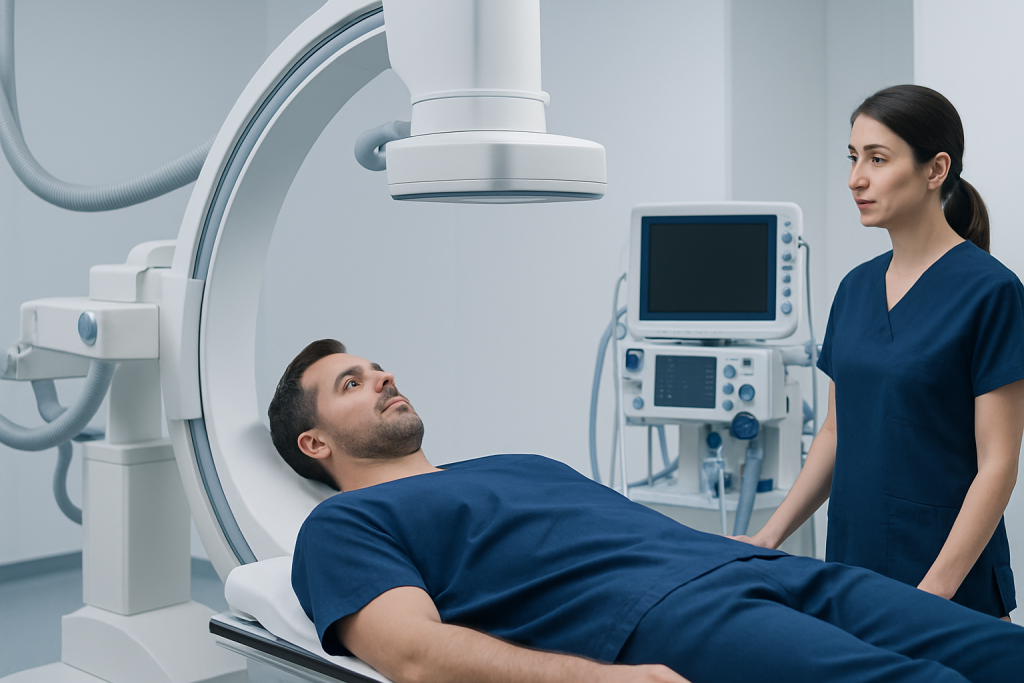
The main advantage of a network over a standalone clinic is that you are not relying on a single facility working in isolation. When your case involves more than one specialty, imaging read by one department, a plan discussed by another, a network can move your records, appointments, and questions through one coordinated channel instead of asking you to repeat your story to each provider separately.
In practical terms, this usually means:
- consultations and tests scheduled in a sensible sequence rather than at random
- access to multidisciplinary teams when a case genuinely needs more than one specialty
- standard processes across facilities, so a second location does not mean starting over
- records and reports that follow you rather than needing to be re-requested
- scheduling that takes your travel dates into account, since you cannot simply come back next week
Not every case needs all of this. A single outpatient consultation is simple anywhere. The network model earns its value when your visit is complex, time-limited, or involves several departments, which describes most international medical trips. If your interest is a specific field, the departmental pages, such as medical oncology or IVF and reproductive health, describe what each unit covers.
What support you may receive before you travel

The most useful part of the process often happens before anyone boards a plane. The pre-travel stage typically involves reviewing your existing medical records, recent reports, imaging, pathology documents, medication lists, and a short summary of your history, so that the receiving team understands your case before travel is arranged. The guide on what records to prepare and what answers to expect covers this stage in detail, including what a records-based opinion can and cannot tell you.
Be clear about the limit here: a review of documents produces an expected pathway, not a final plan. Doctors confirm treatment decisions after examining you in person, and additional tests after arrival are common. This is not a flaw in the process; it is how careful medicine works. What pre-travel review does well is reduce uncertainty, likely timelines, documents to bring, roughly how many days to plan for, so you can book flights and accommodation with fewer guesses.
Non-medical logistics can be discussed at the same stage: airport transfers, hotel options near the hospital, interpreter arrangements, and what the first hospital day involves. If a companion is travelling with you, mentioning this early means support can be planned around both of you. Records that feel incomplete are normal at this stage; coordination teams work with what exists and identify what is still missing or can be brought in person.
What your hospital experience may look like on site
Arrival itself has its own rhythm. Some patients pass through a medical check-in process at Istanbul Airport; most simply transfer to their accommodation and begin at the hospital the next day. The first hospital day usually involves registration, document checks, an initial consultation, and then any recommended tests or imaging.
Large hospitals feel unfamiliar at first, and more so in another country. This is where a named point of contact matters most. International patient teams and interpreters help you understand where to go, what happens next, and what is needed from you. Depending on why you are visiting, your time on site may be limited to outpatient consultations and diagnostics, or it may include day treatment or inpatient care.
Expect plans to be refined once doctors assess you in person. A test may be added, a consultation reordered, a stay lengthened or shortened. In a coordinated network, these adjustments are usually absorbed without you having to renegotiate each element yourself: the guide on handling unexpected test or treatment changes explains how to build slack into your plans so a change does not become a crisis.
Two practical points deserve emphasis. First, language: interpreter support matters not only in consultations but also for consent forms, discharge instructions, medications, and follow-up arrangements: the moments where misunderstanding costs the most. Raise it early and again at check-in if needed. Second, paperwork: consent documents in Turkey have their own conventions, and it is worth reading about how consent forms work for international patients before you are handed one.
Quality, safety, and what to ask about standards
Trust in an unfamiliar hospital is really trust in its systems: how it identifies patients, prevents infection, manages medications, and documents care. Many international patients look at external accreditation as one signal that a hospital has been assessed against recognised quality and safety standards. Accreditation status can vary by facility and over time, so the honest advice is to ask directly which standards apply to the specific hospital where you will be treated, rather than assuming a network-wide answer.
Accreditation is also only one part of the picture. Whatever the certificates say, the questions that matter to your individual case are yours to ask: Who coordinates my care? How are test results communicated to me, and in what language? What written documentation will I take home? What is the follow-up plan after discharge? A hospital comfortable with these questions is telling you something useful.
How quotes and costs are structured
This guide gives no figures, because honest figures cannot exist before your case is reviewed. What can be explained is the structure. A quote for international treatment typically depends on the diagnosis and its complexity, the procedures and tests expected, the anticipated length of stay, and room and companion arrangements. Quotes based on records are estimates; the in-person assessment can change them, in either direction, and a good quote states its own assumptions so you can see what would move the number.
Requesting a quote and paying for one are different things: it is worth understanding what standard practice looks like before committing, and reasonable to be cautious of anything unclear in how a quote is presented. Budget beyond the medical quote too: flights, accommodation, extra recovery days, and the small costs that accumulate around a medical trip are easy to underestimate.
Travel, companions, and practical comfort during your stay
Medical travel goes best when the non-medical details are unglamorous and settled. Think beyond the hospital: arrival time, transfer distance, how far the hotel is from the ward, mobility needs, local weather, and whether you should plan rest days before flying home. Predictability beats luxury. A realistic itinerary with margin in it does more for your peace of mind than any upgrade.
If a family member or companion travels with you, decide their role in advance, emotional support, practical helper, keeper of documents and instructions. Ask where they can wait, which areas they can accompany you into, and how updates will be shared with them. Small clarities like these keep a stressful week calm for both of you.
Comfort on site is mostly preparation: passport, medical records, medication list, chargers, glasses, and essential toiletries within easy reach. Dietary, mobility, hearing, or other accessibility needs should be shared before arrival so the hospital can prepare where possible. Food is a genuine part of the inpatient experience, and it differs from what many visitors expect: the guide to meals in Turkish hospitals is worth ten minutes before you pack snacks you may not need.
After appointments, treatment, or discharge
The period after treatment deserves as much planning as the trip itself. A good discharge means leaving with your diagnosis or findings explained in language you understand, medication instructions confirmed by your treating doctor, activity restrictions in writing, and copies of reports, imaging summaries, prescriptions, and discharge documents in a format your doctor at home can use. Discharge paperwork should also set out which signs warrant medical attention and how questions will be handled after you leave, if any of it is unclear, asking for a repeated or translated explanation is normal and expected.
If you return home soon after treatment, clarify the follow-up plan before departure: an online review, a local doctor visit, repeat tests, or wound checks after travel. Knowing how results and future questions will be handled, and which documents your home doctor needs, makes the transition far smoother than sorting it out by email afterwards.
Recovery timelines sometimes stretch. If you need more days than planned, accommodation, transport, and appointments can usually be adjusted, and having considered the possibility in advance keeps it from becoming stressful. The guide on unexpected overnight stays covers what patients and companions should be ready for.
Step by step
- Prepare your medical records early. Recent reports, scans, test results, medication details, and a short medical summary are the basis of any meaningful pre-travel review. Gathering them before booking travel keeps expectations realistic: a records-based opinion is a starting pathway, not a final plan.
- Understand the journey, not just the first appointment. Ask what the first days are likely to include: consultation, imaging, laboratory work, or admission if needed. Knowing the probable sequence helps you book enough time in Turkey and avoid last-minute flight and hotel changes.
- Plan language and companion support in advance. Flag interpreter needs and travelling companions early. Both affect check-in, consultations, consent discussions, and how discharge instructions are delivered.
- Keep documents and essentials together for arrival. Passport, medical files, insurance or payment documents where relevant, regular medications, and emergency contacts in one bag, with digital and printed copies of the important records.
- Stay flexible after in-person assessment. Extra tests or an adjusted plan after examination usually reflect careful decision-making on current information, not a problem. Build a margin of days into your trip so adjustments do not collide with your return flight.
- Before discharge, get clear written instructions. Medications, follow-up timing, travel restrictions, and documentation for your doctor at home, confirmed in a language you understand, translated where needed.
- Settle the follow-up plan before leaving Turkey. Confirm how results, reports, and future questions will be handled, whether remotely or through local monitoring at home, so nothing depends on chasing paperwork across time zones later.
Your checklist
- Passport and travel documents
- Recent medical reports, scans, and test results
- List of current medications and allergies
- Emergency contact details
- Comfortable clothing and personal essentials
- Phone charger and copies of key documents
- Interpreter request if needed
- Companion details if someone is travelling with you
- Questions you want to ask your doctor and coordinator
Key takeaways
- A hospital network abroad has to rebuild deliberately what a local hospital gives you by default: knowing where to go, who to ask, and what happens next.
- Pre-travel records review produces an expected pathway; the final treatment plan is confirmed only after in-person assessment, so keep margin in your travel dates.
- Ask which quality standards and accreditation apply to the specific hospital treating you, and ask your own coordination questions alongside them.
- Quotes are structural until your case is assessed: they depend on diagnosis, procedures, stay length, and stated assumptions, and honest quotes name those assumptions.
- Leave Turkey with written reports, instructions you understand, and a confirmed follow-up plan: the discharge stage matters as much as the arrival.
Frequently asked questions
What is code blue in a hospital?
“Code blue” is a staff announcement used in many hospitals worldwide to summon a trained team when a patient needs immediate resuscitation. Codes and their colours vary between hospitals and countries, and they are directed at staff, not visitors. As a patient or companion, you are not expected to respond to overhead codes; trained teams handle them.
What does Acibadem International help with?
The international patient team helps coordinate the practical side of a treatment journey: organising records for review, sequencing appointments, and explaining the expected hospital process. Depending on your needs, this can extend to interpreters, transfer guidance, and accommodation planning. Medical decisions themselves remain with your treating doctors.
Are all Acibadem hospitals the same?
Hospitals within the network follow shared standards and processes, but services, specialties, and facilities vary by location. Cases are matched to the hospital and team best suited to the medical need and travel plan, rather than treated identically everywhere.
Will I know my treatment plan before I travel?
You may receive an initial opinion or an expected pathway based on the records you provide, but the final plan is confirmed after in-person consultation and assessment. This is normal practice and protects you: decisions rest on current, verified clinical information rather than documents alone.
Can I get help if I do not speak Turkish?
Yes. Language support is a core part of international patient care. Requesting an interpreter as early as possible makes consultations, consent paperwork, and discharge instructions easier to follow: the paperwork moments are where interpretation matters most.
Can a family member come with me?
In many cases, yes, and many patients find a companion helpful. Mentioning it in advance lets the team explain practical details: waiting areas, which parts of the hospital a companion can enter, how updates are shared, and accommodation considerations.
What happens after I return home?
Follow-up depends on the care you received, but you should leave with reports, discharge instructions, prescriptions where needed, and a clear review plan. That may involve remote follow-up, local doctor visits, repeat tests, or sharing updates with the treating team: the shape of it should be agreed before you fly home.
Add us as a Preferred Source to see more of our trusted health content across Google Search, AI Overviews and Discover.

Update history
- PublishedJune 22, 2026
- Medical review approvedSeptember 13, 2026
- Last content updateSeptember 12, 2026
References1
- Medical Tourism: CDC Travelers' Health wwwnc.cdc.gov
More Patient Guides

At Acibadem, How We Explain Expected Clinical Outcomes and Treatment Success Information
Expected clinical outcomes at Acibadem are explained in clear, realistic terms so you understand likely benefits, limits, risks, and next steps in…

At Acibadem, How Families and Companions Are Supported During Treatment Travel
At Acibadem, family support during treatment travel in Turkey includes interpreters, planning help, visitor guidance, and practical support for companions.

At Acibadem, How Our JCI-Accredited Hospitals Support Safe International Care
JCI-accredited hospitals at Acibadem support safe international care in Turkey with standardized quality, interpreters, coordination and follow-up.

At Acibadem, What Our International Patient Package May Include Before You Travel
International patient package at Acibadem may include medical planning, travel help, interpreters, and stay support in Turkey before you travel.