

Acibadem Hospital Locations in Istanbul

Acibadem operates several hospitals across Istanbul, on both the European and Asian sides of the city. The right campus depends on where your specialist team, tests and admission are planned, which airport you arrive at, and how many visits your treatment involves. Compare locations by medical pathway first, then by transfer time and nearby accommodation, before you book flights or a hotel.
You are trying to work out which Istanbul campus to fly into and where to put your hotel. It is one of the first practical questions international patients face, and the map alone will not answer it. Istanbul is a very large city split by a strait, served by two airports, and shaped by traffic that changes hour by hour. The right campus depends as much on your appointment schedule as on distance.
This guide explains how Acibadem hospital locations in Istanbul are organised, how the city’s geography affects your travel plans, what to compare before you book anything, and what support you can reasonably expect as an international patient. It will not tell you that one district is “best”. It will show you how to work out what suits your treatment.
At a glance
- Best for: International patients comparing Istanbul hospital campuses and planning travel around treatment
- City focus: Istanbul, Turkey, campuses on both the European and Asian sides
- What you will learn: How campus choice works, airport and transfer logic, accommodation planning, and what to confirm before booking
- Key principle: Choose by medical pathway first, geography second
- International support: Interpreter arrangements, appointment coordination and transfer guidance may be available depending on your plan
Why hospital locations in Istanbul matter more than you expect
Istanbul spans two continents. The European side and the Asian side are connected by bridges, tunnels and ferries, but crossing between them at the wrong hour can take longer than a short domestic flight. When you compare hospital locations in Istanbul, you are really comparing three things at once: which airport you should use, how long your daily transfers will take, and where it makes sense to sleep.
The location of your hospital influences your airport choice. Istanbul Airport sits on the European side, north of the city centre. Sabiha Gokcen Airport sits on the Asian side. Both handle international traffic, but arriving at the airport on the wrong side of the city for your campus can add an hour or more to your transfer, sometimes considerably more in peak traffic.
Location also shapes the experience of anyone travelling with you. A companion who can walk to a pharmacy, a supermarket and a café near the hospital has a much easier week than one who needs a taxi for every errand. And if your treatment involves repeated visits, tests one day, a consultation the next, a review before you fly home, the cumulative effect of daily travel across Istanbul becomes a real factor in how tired you are.
None of this changes the medicine. It changes how manageable the trip feels, which matters when you are the patient.
How the Acibadem network is organised across the city
Acibadem operates multiple hospitals and medical facilities across Istanbul rather than one single site. Campuses sit in different districts on both sides of the Bosphorus, and each has its own mix of departments, technology and clinical teams. This is why the honest answer to “which Acibadem hospital should I go to?” is: it depends on your condition, the specialist team handling your case, and where the specific services in your plan, imaging, laboratory work, surgery, admission, are scheduled.
For many patients, everything happens in one building. Consultation, tests, procedure and follow-up are grouped at a single campus, and the only travel decision is where to stay nearby. For others, parts of the pathway may be organised across the wider network, for example when a particular scan or specialised service is based at a different site. Neither arrangement is unusual. What matters is knowing your own arrangement before you book flights and hotels, not after.
If you want a deeper look at how campus assignment works within the network, the guide on choosing the right Acibadem campus in Istanbul for your care goes through it in detail, and there is a companion guide covering Acibadem hospital locations across Turkey if your treatment might take place outside Istanbul.
How to compare Acibadem hospital locations in Istanbul
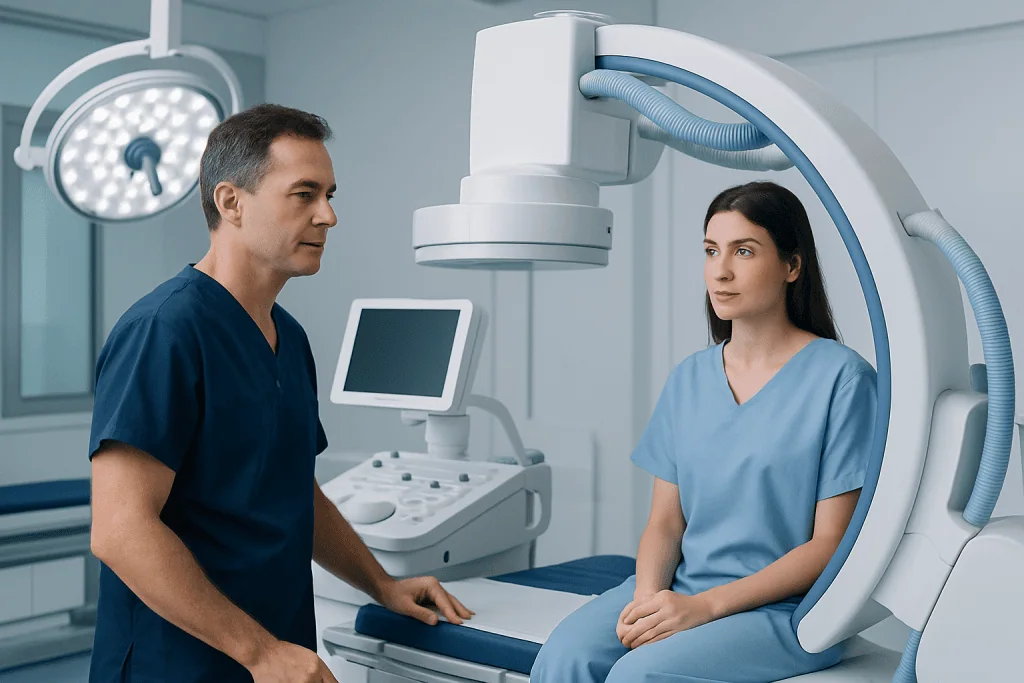
Start with the medical pathway, not the map. The most useful first question is: where will my specialist team, imaging, tests, admission and follow-up actually take place? Once that is confirmed, geography becomes simple: you are planning around one or two known addresses instead of guessing across a city of districts.
Then compare from a transport point of view. Which airport serves that side of the city? How long is the road transfer at the times you will actually travel, not at midnight on a route planner? Is the area around the campus walkable, with hotels, pharmacies and food within reach? If you have mobility needs, it is reasonable to ask specifically about entrances, lifts, wheelchair access and walking distances inside the campus, buildings vary, and the answer is easy to get in advance.
Finally, be realistic about how much in-person time your treatment involves. A single consultation plus a procedure stay is a very different trip from repeated assessments over ten days. The more visits you expect, the more weight you should give to minimising daily travel.
| Factor | What to check | Why it matters |
|---|---|---|
| Airport | Which airport serves the campus side of the city | Landing on the wrong side can add significant transfer time |
| Traffic | Transfer time at your actual appointment hours | Weekday mornings and evenings can double journey times |
| Appointment spread | Whether tests, consultation and admission are at one campus | Determines whether one hotel location covers everything |
| Accommodation | Hotels or serviced apartments within a short ride of the hospital | Reduces fatigue across multiple visits |
| Accessibility | Entrances, lifts, walking distances, wheelchair access | Matters if you or your companion have mobility limits |
| Companion needs | Pharmacies, supermarkets, cafés, waiting arrangements | Makes the week workable for the person travelling with you |
- Confirm whether your main doctor and your tests are at the same campus
- Check which airport is easiest for both arrival and departure
- Consider traffic patterns, especially weekday mornings and evenings
- Look at hotel options near the campus for you and a companion
- Ask whether interpreter support is available on site for your language
Common questions about hospitals in Istanbul, answered plainly
What is the best hospital in Istanbul?
There is no single honest answer, and you should be cautious of lists that claim one. Istanbul has many public and private hospitals, and “best” depends on your condition, the experience of the specific team treating it, the services your plan requires, and the practicalities of getting there. A more useful question is: which hospital has the right department and team for my case, and can I manage the logistics around it? That question has a concrete answer; a ranking does not.
Can foreigners go to hospital in Turkey?
Yes. Turkey receives large numbers of international patients every year, and private hospital groups, including Acibadem, routinely treat people from abroad. Foreign patients are typically self-funded or covered through insurance, depending on the policy, whether a given insurer covers treatment abroad is a question for that insurer, and it is worth settling before travel. You will need your passport for registration, and it helps to carry your medical records in English or with translations.
Are there hospitals in Turkey run to international standards?
Yes. When people ask about an internationally run hospital, they usually mean a hospital where care is delivered to international standards with English-speaking staff. Several private groups in Istanbul, Acibadem among them, serve international patients in English and other languages.
What is the biggest hospital in Istanbul?
By sheer capacity, the largest facilities in Istanbul are the public city hospitals built in recent years, which are among the biggest hospital complexes in Europe. Size, however, is not a useful proxy for what a travelling patient needs. A very large public complex serves a different purpose from a private hospital organised around scheduled international care. Choose by pathway and team, not by bed count.
Planning your journey across Istanbul

Road travel in Istanbul takes longer than the distance suggests. A journey that looks like twenty minutes can take an hour at the wrong time of day, and crossings between the European and Asian sides are the most variable of all. When you build your schedule, leave a genuine buffer around appointments, for traffic, for airport formalities, and for rest after a long flight. This matters most if you are coming for a same-day consultation or if your treatment is likely to leave you tired.
Many international patients prefer an arranged transfer over navigating alone straight after landing, particularly on a first visit. Where transfer support is part of your arrangement, it removes the two most stressful moments of the trip: leaving the airport and finding the right hospital entrance. If you plan to use taxis or app-based transport instead, keep the hospital’s full name, address and contact number saved on your phone in both English and Turkish spelling, because several districts have similar names.
Two related guides cover this ground in practical detail: what to expect at medical check-in at Istanbul airport, and getting around Istanbul for hospital appointments once you are in the city. For the broader picture across a longer stay, see how to travel around Istanbul during treatment.
One simple rule holds up well: for an early-morning appointment, staying near the hospital the night before is almost always more comfortable than crossing the city in rush hour.
Choosing where to stay near your hospital
Match your accommodation to the rhythm of your care, not to the sightseeing map. One outpatient visit? A central hotel may work fine, provided you respect the transfer time. Testing, treatment and reviews spread over several days? A hotel or serviced apartment near the campus is usually the easier choice. It shortens every journey, simplifies mealtimes, and makes the week far more manageable for whoever is travelling with you.
When comparing neighbourhoods around a campus, look at practical comfort: supermarkets, pharmacies, walkable pavements, easy car access, and food options that suit your situation. If you are travelling with children, an elderly parent, or a companion who will spend hours waiting during your appointments, these small things carry more weight than the view from the hotel window.
Even if you arrange your own accommodation, it is worth sharing your hotel details with whoever is coordinating your appointments, so that transfer timing and routes can be planned around a known address rather than adjusted on the day.
What support international patients can expect
You do not have to manage every detail alone. International patient services typically cover appointment coordination, review of documents you provide, interpreter arrangements, and practical communication between you and the hospital. Where treatment involves aligning flights, consultations, imaging and admission dates, this coordination is often what makes the schedule workable.
Be clear-eyed about what support is and is not. Coordinators can confirm which campus each appointment uses, advise on transfer timing, and arrange language support for consultations, admission and discharge discussions. They do not replace your treating doctor, and decisions about your treatment, including anything to do with medication, sit with the clinical team, not with logistics staff.
Two things are worth confirming early, whatever your plan: interpreter availability for your language at each stage of the visit, and how you will receive appointment times, addresses and pre-visit instructions in writing. Having these in hand before you fly reduces most of the day-of-travel stress this guide exists to prevent.
Questions worth settling before you confirm a location
The most useful questions are simple. Which campus will I visit first? Will my tests happen on the same day as my consultation? How many times should I expect to travel to the hospital? Will any part of my care take place at a different Acibadem location? The answers turn a vague trip into a plannable one.
Also settle what happens if the schedule moves. In a city this size, a short delay can knock into transfers, hotel checkout and return flights. Knowing how rescheduling works, and who confirms changes, saves stress later. If your treatment involves recovery time, it is sensible to know whether a return check is planned before you fly home, because that affects how long to book your accommodation for.
Finally: the best location is rarely the one closest to the tourist districts. It is the one that supports your medical schedule, your energy levels, and the person travelling with you. A modest amount of planning at this stage makes the whole trip calmer.
Step by step
- Start from your medical pathway, not the map. The suitable campus is usually determined by where your specialist team, imaging, tests and admission are planned. Make sure you know which hospital each part of your plan uses before anything else is booked.
- Confirm the exact campus for each appointment. Do not assume every visit happens in the same building. Get the full hospital name and address for consultation, imaging, admission and follow-up, and note whether they are at one site or across the network.
- Match your airport and hotel to the confirmed campus. Only once the address is fixed should you choose flights and accommodation. Landing on the right side of the city and sleeping near the hospital removes most of the trip’s friction.
- Build in time for traffic. Istanbul journey times swing widely by hour and day. Leave a buffer before appointments, and avoid tight sequences between discharge, hotel checkout and airport departure.
- Arrange language and companion support early. Confirm interpreter availability for consultations, admission and discharge, and find out what waiting areas and practical arrangements exist for anyone travelling with you.
- Keep all logistics in one place. Save the hospital address, appointment confirmations, transfer contacts, a passport copy and hotel details in both digital and printed form. Travel days go more smoothly when nothing depends on one phone battery.
Your checklist
- Confirm the exact Acibadem campus in Istanbul for each visit
- Check which Istanbul airport is most convenient for that campus
- Book accommodation with realistic travel time to the hospital
- Find out whether tests and consultations can be grouped on the same day
- Confirm interpreter support for your language, in writing
- Save the hospital’s full name, address and contact number on your phone
- Allow extra time for traffic on every appointment day
- Share your arrival and hotel details with whoever coordinates your appointments
Key takeaways
- Compare Acibadem hospital locations in Istanbul by medical pathway first, map distance second
- Istanbul’s two airports serve different sides of the city, confirm your campus before booking flights
- Traffic and Bosphorus crossings can dominate journey times; buffers are not optional
- Establish early whether your appointments are at one campus or across the network
- International patient services can coordinate interpreters, scheduling and transfer timing, but clinical decisions stay with your treating doctor
- A practical location reduces strain for both you and your companion
Frequently asked questions
How do I know which Acibadem hospital in Istanbul is right for my treatment?
The suitable campus usually follows your medical pathway: where your specialist team is based, where your tests and imaging are scheduled, and where any admission is planned. Once those details are confirmed as part of arranging your treatment, the location question largely answers itself: your job is then to plan flights, transfers and accommodation around a known address.
Are all Acibadem services in Istanbul provided in one hospital?
Not always. Many patients complete their entire pathway at a single campus, while others have consultations, imaging or specialised services organised across the wider network. Neither arrangement is unusual, but you should confirm the exact address of every appointment before booking travel.
Which airport should I use for a hospital visit in Istanbul?
It depends on which side of the city your campus is on. Istanbul Airport serves the European side and Sabiha Gokcen serves the Asian side; both handle international flights. Arriving on the wrong side can add an hour or more to your transfer, so confirm your campus before choosing flights.
What is the best hospital in Istanbul, Turkey?
There is no single honest answer. Istanbul has many strong public and private hospitals, and the right one depends on your condition, the specific team treating it, and the practical logistics of your visit. A hospital that suits one patient’s pathway may be a poor fit for another’s, which is why rankings are less useful than a confirmed treatment plan.
Can foreigners go to hospital in Turkey?
Yes. Turkey treats large numbers of international patients, and private hospital groups routinely receive people from abroad. Payment is typically self-funded or handled through insurance depending on the policy, so it is worth confirming coverage with your insurer before travel. Bring your passport and your medical records, ideally in English or translated.
What is the biggest hospital in Istanbul?
The largest facilities by capacity are the public city hospitals built in recent years, which rank among the biggest hospital complexes in Europe. Size is not a good guide for a travelling patient, though: the department, the team and the workability of your schedule matter far more than bed count.
Should I stay near the hospital or in central Istanbul?
If you have several appointments or expect to feel tired, staying near the hospital is usually more comfortable. If your visit is a single outpatient consultation, a central stay can work, provided you plan realistically for traffic and transfer time, especially for morning appointments.
Will there be language support if I do not speak Turkish?
Interpreter support is a standard part of international patient services and should be arranged as early as possible. It is worth confirming language assistance not only for the consultation itself but also for admission, discharge and any written instructions, so nothing important reaches you only in a language you cannot read.
Add us as a Preferred Source to see more of our trusted health content across Google Search, AI Overviews and Discover.

Update history
- PublishedJune 22, 2026
- Medical review approvedSeptember 13, 2026
- Last content updateSeptember 12, 2026
References2
- Medical Tourism: CDC Travelers' Health wwwnc.cdc.gov
- Foreign travel advice: Turkey: GOV.UK gov.uk
More Patient Guides

Medical Chaperones in Turkey: When Patients Can Request One
Medical chaperones in Turkey can be requested for sensitive exams or when you want added reassurance during care in Istanbul.

Medical Interpreter or Family Member: Who Should Help During Appointments in Turkey?
Medical interpreter or family member in Turkey? Use a trained interpreter for clinical communication and keep family involved for support and notes.

How to Plan for Prayer, Modesty, and Cultural Needs During Care in Turkey
Prayer, modesty, and cultural care needs in Turkey can be planned in advance by sharing your preferences with your care team and…

Interpreter Support in Turkish Hospitals: When to Request Help
Interpreter support in Turkish hospitals helps you understand appointments, consent and discharge clearly in Turkey or Istanbul.