

Airport Arrival in Turkey for Medical Travelers: Immigration, SIM Cards, and Meeting Your Driver

After landing, you pass through passport control, collect your baggage, clear customs, and exit into the public arrivals hall, where your driver or transfer contact should be waiting at an agreed meeting point. Keeping your passport, hospital confirmation, medication list, and driver contact in your hand luggage, and sending one short message when you land, makes each of these steps noticeably easier.
Will someone actually be there when you walk out? That is the question most patients turn over during the last hour of the flight. Landing in a busy airport after a long journey, possibly uncomfortable and possibly alone, feels very different when you already know the sequence of what happens next.
This guide walks through airport arrival in Turkey for medical travelers in order: passport control, baggage claim, customs, getting your phone working, and finding your driver in the arrivals hall. None of it is complicated, but each step goes more smoothly when you have prepared for it before the plane doors open. If you want the wider picture of the whole first day, the arrival day checklist for treatment in Turkey covers everything from the airport through to the hospital door.
At a glance
- Best for: First-time medical travelers arriving in Turkey, with or without a companion
- Covers: Immigration, baggage and customs, SIM cards and Wi-Fi, currency basics, and meeting your driver
- Main airports: Istanbul Airport and Sabiha Gokcen; the same principles apply at other Turkish airports
- Keep in hand luggage: Passport, visa paperwork if required, hospital confirmation, driver contact, hotel address, essential medication
- Support option: International patient teams commonly coordinate transfers and send meeting-point instructions before you fly
What to expect when you land
Airport arrival in Turkey for medical travelers follows the same path as for any other visitor: passport control first, then baggage claim, then customs, then the exit into the public arrivals area. The difference is what you are carrying and how you feel. You may be tired, in discomfort, managing medication timing, or responsible for a companion who is unwell. Knowing the order of events lets you spend your limited energy on the parts that matter.
Keep your essential documents in your hand luggage, never in checked baggage. That means your passport, any visa paperwork, your hospital appointment or admission confirmation, accommodation details, transfer instructions, and a list of your current medications. You should be able to reach all of these without opening a suitcase, ideally from a single folder or pouch that stays with you from seat to arrivals hall.
Once the aircraft is taxiing and you are permitted to use your phone, switch it on, check whether mobile data or roaming works, and read the most recent message from your hospital or driver. If your treatment is arranged through Acibadem, you will usually have received transfer instructions, a named meeting point, and a contact number from the international patient services team before departure. Reading these again before you stand up is worth thirty seconds of your time.
One honest note: arrivals at large Turkish airports can take longer than travelers expect, particularly at peak hours. Passport queues, a slow baggage belt, and the walk between them can add up. Organised medical transfers know this and track flight times, so a longer-than-expected arrival is normal, not a crisis.
Immigration and passport control in Turkey
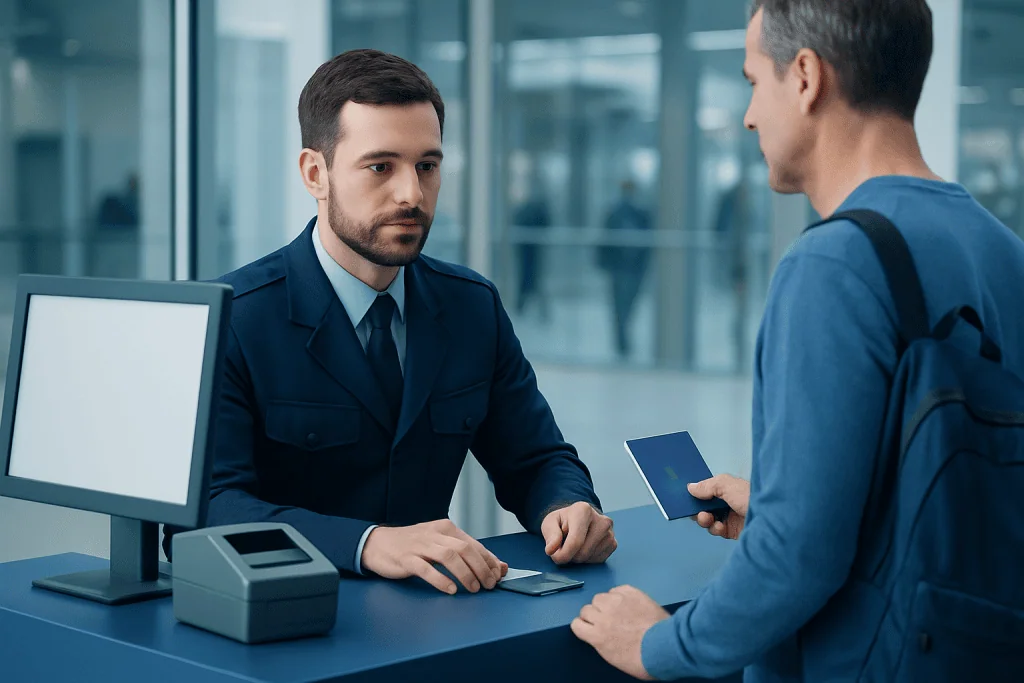
At passport control, signage and airport staff direct you to the correct lane based on your passport type. Have your passport open to the identification page and keep any visa or entry documentation ready. It is sensible to have your return ticket, hotel booking, and hospital confirmation letter reachable as well, even though officers do not routinely ask for them.
If you are asked about the purpose of your trip, a simple and truthful answer, tourism, a medical consultation, or treatment, is generally all that is needed. There is normally no requirement to present detailed medical records at immigration unless an officer specifically asks for supporting documents. Answer briefly and accurately, and do not volunteer more paperwork than requested; it slows the queue without helping your case.
Medication deserves particular attention during airport arrival in Turkey for medical travelers. Keep medicines in their original packaging where possible, and carry copies of prescriptions for anything important, especially injectable medication, controlled substances, or supplies related to a chronic condition. This is not usually checked, but when it is, having the paperwork ready turns a potential delay into a two-minute conversation. Any questions about doses or timing belong to your treating doctor, not to this guide.
Visa and passport-validity rules change, and they differ by nationality. Check them through official government sources before you travel rather than relying on forum posts or advice from other patients, which is often out of date. Confirming this a week or two before departure removes an entire category of arrival stress.
If you feel genuinely unwell after the flight, ask airport staff for assistance rather than pushing through the queue. Turkish airports have staff and procedures for exactly this, and standing in line while struggling helps no one.
Baggage claim, customs, and staying organised

After passport control, check the overhead screens for your flight number and baggage belt. Wheelchairs, mobility aids, strollers, and oversized medical equipment often arrive at a separate belt or a special handling area rather than the main carousel, ask ground staff if yours does not appear with the ordinary luggage. If a checked bag is missing, report it at the airline’s baggage desk before you leave the secure area. Claims are much harder to open once you have exited.
Customs is the next step. Most travelers simply follow the green or standard exit route. If you are carrying a large amount of cash, valuable medical devices, or anything you suspect might need declaring, ask airport staff which channel applies to you. Clarifying takes a minute; guessing wrong takes considerably longer.
Treat the space between customs and the exit doors as a deliberate pause. Once you walk into the public arrivals hall, you are in a crowd, and going back is awkward. Before you step through:
- Count your bags and confirm medical supplies, mobility aids, and valuables are all present.
- Check that your passport, phone, chargers, wallet, and medications are on your person.
- Re-read your pickup instructions, terminal, exit number, and what sign to look for.
- If you are exhausted, sit down for two minutes and drink some water first.
Two habits worth adopting before you even fly: photograph your luggage tags at check-in, and keep one change of clothes plus a day or two of essential medication in your cabin bag. If a suitcase is delayed, neither your comfort nor your treatment schedule depends on it. Overnight arrivals make this pause even more important: the guide on pacing your first medical day after an overnight flight explains how to structure the hours that follow.
Getting connected: SIM cards, Wi-Fi, and useful contacts
In the arrivals area you will usually find airport Wi-Fi, SIM card kiosks, and exchange counters within a short walk of each other. Decide your connectivity approach before you land, because deciding while tired and surrounded by kiosks rarely produces good decisions.
If your home mobile plan includes roaming on reasonable terms, the simplest option is often to use it for the first hours and sort out a local SIM later, once you are rested. The same applies if your phone supports eSIMs and you installed one before travelling. Your priority on arrival is meeting your driver, not comparing data packages.
If you do want a Turkish SIM card at the airport, bring your passport to the kiosk, because registration is commonly required for local SIMs. Ask clearly about the data allowance, local and international calls, activation time, and whether your phone needs to be unlocked. Airport kiosks are convenient, but confirm exactly what you are buying before you pay. A fuller comparison of roaming, eSIMs, and local SIMs is in the guide to mobile phone and internet setup for medical travelers in Turkey.
If you skip the kiosk, connect to airport Wi-Fi long enough to send one short update to your driver, companion, or hospital contact: landed, at passport control, or collecting bags is enough. International patient teams, including Acibadem’s, typically use messaging apps and phone calls to guide arriving patients to the pickup point in real time, and a timely message from your side makes that far easier.
Finally, keep the essentials offline. Write down, on paper, or as screenshots, the full name of your hospital, your hotel address, your driver’s name and number, and any support contact from your medical provider. Batteries run down and airport Wi-Fi is not always cooperative; paper never needs a signal.
Meeting your driver without confusion
For many patients the most stressful part of airport arrival in Turkey is not immigration but the last few minutes in the arrivals hall. The space is crowded, the signage is dense, and dozens of people are holding name boards. Before you exit the secure area, check the exact instructions you were given: which terminal, which exit or gate, which floor, and whether the driver will hold your name, your provider’s name, or a transfer company sign.
Once you are through, go to the agreed meeting point and stay there. Stand where you can be seen, keep your phone in your hand, and give the driver time. Drivers are sometimes held up by parking restrictions and terminal congestion, and they cannot know precisely how long you spent at immigration and the baggage belt. Leaving the meeting point to search is how patients and drivers circle past each other for half an hour. What a prearranged pickup normally looks like from the driver’s side is covered in the guide to airport transfer for medical travelers in Turkey.
If your care is organised through Acibadem, the international patient services team can typically confirm where to stand and who to look for, which is reassuring if you are arriving late at night, travelling alone, or unsteady after a long flight. If you cannot locate your driver after a reasonable wait, call or message the transfer contact number you were given before booking any alternative transport. There is a dedicated guide on what to do when an airport pickup is delayedthe short version is: stay put, communicate, and do not accept unofficial offers.
When you do meet the driver, confirm two things before leaving the terminal: your name, and your destination. Check whether you are going straight to the hospital for admission or to your hotel first, and keep your passport and medical documents on your lap or in a small bag with you, not buried in the boot with your suitcases.
Money, taxis, and practical tips for a calm first day
You do not need to solve every money question at the airport. If your transfer is prearranged and your hotel and hospital accept cards, you can manage the first hours with no cash at all. That said, a small amount of Turkish lira is genuinely useful for water, snacks, or minor transport needs. If you exchange money at the airport, check the rate and any fees first, and change only what you need for the first day, city exchange options are covered in the guide to currency exchange and cash tips for medical travelers in Turkey.
If your arranged pickup falls through entirely and you need a backup, use official airport transport only. Follow the marked taxi or transport signs inside the terminal, and decline unsolicited offers from anyone approaching you in the arrivals hall, however friendly. If you take a taxi, show the driver the exact written destination, and if possible have your hospital or hotel confirm the address in Turkish by message beforehand.
Then keep the rest of the day light. Long flights, dehydration, stress, and time zone changes accumulate, and even a flawless arrival is tiring. If you are not expected at the hospital immediately, your only real jobs are reaching your accommodation safely, charging your phone, eating something simple, and resting before your first appointment. Many patients also send a short message to their hospital contact confirming safe arrival; international patient teams generally use that to firm up next-day details such as interpreter arrangements, appointment timing, and which documents to bring.
Step by step
- Check your documents before landing. Before the doors open, confirm that your passport, visa if needed, hospital confirmation, hotel address, and transfer details are together in one folder or pouch. This saves time at immigration and prevents the classic mistake of leaving something in the seat pocket.
- Complete immigration calmly. Follow the signs to passport control and keep your answers brief and truthful if asked about the purpose of your visit. If you are tired, do not rush; it is perfectly fine to step aside after the counter and reorganise your documents before moving on.
- Collect your bags and verify essentials. Count every item before leaving the belt area and check that medical supplies, mobility aids, and valuables are accounted for. Report any missing bag at the airline desk immediately: it is far harder to resolve after you exit the restricted area.
- Get connected if needed. Use airport Wi-Fi or buy a SIM card if you need local data straight away. Send one short update to your driver, companion, or hospital contact so they know you have landed and whether you are delayed.
- Go directly to the agreed meeting point. Do not wander through the arrivals hall before checking your pickup instructions. Stand exactly where you were told, keep your phone in hand, and give the driver time to reach you in a crowded terminal.
- Confirm the driver and destination. Before leaving the airport, verify your name and where you are going. If anything is unclear, ring the transfer contact number you were given and confirm before getting into the vehicle.
- Prioritise rest and the next day’s plan. Once at your hotel or hospital, charge your phone, drink water, and review the next steps for your appointment. A calm first evening makes the rest of the trip feel easier.
Your checklist
- Passport with adequate validity
- Visa or entry approval if required for your nationality
- Hospital appointment or admission confirmation
- Driver name, phone number, and meeting point instructions
- Hotel address and booking confirmation
- Essential medications in original packaging
- Printed and digital copies of prescriptions and key medical records
- Phone charger and power bank
- Offline copies of key contacts, on paper or as screenshots
- Travel insurance details if applicable
Key takeaways
- Keep your passport, hospital documents, medications, and transfer details in your hand luggage, never in checked baggage.
- Use airport Wi-Fi or a local SIM to send one short arrival message, but do not feel pressured to solve every phone question before meeting your driver.
- Wait at the exact pickup point, and confirm the driver’s identity and your destination before leaving the airport.
- If your pickup fails, use official airport transport only and decline unsolicited offers in the arrivals hall.
- International patient services, including Acibadem’s, commonly coordinate transfers, meeting points, and next-day logistics for arriving patients.
Frequently asked questions
Do I need to tell immigration that I am coming for medical treatment?
If an officer asks about the purpose of your trip, answer honestly and simply, medical consultation or treatment is usually enough. You normally only need to show hospital letters or other supporting documents if the officer specifically requests them, so keep them reachable but do not present them unprompted.
Should I buy a SIM card at the airport or wait until later?
If you need local data and calls immediately, an airport SIM is convenient, bring your passport, as registration is commonly required. If you have affordable roaming or a working eSIM, it is often simpler to use that for the first hours and handle a local SIM once you are rested, since meeting your driver is the priority.
What if my driver is not there when I walk into arrivals?
Stay at the agreed meeting point and message or call the driver or transfer contact using Wi-Fi or mobile service. Organised medical pickups track flight times, but immigration and baggage delays still affect timing, so drivers are sometimes a few minutes behind. A short message with your exit number usually resolves it quickly.
Is it safe to take a taxi from the airport if I miss my transfer?
Use official airport taxi ranks or approved transport desks only, and decline unsolicited offers in the arrivals hall. Before getting in, have the exact hospital or hotel address written down, ideally confirmed in Turkish by message from your hotel or care coordinator, and show it to the driver directly.
What documents should I keep with me instead of in checked luggage?
Keep your passport, visa documents, hospital confirmation, prescriptions, essential medications, insurance details, and transfer instructions in your cabin bag. Printed copies are worth carrying too, in case your phone battery dies or internet access is unreliable when you need an address or contact number.
Can I bring my medication through Turkish customs?
Travelers routinely bring personal medication into Turkey. Keep medicines in original packaging where possible and carry prescription copies, particularly for injectable or controlled medication. If you are unsure whether something needs declaring, ask airport staff which customs channel applies rather than guessing. Rules can change, so check official sources before travelling.
Does Acibadem help with airport arrival logistics?
Patients whose treatment is arranged through Acibadem usually receive transfer arrangements, a named meeting point, and a contact number from the international patient services team before departure. The team also commonly coordinates interpreters and next-day appointment details, so most arrival questions are settled before the flight rather than in the terminal.
Add us as a Preferred Source to see more of our trusted health content across Google Search, AI Overviews and Discover.

Update history
- PublishedJuly 6, 2026
- Medical review approvedSeptember 1, 2026
- Last content updateSeptember 1, 2026
References2
- GOV.UK: Foreign travel advice: Turkey gov.uk
- CDC Travelers' Health: Türkiye (Turkey) wwwnc.cdc.gov
More Patient Guides

GHIC and EHIC in Turkey: Why They Do Not Cover You
The blue card that quietly covers you across Europe stops working at the Turkish border, and every summer, travelers discover this…

Do You Need Vaccinations for Turkey?
Here is the answer travel clinics give every day: no vaccinations are required to enter Turkey from anywhere in the normal course…

Flying With a Broken Leg or Cast: Airline Rules and Comfort
A broken leg does not cancel a flight, airlines carry passengers in casts every single day. What surprises travelers is that…
Travel Insurance After Cancer: What Patients Should Know
A cancer diagnosis changes how insurers read your name, but it does not end your traveling life. Thousands of people with…