

Currency Exchange and Cash Tips for Medical Travelers in Turkey
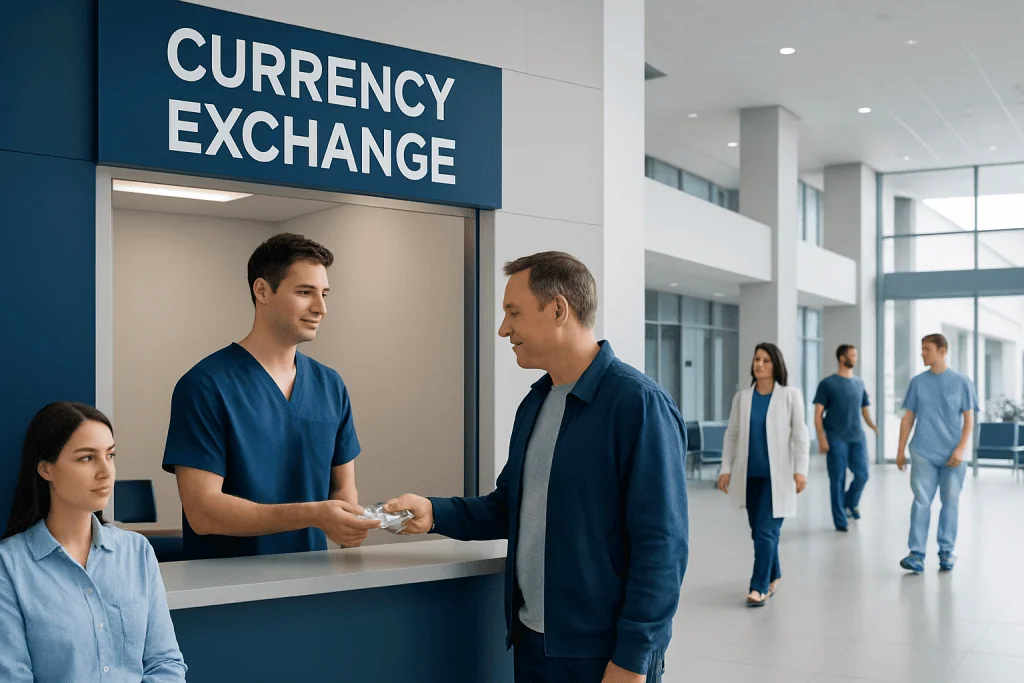
Bring a mix of payment methods, not a large stack of cash. Use international cards for bigger planned payments, keep a modest amount of Turkish lira for taxis, pharmacies and small purchases, and exchange money only at banks, airport counters, hotel desks or licensed exchange offices. Tell your bank you are travelling, confirm hospital payment methods in writing before you fly, and keep every receipt in one folder.
Wondering how much cash to bring, and whether your card will simply work when you land? It is one of the most common questions patients ask before flying to Turkey. A little money planning makes the whole trip calmer from the moment you clear immigration.
This guide covers the currency exchange and cash tips for medical travelers in Turkey that actually matter: how the Turkish lira works day to day, where to change money safely, how ATMs and card fees behave, how tipping works, and how hospital payments differ from holiday spending. None of it is complicated. It just works better when you sort it out before you fly rather than at an airport counter after a long flight.
At a glance
- Local currency: Turkish lira (TRY or TL) is what you will use for taxis, cafes, pharmacies and small purchases.
- Best approach: A mix of cards and modest cash. Do not carry your whole treatment budget in notes.
- Before travel: Tell your bank you will be in Turkey, confirm your PIN, and check foreign transaction and ATM fees.
- Hospital payments: Confirm accepted payment methods and timing in writing with your International Patient Services contact.
- Exchange safely: Banks, airport counters, hotel desks and licensed exchange offices only. Never informal street exchange.
- Tipping: Voluntary and appreciated in service settings. Keep small notes handy. Do not tip clinical staff.
Why money planning matters more on a medical trip
When you travel for healthcare, money questions carry more weight than ordinary holiday budgeting. You are managing airport transfers, consultation times, prescriptions, meals for a companion and the possibility that your stay changes length after evaluation. A simple cash and card plan lets you focus on your care instead of hunting for an ATM while tired and jet-lagged.
The good news: everyday payments in Turkey are straightforward, they just do not work exactly like home. Larger hotels, hospitals, shopping centres and restaurants routinely accept international cards. Smaller taxis, local cafes, pharmacies and delivery services often prefer Turkish lira in cash. That split, cards for big things, lira for small things, is the core of every sensible list of currency exchange and cash tips for medical travelers in Turkey, and it holds up in practice.
At Acibadem, the International Patient Services team can walk you through the payment steps connected to your hospital visit: where the cashier is, which documents to keep, and who to ask if a card is declined. They cannot replace your bank or a financial adviser, and they will not advise you on exchange rates. What they can do is make the hospital side of money clear before it becomes urgent. For the treatment payments themselves, see our separate guide on paying for treatment in Turkey by card, bank transfer or cash.
Understanding Turkish lira, cards and everyday spending
The official currency is the Turkish lira, written as TRY or TL. You will use it for bottled water, snacks, short taxi rides, pharmacy items, tips and small errands. Even if your hospital quote or hotel booking was discussed in another currency, daily life outside the hospital runs on lira. One honest caveat: the lira’s value against major currencies moves over time, sometimes noticeably. This does not change your plan: it simply means you should not memorise fixed amounts from an old forum post, and you should exchange in modest batches rather than converting everything on day one.
International debit and credit cards work widely in Istanbul, Ankara, Izmir, Bodrum and other cities where medical travelers usually stay. Visa and Mastercard are the most reliably accepted; other card networks are patchier, so bring a backup card on a different network if you have one. Contactless payment is common for small amounts. Above a certain threshold the terminal will ask for your PIN, so confirm you know it before you fly: a signature will not rescue you at a Turkish card terminal.
Check three things with your bank before departure: whether your card is enabled for use in Turkey, what foreign transaction and ATM withdrawal fees apply, and whether you need to activate international use in your banking app. If you expect a larger card payment for accommodation or hospital services, ask about a temporary limit increase, but only after you have confirmed the amount and timing with the provider, so you are not raising limits on guesswork.
Where to exchange currency safely in Turkey

You can exchange foreign currency at airports, banks, licensed exchange offices, some hotels and occasionally in shopping centres. Airport counters are convenient when you first arrive, but their rates and fees are usually not the most favourable in the city. The practical move is to change only a small amount at the airport for immediate needs, a drink, a tip, a short taxi ride, and compare proper options once you are rested. Our guide to airport arrival in Turkey for medical travelers covers what those first-hour needs actually look like.
Licensed exchange offices are everywhere in busy districts, marked with signs reading Döviz or Exchange. Use them like this: look for a clear rate board showing buy and sell rates, ask directly whether any commission applies on top of the displayed rate, count your lira at the counter before stepping away, and keep the receipt. The receipt matters if you exchanged a larger sum, need to exchange lira back before departure, or may claim reimbursement from an insurer or employer later.
Avoid informal exchange completely. That means street sellers, strangers offering a better rate, and drivers who suggest handling the exchange themselves. Even when the offer is genuine, you have no receipt, no recourse and no way to resolve a miscount. If you are staying near an Acibadem hospital, your patient services contact or hotel concierge can point you to established exchange offices and bank branches nearby: this is a normal question and they hear it daily.
How much cash should you carry?
Enough for small daily needs, and no more. Carrying a large share of your treatment budget in cash adds anxiety and turns a lost bag into a serious problem. Larger planned payments belong on cards or bank transfers, confirmed in advance, more on that in our guide to paying medical bills in Turkey.
Rather than chasing one perfect number, think in categories. Typical cash needs for a medical stay include:
- Arrival transport, if your transfer is not prearranged by the hospital or hotel
- Snacks, bottled water and small meals for you and your companion
- Tips for hotel staff, porters and drivers
- Pharmacy purchases and small personal items
- A local SIM card, if you are not sorting connectivity another way, see mobile phone and internet setup for medical travelers in Turkey
- Laundry, taxis between hotel and hospital, and quick errands during recovery
If your transfer and hotel are arranged through the hospital, your first-day cash needs drop considerably. Whatever amount you settle on, split it: some in a secure wallet you carry, some in the hotel safe, some in a separate backup pouch. Never keep all cards and cash in one bag, especially on transfer days between airport, hotel and hospital. And if you are coming for surgery, hand your companion a small cash reserve before admission day so they can manage errands while you rest, without needing your wallet or your PIN.
Tipping in Turkey: a calm approach
Tipping questions dominate travel forums, usually framed as whether a specific note is generous or stingy. The honest answer is that no fixed number stays reliable, because the lira’s value shifts and because context matters: a tip that suits a porter carrying one bag does not suit a full restaurant meal. So think in situations, not fixed amounts.
In restaurants and cafes with table service, leaving a modest proportion of the bill is customary and appreciated; check first whether a service charge is already included. For hotel porters, housekeeping and drivers, a small note is a normal gesture. Taxi passengers often simply round the fare up. None of this is obligatory, tipping in Turkey is voluntary, and nobody respectable will chase you for it.
Two habits make tipping easy. First, keep small denominations on you, because breaking a large note for a small tip is awkward for everyone. Second, tip in lira rather than foreign coins, which recipients often cannot exchange. In medical settings the rule is different and simpler: follow hospital policy and do not tip clinical staff. You will never be expected to, and you should not feel pressured if anyone suggests otherwise.
Hospital payments, deposits and financial documents
Hospital payment processes depend on your treatment plan, insurance status, quote and any changes recommended after evaluation. Before you travel, ask for written guidance on what your quote includes, what may be billed separately, and when payment is expected. Getting this in writing prevents confusion on admission day, when your attention belongs on your appointments, not on cashier logistics.
Acibadem’s international teams handle these questions constantly and can guide you through the practical side: where the cashier is, how to request an invoice, and how to get interpreter support during a payment conversation. If you plan to pay by card, confirm your limits with your bank beforehand and bring the physical card used for any pre-authorisation or booking, some desks need to see it. If an insurer or embassy is involved, ask which documents they require before discharge, not after; our guide on travel insurance for treatment in Turkey explains what to check.
Keep one dedicated folder, paper, digital, or both, holding quotes, deposit confirmations, invoices, exchange receipts, pharmacy receipts and insurance correspondence. Photograph paper receipts, since thermal paper fades. If your treatment plan changes after tests or consultations, ask for updated financial information in writing before authorising non-urgent next steps. This is not distrust; it is how organised patients keep their records claim-ready.
ATMs, bank fees and the conversion trap
ATMs are everywhere in Turkish cities: airports, shopping centres, bank branches and near hospitals. Prefer machines physically attached to a bank branch, in well-lit and busy locations. Before confirming a withdrawal, read the screen properly: the fee, the exchange rate offer and the total.
Watch for one specific trap: dynamic currency conversion. Some ATMs and card terminals offer to charge you in your home currency “for convenience”. The convenience is real; the exchange rate embedded in it is often poor. In many cases, choosing to be charged in Turkish lira lets your own bank or card network handle the conversion at its standard rate, usually the better deal, though you should confirm your own bank’s policy before travelling, since card products differ.
Standard ATM hygiene applies. Shield your PIN, decline help from strangers at the machine, and cancel the transaction if anything about the machine looks unusual. If an ATM retains your card, contact the bank named on the machine and your own card issuer immediately. Save your bank’s international helpline in your phone and write it down separately, if your phone is lost or dead, the paper copy earns its place. It belongs on the same list as the numbers in our guide to emergency contacts to save before you go.
Small cash habits that make your stay easier
Small denominations do a lot of work in Turkey. Taxi drivers, kiosks and delivery couriers may not have change for large notes, and standing at a car window while a driver searches for change is nobody’s favourite moment. When you exchange money or withdraw cash, break large notes early at a supermarket, pharmacy or hotel desk, before you actually need small money in a hurry.
If you are travelling with a companion, agree a simple daily system: who carries the cash, who keeps receipts, how shared expenses are settled. During recovery your energy will vary day to day, and a clear arrangement lets your companion buy meals, personal items or pharmacy supplies without repeatedly waking you for a card or a PIN. Decide before admission day, not from a hospital bed.
Finally, plan the end of the trip. Aim to run down your lira in your last days rather than exchanging a large sum back at the airport, where you lose on the spread twice. Small leftover amounts are easily spent on departure-day meals and last purchases.
Step by step
- Check your bank and card settings before departure. Tell your bank you will be in Turkey and confirm your cards are enabled for international use. Ask about foreign transaction fees, ATM limits, daily spending limits and how emergency card replacement works abroad.
- Confirm hospital payment methods in writing. Ask your patient coordinator which methods are accepted for your planned care, and keep written details about deposits, invoices, insurance documents and expected payment timing.
- Bring more than one payment option. Travel with at least one backup card, ideally on a different network, and keep it separate from your main wallet. If one card is blocked or rejected, the second prevents a delay from becoming a crisis.
- Exchange a small amount on arrival. Get enough lira for immediate needs, snacks, small transport costs, tips. Compare exchange offices or use a bank ATM later, once you are rested and settled.
- Use safe, official exchange points only. Banks, airport counters, licensed exchange offices and reputable hotel desks. Decline informal street exchange regardless of the rate offered.
- Keep receipts and payment records together. Hospital receipts, exchange slips, ATM slips and pharmacy bills in one folder, photographed as backup. They matter for insurance claims, reimbursement and your own budgeting.
- Plan cash access during recovery. Prepare small notes in advance and hand your companion a reserve plus clear instructions, so errands happen without you leaving the hotel or hospital unnecessarily.
Your checklist
- Notify your bank that you will travel to Turkey.
- Confirm your card PIN and international spending limits.
- Bring at least one backup payment method if available.
- Carry a modest amount of Turkish lira for arrival and small purchases.
- Use licensed exchange offices, banks or bank-attached ATMs only.
- Choose to be charged in lira when a terminal offers home-currency conversion, after checking your bank’s policy.
- Keep small denominations for tips, taxis and kiosks.
- Keep hospital quotes, receipts and invoices in one folder, with photos as backup.
- Save your bank’s emergency phone number offline, on paper.
- Split cash and cards between separate secure places.
- Ask your Acibadem contact about cashier locations and interpreter support before admission day.
Key takeaways
- Turkish lira handles small daily expenses even when major payments go by card or transfer.
- Do not carry large cash sums for the whole journey; split funds and use secure payment methods for big costs.
- Confirm hospital payment timing, accepted methods and required documents in writing before you travel.
- Licensed exchange offices, banks and bank-attached ATMs are the only exchange points worth using.
- When a machine offers to charge your home currency, being charged in lira is often better, verify with your bank.
- Tipping is voluntary: small lira notes for service staff, a modest share of restaurant bills, nothing for clinical staff.
- Acibadem’s International Patient Services can clarify hospital payment logistics and arrange interpreter support, though they do not give financial advice.
Frequently asked questions
Should I exchange money before I travel to Turkey?
Usually only a little, if at all. Turkish lira is often harder to obtain at a good rate outside Turkey, and exchange offices and ATMs are plentiful once you arrive. Many travelers bring a limited amount of a major foreign currency as a backup and exchange small batches into lira as needed. For larger costs, arrange card or transfer payments in advance instead of converting cash.
How much should I tip in Turkey, is a small lira note enough?
It depends on the situation, and no fixed figure stays reliable because the lira’s value changes over time. For porters, housekeeping and drivers, a small note is a normal, appreciated gesture. In restaurants with table service, a modest proportion of the bill is customary, check whether service is already included. Tipping is voluntary throughout, and hospital clinical staff should not be tipped at all.
Can I pay hospital bills in cash in Turkey?
Policies vary by hospital, amount, treatment plan and regulation. Before traveling, ask your International Patient Services contact which methods are accepted and whether limits or documentation requirements apply. For safety and record-keeping, avoid carrying large cash amounts unless you have been specifically advised to and understand the process.
Are credit cards widely accepted in Turkey?
Yes. International cards work in hotels, hospitals, shopping centres and most restaurants in major cities, with Visa and Mastercard the most reliably accepted. Small shops, taxis and local services may still prefer cash, so keep some lira with you, know your PIN, and carry a backup card in case a terminal fails or your bank blocks a transaction.
Is it better to use ATMs or exchange offices?
Both work well if you choose reputable options. Bank-attached ATMs are convenient for lira withdrawals; licensed exchange offices suit converting foreign cash you already carry. Either way, compare fees, read the displayed rate, decline home-currency conversion offers unless your bank advises otherwise, and never accept a transaction you do not fully understand.
What should I do if my card is declined at the hospital or hotel?
Contact your bank first, international security systems regularly block legitimate transactions abroad. Ask whether a daily limit, foreign-use setting or fraud check caused it. If you are at an Acibadem hospital, ask the International Patient Services team for support; they deal with this routinely and can explain your practical next options while you sort things with your bank.
How much Turkish lira do I need on my first day?
It depends on how much is prearranged. If your transfer, hotel and meals are organised through the hospital, a modest amount for snacks, tips and small items covers you until you can visit a bank ATM or exchange office at leisure. Avoid converting a large sum at the airport while tired, exchange a little, then compare options once settled.
Should my companion carry money for me during treatment?
Yes, if you are having surgery or a procedure. Give them a small cash reserve and one agreed payment method for errands, decided before admission day. Agree what they may pay for, where receipts go and how to reach the hospital team with questions. It makes recovery days noticeably smoother for both of you.
Add us as a Preferred Source to see more of our trusted health content across Google Search, AI Overviews and Discover.

Update history
- PublishedJune 8, 2026
- Medical review approvedSeptember 13, 2026
- Last content updateSeptember 12, 2026
References1
More Patient Guides

GHIC and EHIC in Turkey: Why They Do Not Cover You
The blue card that quietly covers you across Europe stops working at the Turkish border, and every summer, travelers discover this…

Do You Need Vaccinations for Turkey?
Here is the answer travel clinics give every day: no vaccinations are required to enter Turkey from anywhere in the normal course…

Flying With a Broken Leg or Cast: Airline Rules and Comfort
A broken leg does not cancel a flight, airlines carry passengers in casts every single day. What surprises travelers is that…
Travel Insurance After Cancer: What Patients Should Know
A cancer diagnosis changes how insurers read your name, but it does not end your traveling life. Thousands of people with…