

Mobile Phone and Internet Setup for Medical Travelers in Turkey

Most medical travelers in Turkey use one of four options: international roaming, a Turkish SIM card, an eSIM installed before departure, or Wi-Fi at the hospital and hotel. Check that your phone is unlocked and eSIM-capable before you fly, carry your passport for SIM registration, and keep at least one backup, offline maps, printed addresses and a companion's number.
This guide walks you through mobile phone and internet setup for medical travelers in Turkey: what your realistic options are, what to check on your handset before departure, how SIM registration works, what to expect from hospital and hotel Wi-Fi, and how to keep your contact details usable across a treatment journey that may involve transfers, appointments and remote follow-up.
At a glance
- Procedure type: Travel and communication planning, not a medical procedure
- Purpose: Staying reachable by your care team, interpreters, transfer drivers and family throughout treatment in Turkey
- Anesthesia: Not applicable
- Hospital stay: Not required; connectivity is best arranged before travel or on arrival
- Estimated recovery: Not applicable; setup usually takes minutes to a few hours depending on the option chosen
- Return to daily life: Immediate once your connection is tested and working
- Final result timeline: Roaming and eSIMs can be active before you land; a Turkish SIM is usually working the same day it is registered
- Suitable department: International Patient Services and patient coordination for communication logistics; telecom services themselves come from independent operators
- International patient support: Interpreter coordination, transfer communication, accommodation guidance and remote follow-up channels
Why connectivity is part of your treatment plan
Phone and internet access is not medicine, but on a medical trip it does real work. Appointment changes arrive by message. Your transfer driver confirms a meeting point. Your interpreter coordinates timing. Your family expects updates from the ward. When any of those channels fails, the trip becomes harder than it needs to be, usually at the moment you have the least energy to fix it.
That is why mobile phone and internet setup for medical travelers in Turkey deserves a place on your pre-travel checklist alongside passports, records and medication lists. The good news is that Turkey is well covered by mobile networks in cities where major hospitals operate, and international visitors have several workable options. The task is choosing the right one for your handset, your length of stay and your habits, then testing it before it matters.
One honest limit up front: telecom services are provided by independent mobile operators, not by hospitals. A hospital’s international patient team can tell you how it will communicate with you and where Wi-Fi is available, but your SIM, eSIM or roaming plan is a contract between you and a telecom provider, on their terms.
When to plan your setup
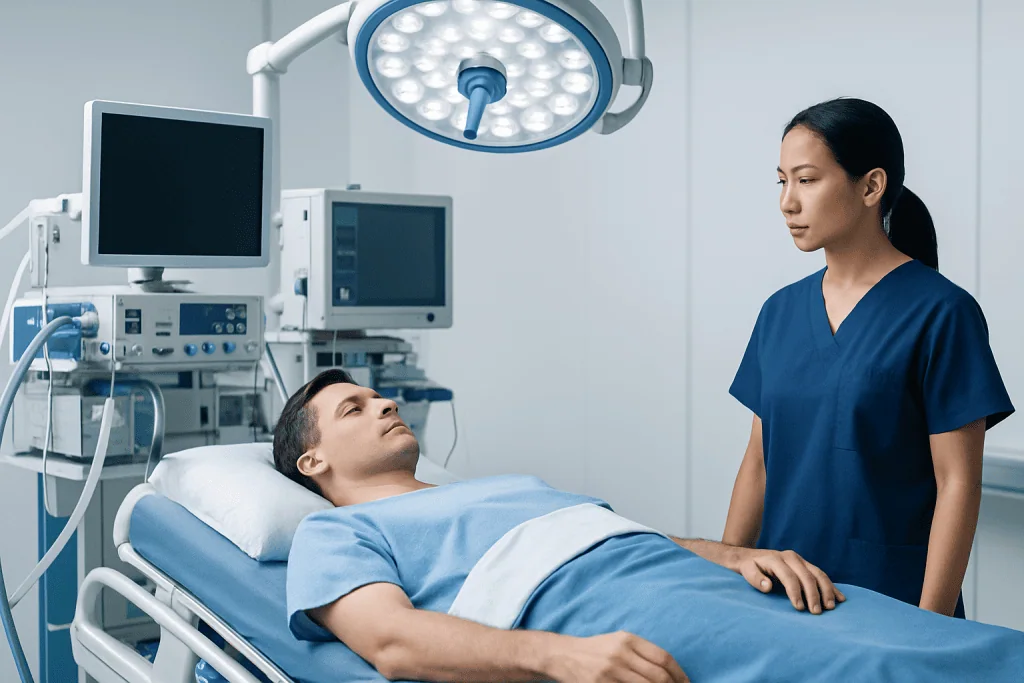
Plan connectivity before every medical trip, but treat it as essential in three situations. First, if your schedule involves several appointments, tests or clinic locations, because timing changes travel by phone. Second, if you will be admitted for surgery or a procedure, because you will not want to troubleshoot SIM settings while recovering. Third, if you do not speak Turkish, because translation apps, maps and messaging become your working tools from the moment you land.
Timing matters more than most travelers expect. Roaming packages usually need activating before departure. eSIMs are best installed at home on reliable Wi-Fi, following the provider’s instructions on when to activate, some plans start their validity clock at installation, others at first use. A physical Turkish SIM can only be bought after arrival, which means your first hour in the country may be offline unless you have a bridge such as airport Wi-Fi or roaming. Our guide to airport arrival in Turkey for medical travelers covers that first hour in detail.
If your stay stretches beyond a few days, relying only on home-country roaming is rarely the most convenient choice. Compare it against local options before you commit, and check what happens to your allowance if your treatment plan extends your stay.
Who benefits most from planning ahead

Everyone travelling for treatment benefits from a working connection, but some situations raise the stakes. Patients travelling alone have no companion to fall back on. Parents accompanying a child, and adult children accompanying an elderly parent, often run two schedules at once. Patients whose treatment ends with a recovery period at a hotel depend on their phone for pharmacy runs, transport and follow-up messages precisely when they are least mobile.
Your habits matter too. If you use digital boarding passes, online banking, translation apps or messaging platforms to keep in touch with family, you need data from day one, and you need to think about SMS verification codes, which usually arrive on your home number. Keep that in mind before you swap SIM cards: a bank code sent to a SIM sitting in your hotel safe helps nobody.
In practical terms: an eSIM suits someone with a compatible, unlocked smartphone who wants data working at the baggage belt. A physical Turkish SIM suits someone whose phone takes removable SIMs and who wants local data and local calling. Roaming suits short stays and people who must keep receiving calls on their home number. If you are unsure which camp you fall into, your home operator or handset manufacturer can confirm what your device supports before you travel.
Your four main options in Turkey
The options below can be combined, and for most medical travelers the strongest plan is two of them together, one primary, one backup.
International roaming
Roaming is the simplest option because nothing changes: your number, your SMS codes, your contacts all keep working. Its usefulness depends entirely on your home operator’s rules for Turkey, whether roaming is enabled on your account, what a travel package includes, and how data, calls and texts are charged once any allowance runs out. Confirm all of this before departure, in writing if possible. Turkey sits outside the roaming zones that cover many European plans, so do not assume your usual EU arrangement applies.
A Turkish physical SIM card
A local SIM gives you Turkish mobile data, local calls and a local number, which some travelers find useful for hotels and drivers. You will need your passport to register the SIM, and you should buy from an official operator store or authorised dealer rather than an informal stall. Your phone must be unlocked and support the relevant network bands. One rule specific to Turkey: foreign handsets used with Turkish SIMs for extended stays must eventually be registered with the authorities or they can be blocked from local networks; short-stay medical travelers are generally unaffected, but if your treatment plan involves months in the country, ask the operator about current registration rules when you buy. Our companion guide to mobile internet and SIM cards in Turkey for international patients goes deeper on operators and coverage.
An eSIM
An eSIM is a digital SIM installed on a compatible smartphone without removing your physical SIM, which means your home number stays live for verification codes while a Turkish or travel data plan handles internet. It can be purchased and installed before you fly, so data works soon after landing. Read the plan details carefully: many travel eSIMs are data-only with no local calling, validity periods vary, and installation usually cannot be repeated if the QR code is consumed on the wrong device. We cover setup step by step in using eSIMs and mobile data in Turkey during medical travel.
Hospital and hotel Wi-Fi
Wi-Fi is excellent for video calls, large file downloads and keeping data use down, and many hospitals and hotels offer it. Treat it as a supplement, not a foundation: availability and performance vary by building and policy, it does nothing for you in a taxi or at a transfer meeting point, and shared networks are not the place for banking or sensitive documents. A sensible plan is one mobile data option plus Wi-Fi, never Wi-Fi alone.
Three checks before you fly
Sorting out mobile phone and internet setup for medical travelers in Turkey comes down to three questions about your handset, all answerable from home.
- Is your phone unlocked? A phone locked to your home operator will reject Turkish SIMs and most eSIMs. Your operator can confirm lock status and, in many cases, unlock the device on request, allow time, as this is not always instant.
- Does it support eSIM? Most recent smartphones do, but not all, and some regional handset variants have eSIM disabled. Check your model’s settings or the manufacturer’s specifications rather than assuming.
- Does your roaming work in Turkey? Even if you plan to use a local SIM, roaming that works for the first hour after landing is a valuable bridge. Confirm activation and understand the charges so a few minutes of use does not surprise you.
While you are at it, decide how you will receive verification codes for banking and travel apps during the trip, and note that a phone with a dead battery has no connectivity plan at all, pack a power bank for airport and hospital days. Our packing guide for hospital, hotel and recovery covers chargers, adapters and the rest.
Setting up before departure
Treat communication the way you treat medical documents: organised, duplicated, and not dependent on a single point of failure. Save the hospital address, your coordinator’s contact details, your hotel address and your transfer meeting point in your phone, and also offline, as screenshots or on paper, in case you land without a connection. The guide to emergency contacts to save before you go lists what belongs on that offline sheet.
If you are using roaming, activate the travel package before departure and test it if your operator allows. If you are using an eSIM, install it at home on Wi-Fi and follow the provider’s activation instructions precisely. If you are buying a local SIM after arrival, keep your passport accessible for registration. Download offline maps of your destination city and any translation language packs while you still have unlimited home internet.
Finally, tell your patient coordinator which number and which channel you will actually be using while in Turkey. If your number will change after arrival, because you swap to a Turkish SIM, for instance, pass on the new number as soon as it is active, so appointment reminders and transfer details keep reaching you.
Arrival day: the first hour
Landing is when your plan gets tested. Switch off airplane mode, let the phone find a network, and check that data flows before you leave the arrivals area, airport Wi-Fi gives you a safety net while you troubleshoot. If you are buying a SIM at the airport, operator counters exist at major international airports, though queues after long-haul arrivals can be slow; some travelers prefer a city-centre operator store the next day, bridged by an eSIM or roaming in the meantime.
Arrival day is also when flight delays, slow baggage and missed meeting points collide with connectivity gaps. A working connection is what turns a delayed pickup from a crisis into an inconvenience: you can reach your driver, your coordinator can reach you, and nobody is standing at the wrong exit wondering what happened.
Phone use during hospital visits and admission
Inside a hospital, phone use may be restricted in some clinical areas for privacy, safety or infection-control reasons, imaging suites, operating areas and intensive care in particular. Staff will tell you where devices are welcome, and whether a companion should hold your phone during a procedure. If you are admitted, Wi-Fi access and phone rules are usually explained at registration or by guest services.
A few practical habits help. Keep your charger by the bed and do not leave devices unattended. Before a procedure with sedation or anaesthesia, hand your phone to your companion or store it as the hospital instructs, and accept that the hours afterwards are for rest rather than replying to messages. Inside the ward, the nurse call system, not your phone, is how you reach staff.
After discharge and back home
The days after discharge are when connectivity quietly earns its keep: transport back to the hotel, pharmacy locations, follow-up appointment times, and messages from home. Keep your phone charged and carry a power bank when moving between hospital, hotel and airport. Before you leave the hospital, confirm which number and channel your care team will use for follow-up, and make sure your records show the number you are actually carrying.
After you return home, keep the same communication channel active where possible, because remote follow-up often continues by message, call or email. Save any reports shared digitally alongside your other records: our guide to sending medical records securely explains how to handle medical files over the internet without exposing them.
A practical timeline
| Timeframe | What to expect |
|---|---|
| Before departure | Confirm unlock status, eSIM support and roaming rules. Install an eSIM or activate a roaming package. Save key addresses and contacts offline. |
| First 24 hours | Test your connection at the airport. Buy and register a local SIM if that is your plan. Send a test message to your companion, family or coordinator. |
| First week | Use your connection for appointment updates, navigation and interpreter coordination. Watch data use if your plan has limits. |
| Weeks 2–4 | If your stay extends, renew or top up your plan before it lapses. Pass on any number change so hospital records stay current. |
| After returning home | Keep the agreed follow-up channel active. Store digital reports with your other medical records. |
Privacy and security
A medical trip concentrates sensitive material on one device: records, passport scans, banking apps, insurance documents. Handle it accordingly. Avoid sending passport copies, payment details or medical reports over open public Wi-Fi; use mobile data or a trusted network for anything confidential. Scam messages impersonating airlines, hotels, banks and even hospitals circulate everywhere travelers do, be sceptical of unexpected links and verify unusual requests through the contact details you already hold, not the ones in the message.
If you remove your home SIM to use a Turkish one, store it somewhere safe. That small card is your access to SMS verification codes, and losing it abroad is a genuinely tedious problem to fix.
What can go wrong, honestly
The risks here are practical, not medical, and most are avoidable. The common failures: a phone that turns out to be locked, an eSIM QR code consumed on the wrong device, a data-only plan bought by someone who needed voice calls, a roaming bill inflated by background app updates, weak indoor coverage in a specific building, and verification codes stranded on an unreachable home number.
From a care-coordination perspective, the one risk worth engineering against is unreachability. If your care team cannot reach you, appointment changes and follow-up details can be missed. The fix is redundancy: give the hospital at least two ways to reach you, mobile number plus email, or your number plus a companion’s, and keep both current for the length of the trip.
How costs work
This guide deliberately quotes no figures, because telecom pricing changes frequently and varies by operator, plan and point of sale. What your connectivity costs depend on is stable, though: the option you choose, your length of stay, how much data the plan includes, whether voice calls are bundled, and whether you buy at the airport or in a city store. Confirm current terms directly with your home operator or the Turkish provider before committing.
Connectivity is a personal travel expense, separate from medical costs. A hospital quotation covers healthcare-related items; SIM cards, eSIM plans, roaming charges, devices, chargers and app subscriptions sit outside it unless a document explicitly states otherwise. What hospital support does typically include is guidance on communication channels, coordinator contact details, interpreter coordination and information about Wi-Fi availability where it exists.
How Acibadem fits in
Acibadem International works with patients from many countries, and the international patient team’s role in your connectivity is coordination, not telecoms: agreeing which channel the hospital will use to reach you, arranging interpreter support, keeping transfer and appointment communication running, and continuing follow-up contact after you return home. Your medical decisions rest on physician evaluation; the communication plan simply makes sure information moves reliably between you and the people treating you.
A note on this guide
This guide provides general information for international patients and companions planning phone and internet access during a medical trip to Turkey. It does not replace advice from a physician, a telecom provider, an insurer or a travel professional. Network rules, roaming terms, registration requirements and hospital policies change and vary by device, operator and location, so verify time-sensitive details with the relevant provider before you travel. Any question about your treatment, recovery or fitness to travel belongs with your treating doctor.
Step by step
- Initial contact. You share your preferred contact method, phone number with country code, email, or messaging app, at the start of the process, so every later step has a working channel.
- Medical record submission. Records, reports and images travel through the official channel your coordinator provides, ideally over a secure connection rather than public Wi-Fi.
- Preliminary medical review. While the relevant medical team reviews your records, you confirm your phone can receive international calls and that email works as a backup.
- Treatment plan and quotation. Your preliminary plan arrives through the agreed channel. Key dates and details are worth saving offline as well.
- Travel planning. You choose between roaming, an eSIM, a Turkish SIM and Wi-Fi, and verify that your phone is unlocked and compatible with the choice.
- Arrival. You test your connection at the airport and keep hospital, hotel and transfer details accessible offline in case activation is slow.
- In-person consultation. Your phone confirms timings and interpreter arrangements, but hospital guidance governs where devices are used in clinical areas.
- Pre-operative tests. Your device stays available for coordination, silenced when requested; a companion can field messages while you are occupied.
- Treatment. Before a procedure, your phone goes to your companion or into safe storage per hospital instructions; the nurse call system handles anything urgent on the ward.
- Hospital stay. Hospital Wi-Fi or mobile data keeps family updated and discharge logistics moving, with rest taking priority over screens.
- Discharge and travel clearance. Discharge instructions, follow-up contacts and travel guidance get saved both online and offline before you leave.
- Remote follow-up. The agreed channel stays active after you return home, and any requested documents or photos move only through approved, secure routes.
Your checklist
- Valid passport and travel documents
- Primary mobile phone, confirmed unlocked, and its charger
- Travel plug adapter compatible with Turkey (type C/F, European style)
- Power bank for airport, transfer and hospital days
- Roaming terms for Turkey confirmed with your home operator
- eSIM installed before departure, if that is your chosen option
- Your coordinator’s contact details, saved and duplicated offline
- Hospital address, hotel address and transfer meeting point saved offline
- Offline maps and translation language packs downloaded
- A plan for receiving SMS verification codes if you change SIMs
- Companion’s phone number and an emergency contact sheet
- Home SIM card stored safely if removed from the phone
Key takeaways
- Reliable mobile phone and internet setup for medical travelers in Turkey means one tested mobile data option plus a backup, never Wi-Fi alone.
- Three pre-flight checks decide everything: is the phone unlocked, does it support eSIM, and does roaming work in Turkey.
- Turkish SIM cards require passport registration and an official point of sale; eSIMs are best installed at home before departure.
- Keep offline copies of the hospital address, coordinator contacts and transfer details in case you land without a connection.
- Treat public Wi-Fi as unsuitable for medical records, banking and passport scans; use mobile data or trusted networks for anything sensitive.
- Connectivity is a personal travel expense set by telecom providers, separate from any medical quotation.
Frequently asked questions
Do I need a Turkish SIM card for my medical trip?
Not necessarily. Short stays often work fine on roaming or a travel eSIM, while longer stays or heavy data use tend to favour a local SIM. The right answer depends on your phone, your length of stay and whether you need local calls as well as data.
Can I use an eSIM in Turkey?
Yes, if your smartphone supports eSIM and is unlocked. Install it before departure on reliable Wi-Fi and read the plan terms carefully: many travel eSIMs are data-only, validity periods vary, and installation usually cannot be repeated on a second device.
Will I have Wi-Fi at the hospital?
Hospital Wi-Fi is available in many areas, but coverage and access rules vary by building and policy. Treat it as a supplement and keep a mobile data option for transfers, navigation and communication outside the hospital.
Should I activate roaming before I travel?
Yes, if roaming is part of your plan. Confirm with your home operator before departure that roaming is enabled for Turkey, what any travel package includes, and how data, calls and SMS are charged beyond the allowance. Turkey is outside many European roaming zones, so check rather than assume.
Is public Wi-Fi safe for medical documents?
Open public networks are not the place for medical records, passport copies or payment details. Use mobile data or a trusted private network for sensitive material, stick to official communication channels, and be cautious with unexpected links or requests.
What if my phone does not work after I arrive?
Check the basics first: airplane mode off, roaming enabled in settings, SIM or eSIM correctly selected as the data line, and network selection set to automatic. Airport or hotel Wi-Fi gives you a bridge while you troubleshoot, and an official operator store can resolve SIM and registration issues in person.
Can my companion manage communication for me after surgery?
Yes, and many patients prefer it. A companion can field family updates and routine messages while you rest. Make sure the hospital holds accurate contact details for both of you, so nothing depends on a single phone.
Are phone and internet costs included in my medical quotation?
Generally not. SIM cards, eSIM plans, roaming charges, devices and accessories are personal travel expenses arranged with telecom providers. A medical quotation covers healthcare-related items; anything about connectivity would be stated explicitly if it were included.
Add us as a Preferred Source to see more of our trusted health content across Google Search, AI Overviews and Discover.

Update history
- PublishedJune 22, 2026
- Medical review approvedSeptember 13, 2026
- Last content updateSeptember 12, 2026
References1
More Patient Guides

HoLEP in Turkey: How It Compares With TURP and What Recovery Involves
HoLEP in Turkey treats enlarged prostate tissue with laser enucleation; learn how it compares with TURP, recovery, travel and follow-up.
Porcelain Veneers in Turkey: Who Is Suitable and How Many Visits Are Needed?
Porcelain veneers in Turkey can enhance tooth shape and colour in two visits for suitable patients after a personalised dental assessment.

How to Prepare for a Sedation Procedure in Turkey
Prepare safely for a sedation procedure in Turkey with guidance on fasting, medicines, travel, recovery and follow-up.
Treatment Delays in Turkey: What Happens If Tests or Recovery Change Your Schedule
Treatment delays in Turkey can happen if tests or recovery change your plan. Learn how to manage appointments, travel, accommodation and follow-up.