

At Acibadem, How We Help You Choose Between Maslak, Altunizade, and International Hospital

The right choice depends on where your specialist team, tests and treatment can be organised most smoothly, and on practical details such as which side of Istanbul you will stay on. Maslak sits on the European side; Altunizade and International Hospital are on the Asian side. Acibadem International reviews your medical records and travel plans, then explains which hospital fits your case and why.
Three hospital names, one trip to plan. You are trying to work out which one is right for you, and the honest answer is that it is rarely a mystery. It is a matching exercise: your diagnosis, your specialist team, your travel plans and your energy levels on treatment days all point somewhere. This guide explains how that matching works in practice.
Acibadem Maslak, Acibadem Altunizade and Acibadem International Hospital are all part of the same group, and all three receive patients from abroad. That is precisely why the decision can feel confusing from a distance: the names look interchangeable on a screen. They are not interchangeable in your daily experience, and the difference usually comes down to where your care pathway and your logistics line up best.
At a glance
- Best way to choose: Match your treatment pathway and specialist team first, then your daily logistics
- Main locations: Maslak on Istanbul’s European side; Altunizade and International Hospital on the Asian side
- Who helps you decide: Acibadem International patient coordinators, working with the medical teams
- What to compare: Where your consultations and tests will run, expected stay length, airport route, companion needs
- Support available: Interpreters, appointment sequencing, accommodation guidance and follow-up coordination
- What a good decision looks like: One you can explain back in a sentence, not a leap of faith
How we help you choose between Maslak, Altunizade, and International Hospital
The short version of how we help you choose between Maslak, Altunizade, and International Hospital is this: the decision starts from your medical file, not from the map. Coordinators look at your reports, imaging and history to understand what kind of pathway you are likely to need: a single consultation, advanced imaging, surgery, oncology planning, cardiac assessment, a second opinion, or a multi-department programme. Only after that does geography enter the conversation.
This order matters. A hospital that looks convenient from your hotel is not automatically the one where your specialist team and the equipment for your specific tests are scheduled. Choosing on location first and medicine second is how patients end up crossing Istanbul between appointments. Choosing on medicine first and location second is how the trip stays calm.
The process is deliberately unglamorous. Records are reviewed, gaps are identified, the relevant department is consulted, and a recommendation comes back with a plain-language reason attached. If two hospitals would both work clinically, you are told so, and the tie is broken on practical grounds: transfer times, your accommodation, your companion’s needs, how often you will need to return. The same logic applies across the wider network, which we cover in a broader guide on choosing a hospital in Istanbul as an international patient.
Start with your medical needs, not the building name
When several well-known hospitals belong to the same group, it is tempting to ask which one is “best” in the abstract. The more useful question is narrower: which hospital fits your diagnosis, your expected tests and your treatment pathway most closely? A one-day diagnostic visit, a planned operation and a multi-week treatment programme each pull the decision in different directions.
Consider what your pathway actually involves. If your care will centre on one specialist, the sensible starting point is where that specialist’s clinic and the related diagnostics run. If your care will involve several departments, say imaging, pathology review, a surgical team and post-treatment monitoring, then the deciding factor is where those departments can be sequenced with the least friction. Concentrating your appointments in one building, as far as the plan allows, is one of the simplest ways to make a medical trip less tiring.
The nature of your treatment shapes the choice too. Whether your plan points towards admission or repeated visits changes what “convenient” means; our guide on choosing between inpatient and outpatient treatment in Turkey explains that trade-off in detail. A patient staying on a ward for several nights cares less about the daily commute than a patient returning every second day for tests and reviews.
One honest caveat: no recommendation made before your records are reviewed is worth much. If your file is incomplete, the first step is usually identifying what is missing, recent imaging, pathology, a medication list, because the hospital question cannot be answered properly without it.
How Maslak, Altunizade, and International Hospital may feel different to you
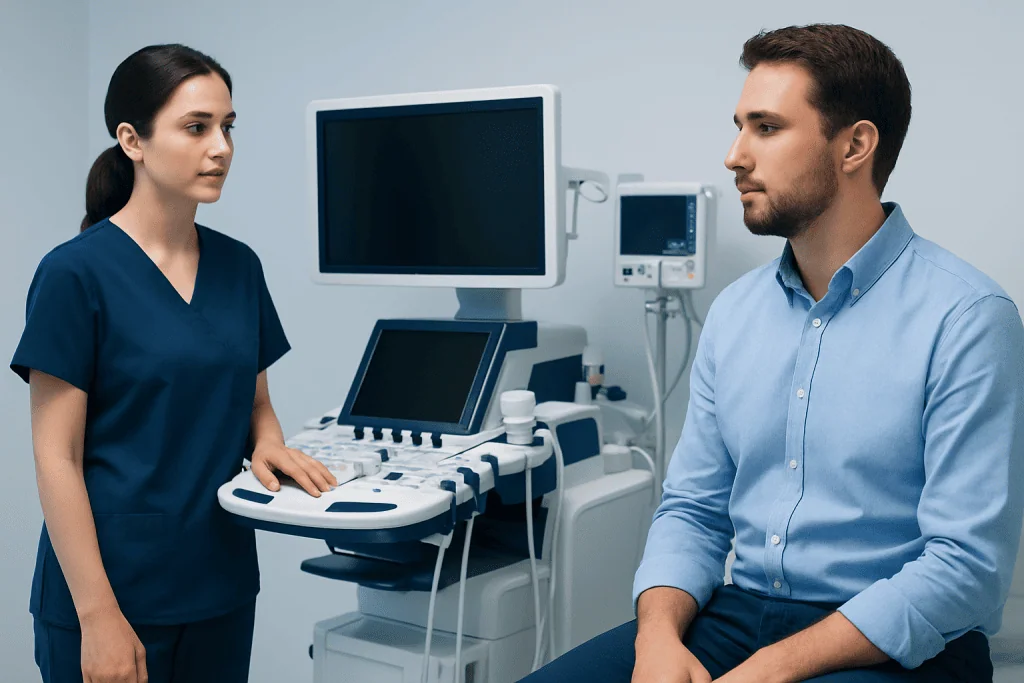
All three hospitals sit inside the same network and are supported by the same international patient services. The clinical standards are shared. What differs is the experience of getting there, staying nearby and repeating the journey, details that matter far more once you are in Istanbul than they seem from home.
The clearest structural difference is geography. Istanbul is divided by the Bosphorus, and crossing it during peak traffic takes real time and energy. Acibadem Maslak is on the European side. Acibadem Altunizade and Acibadem International Hospital are both on the Asian side. If your accommodation, your companion’s plans or your onward travel anchor you to one side of the city, that alone can tilt the decision, provided the medical fit is equal.
| Hospital | Side of Istanbul | When it often makes practical sense |
|---|---|---|
| Acibadem Maslak | European side | Your accommodation or plans sit on the European side, or your specialist team and tests are scheduled there |
| Acibadem Altunizade | Asian side | Your care pathway runs on the Asian side and you want to keep daily journeys short |
| Acibadem International Hospital | Asian side | A familiar setting for many patients travelling from abroad, with long-standing cross-border coordination |
None of this makes one hospital universally better. Each is more convenient in certain situations, and the ranking changes with the patient. A few honest patterns:
- European side preference: Maslak usually simplifies your days
- Asian side preference: Altunizade or International Hospital tends to be more practical
- Complex, multi-department scheduling: go where your specialist team and tests align, even if the commute is longer
- Short diagnostic trip vs longer stay: weigh travel time, rest and companion comfort differently for each
If you want the fuller framework behind these comparisons, how campus choice works across the group, not just these three names, see our guide on how we help you choose the right hospital campus.
Questions that genuinely help narrow down the right hospital

Broad impressions, reviews, rankings, photographs of lobbies, rarely settle this decision. Specific questions do. These are the ones that consistently produce useful answers:
- Where does the main specialist for my case usually see patients?
- Where will my expected tests and imaging actually take place?
- Can my consultations, diagnostics and treatment be concentrated in one building?
- If a procedure is planned, where and how often will follow-up reviews happen?
- How many departments are likely to be involved in my care?
Travel details deserve the same scrutiny, because they shape your comfort more than most patients expect. If you will arrive tired, fast before a test, travel with children or need mobility assistance, the route between airport, hotel and hospital becomes part of the treatment plan. The same is true for a companion who will move between the hospital and accommodation every day.
The number of departments involved is often the quiet deciding factor. A patient coming for a single consultation can choose almost entirely on convenience. A patient whose plan involves oncology review, imaging, pathology coordination, surgery and monitoring should choose on pathway alignment first, and it is reasonable to expect that pathway explained in plain language rather than hospital jargon, so you are not left decoding logistics on your own.
What the coordination process looks like in practice
You do not need to arbitrate between three hospital names by reading websites. The comparison is done with you, and it follows a predictable shape. First, your existing records are reviewed and any missing information is identified. Second, the relevant medical team assesses what your pathway is likely to involve, consultations only, diagnostics, a procedure, or a longer programme. Third, the hospital options are compared against that pathway, and a recommendation is explained together with the reasoning behind it.
Alongside the medical review, coordinators handle the practical scaffolding: sequencing appointments in a logical order, arranging interpreter support where needed, and advising on accommodation and transfers. Interpretation matters more than many patients anticipate, discussions about diagnosis, consent, medication and discharge instructions are exactly the conversations where nothing should be lost in translation.
Coordination does not stop at the hospital choice. Once tests are complete, there is usually a short planning phase before treatment begins, results are consolidated, the team confirms the plan, and your schedule firms up. We describe that stage separately in what happens between your last test and treatment start. Depending on your route, support can also include communication around follow-up after you return home, which is worth confirming before you decide rather than after.
Two things this process will not do, and should not do. It will not tell you a hospital is right for you before your file has been read. And it will not present the decision as obvious when it involves trade-offs: a good recommendation names the trade-offs out loud.
Practical factors that can matter as much as the hospital itself
Even when two hospitals are equally appropriate clinically, your circumstances can make one clearly better. If you expect several early-morning visits, a short commute from your accommodation preserves energy you will want for other things. If your plan involves repeat blood tests, imaging, dressing changes or reviews across several days, convenience stops being a luxury and becomes a quality-of-life factor.
Where you stay deserves as much thought as where you are treated. The area around the hospital, the transport links and the walkability all affect how each day feels, particularly for whoever is travelling with you. Our guide on choosing the right area to stay near the hospital works through this in detail. As a rule, the hospital decision and the accommodation decision should be made together, not in sequence.
Think honestly about who is coming with you and what they will need: comfortable accommodation nearby, straightforward transport, clear visiting arrangements, and something to do during the hours you are in appointments. If you are older, have reduced mobility or expect fatigue after treatment, minimising crossings of the city is one of the kindest things you can build into the plan.
Finally, consider your timeline’s flexibility. Some patients come for a short diagnostic trip; others stay through treatment and early recovery; some arrive for one thing and learn they need another. If your plan may change after the first consultation, it helps to be in a hospital where the next steps can be organised without avoidable delays, which is exactly why the review looks at your whole likely journey, not just your first appointment.
Is there a single “best” hospital in Turkey?
Patients searching for this decision often start with a bigger question: which hospital in Turkey is the best? The honest answer is that no single ranking settles it, and lists that claim to are usually measuring different things, size, publication output, popularity with foreign patients, or simply marketing reach. The “best” hospital for a complex cardiac case, a routine diagnostic work-up and a long oncology programme may be three different buildings, sometimes within the same group.
That is why this guide keeps returning to the same method: define your pathway, find where that pathway runs most smoothly, then optimise the logistics around it. It is less satisfying than a league table. It is also how the decision actually gets made well. International bodies that advise travellers on planned medical care abroad make a similar point, the preparation and the fit matter more than the name, and we list two of those resources at the end of this guide.
A simple way to make your decision with confidence
Once your file has been reviewed and a recommendation made, test it. You are entitled to a direct explanation of why one hospital is suggested over another, whether a different Acibadem hospital would also be suitable, and what the trade-offs are in location, scheduling or convenience. A good decision feels understandable. If you cannot repeat the reasoning back in a sentence or two, keep asking until you can.
It also helps to rank what matters most to you personally: specialist access, trip simplicity, companion comfort, side of the city, ease of follow-up. Write the list down. When two options are genuinely close, your own ranking, not anyone else’s, is the fair tiebreaker. There is rarely a one-size-fits-all answer here, and that is not a flaw in the system; it is why the comparison is done case by case.
How we help you choose between Maslak, Altunizade, and International Hospital ultimately comes down to making that reasoning visible: which hospital fits your case, why it fits, and what your days in Istanbul will look like from arrival through discharge and follow-up. Asking questions until the plan makes sense is not an imposition on the process. It is the process.
Step by step
- Gather your medical records first. Collect recent reports, scan results, pathology if available, a current medication list and a short medical summary. A complete file is what allows Maslak, Altunizade and International Hospital to be compared against your actual care needs rather than guesswork.
- Clarify your treatment goal. Be clear with yourself whether you are seeking a diagnosis, a second opinion, surgery, ongoing treatment or a follow-up plan. The right hospital for a one-day evaluation is often not the right hospital for a multi-step pathway.
- Establish where your specialist team and tests will run. Get a practical explanation of where your consultations, imaging and any planned treatment are likely to be organised. This stops geography from overriding the factor that matters more.
- Compare day-to-day logistics in Istanbul. Weigh airport arrival, accommodation location, traffic across the Bosphorus, mobility needs and how often you will return to the hospital. Small logistical differences compound quickly when you are unwell or recovering.
- Plan for your companion’s needs too. Consider how easily they can accompany you, wait comfortably and move between hospital and accommodation. A workable plan for your companion makes the whole trip calmer for both of you.
- Confirm which support services you will use. Check in advance how interpreter support, transfer guidance, accommodation assistance and discharge communication will work. Knowing what is arranged makes the overall journey easier to judge.
- Choose the option that is medically sound and practically sustainable. The right choice balances specialist fit with the smoothest realistic experience on the ground. Once you understand both halves of that reasoning, the decision usually makes itself.
Your checklist
- Prepare recent medical reports, imaging files and a medication list before any recommendation is made
- Write down whether you want diagnosis, treatment, surgery or follow-up
- Establish which hospital can keep most of your appointments in one place
- Decide whether the European or Asian side of Istanbul suits your plans better
- Compare airport transfer time and accommodation convenience for each option
- Account for mobility, fatigue and how often you will need to visit the hospital
- Plan your companion’s accommodation and daily transport alongside your own
- Confirm interpreter and international patient support arrangements
- Understand how follow-up will work after you return home
Key takeaways
- The choice between Maslak, Altunizade and International Hospital starts with your treatment pathway and specialist team, not the map.
- Maslak is on Istanbul’s European side; Altunizade and International Hospital are on the Asian side: a real factor if you expect repeated visits, limited mobility or a longer stay.
- Acibadem International compares the options using your records, schedule, travel plans and support needs, and explains the reasoning in plain language.
- Interpreters, accommodation guidance and coordinated appointments can matter as much as the hospital name.
- There is no single “best” hospital in Turkey: a good decision is one that is medically appropriate and practically sustainable for you.
Frequently asked questions
Does Acibadem accept international patients?
Yes. Maslak, Altunizade and International Hospital all receive patients from abroad, supported by international patient services that cover interpretation, appointment coordination, accommodation guidance and communication around follow-up after you return home.
Which hospital in Turkey is considered the best?
There is no single answer that holds for every patient. Rankings measure different things and rarely reflect the fit for an individual case. The most reliable approach is to define your treatment pathway first and then identify where that pathway, specialist team, tests, treatment and follow-up, runs most smoothly.
Is one of these three Acibadem hospitals always the right choice?
No. The best option depends on your diagnosis, the specialist team involved, the tests you may need and how your treatment is expected to progress. Your preferred side of Istanbul and travel comfort matter too, but they come second to the medical fit.
How do I choose between the European and Asian side of Istanbul?
Think about where you will stay, how often you will travel to the hospital, and how comfortable you are with longer journeys in city traffic. Crossing the Bosphorus takes real time at peak hours, so if you expect multiple appointments or have limited mobility, keeping your route on one side of the city helps considerably.
How is a hospital recommendation actually made?
It starts with a review of your medical records. Once your reports and imaging have been assessed and the likely pathway is clear, coordinators and the relevant medical team compare the hospitals against that pathway and explain which one fits your consultations, tests, treatment plan and logistics, including why.
What if I need more than one specialist?
Then coordination becomes the deciding factor. When several departments are involved, the strongest choice is usually the hospital where your multidisciplinary care can be sequenced most smoothly, even if another option looks more convenient geographically.
Should I choose based only on the hospital nearest my hotel?
Not usually. Convenience is a real factor, but it should be weighed together with specialist access, testing needs and your treatment pathway. In practice it often works better the other way around: choose the hospital first, then choose accommodation near it.
What if my treatment plan changes after the first consultation?
That happens, particularly when further tests are needed. It is one reason the hospital choice is made through a coordinated review of your whole likely journey rather than a single appointment, so next steps can be rearranged with as little disruption as possible.
Add us as a Preferred Source to see more of our trusted health content across Google Search, AI Overviews and Discover.

Update history
- PublishedJune 22, 2026
- Medical review approvedSeptember 13, 2026
- Last content updateSeptember 12, 2026
References1
- CDC Travelers' Health: Medical Tourism wwwnc.cdc.gov
More Patient Guides

At Acibadem, How We Explain Expected Clinical Outcomes and Treatment Success Information
Expected clinical outcomes at Acibadem are explained in clear, realistic terms so you understand likely benefits, limits, risks, and next steps in…

At Acibadem, How Families and Companions Are Supported During Treatment Travel
At Acibadem, family support during treatment travel in Turkey includes interpreters, planning help, visitor guidance, and practical support for companions.

At Acibadem, How Our JCI-Accredited Hospitals Support Safe International Care
JCI-accredited hospitals at Acibadem support safe international care in Turkey with standardized quality, interpreters, coordination and follow-up.

At Acibadem, What Our International Patient Package May Include Before You Travel
International patient package at Acibadem may include medical planning, travel help, interpreters, and stay support in Turkey before you travel.