

At Acibadem: What Our JCI Accreditation Means for Your Safety

JCI accreditation means an independent organisation has assessed a hospital against international standards for safe, consistent care: correct patient identification, medication safety, infection prevention, team communication and discharge planning. At Acibadem, it tells you how care is organised day to day. It does not promise a particular result, and it never replaces a direct discussion of your own case with your doctor.
You have found a hospital in Turkey. The plan looks workable, and the website says “JCI accredited.” A fair question follows: what does that actually change for you, on the day you arrive with a suitcase and a medical file?
This guide answers that question in practical terms. It explains what JCI accreditation is, what a JCI survey actually examines, what you are likely to notice as a patient at Acibadem, and — just as importantly — what accreditation does not tell you. The aim is to help you use accreditation as a working tool when you plan care abroad, not as a badge you take on trust.
At a glance
- What JCI is: Joint Commission International, an independent body that assesses hospitals against international safety and quality standards
- What accreditation covers: patient identification, medication safety, infection prevention, surgical safety, documentation, patient rights and staff qualifications
- What it means for you: care organised through defined systems rather than informal habits, across arrival, treatment and discharge
- What it does not mean: a promise of any specific result, or a substitute for a personalised treatment plan
- How to use it: verify the accreditation yourself, then ask how the standards apply to your own treatment path
Why accreditation matters when you are choosing care abroad
Comparing hospitals in another country is difficult. You cannot walk the corridors, you may not speak the language, and every website presents itself well. Accreditation gives you one reference point that does not come from the hospital’s own marketing: an external organisation has reviewed whether the hospital works to recognised standards for safety, quality and patient-centred care, and has confirmed that it does.
That matters because medical travel involves far more than the procedure itself. You depend on reliable communication, careful documentation, identity checks before every intervention, safe medication handling, clean facilities and a coordinated plan from your first enquiry to your return home. A weak link in any of those areas can affect you as much as the operation or treatment does. Accreditation does not remove risk — no framework can — but it tells you the hospital is expected to manage risk through defined, audited systems rather than the habits of individual staff.
At Acibadem, JCI accreditation is one of the ways you can understand how safety is organised across the whole care journey. Treat it as a framework around your care, not as the whole answer. Your diagnosis, the fit of the treatment plan, and the experience of the team treating your specific condition remain central, and none of those can be read from a certificate.
What JCI accreditation means in simple terms
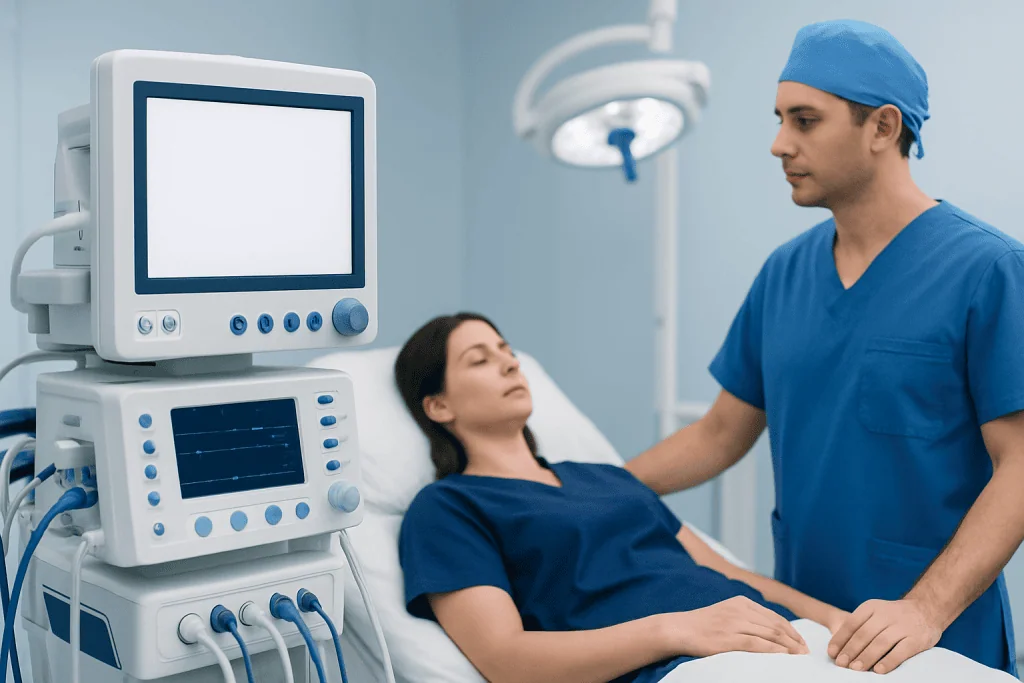
JCI stands for Joint Commission International. It is the international arm of the body that accredits hospitals in the United States, and it evaluates healthcare institutions worldwide against a published set of standards. When a hospital is JCI accredited, it means surveyors have visited the hospital, examined how it actually works, and confirmed that its systems meet those standards. Accreditation is not permanent: hospitals are re-surveyed on a regular cycle and must keep meeting the standards to retain it.
The survey is not about décor or equipment lists. It examines the processes that decide whether care goes right or wrong on an ordinary day: how the hospital identifies patients correctly before every test and procedure, how it reduces infection risk, how medications are prescribed, checked and given, how teams hand information to each other, how emergencies are handled, how consent is taken, how records are kept, and how patient rights are protected. It also looks at whether staff are qualified for their roles and whether the hospital measures its own performance over time.
The practical takeaway for you is this: JCI accreditation describes how care is delivered every day, not the outcome of any single treatment. For a broader look at what this framework means across Turkish hospitals generally, see our guide to what JCI accreditation means for patients in Turkey.
What you may notice as a patient at a JCI-accredited hospital

Much of what accreditation requires is invisible to patients — audit trails, training records, incident reporting. But some of it you will see and feel, and it helps to recognise it for what it is.
Repeated identity checks. Staff will confirm your name and date of birth before blood tests, imaging, medications and procedures, and you will usually wear an identification wristband as an inpatient. This can feel repetitive when you are tired or anxious. It is deliberate. Checking identity at every step is one of the simplest and most effective ways hospitals prevent avoidable mistakes, and international standards require it.
Structured communication and checklists. You may notice staff confirming instructions aloud, documenting details carefully, and working through checklists at key moments — admission, surgery preparation, transfers between departments, discharge. These routines exist to stop information being lost between teams, which is one of the most common sources of error in any hospital, anywhere.
Medication verification. Expect to be asked more than once about your current medications, doses and allergies, and expect nurses to check your identity and your chart before giving anything. Our separate guide on medication safety during a hospital stay in Turkey explains what these checks involve and how you can support them.
Visible infection prevention. Hand hygiene between patients, cleaning protocols, protective equipment where appropriate, and careful handling of sterile materials are all part of the required safety culture. No hospital can eliminate infection risk entirely, but strong, consistently followed processes reduce it and support fast action when concerns arise.
For international patients at Acibadem, coordinators and interpreters sit alongside these clinical systems. Their role is to make the systems usable for you: explaining consent documents in a language you understand, clarifying pre-treatment instructions, and making sure travel fatigue or a language gap does not turn into avoidable confusion.
How accreditation supports your journey before, during and after treatment
Before you arrive
Safety starts with preparation. A well-organised hospital will want to review your medical records, imaging, medication list and relevant history in advance, so that the clinical team can assess your case properly rather than making rushed decisions on arrival. Advance review also makes it easier to identify whether additional tests, a second specialist opinion, or specific precautions are needed before treatment goes ahead. If surgery is planned, our patient safety checklist before surgery in Turkey sets out what good pre-arrival preparation looks like from the patient’s side.
During your stay
Accreditation supports coordination. If your care involves several specialists, laboratory work, imaging, an anaesthesia assessment or inpatient observation, standardised pathways help these parts connect: results reach the right people, handovers follow a set format, and the plan is documented so every team works from the same information. In a large hospital group such as Acibadem, this kind of structured coordination matters most precisely when your treatment crosses departments.
After treatment
Safety does not end at discharge, and JCI standards treat discharge planning as part of care rather than an afterthought. Good discharge planning typically includes clear instructions on medication use, wound care or activity limits where relevant, warning signs to watch for, and how questions after discharge are handled. For international patients this stage carries extra weight, because you may be recovering in a hotel, travelling within Turkey, or flying home shortly after treatment.
Documentation supports continuity too. Before departure, it is reasonable to expect a written medical report, prescriptions, copies of relevant imaging and clear aftercare instructions, so your doctor at home can understand exactly what was done. Accredited systems place strong emphasis on complete records, and that emphasis works in your favour when your follow-up happens in another country.
What JCI accreditation does not mean
Be clear-eyed about the limits. Accreditation does not mean every treatment is appropriate for every patient, and it does not promise a specific result. Your outcome depends on your diagnosis, your general health, the complexity of the procedure, and how your body responds to treatment and recovery — none of which a certificate can change.
It does not mean you should skip your own checks. Confirm the treatment plan, ask why a particular test or procedure is recommended, share your complete medication list, mention allergies, and speak up when something is unclear. Participation of this kind is part of safe care, not a challenge to the medical team. If something during your stay does concern you, it also helps to know in advance how to report a safety concern in a Turkish hospital — accredited hospitals are required to have a route for exactly that.
Accreditation is not a pricing tier either. It does not set what your treatment will cost. Any quote you receive reflects the scope of your treatment plan — the procedure itself, the expected length of stay, the tests and consultations around it — and it should be explained to you in those terms, item by item, before you commit.
Finally, accreditation is one factor among several. Weigh it alongside the hospital’s experience with your specific condition, the availability of a multidisciplinary team if your case needs one, how well communication works in your language, and whether you genuinely understand the travel, recovery and follow-up plan. Safety is strongest where systems, expertise and patient understanding meet.
How to verify accreditation and make it meaningful for you
Do not take any accreditation claim — ours or anyone’s — on trust from a website banner. JCI publishes a public directory of currently accredited organisations, and checking it takes a few minutes. Our guide on how to verify hospital accreditation in Turkey walks through the steps, including what to do when a hospital group has multiple sites and you want to confirm the specific hospital where you will be treated.
Once verified, turn the label into questions. Instead of asking only whether a hospital is accredited, ask how its safety procedures apply to your own treatment path. That produces answers you can actually compare between providers.
- Ask how your identity will be checked at each stage of the process.
- Ask how your medications and allergies will be reviewed before treatment begins.
- Ask what infection-prevention measures are standard for your type of care.
- Ask how consent, test results and discharge instructions are provided in English or your preferred language.
- Ask for a clear point of contact for the whole care journey, and how questions after discharge are handled.
- Ask what written records you will receive before returning home.
Practical support matters too. Interpreter access, coordination between appointments, realistic timing between arrival and treatment, and travel-ready medical reports are not clinical topics, but they decide whether you experience the hospital’s safety systems as reassuring structure or as bureaucracy you cannot follow.
Step by step
- Write down your own safety priorities. Before comparing hospitals, note what matters most to you: language support, infection prevention, medication safety, specialist coordination, discharge planning. This keeps you focused on practical detail rather than marketing language.
- Verify the accreditation independently. Check the JCI public directory for the specific hospital where you will be treated, and note when the accreditation was last renewed. A current listing is the baseline; the questions that follow build on it.
- Assemble complete medical information early. A safer plan starts with a complete clinical picture: diagnosis, previous reports, imaging, allergy history and a current medication list, especially if you have chronic conditions or previous treatment elsewhere.
- Ask how international patients are coordinated. Establish who organises appointments, whether interpreters are available for consultations and consent, and how information will reach you before arrival and after discharge.
- Confirm safety processes in plain language. You do not need technical vocabulary. Ask how the team verifies identity, prevents medication errors, manages infection risk, and explains consent, results and aftercare.
- Plan discharge before treatment begins. Ask early how long you may need to stay in Turkey after treatment, what recovery support you may need, and how post-discharge questions are handled, so the transition from hospital to hotel or home is arranged rather than improvised.
- Keep your records organised for follow-up. Before leaving, collect your medical report, prescriptions, imaging copies where relevant, and written aftercare instructions. These documents let your doctor at home continue your care safely.
Your checklist
- Verify the hospital’s JCI listing yourself before you commit.
- Bring a full list of your medications, supplements and allergies.
- Carry copies of key medical reports and recent imaging if available.
- Save your coordinator’s contact details in your phone and on paper.
- Ask for instructions in English or your preferred language.
- Confirm how questions after discharge are handled and by whom.
- Check how many days you may need to remain in Turkey after treatment.
- Keep your passport, insurance documents and hospital papers together.
- Arrange a companion if treatment may limit your mobility or communication.
Key takeaways
- JCI accreditation is independent confirmation that a hospital’s systems meet international standards for safety and quality — and it must be renewed, not earned once.
- What it changes for you is mostly process: identity checks, medication verification, infection-prevention routines, structured handovers and planned discharge.
- It supports the whole journey — preparation, treatment, discharge and the documentation you carry home for follow-up.
- It does not promise a specific result, set a price, or replace personalised medical advice about your own case.
- Verify the accreditation yourself, then use it to ask concrete questions about how the standards apply to your treatment path.
Frequently asked questions
Does JCI accreditation mean treatment at Acibadem carries no risk?
No. No hospital and no treatment is free of risk, and accreditation is not a promise about outcomes. What it means is that the hospital has been assessed against recognised international standards for how it organises care and manages the risks that arise in healthcare — and that it must keep meeting those standards to remain accredited.
What does a JCI survey actually examine?
Surveyors look at how the hospital works in practice: patient identification, medication management, infection prevention, surgical safety processes, emergency response, consent, documentation, patient rights, staff qualifications and how the hospital measures its own quality over time. The focus is on everyday systems, not equipment lists or appearance.
Will I notice any difference as a patient in a JCI-accredited hospital?
Often yes, in small but meaningful ways: repeated identity checks before tests and medications, wristbands, checklists at key moments, careful medication questioning, visible hand hygiene, and structured discharge instructions. These routines can feel repetitive, but they are central to preventing avoidable errors.
How can I check whether a hospital’s accreditation is genuine and current?
JCI maintains a public directory of currently accredited organisations, which anyone can search. Check the specific hospital where you will be treated, not just the group name, since accreditation applies to individual facilities. It is a short task and worth doing for any hospital you are considering, anywhere.
Is accreditation more important than choosing the right specialist team?
Neither replaces the other. Accreditation tells you the hospital has sound systems; the specialist team determines whether your condition is evaluated and treated appropriately within those systems. When comparing options, look for both: clinical experience with your condition and a verified safety framework around it.
Why should I care about accreditation if I am only coming for one procedure?
Because even a short medical trip involves many steps beyond the procedure: admission, testing, medication review, anaesthesia where relevant, handovers between teams, and discharge. Errors are at least as likely in those surrounding steps as in the procedure itself, and accreditation standards address exactly those steps.
Does accreditation cover the paperwork I take home after treatment?
Accreditation standards place strong emphasis on complete, accurate documentation, which includes discharge summaries and medical records. In practice, that supports you receiving a written report, prescriptions and aftercare instructions you can hand to your doctor at home, so follow-up care continues from an accurate picture of what was done.
What happens if a hospital stops meeting JCI standards?
Accreditation is cyclical, not permanent. Hospitals are re-surveyed at regular intervals and must demonstrate continued compliance to keep their accredited status. A hospital that no longer meets the standards can lose its accreditation, which is why checking that a listing is current is a worthwhile part of your own research.
Add us as a Preferred Source to see more of our trusted health content across Google Search, AI Overviews and Discover.

Update history
- PublishedJune 22, 2026
- Medical review approvedAugust 31, 2026
- Last content updateAugust 31, 2026
References1
More Patient Guides

Private MRI, CT and Check-Up Costs in Turkey: How Scans Are Priced
How private MRI, CT, PET-CT and full check-up packages are priced in Turkey — modality, region, contrast, reporting — and what a…

Cataract Surgery Cost in Turkey: Per-Eye Prices and Lens Options
Cataract surgery in Turkey is priced per eye and the lens decides the quote. Biometry, both eyes on one trip, and what…

Lip Filler Cost in Turkey: Per-ml Prices Explained
Lip filler in Turkey is priced per millilitre with licensed hyaluronic acid brands and physician injectors. Volume, product, dissolving, safety and what…

Botox Cost in Turkey: Per-Area and Per-Unit Prices
How Botox is priced in Turkey — per area or per unit, brand, physician injectors, medical indications — and what a serious…