

Medication Safety During a Hospital Stay in Turkey

Medication safety during a hospital stay in Turkey rests on one thing: complete, accurate information. Bring a full list of every medicine, supplement and allergy, keep medicines in original packaging in your hand luggage, repeat your key details at admission, ask about anything unfamiliar before taking it, and leave with a written discharge plan that names each medicine by its generic name.
Will the tablet you take every morning even exist in Turkey under the same name? It is one of the first questions international patients ask, and it deserves a straight answer before you fly: probably yes, but possibly under a different brand, in different packaging, at a different strength. That is exactly why preparation matters.
A safe hospital stay starts with clear information about every medicine, supplement, allergy and past reaction you have. That information is what lets the team plan around your routine instead of guessing at it. No hospital system, however careful, can check against a list it has never seen.
This guide walks you through medication safety during a hospital stay in Turkey from the packing stage to the flight home: what to document, what needs paperwork at the border, what happens at admission, which questions to ask on the ward, and how to leave with a discharge plan your doctor at home can actually read.
At a glance
- Best first step: Build one complete medication list in English, generic names, doses, timing, allergies, and send it before you arrive.
- What to pack: Original packaging, prescriptions, a doctor’s letter for injections or controlled medicines, and key medical reports.
- At the border: Controlled medicines such as strong painkillers may need documentation; check Turkish rules before you travel.
- During admission: Repeat your allergies and key medicines in person, even if you already sent documents.
- On the ward: Ask the name, purpose and dose of anything unfamiliar before you take it. Request an interpreter if anything is unclear.
- Before discharge: Get written instructions covering what to continue, stop, change and monitor after you return home.
Why medication safety during a hospital stay in Turkey needs early planning
When you travel for hospital care, your medication routine crosses languages, brand names, prescribing systems and time zones all at once. A medicine you have taken for years may be sold in Turkey under a different name, in a box that looks nothing like the one in your bathroom cabinet, or as a local equivalent with the same active ingredient. None of this is unusual. It does mean, though, that the burden of clear communication starts before your flight, not at the ward door.
Medication safety is broader than avoiding the wrong tablet. It covers allergy checks, interactions between medicines, correct timing around anaesthesia and procedures, safe storage, and understanding what changes after discharge. If you take blood thinners, diabetes medicines, blood pressure or heart medicines, psychiatric medicines, hormone therapy, immune-suppressing medicines or regular painkillers, your care team needs that information early, ideally before you arrive, so that any planning around a procedure can happen in advance rather than at the bedside.
Turkish hospitals that treat international patients, including Acibadem, run structured medication processes: doctor orders, pharmacy checks and nursing protocols work together, and medicines are documented at each step. Those systems work best when your side of the record is complete. Medication safety during a hospital stay in Turkey is a shared job: the hospital brings the process, you bring the accurate history.
One honest limit to state up front: this guide explains how to prepare and communicate. It does not tell you to start, stop or change any medicine. Those decisions belong to the doctor treating you, working with the doctor who prescribed the medicine at home.
Prepare a medicine file before you travel

Before your trip, create a simple medicine file you can share with your international patient coordinator and the hospital team. Include every prescription medicine, over-the-counter medicine, vitamin, herbal product, injection, inhaler, patch, eye drop and cream you use. If you take something only when needed: a migraine tablet, a sleep aid, include that too, with the reason you use it.
For each item, record the generic name if you know it, the brand name, the strength, the dose, the time of day, and how long you have been taking it. The generic name is the single most useful detail, because brand names change between countries while active ingredients do not. If your doctor at home has recently changed a dose, note the date and the reason.
Add to the same file:
- Your allergies and the exact reaction you had, rash, swelling, breathing difficulty, fainting, severe stomach upset. “Allergic to penicillin” is less useful than “penicillin: facial swelling within an hour”.
- Medicines you were told to avoid because of kidney, liver, heart or stomach conditions.
- Recent lab results if your medicines require monitoring: INR for blood thinners, kidney and liver function, blood sugar records.
- Contact details for your usual doctor or pharmacist at home, if available.
If you are travelling for an operation, this file feeds directly into anaesthesia planning. Our separate guide, Before Surgery in Turkey: Your Medication and Supplement Safety Checklist, covers the pre-operative side in detail.
Which medicines need extra paperwork to enter Turkey
A common search question is what medications you cannot take into Turkey. The honest answer: most everyday prescription medicines travel without difficulty, but controlled substances are treated differently. Strong painkillers such as opioids, some sedatives and sleeping tablets, certain ADHD medicines and some psychiatric medicines fall under controlled-drug rules in many countries, and Turkey applies its own restrictions. Rules can change, so check the current position with the Turkish embassy or consulate in your country before you book, and read your own government’s travel advice for Turkey.
Practical steps that help regardless of the medicine:
- Carry a letter from your prescribing doctor stating the medicine, the condition it treats, and the dose, in English.
- Keep the original pharmacy label on the packaging, with your name matching your passport.
- Carry a quantity that clearly matches personal use for your trip, not a bulk supply.
- If you use needles, injectable medicines, a pump or another device, carry a prescription or doctor’s letter explaining why you need them.
If a medicine you rely on turns out to be restricted, do not simply leave it behind. Tell your hospital coordinator well before travel so the treating team can plan a safe approach with you and your doctor at home.
Pack medicines safely for your journey
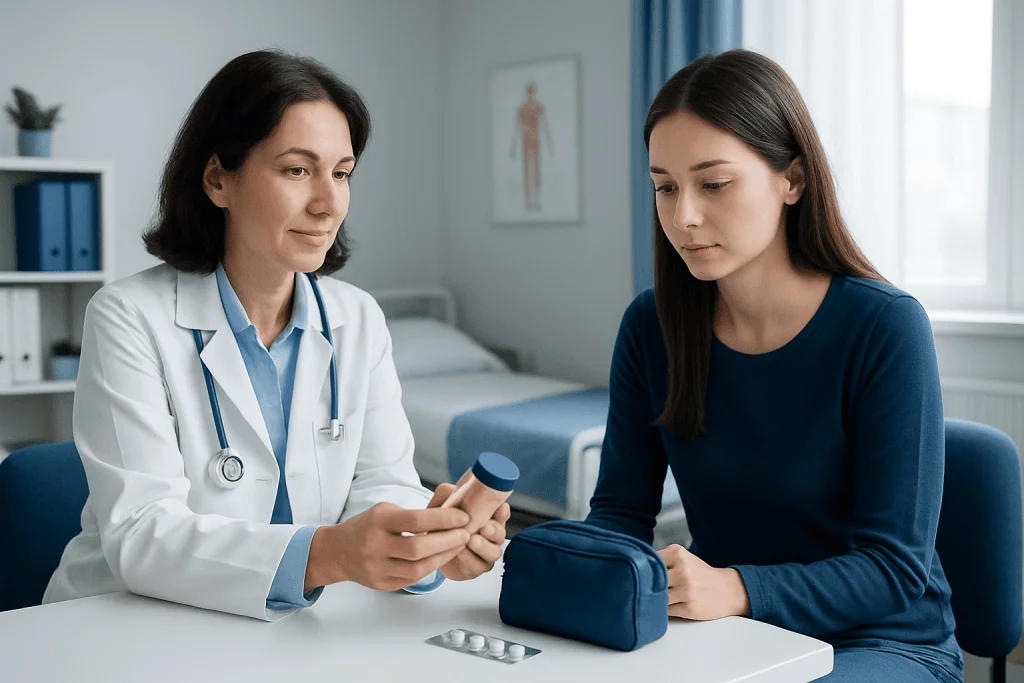
Carry your essential medicines in your hand luggage, never only in checked baggage. Flight delays, lost bags or an unexpected overnight stop can break your routine if everything is packed away in the hold. Keep medicines in their original packaging: labels let hospital staff confirm the active ingredient, strength, expiry date and prescriber without guesswork.
Bring enough supply for your planned stay plus a sensible buffer in case your schedule changes, treatment stays sometimes run longer than the first estimate. For medicines that need refrigeration, ask your pharmacist at home how to transport them and what temperature range they tolerate; hospitals can usually store refrigerated medicines once you arrive, but the journey itself is your responsibility.
Do not tip different tablets into one unlabelled container to save space. It makes identification difficult and raises the risk of confusion, particularly with tablets that look alike. If you use a pill organiser at home, bring it, but bring the original boxes as well. If you expect to need a new supply while in Turkey, read Managing Prescription Refills During a Treatment Stay in Turkey before you leave, so you know how local prescribing works.
What happens at hospital admission
At admission, the team asks about your current medicines, allergies, medical history and recent treatments. This step is called medication reconciliation: comparing what you normally take with what is planned during your stay, so the team can decide what continues, what pauses and what may need adjusting around your treatment. It is one of the most important safety checks of the entire admission, and it only works if your account is complete.
Be open about everything, herbal remedies, sleep aids, weight-loss products, bodybuilding supplements, traditional medicines, painkillers bought without prescription. These can affect bleeding risk, anaesthesia planning, blood pressure, blood sugar and liver function, and they interact with prescribed medicines. The team is not there to judge your choices; they need the full picture to keep you safe. Some medicine classes deserve particular emphasis when you talk to the admitting team:
| Medicine type | Why the team needs to know early |
|---|---|
| Blood thinners and antiplatelets | They affect bleeding around procedures and may need planned timing decided by your doctors. |
| Diabetes medicines and insulin | Fasting, procedures and changed meal times all affect blood sugar management in hospital. |
| Heart and blood pressure medicines | They interact with anaesthesia and with fluids given during treatment. |
| Psychiatric and seizure medicines | Timing usually matters; interruptions need medical planning, never improvisation. |
| Immune-suppressing medicines and steroids | They influence infection risk, healing and how the body responds to procedures. |
| Herbal products and supplements | Several affect bleeding, blood pressure or drug metabolism despite seeming mild. |
If you are admitted through Acibadem International services, your coordinator can make sure your documents reach the treating team and arrange interpreter support. Even so, the safest habit is to personally repeat the essentials at admission: your allergies, your most important daily medicines, and anything that has caused a serious problem before. Repetition is not rudeness; it is how safety systems are designed to work.
The five moments of medication safety
People often ask about the “five steps” of medication safety. The World Health Organization frames these as five moments, points where asking questions protects you most:
- Starting a medicine: What is it called, why do I need it, and what should I watch for?
- Taking a medicine: When do I take it, how, and with or without food?
- Adding a medicine: Does this work safely with everything else I take?
- Reviewing medicines: Do I still need each one? Is the dose still right?
- Stopping a medicine: Can it stop suddenly, or does it need a plan?
You do not need to memorise the framework. Notice what it implies: every change, starting, adding, stopping, is a moment to ask, not to assume. That applies doubly when you are far from your usual doctor and pharmacist.
During your stay: ask, confirm, and speak up
On the ward, nurses administer your medicines according to doctor orders and pharmacy checks. Some medicines may look different from your usual brands, because hospitals often stock generic or equivalent products. If a tablet, injection or timing seems unfamiliar, ask what it is and why you are receiving it. A practical phrase: “Please tell me the name, purpose and dose of this medicine.” If the answer is unclear because of language or medical terms, ask for an interpreter before taking the medicine, unless it is an emergency situation. Clarity matters most for medicines that affect alertness, pain control, blood clotting, blood sugar, heart rhythm or blood pressure.
You are also a useful pair of eyes. Tell the nurse if you notice a missed usual medicine, an apparent duplicate dose, a new symptom after a medicine, or a dose given at a time very different from your home routine. If you feel unwell between rounds, dizzy, itchy, short of breath, unusually sleepy, nauseated or confused, use the call button straight away rather than waiting; our guide to using the nurse call system explains how it works. Nurses will also be checking your observations regularly, which is part of how medicine effects are tracked, see vital signs monitoring during your hospital stay for what to expect.
One firm rule: never take your own medicines from your suitcase during the admission unless the hospital team has specifically approved it. Self-dosing in hospital can duplicate treatment the nurses have already given, or interfere with a plan you cannot see. Hand your medicines over for safe storage if asked; this protects you, and you get them back at discharge. For longer admissions, the routines around comfort and daily rhythm also help you keep track of your medication schedulestaying comfortable during a multi-day stay covers that side.
Discharge: leave with a plan you understand
Discharge is one of the highest-risk moments for medication errors anywhere in the world, because the plan often changes during the stay. Before you leave, you need to know which medicines to continue, stop, restart later or take only for a short course. Ask for written instructions in a language you understand, with interpreter explanation if anything is ambiguous.
A good discharge medication plan states, for each medicine: name, dose, timing, duration, purpose, and special instructions, take with food, avoid alcohol, do not drive, monitor blood pressure, arrange a blood test. If a medicine was prescribed under a Turkish brand name, ask for the generic name in writing so your doctor and pharmacist at home can identify it without a translation exercise.
Then check the practicalities: enough supply for the journey home and the first days after arrival, and a copy of the plan for your local doctor. If your treatment requires ongoing prescriptions in your country, ask before you leave what documents your home doctor will need. And know the limit of self-management: if you develop sudden swelling of the face or throat, difficulty breathing, severe rash with fever, or heavy unexpected bleeding after starting a new medicine at home, call your local emergency number or go to the nearest emergency department now.
Step by step
- Make one complete medication list. Every medicine and supplement, with dose, timing and reason. Use generic names where possible, and put allergies and past reactions at the top.
- Check border rules for controlled medicines. If you take strong painkillers, sedatives or ADHD medicines, confirm Turkey’s current requirements with the embassy and carry a doctor’s letter.
- Share your list before arrival. Send it with your medical records, especially before surgery, so the team can plan around anything that needs special handling.
- Pack original packages in hand luggage. Keep essentials with you through flights and transfers, with enough supply plus a buffer for schedule changes.
- Review medicines at admission. Repeat your key medicines and allergies in person, and ask whether to hand over your own medicines for safe storage.
- Ask before taking anything unfamiliar. Name, purpose, dose, and an interpreter if the explanation is not fully clear. Report new symptoms quickly using the call button.
- Confirm your discharge plan. Check what changed from your pre-hospital routine, get generic names in writing, and know who to contact with questions after you return home.
Your checklist
- Medication list with generic and brand names, doses and timing
- Allergy list with the exact reaction you experienced
- Original medicine packages and prescriptions
- Doctor’s letter for injections, controlled medicines, devices or refrigerated medicines
- Confirmation of Turkish entry rules for any controlled medicine you take
- Recent lab results related to your medicines, if available
- Enough supply for the trip plus extra days
- Interpreter request for medication discussions if needed
- Written discharge plan with generic names before leaving hospital
- Contact details for post-discharge questions
Key takeaways
- Bring a complete medication and allergy list, and send it before your hospital stay in Turkey begins.
- Keep medicines in original packaging in your hand luggage, and check Turkish rules for controlled medicines before travel.
- Repeat your allergies and key medicines at admission: the reconciliation check works only with complete information.
- Do not take personal medicines on the ward without the team’s approval, and ask about anything unfamiliar before taking it.
- Leave with a written discharge plan that uses generic names, so your doctor at home can continue your care without guesswork.
Frequently asked questions
What medications can I not take into Turkey?
Most routine prescription medicines travel without difficulty. Controlled substances, strong opioid painkillers, some sedatives and sleeping tablets, certain ADHD and psychiatric medicines, are subject to stricter rules, and requirements can change. Check with the Turkish embassy or consulate in your country before travel, carry a doctor’s letter and the original pharmacy-labelled packaging, and keep quantities clearly limited to personal use.
Is healthcare better in Turkey or the UK?
There is no honest single answer. Both countries have well-trained doctors and modern hospitals; the systems differ in structure, waiting times and how private care is organised. The useful question for a patient is narrower: does the specific hospital and team have the experience and processes for your specific treatment? Ask about the team, the process and the follow-up plan, and judge on those specifics.
What are the 5 steps of medication safety?
The World Health Organization describes five moments when asking questions protects you most: starting a medicine, taking a medicine, adding a medicine, reviewing your medicines, and stopping a medicine. At each moment, ask what it is called, why you need it, how to take it, whether it works safely with everything else, and whether stopping needs a plan.
Is A&E free in Turkey?
Emergency departments in Turkey provide urgent assessment and life-saving care, but as an international visitor you should not assume treatment is free. What you pay depends on whether the hospital is public or private, your insurance cover, and what treatment you need. Travel with valid health or travel insurance and check what it covers before you fly. If you have a medical emergency in Turkey, call your local emergency number or go to the nearest emergency department now.
Should I bring my own medicines to the hospital in Turkey?
Yes, bring them in original packaging for identification and continuity. Once admitted, do not take your own medicines unless the hospital team specifically approves it. The team may store them safely or use hospital-supplied equivalents, so that every dose you receive is documented and checked against your treatment plan.
What if my medicine has a different name in Turkey?
Brand names vary between countries; active ingredients do not. The generic name, ingredient and dose are what the hospital team needs. At discharge, ask for the generic name of anything prescribed in Turkey so your doctor or pharmacist at home can identify it without ambiguity.
Can I continue vitamins, herbal products, or supplements in hospital?
Do not assume so. Some supplements affect bleeding, anaesthesia, blood pressure, blood sugar or how other medicines are processed by the body. Declare everything you take, even products that seem natural or mild, and let the treating team decide what fits safely into your hospital plan.
How do I manage time-zone changes for regular medicines?
Ask the doctor who prescribes the medicine before you travel, especially for insulin, seizure medicines, blood thinners, heart medicines and anything taken at strict intervals. Do not make timing changes on your own for high-risk medicines. During admission, tell the hospital team the schedule you follow at home so hospital timing can be planned around it.
Add us as a Preferred Source to see more of our trusted health content across Google Search, AI Overviews and Discover.

Update history
- PublishedJune 8, 2026
- Medical review approvedSeptember 13, 2026
- Last content updateSeptember 12, 2026
References3
More Patient Guides

When to Delay Travel for Treatment in Turkey Because of Cold, Flu, or Fever
Delay travel for treatment in Turkey if you have fever, worsening flu symptoms, or breathing difficulty; contact your care team before flying.

Traveling to Turkey for Treatment While Pregnant: Safety Questions to Ask First
Traveling to Turkey while pregnant can be safe with medical clearance, airline checks and a tailored care plan. Ask these key safety…

When to Seek Urgent Help After Leaving the Hospital in Turkey
When to seek urgent help after leaving the hospital in Turkey: act fast for breathing trouble, chest pain, heavy bleeding, high fever,…

At Acibadem, How We Handle Consent, Privacy, and Patient Decision-Making
Consent, privacy, and patient decision-making at Acibadem in Turkey are handled with clear information, confidentiality, interpreters, and respect for your choices.