

Vital Signs Monitoring During Your Hospital Stay in Turkey
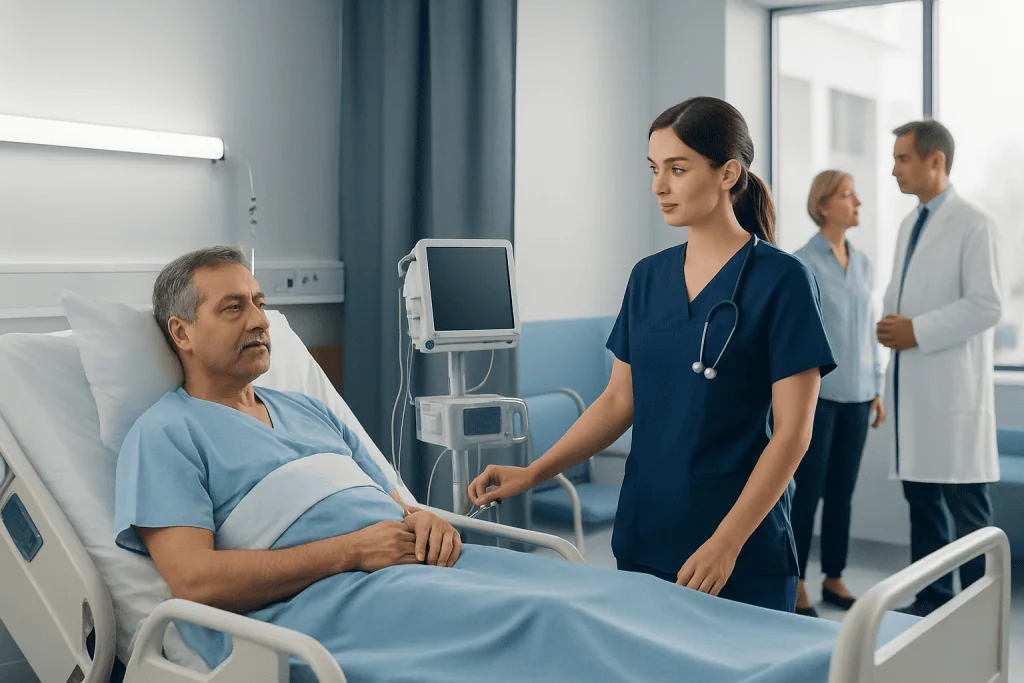
During a hospital stay in Turkey, nurses measure your temperature, pulse, blood pressure, breathing rate and oxygen saturation at intervals matched to your condition. Stable ward patients are typically checked every few hours; after surgery or anaesthesia, checks are more frequent or continuous. Trends matter more than single readings, and your team interprets numbers alongside your symptoms, examination findings and test results.
Someone in a uniform arrives at your bedside, wraps a cuff around your arm, clips a small device to your finger and writes numbers on a chart. This happens several times a day, sometimes at night. This guide explains what vital signs monitoring during your hospital stay in Turkey actually involves: what is measured, why the frequency changes, what the alarms mean and how monitoring shapes decisions about your discharge and your flight home.
It is written for international patients who want to understand the routine before they are admitted, rather than piecing it together from beeps and chart entries once they are on the ward.
At a glance
- What it is: Regular bedside measurement of temperature, pulse, blood pressure, breathing rate and oxygen saturation, plus nursing assessment
- Purpose: To spot changes in your condition early and guide decisions about treatment, observation level and discharge
- Anaesthesia: Not applicable, routine checks are non-invasive and generally comfortable
- How often: At planned intervals for stable patients; more frequently or continuously after surgery, anaesthesia or new medication
- Where: All inpatient areas, wards, recovery rooms, high-dependency units and intensive care
- What matters most: Trends over time, interpreted together with symptoms and test results, not one isolated number
- Discharge link: Stable readings are one of the things your doctor reviews before discharge and before confirming you are fit to fly
- International patient support: Interpreter services, care coordination, transfer guidance and remote follow-up planning
What is vital signs monitoring?
Vital signs are the basic measurements that show how your body’s core systems are working. In most Turkish hospitals, as elsewhere, the standard set is body temperature, heart rate, blood pressure, breathing rate and oxygen saturation. Depending on your condition, nurses may also track your pain score, level of alertness, fluid intake and output, and blood sugar.
Vital signs monitoring during your hospital stay in Turkey is not a treatment in itself. It is a safety process that runs alongside whatever brought you to hospital, surgery, infection treatment, cardiac care, oncology or observation. Its value lies in comparison: your first readings on admission become a baseline, and every later measurement is read against it. A blood pressure that would be unremarkable in one patient can be significant in another, which is why single numbers mean less than the pattern they form.
On an Acibadem ward, monitoring is carried out by nurses at the bedside, sometimes with portable devices, and by continuous monitors in recovery rooms, high-dependency units and intensive care. Staff record each set of readings, and doctors review the trends during rounds alongside your examination and test results.
When is it recommended?
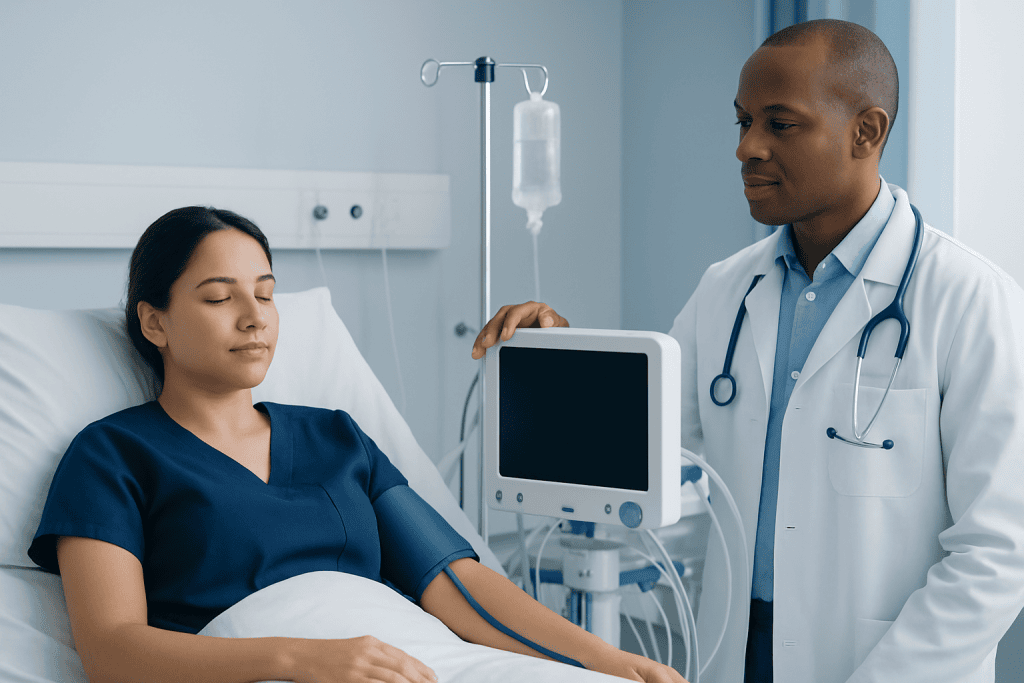
Practically every hospital admission includes vital signs monitoring. It matters most at moments of change: before and after an operation, during and after anaesthesia, when a new medication is started, during treatment for infection, after a cardiac event, during pregnancy-related admissions, and whenever there are breathing, circulation or neurological concerns.
The frequency is not fixed. A stable patient recovering well may be checked at planned intervals through the day. A patient just returned from theatre, or one whose readings have shifted, is checked more often, sometimes continuously for a period. If your checks become more frequent, it usually means your team is being appropriately careful during a phase that warrants closer attention, not that something has gone wrong.
Monitoring also feeds directly into discharge planning. Before you leave the hospital, your doctor wants to see readings stable enough for you to continue recovering in a hotel or at home. For international patients this carries extra weight: a long flight and distance from the treating team make stability before travel more important, which is one reason doctors sometimes advise staying in Turkey for a few days after discharge before flying.
Who is a good candidate?

Every inpatient, adult, child or older patient, is monitored. Routine checks are non-invasive and quick. What varies is intensity. Patients with heart or lung disease, diabetes, infection risk, recent major surgery, significant pain or complex medication plans generally need closer observation than someone admitted for a minor procedure.
Some situations call for an individualised plan: an irregular heart rhythm, notably high or low blood pressure, an oxygen requirement, sleep apnoea, kidney disease, neurological symptoms or a previous difficult experience with anaesthesia. In these cases the doctor decides whether scheduled checks are sufficient or whether continuous monitoring is safer for a period.
Practical details matter too. If you have sensitive or fragile skin, swelling, a dialysis access site, previous lymph node surgery on one side, wounds, burns or an implanted device, tell your nurse before cuffs and sensors are placed. The team can usually use a different limb, reposition a probe or choose gentler adhesives.
Routine checks and continuous monitoring
There are broadly three levels. Routine bedside checks are the most common: a nurse measures your temperature, blood pressure and oxygen saturation, counts your breathing, and asks about pain, dizziness, nausea, sleep and general comfort. That conversation is part of the assessment, not small talk, what you report often carries as much weight as the numbers.
Intermittent electronic monitoring sits in the middle: repeated automated readings without being permanently connected to a monitor. Continuous monitoring, leads on the chest for heart rhythm, a fixed oxygen probe, sometimes an automatic cuff cycling at set intervals, is standard after anaesthesia, in intensive care, in cardiac units and whenever heart rhythm, blood pressure or oxygen levels need constant follow-up. Blood glucose checks, urine output measurement and fluid balance charts may be added when relevant.
The level is matched to clinical need, not convenience or room category. If you are having surgery, it is reasonable to ask in advance how you will be monitored afterwards and where; our guide on questions to ask about ICU, ward stay and overnight monitoring covers exactly that conversation.
How often are vital signs checked in hospital?
There is no single answer, but the pattern is predictable. Stable ward patients are commonly checked every four to eight hours, following the hospital’s protocol and the doctor’s orders. Immediately after surgery or anaesthesia, checks are much closer together, often every fifteen to thirty minutes at first, then hourly, then spacing out as you remain stable. In intensive care, monitoring is continuous.
The frequency is reviewed constantly. New symptoms, a change in medication, a fever or an unexpected reading will tighten the schedule; steady progress will loosen it. If night-time checks are disturbing your sleep, say so, teams can sometimes adjust timing or technique for stable patients, though safety takes priority. Practical ideas for resting well on a ward are collected in our guide to staying comfortable during a multi-day hospital stay in Turkey.
Online evaluation before travel
Before an international patient travels, the relevant Acibadem department reviews medical records shared through the coordination team: diagnosis, planned treatment, previous operation reports, medication list, allergies, recent blood tests and imaging. This review helps the team anticipate whether routine ward care, a monitored bed or another level of observation is likely to be appropriate.
The review works best when it includes anything that affects observation needs: a heart or lung condition, a recent hospitalisation, an oxygen requirement, pregnancy, mobility limitations or a complex medication schedule. A preliminary review does not replace an in-person assessment: the final monitoring plan is confirmed after arrival, physical examination and pre-treatment tests, and it can change if your condition changes before travel.
Before your admission
At admission, your team asks about your medical history, current symptoms, medicines, allergies and any previous reactions to anaesthesia. This shapes expectations: it tells the team which changes in your readings would be normal for you and which would need faster attention.
Decisions about continuing or pausing any medication before a procedure belong to your treating doctor and anaesthesia team, bring a complete, accurate list, including blood thinners, blood pressure and diabetes medicines, supplements and herbal products, and let them decide. Our guide on medication safety during a hospital stay in Turkey explains how that process works on the ward. Mention any devices you use at home: a CPAP machine, oxygen, an insulin pump, a pacemaker card or a blood pressure diary.
Your first set of readings becomes your baseline. Tell the nurse if you have just walked a long corridor, had coffee, smoked, taken medication or are feeling anxious, all of these can nudge the numbers, and knowing about them makes the baseline more useful.
What happens during monitoring
A typical check takes a few minutes. The cuff inflates on your arm and releases; a clip on your finger, toe or earlobe estimates oxygen saturation; a digital thermometer records your temperature; the nurse counts your breathing while you rest. For continuous monitoring, small adhesive sensors or leads stay on your skin.
Monitors alarm when a reading moves outside a set range, or when a sensor slips, a cable loosens or your fingers are cold. Many alarms are technical prompts, not emergencies. Nurses assess the alarm, check the sensor and your position, repeat the reading if needed and look at how you actually are before deciding whether anything else is required.
Context is everything. Blood pressure shifts with pain, stress, sleep, hydration and medication. Oxygen readings can be skewed by nail polish, movement or poor circulation in a cold hand. An unexpected number is usually rechecked and weighed against your symptoms before it changes anything in your care plan. If something changes between scheduled checks, new pain, breathlessness, dizziness or simply feeling unwell, use the bedside call button rather than waiting for the next round; our guide to using the nurse call system explains how it works.
Hospital stay and discharge
Through your stay, vital sign trends feed daily decisions: whether pain control is adequate, whether you are ready to mobilise, whether a medication is having the intended effect, whether fluids need adjusting. Doctors read the chart together with your examination, laboratory results and imaging.
Before discharge, the team looks for a stable picture: settled blood pressure and pulse, acceptable oxygen levels, no concerning fever pattern, controlled pain, safe mobility, and eating and drinking as appropriate. None of these is judged in isolation.
For international patients, discharge often includes travel planning. After major surgery or complex treatment, your doctor may advise remaining in Turkey for a period before flying, so recovery can be checked before a long journey. Acibadem International can coordinate interpreter support, follow-up appointments, transfers and post-return communication with your medical team.
Recovery timeline
Monitoring itself has no recovery period: the timeline below shows how it typically runs alongside a treatment journey. Your own schedule depends on the reason for your admission.
| Timeframe | What to expect |
|---|---|
| First 24 hours | Frequent checks, especially after anaesthesia, a procedure or admission for an acute condition. Pain, alertness, breathing and fluid balance are assessed alongside the standard readings. |
| First week | Checks space out as you stabilise. Fever, blood pressure changes, oxygen needs or pain concerns bring them closer together again. |
| Weeks 2–4 | After discharge, some patients are asked to track temperature, blood pressure, blood sugar or oxygen levels at home, and attend follow-up visits. |
| Months 1–3 | Longer-term follow-up is driven by the main diagnosis: your doctor may review trends such as blood pressure control, exercise tolerance or breathing comfort. |
| Ongoing | There is no “final result” from monitoring. The aim throughout is early recognition of change and appropriate follow-up until your condition is stable. |
If home monitoring is part of your discharge plan, your written instructions will state what to measure, how often and how to report results during remote follow-up.
What to avoid
The main thing to avoid is removing sensors, oxygen tubing, cuffs or leads yourself. If equipment feels tight, itchy or restrictive, ask the nurse, devices can almost always be repositioned without losing the monitoring.
Avoid the opposite trap too: dismissing how you feel because the last reading was normal. Vital signs complement your own account; they do not replace it. Tell the team about any new or worsening symptom, whatever the chart says.
After discharge, home readings should be interpreted through the instructions your doctor gave you, together with your symptoms and history, not used on their own to change what you take or do. Any change to prescribed medicines is a decision for your treating doctor.
Risks and limitations
Routine monitoring is very safe. Possible minor issues include temporary pressure from the cuff, skin marks from adhesive sensors or discomfort from a finger clip, all usually solved by repositioning or changing the site.
Devices can also mislead. Movement, cold extremities, poor circulation, nail products, a loose sensor, an irregular heart rhythm or the wrong cuff size can all produce inaccurate readings. This is precisely why nurses repeat unexpected measurements and assess you clinically rather than acting on a single number.
Finally, monitoring has limits worth stating plainly: it cannot prevent every complication and it cannot guarantee any outcome. It is one strong tool among several, skilled nursing assessment, physician review, laboratory tests, and it works best when you communicate openly with the team.
What are hospitals in Turkey like for international patients?
Turkey has both a public healthcare system and a large private hospital sector, and it is the private sector that most international patients use. Larger private hospitals typically offer single inpatient rooms, space or a fold-out bed for a companion, and dedicated international patient departments that handle interpreting, scheduling and paperwork. Monitoring practice follows the same clinical logic you would expect in Western Europe: baseline readings on admission, scheduled ward checks, and continuous monitoring in recovery, high-dependency and intensive care areas. Day-to-day details of ward life, including meal servicesare covered in our other guides.
One point worth knowing before you travel: healthcare in Turkey is not free for tourists. The public system covers Turkish citizens and registered residents. Visitors are treated as private patients and billed for care, so treatment plans, quotations and travel or medical insurance arrangements should be settled before admission. Emergency departments will assess and stabilise anyone who arrives, but the costs of that care still fall to the patient or their insurer.
Cost and package information
Vital signs monitoring is usually part of the wider inpatient care plan rather than a separately priced service. What drives the overall figure is the reason for admission, the length of stay, the room and department type, the complexity of any surgery or procedure, laboratory tests, imaging, medications, specialist consultations and whether intensive or high-dependency care is needed.
A typical inpatient package covers standard nursing care, routine bedside monitoring, accommodation in the assigned room category, planned physician visits and standard in-hospital services tied to the treatment plan. Continuous monitoring, intensive care, extra tests, an extended stay, blood products, special devices or management of complications may sit outside the package, according to the hospital’s quotation and billing policy.
Quotations are individual, prepared after the medical records and proposed treatment plan have been reviewed, and they itemise what is included, what is excluded and what depends on medical need. No quotation replaces the final plan made after in-person physician evaluation.
Why choose Acibadem
Acibadem operates a group of hospitals in Turkey with multidisciplinary specialist teams and established international patient services. For an inpatient, that translates into coordinated care across departments: nursing assessment, documented monitoring, physician review and interpreter support working from the same plan.
Monitoring is a small, unglamorous part of hospital care, but it reflects the wider approach, regular assessment, clear documentation and timely communication, explained in a language you understand. International patient services handle the practical layer: appointments, transfers, accommodation guidance, discharge coordination and remote follow-up communication once you are home.
Medical review and disclaimer
This guide has been reviewed by the Acibadem International medical team. It provides general information about vital signs monitoring during your hospital stay in Turkey and is intended to help international patients understand what to expect.
It does not replace a consultation, physical examination, diagnosis or treatment plan from a qualified physician. Monitoring needs vary with your medical history, symptoms, procedure, medications and test results, and your suitability for travel, admission, treatment, discharge and follow-up must be evaluated by a physician.
Step by step
- Initial contact. A coordinator collects your basic information, preferred language, planned treatment area and travel expectations.
- Medical record submission. Relevant records, test results, imaging, medication lists and, where relevant, symptom photos, are gathered so the medical team can review your situation before travel.
- Preliminary medical review. The appropriate department considers your likely admission needs, including whether routine ward monitoring or closer observation may be required.
- Treatment plan and quotation. A preliminary plan and individualised quotation are prepared from the available information; the plan may change after in-person evaluation.
- Travel planning. Appointment timing, transfers, accommodation and interpreter arrangements are organised, with guidance on documents and medicines to bring.
- Arrival. You are guided to the hospital according to your schedule, with support for registration and communication.
- In-person consultation. Your physician examines you, reviews your records and confirms the plan, including any special monitoring needs.
- Pre-treatment tests. Blood work, imaging, ECG or anaesthesia assessment may be performed. Baseline vital signs are recorded.
- Treatment. Monitoring runs alongside the planned care, adjusted to your condition, anaesthesia status and medications.
- Hospital stay. Nurses check your vital signs at intervals matched to your condition and report significant changes to your doctor. You are encouraged to report any new symptom.
- Progress review. Your doctor reviews trends, test results and recovery status; the plan is continued, adjusted or moved towards discharge.
- Discharge and travel clearance. The team confirms stability, explains medicines and activity guidance, and advises when flying is appropriate.
- Remote follow-up. Where appropriate, follow-up is arranged after you return home, including review of any home monitoring records you keep.
Your checklist
- Passport and travel documents
- Complete medical history and current diagnosis
- List of all medications, supplements and herbal products
- Known allergies, including medication, latex, adhesive or food allergies
- Previous surgeries, anaesthesia history and any complications
- Current symptoms and when they started
- Recent blood tests, ECG, imaging reports or hospital discharge summaries
- Information about chronic conditions such as heart disease, lung disease, diabetes or kidney disease
- Details of implanted or home devices: pacemaker, stent, port, insulin pump, CPAP
- Emergency contact details and companion information
- Home monitoring records if you keep them: blood pressure, blood sugar, oxygen saturation or temperature logs
Key takeaways
- Vital signs monitoring is a routine safety process in every hospital admission, not a sign that something is wrong.
- The standard set is temperature, pulse, blood pressure, breathing rate and oxygen saturation, often with pain score and fluid balance.
- Frequency is matched to your condition: scheduled checks for stable ward patients, frequent or continuous monitoring after surgery or anaesthesia.
- Trends over time, read alongside your symptoms and test results, matter far more than any single reading.
- Stable readings are part of discharge and fit-to-fly decisions, which is why international patients sometimes stay in Turkey briefly after discharge.
- Healthcare in Turkey is not free for visitors, quotations and insurance arrangements belong in the planning stage, before admission.
Frequently asked questions
How often do they check vitals in a hospital?
It depends on your condition. Stable ward patients are commonly checked every four to eight hours according to protocol and the doctor’s orders. Immediately after surgery or anaesthesia, checks may run every fifteen to thirty minutes before gradually spacing out. In intensive care, monitoring is continuous. The schedule is reviewed constantly and tightened whenever readings or symptoms change.
Is vital signs monitoring painful?
Routine monitoring is non-invasive and most patients find it comfortable. You may feel temporary pressure from the blood pressure cuff or mild irritation from adhesive sensors. If anything feels uncomfortable or too tight, tell your nurse, devices can be repositioned or moved to another site.
Does a monitor alarm mean something is wrong?
Not necessarily. Alarms sound when a reading crosses a set threshold, but also when a sensor slips, a cable loosens or your hand is cold. Nurses assess the alarm, check the equipment, repeat the reading if needed and look at how you actually feel before deciding whether any action is required.
What are hospitals like in Turkey?
Larger private hospitals in Turkey typically offer single inpatient rooms, companion arrangements, modern monitoring equipment and dedicated international patient departments with interpreters. Ward routines, admission baseline readings, scheduled checks, continuous monitoring in recovery and intensive care, follow the same clinical logic used across Europe.
Do tourists get free healthcare in Turkey?
No. Turkey’s public system covers citizens and registered residents. Visitors are treated as private patients and are billed for care, including emergency care after initial assessment and stabilisation. Travel or medical insurance, or an agreed quotation with the hospital, should be arranged before a planned admission.
How good is Turkey’s healthcare system?
Turkey has a well-developed private hospital sector that treats large numbers of international patients each year, alongside its public system. Standards vary between institutions, as in any country, so it is sensible to ask any hospital about its facilities, the monitoring available in recovery and intensive care, and how international patients are supported before committing to treatment.
Will I need to monitor anything after discharge?
Some patients are asked to track temperature, blood pressure, blood sugar, oxygen saturation or specific symptoms at home, depending on the diagnosis and treatment. Your written discharge instructions will state exactly what to measure, how often and how results feed into your follow-up.
Is vital signs monitoring safe for children and older adults?
Yes. It is routine at every age. Cuff sizes, sensor placement and check frequency are adjusted to the patient’s age, size and condition, and paediatric and older patients may receive additional comfort measures or closer observation where needed.
Add us as a Preferred Source to see more of our trusted health content across Google Search, AI Overviews and Discover.

Update history
- PublishedJune 22, 2026
- Medical review approvedAugust 30, 2026
- Last content updateAugust 30, 2026
References2
- Vital signs: MedlinePlus Medical Encyclopedia medlineplus.gov
- Vital Signs: Cleveland Clinic my.clevelandclinic.org
More Patient Guides

HoLEP in Turkey: How It Compares With TURP and What Recovery Involves
HoLEP in Turkey treats enlarged prostate tissue with laser enucleation; learn how it compares with TURP, recovery, travel and follow-up.

Porcelain Veneers in Turkey: Who Is Suitable and How Many Visits Are Needed?
Porcelain veneers in Turkey can enhance tooth shape and colour in two visits for suitable patients after a personalised dental assessment.

How to Prepare for a Sedation Procedure in Turkey
Prepare safely for a sedation procedure in Turkey with guidance on fasting, medicines, travel, recovery and follow-up.

Treatment Delays in Turkey: What Happens If Tests or Recovery Change Your Schedule
Treatment delays in Turkey can happen if tests or recovery change your plan. Learn how to manage appointments, travel, accommodation and follow-up.